When it comes to making crucial healthcare decisions, having a Medical Power of Attorney (MPOA) form in place can provide peace of mind for both individuals and their loved ones. This legal document allows a person, often referred to as the "principal," to designate another individual, known as the "agent," to make medical decisions on their behalf in the event that they become unable to communicate their wishes. The MPOA covers a range of healthcare decisions, from routine medical care to life-sustaining treatments, ensuring that the principal's preferences are honored even when they cannot voice them. It is important for the agent to understand the principal's values and wishes, as they will be responsible for making decisions that align with those beliefs. Additionally, the MPOA can be customized to include specific instructions or limitations, allowing for a tailored approach to each individual’s healthcare needs. By establishing this form, individuals can take proactive steps to ensure that their medical care aligns with their personal beliefs and preferences, ultimately reducing stress during difficult times.
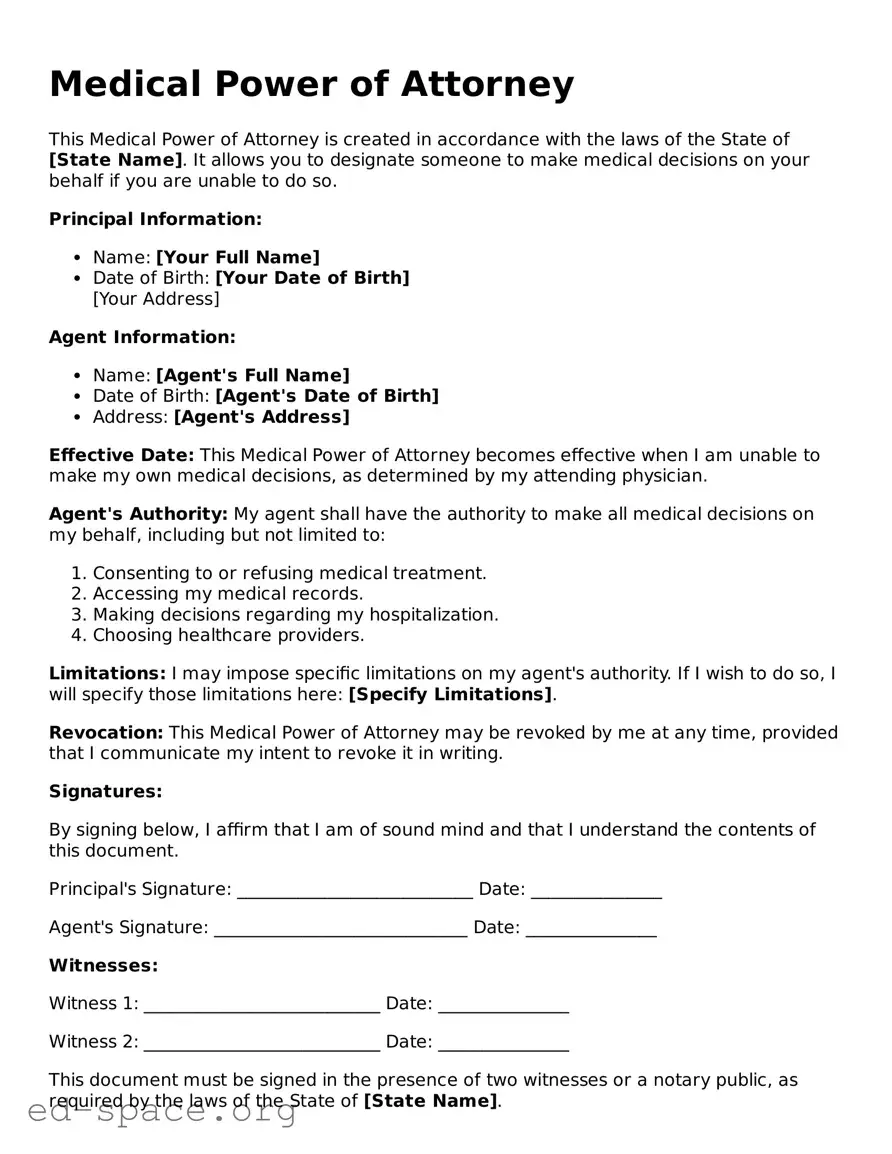
Medical Power of Attorney
This Medical Power of Attorney is created in accordance with the laws of the State of [State Name]. It allows you to designate someone to make medical decisions on your behalf if you are unable to do so.
Principal Information:
Agent Information:
Effective Date: This Medical Power of Attorney becomes effective when I am unable to make my own medical decisions, as determined by my attending physician.
Agent's Authority: My agent shall have the authority to make all medical decisions on my behalf, including but not limited to:
Limitations: I may impose specific limitations on my agent's authority. If I wish to do so, I will specify those limitations here: [Specify Limitations].
Revocation: This Medical Power of Attorney may be revoked by me at any time, provided that I communicate my intent to revoke it in writing.
Signatures:
By signing below, I affirm that I am of sound mind and that I understand the contents of this document.
Principal's Signature: ___________________________ Date: _______________
Agent's Signature: _____________________________ Date: _______________
Witnesses:
Witness 1: ___________________________ Date: _______________
Witness 2: ___________________________ Date: _______________
This document must be signed in the presence of two witnesses or a notary public, as required by the laws of the State of [State Name].
| Fact Name | Description |
|---|---|
| Definition | A Medical Power of Attorney (MPOA) allows an individual to designate someone to make healthcare decisions on their behalf if they become incapacitated. |
| Legal Authority | The MPOA is governed by state law, which varies by jurisdiction. In most states, the authority is outlined under the Uniform Health-Care Decisions Act. |
| Durability | This document remains effective even if the individual becomes mentally incapacitated, ensuring that decisions can still be made. |
| Revocation | An MPOA can be revoked at any time by the principal, as long as they are mentally competent to do so. |
| Witness Requirements | Most states require the MPOA to be signed in the presence of witnesses or a notary public to ensure its validity. |
| Scope of Authority | The agent's authority can be broad or limited, depending on how the MPOA is drafted. Specific instructions can be included to guide decision-making. |
Filling out a Medical Power of Attorney form is an important step in ensuring that your healthcare decisions are made according to your wishes. Once you complete this form, it will allow someone you trust to make medical decisions on your behalf if you are unable to do so. Follow these steps carefully to ensure the form is filled out correctly.
What is a Medical Power of Attorney?
A Medical Power of Attorney is a legal document that allows you to designate someone to make healthcare decisions on your behalf if you become unable to do so. This person, often referred to as your agent or proxy, will have the authority to make medical choices based on your wishes and best interests. It is an important tool for ensuring that your healthcare preferences are honored when you cannot communicate them yourself.
Who can be appointed as my agent?
You can choose anyone you trust to act as your agent, as long as they are of legal age and capable of making decisions. Many people choose a family member or close friend. It’s important to select someone who understands your values and wishes regarding medical treatment, as they will be responsible for making decisions that align with your preferences.
Do I need a lawyer to create a Medical Power of Attorney?
While it is not required to have a lawyer to create a Medical Power of Attorney, consulting one can be beneficial. A lawyer can help ensure that the document meets your state's legal requirements and that it accurately reflects your wishes. Many states also provide templates or forms that you can fill out on your own, making the process more accessible.
Can I change or revoke my Medical Power of Attorney?
Yes, you can change or revoke your Medical Power of Attorney at any time, as long as you are mentally competent. To do this, you should create a new document that clearly states your intentions or write a revocation letter. It’s advisable to inform your agent and any healthcare providers of the changes to avoid confusion.
What happens if I don’t have a Medical Power of Attorney?
If you do not have a Medical Power of Attorney and become unable to make healthcare decisions, your family members may have to go through a legal process to obtain the authority to make those decisions for you. This can lead to disputes among family members and may not reflect your personal wishes, making it important to have this document in place.
Is a Medical Power of Attorney the same as a living will?
No, a Medical Power of Attorney and a living will are not the same, although they are often used together. A living will outlines your wishes regarding specific medical treatments and end-of-life care, while a Medical Power of Attorney designates someone to make decisions on your behalf. Together, they provide comprehensive guidance for your healthcare preferences.
Can I use a Medical Power of Attorney in another state?
Generally, a Medical Power of Attorney is valid in other states, but it is crucial to check the specific laws of the state where you will be receiving care. Some states have different requirements for the document to be recognized. It’s a good idea to consult a local attorney if you plan to move or travel to ensure your document remains valid.
What should I discuss with my agent before signing the document?
Before signing the Medical Power of Attorney, have an open and honest conversation with your agent about your healthcare preferences. Discuss your values, beliefs, and any specific wishes regarding medical treatments, end-of-life care, and life-sustaining measures. This dialogue will help your agent make informed decisions that align with your desires.
How do I ensure my Medical Power of Attorney is valid?
To ensure your Medical Power of Attorney is valid, follow your state's specific requirements, which may include signing the document in the presence of witnesses or having it notarized. It’s also wise to keep copies of the document with your healthcare provider and inform your agent about its existence. This way, everyone involved is aware of your wishes and can act accordingly.
Not Designating a Clear Agent: One common mistake is failing to clearly designate an agent. This person should be someone you trust to make medical decisions on your behalf. Without a clear choice, it may lead to confusion or disputes among family members.
Overlooking State-Specific Requirements: Each state has its own rules regarding Medical Power of Attorney forms. Some people neglect to check their state’s requirements, which can lead to the form being invalid. Always ensure that the form meets local legal standards.
Failing to Discuss Wishes with the Agent: It’s important to have a conversation with the person you are appointing as your agent. Many individuals forget to discuss their medical preferences and values, which can result in decisions that do not align with their wishes.
Not Updating the Form: Life circumstances change, and so do relationships. Some people forget to update their Medical Power of Attorney when significant life events occur, such as marriage, divorce, or the death of a previously designated agent. Regularly reviewing and updating the form is essential.
A Medical Power of Attorney is an important document that allows an individual to designate someone else to make healthcare decisions on their behalf if they are unable to do so. However, there are several other forms and documents that can complement this legal instrument, ensuring that your healthcare preferences are respected and that your wishes are clearly communicated. Below is a list of commonly used documents alongside the Medical Power of Attorney.
These documents work together to provide a clear picture of your healthcare wishes and ensure that your designated representative can act in your best interest. It is advisable to review these forms periodically and discuss your preferences with your loved ones and healthcare providers to ensure that everyone is on the same page.
The Medical Power of Attorney form shares similarities with several other important documents. Each of these documents serves a unique purpose in managing health care decisions and personal affairs. Here’s a list of seven documents that are comparable:
Understanding these documents can help individuals make informed choices about their health care and personal affairs. Each serves a critical role in ensuring that wishes are respected and that appropriate care is provided.
When filling out a Medical Power of Attorney form, it's important to be thorough and careful. Here are five things you should and shouldn't do:
Understanding the Medical Power of Attorney (MPOA) is crucial for making informed decisions about healthcare. However, several misconceptions can lead to confusion. Here are seven common misconceptions about the MPOA form:
The MPOA can be activated anytime a person is unable to make their own medical decisions, not just in emergencies.
The agent named in the MPOA can make decisions, but they must act in accordance with the wishes and values of the person who appointed them.
A living will outlines specific medical treatments a person wants or does not want, while the MPOA designates someone to make decisions on behalf of the individual.
The MPOA can be revoked or amended at any time as long as the person is mentally competent.
Anyone, regardless of age, can benefit from having a MPOA in place, especially those with health conditions or undergoing surgery.
When properly executed, the MPOA is legally binding and must be honored by healthcare providers.
While legal assistance can be helpful, individuals can complete the MPOA form on their own, provided they follow state requirements.
Clarifying these misconceptions can empower individuals to make informed decisions about their healthcare preferences and ensure their wishes are respected.
Filling out and using a Medical Power of Attorney (MPOA) form is an important step in ensuring your healthcare decisions align with your wishes. Here are some key takeaways to consider: