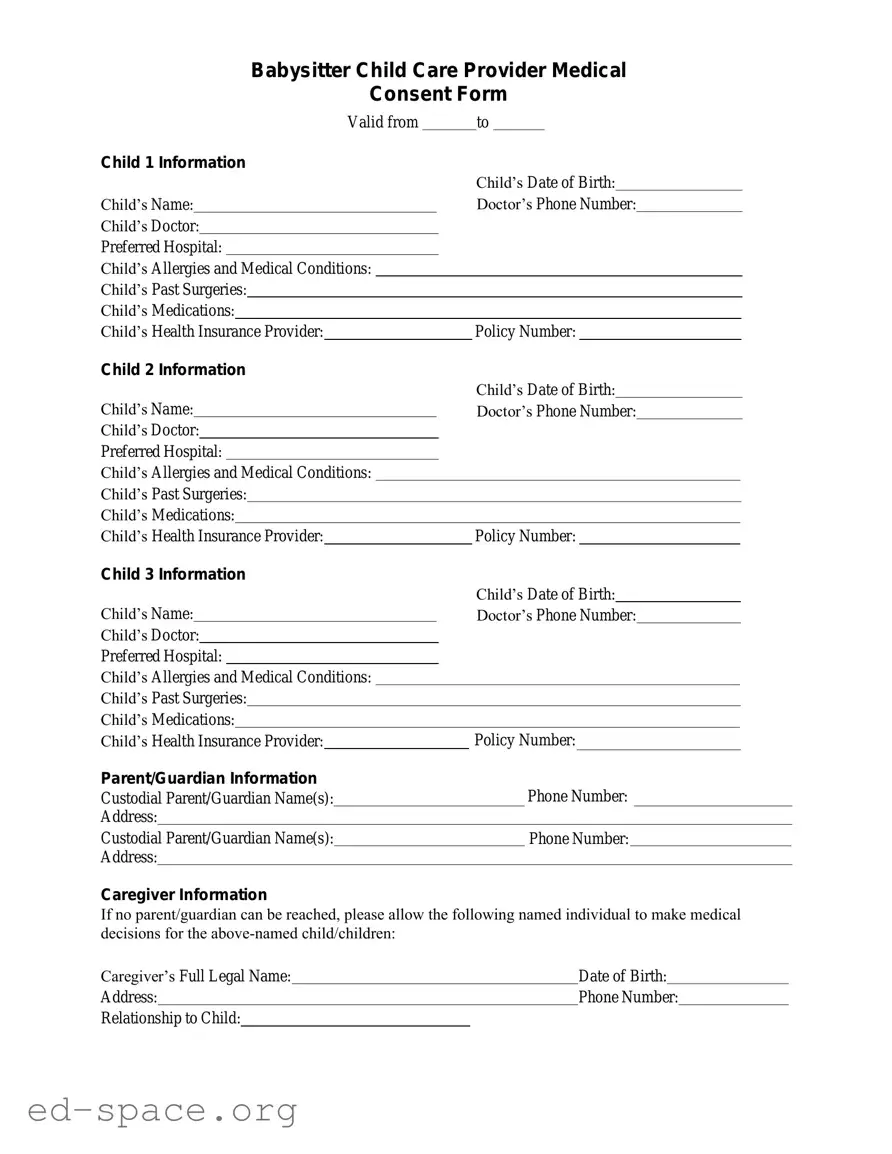
The Medical Consent Babysitter form serves as a vital document for parents and guardians, ensuring that appropriate medical care can be administered to children in their absence. This form collects essential information about each child, including their date of birth, allergies, medical conditions, and medications, which can be crucial in emergency situations. Additionally, it outlines the preferred hospital and provides contact details for the child's doctor, facilitating quick access to medical care. The form also requires information about the custodial parent or guardian, allowing caregivers to reach them easily if needed. In the event that a parent or guardian cannot be contacted, the form designates a caregiver authorized to make medical decisions on behalf of the child or children. This includes sharing personal information with emergency personnel, authorizing the use of life-saving medical devices, and permitting ambulance transport if necessary. By clearly stating these permissions, the Medical Consent Babysitter form helps ensure that children receive timely and appropriate medical attention when it is most needed.
|
|
|
|
|
|
|
|
Babysitter Child Care Provider Medical |
|
||||||||||||||||||||
|
|
|
|
|
|
|
|
|
|
Consent Form |
|
||||||||||||||||||
|
|
|
|
|
|
|
|
|
|
Valid from |
|
|
|
to |
|
|
|
||||||||||||
Child 1 Information |
|
|
|
|
|
|
|
|
|
|
|
|
|
||||||||||||||||
|
|
|
|
|
|
|
|
|
|
|
|
|
|
|
|
|
|
Child’s Date of Birth: |
|
|
|||||||||
Child’s Name: |
|
|
Doctor’s Phone Number: |
|
|||||||||||||||||||||||||
|
|
|
|
|
|
|
|
|
|
|
|
|
|
|
|
|
|||||||||||||
Child’s Doctor: |
|
|
|
|
|
|
|
|
|
|
|
|
|
|
|
||||||||||||||
Preferred Hospital: |
|
|
|
|
|
|
|
|
|
|
|
|
|
|
|
||||||||||||||
Child’s Allergies and Medical Conditions: |
|
|
|
|
|
|
|
|
|
|
|
|
|
|
|||||||||||||||
Child’s Past Surgeries: |
|
|
|
|
|
|
|
|
|
|
|
|
|
|
|||||||||||||||
Child’s Medications: |
|
|
|
|
|
|
|
|
|
|
|
|
|
|
|||||||||||||||
Child’s Health Insurance Provider: |
|
|
Policy Number: |
|
|
||||||||||||||||||||||||
Child 2 Information |
|
|
|
|
|
|
|
|
|
|
|
|
|
||||||||||||||||
|
|
|
|
|
|
|
|
|
|
|
|
|
|
|
|
|
|
Child’s Date of Birth: |
|
|
|||||||||
Child’s Name: |
|
|
|
|
|
|
|
Doctor’s Phone Number: |
|
||||||||||||||||||||
Child’s Doctor: |
|
|
|
|
|
|
|
|
|
|
|
|
|
|
|
||||||||||||||
|
|
|
|
|
|
|
|
|
|
|
|
|
|||||||||||||||||
Preferred Hospital: |
|
|
|
|
|
|
|
|
|
|
|
|
|
|
|
||||||||||||||
Child’s Allergies and Medical Conditions: |
|
|
|
|
|
|
|
|
|
|
|
|
|
|
|||||||||||||||
Child’s Past Surgeries: |
|
|
|
|
|
|
|
|
|
|
|
|
|
|
|||||||||||||||
Child’s Medications: |
|
|
|
|
|
|
|
|
|
|
|
|
|
|
|||||||||||||||
Child’s Health Insurance Provider: |
|
|
Policy Number: |
|
|
||||||||||||||||||||||||
Child 3 Information |
|
|
|
|
|
|
|
|
|
|
|
|
|
||||||||||||||||
|
|
|
|
|
|
|
|
|
|
|
|
|
|
|
|
|
|
Child’s Date of Birth: |
|
|
|||||||||
Child’s Name: |
|
|
Doctor’s Phone Number: |
|
|||||||||||||||||||||||||
|
|
|
|
|
|
|
|
|
|
|
|
|
|
|
|
|
|
|
|
|
|
|
|
|
|||||
Child’s Doctor: |
|
|
|
|
|
|
|
|
|
|
|
|
|
|
|
||||||||||||||
|
|
|
|
|
|
|
|
|
|
|
|
|
|||||||||||||||||
Preferred Hospital: |
|
|
|
|
|
|
|
|
|
|
|
|
|
|
|
||||||||||||||
Child’s Allergies and Medical Conditions: |
|
|
|
|
|
|
|
|
|
|
|
|
|
|
|||||||||||||||
Child’s Past Surgeries: |
|
|
|
|
|
|
|
|
|
|
|
|
|
||||||||||||||||
Child’s Medications: |
|
|
|
|
|
|
|
|
|
|
|
|
|
|
|
||||||||||||||
Child’s Health Insurance Provider: |
|
|
Policy Number: |
|
|||||||||||||||||||||||||
Parent/Guardian Information |
|
|
|
|
|
|
|
|
|
|
|
|
|
||||||||||||||||
Custodial Parent/Guardian Name(s): |
|
|
|
|
Phone Number: |
|
|||||||||||||||||||||||
Address: |
|
|
|
|
|
|
|
|
|
|
|
|
|
|
|
||||||||||||||
Custodial Parent/Guardian Name(s): |
|
|
|
|
Phone Number: |
|
|||||||||||||||||||||||
Address: |
|
|
|
|
|
|
|
|
|
|
|
|
|
|
|
||||||||||||||
Caregiver Information
If no parent/guardian can be reached, please allow the following named individual to make medical decisions for the
Caregiver’s Full Legal Name: |
|
|
Date of Birth: |
|
|||
Address: |
|
|
Phone Number: |
||||
|
|
|
|
|
|
|
|
Relationship to Child: |
|
|
|
|
|
||

Minor Medical Consent |
|
In case of an emergency, I grant permission to |
to make medical decisions |
for my child/children until one parent/guardian can be reached. Medical decisions I authorize the above named individual to make include:
□ Sharing personal information about my child/children with emergency personnel. □ Authorizing use of
□ Authorizing use of an ambulance for transport. □ Other:
Parent/Guardian Name: |
|
Signature: |
|
Date: |
|
|
Witness Name: |
|
Signature: |
|
Date: |
|
|
Parent/Guardian Name: |
|
Signature: |
|
Date: |
|
|
Witness Name: |
|
Signature: |
|
Date: |
|
|
In case of an emergency, I agree to make medical decisions for the above named child/children until one parent/guardian can be reached.
Caregiver Name: |
|
Signature: |
Date: |
|
Witness: |
||
|
|
|
|
|
|
|
|
Witness Name: |
|
|
Signature: |
Date: |
|
|
|
|
|
|
|
|
|
|
|
| Fact Name | Detail |
|---|---|
| Purpose | The Medical Consent Babysitter form allows caregivers to make medical decisions for children in emergencies. |
| Child Information | It collects essential details about each child, including their name, date of birth, and medical history. |
| Parent/Guardian Details | Information about custodial parents or guardians is required, including names and contact information. |
| Caregiver Authorization | The form allows a designated caregiver to make medical decisions if parents cannot be reached. |
| Emergency Permissions | Parents grant permission for caregivers to share information and authorize medical treatments in emergencies. |
| State-Specific Forms | Some states have specific requirements for medical consent forms, governed by local laws. |
| Witness Signatures | The form requires signatures from witnesses to validate the consent given by parents or guardians. |
| Health Insurance | Parents must provide health insurance details, including the provider and policy number, for medical services. |
| Validity Period | The form specifies a validity period, indicating the time frame during which the consent is effective. |
Completing the Medical Consent Babysitter form is essential for ensuring that caregivers can make informed medical decisions for your child in case of an emergency. Follow these steps carefully to provide all necessary information clearly and accurately.
After completing the form, review all information for accuracy. Keep a copy for your records and provide the original to the babysitter or caregiver. This preparation ensures peace of mind while your child is in someone else's care.
What is a Medical Consent Babysitter form?
A Medical Consent Babysitter form is a document that allows a babysitter or caregiver to make medical decisions for your child in case of an emergency. It includes important information about your child's health, allergies, and medical history, ensuring that the caregiver can act quickly if needed.
Why do I need this form?
This form is crucial for ensuring that your child receives appropriate medical care when you are not available. It provides the caregiver with the authority to make decisions and access necessary medical information, which can be vital in an emergency situation.
What information do I need to provide for each child?
You will need to fill out details such as each child's name, date of birth, doctor’s contact information, preferred hospital, allergies, medical conditions, past surgeries, medications, and health insurance provider along with the policy number. This information helps caregivers make informed decisions regarding your child's health.
Who can make medical decisions for my child if I am unreachable?
The form allows you to designate a caregiver who can make medical decisions for your child if you cannot be reached. You will need to provide their full legal name, date of birth, address, phone number, and their relationship to your child.
What medical decisions can the caregiver make?
The caregiver can make several important medical decisions, including sharing your child's personal health information with emergency personnel, authorizing the use of life-saving medical devices, and calling for an ambulance if necessary. You can also specify any other medical decisions you authorize.
How long is the Medical Consent Babysitter form valid?
The form includes a validity period that you can specify. It is essential to update the form regularly, especially if there are changes in your child's health or if you have a new babysitter or caregiver.
Do I need to have the form notarized?
Notarization is not typically required for a Medical Consent Babysitter form, but it may be a good idea to have it witnessed to ensure that the document is legally recognized and to provide additional assurance to the caregiver.
What should I do with the completed form?
Once completed, provide copies of the form to the babysitter or caregiver and keep a copy for your records. It’s also wise to inform your child’s doctor and any emergency contacts about the existence of the form.
Can I update the form if my child's medical information changes?
Yes, you can and should update the form whenever there are changes in your child's medical information, such as new allergies, medications, or changes in your child's doctor. Keeping the form current is essential for your child's safety.
How do I ensure my babysitter understands the form?
Before leaving your child with a babysitter, take the time to review the form with them. Explain any critical medical information and answer any questions they might have. This will help them feel more confident in handling any emergencies that may arise.
Incomplete Information: Failing to fill out all required fields can lead to confusion in emergencies. Ensure all sections, including the child’s name, date of birth, and medical history, are fully completed.
Outdated Contact Details: Providing old phone numbers or addresses for parents or guardians can hinder timely communication. Always double-check that contact information is current and accurate.
Missing Emergency Contacts: Not listing a designated caregiver or failing to include their contact information can complicate medical decision-making. It’s crucial to name someone who can be reached if parents cannot be contacted.
Neglecting Medical History: Omitting important details about allergies, medications, or past surgeries can put a child at risk. Be thorough when detailing any medical conditions or treatments the child has received.
When caring for children, especially in the absence of parents or guardians, several important documents can provide essential information and consent. Along with the Medical Consent Babysitter form, consider having the following forms ready. Each serves a unique purpose in ensuring the safety and well-being of the child.
Having these documents prepared can provide peace of mind for both parents and caregivers. They ensure that everyone involved is informed and ready to handle any situation that may arise while caring for children.
The Medical Consent Babysitter form is crucial for ensuring that caregivers have the authority to make medical decisions for children in emergency situations. Several other documents serve similar purposes, providing essential information and permissions regarding medical care. Below are five documents that share similarities with the Medical Consent Babysitter form:
Filling out the Medical Consent Babysitter form is an important step in ensuring your child's safety while in someone else's care. Here are some key things to keep in mind:
Understanding the Medical Consent Babysitter form is essential for parents and caregivers. However, several misconceptions can lead to confusion. Here are eight common misunderstandings:
By addressing these misconceptions, parents and caregivers can better understand the importance of the Medical Consent Babysitter form, ensuring that children receive the best care possible in any situation.
Filling out a Medical Consent Babysitter form is an important step in ensuring your child's safety while in the care of someone else. Here are some key takeaways to keep in mind:
By taking these steps, you help ensure that your child receives the best possible care in your absence.