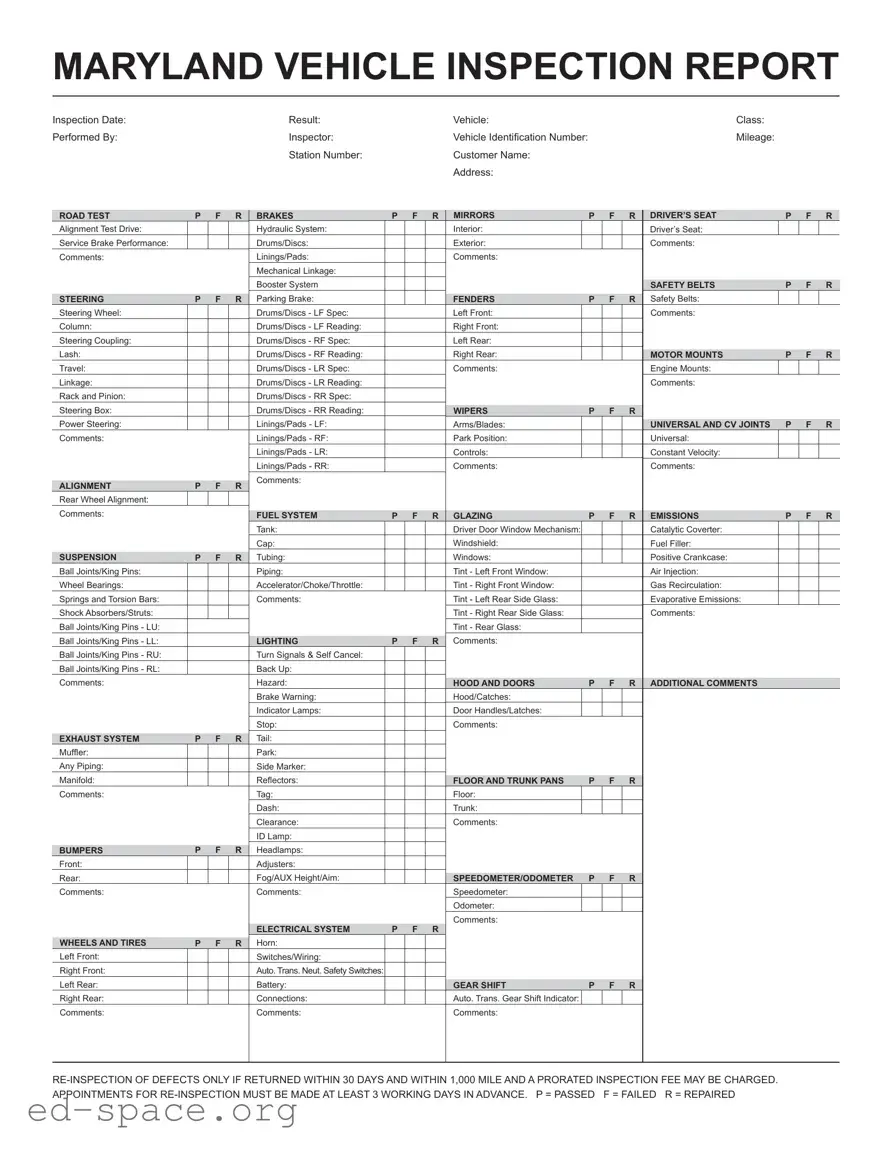
The Maryland Vehicle Inspection Report is a crucial document that ensures vehicles meet safety and emissions standards before they are allowed on the road. This form captures essential details such as the inspection date, results, vehicle class, and the inspector's information. It includes a comprehensive checklist covering various components of the vehicle, including brakes, mirrors, safety belts, and the hydraulic system. Each section allows the inspector to mark whether the item passed, failed, or was repaired. Additionally, the report assesses critical aspects like the fuel system, emissions, lighting, and suspension. Comments sections throughout the form provide space for inspectors to note specific observations or concerns. Ultimately, this report plays a vital role in maintaining road safety and environmental standards in Maryland.

MARYLAND VEHICLE INSPECTION REPORT
Inspection Date: |
|
|
|
Result: |
|
|
|
Vehicle: |
|
|
|
|
|
Class: |
|
|
|
|
||||||
Performed By: |
|
|
|
Inspector: |
|
|
|
Vehicle Identification Number: |
|
|
|
|
|
Mileage: |
|
|
|
|
||||||
|
|
|
|
|
|
Station Number: |
|
|
|
Customer Name: |
|
|
|
|
|
|
|
|
|
|
||||
|
|
|
|
|
|
|
|
|
|
|
Address: |
|
|
|
|
|
|
|
|
|
|
|||
|
|
|
|
|
|
|
|
|
|
|
|
|
|
|
|
|
|
|
|
|
|
|||
ROAD TEST |
P |
F |
R |
BRAKES |
P |
F |
R |
MIRRORS |
P |
F |
R |
DRIVER’S SEAT |
P |
F |
R |
|
||||||||
Alignment Test Drive: |
|
|
|
Hydraulic System: |
|
|
|
Interior: |
|
|
|
|
Driver’s Seat: |
|
|
|
|
|||||||
Service Brake Performance: |
|
|
|
Drums/Discs: |
|
|
|
Exterior: |
|
|
|
|
Comments: |
|
|
|
|
|
||||||
Comments: |
|
|
|
|
|
Linings/Pads: |
|
|
|
Comments: |
|
|
|
|
|
|
|
|
|
|
|
|||
|
|
|
|
|
|
Mechanical Linkage: |
|
|
|
|
|
|
|
|
|
|
|
|
|
|
|
|
|
|
|
|
|
|
|
|
Booster System |
|
|
|
|
|
|
|
|
|
|
|
|
|
|
|
|
||
|
|
|
|
|
|
|
|
|
|
|
|
|
|
|
|
SAFETY BELTS |
P |
F |
R |
|
||||
STEERING |
P |
F |
R |
Parking Brake: |
|
|
|
FENDERS |
|
P |
F |
R |
Safety Belts: |
|
|
|
|
|||||||
Steering Wheel: |
|
|
|
Drums/Discs - LF Spec: |
|
|
|
Left Front: |
|
|
|
|
Comments: |
|
|
|
|
|
|
|||||
Column: |
|
|
|
Drums/Discs - LF Reading: |
|
|
|
Right Front: |
|
|
|
|
|
|
|
|
|
|
|
|||||
Steering Coupling: |
|
|
|
Drums/Discs - RF Spec: |
|
|
|
Left Rear: |
|
|
|
|
|
|
|
|
|
|
|
|||||
Lash: |
|
|
|
Drums/Discs - RF Reading: |
|
|
|
Right Rear: |
|
|
|
|
|
|
|
|
|
|
|
|||||
|
|
|
|
|
|
|
|
|
|
MOTOR MOUNTS |
P |
F |
R |
|
||||||||||
Travel: |
|
|
|
Drums/Discs - LR Spec: |
|
|
|
Comments: |
|
|
|
|
Engine Mounts: |
|
|
|
|
|||||||
Linkage: |
|
|
|
Drums/Discs - LR Reading: |
|
|
|
|
|
|
|
|
|
|
Comments: |
|
|
|
|
|
|
|||
Rack and Pinion: |
|
|
|
Drums/Discs - RR Spec: |
|
|
|
|
|
|
|
|
|
|
|
|
|
|
|
|
|
|||
Steering Box: |
|
|
|
Drums/Discs - RR Reading: |
|
|
|
|
|
|
|
|
|
|
|
|
|
|
|
|||||
|
|
|
|
|
|
WIPERS |
P |
F |
R |
|
|
|
|
|
|
|
||||||||
Power Steering: |
|
|
|
Linings/Pads - LF: |
|
|
|
Arms/Blades: |
|
|
|
|
UNIVERSAL AND CV JOINTS |
P |
F |
R |
|
|||||||
Comments: |
|
|
|
|
|
Linings/Pads - RF: |
|
|
|
Park Position: |
|
|
|
|
Universal: |
|
|
|
|
|||||
|
|
|
|
|
|
Linings/Pads - LR: |
|
|
|
Controls: |
|
|
|
|
Constant Velocity: |
|
|
|
|
|||||
|
|
|
|
|
|
Linings/Pads - RR: |
|
|
|
Comments: |
|
|
|
|
Comments: |
|
|
|
|
|
|
|||
|
|
|
|
|
|
Comments: |
|
|
|
|
|
|
|
|
|
|
|
|
|
|
|
|
|
|
ALIGNMENT |
P |
F |
R |
|
|
|
|
|
|
|
|
|
|
|
|
|
|
|
|
|
|
|
||
Rear Wheel Alignment: |
|
|
|
|
|
|
|
|
|
|
|
|
|
|
|
|
|
|
|
|
|
|
||
Comments: |
|
|
|
|
|
|
|
|
|
|
|
|
|
|
|
|
|
|
|
|
|
|
||
|
|
|
|
|
FUEL SYSTEM |
P |
F |
R |
GLAZING |
|
P |
F |
R |
EMISSIONS |
|
|
P |
F |
R |
|
||||
|
|
|
|
|
|
Tank: |
|
|
|
Driver Door Window Mechanism: |
|
|
|
|
Catalytic Coverter: |
|
|
|
|
|||||
|
|
|
|
|
|
Cap: |
|
|
|
Windshield: |
|
|
|
|
Fuel Filler: |
|
|
|
|
|||||
|
|
|
|
|
|
|
|
|
|
|
Windows: |
|
|
|
|
|
|
|
|
|
|
|
||
SUSPENSION |
P |
F |
R |
Tubing: |
|
|
|
|
|
|
|
Positive Crankcase: |
|
|
|
|
||||||||
Ball Joints/King Pins: |
|
|
|
Piping: |
|
|
|
Tint - Left Front Window: |
|
|
|
|
Air Injection: |
|
|
|
|
|||||||
Wheel Bearings: |
|
|
|
Accelerator/Choke/Throttle: |
|
|
|
Tint - Right Front Window: |
|
|
|
|
Gas Recirculation: |
|
|
|
|
|||||||
Springs and Torsion Bars: |
|
|
|
Comments: |
|
|
|
|
Tint - Left Rear Side Glass: |
|
|
|
|
Evaporative Emissions: |
|
|
|
|
||||||
Shock Absorbers/Struts: |
|
|
|
|
|
|
|
|
Tint - Right Rear Side Glass: |
|
|
|
|
Comments: |
|
|
|
|
|
|
||||
Ball Joints/King Pins - LU: |
|
|
|
|
|
|
|
|
Tint - Rear Glass: |
|
|
|
|
|
|
|
|
|
|
|
||||
Ball Joints/King Pins - LL: |
|
|
|
|
|
|
|
|
Comments: |
|
|
|
|
|
|
|
|
|
|
|
|
|||
|
|
|
LIGHTING |
P |
F |
R |
|
|
|
|
|
|
|
|
|
|
|
|||||||
Ball Joints/King Pins - RU: |
|
|
|
Turn Signals & Self Cancel: |
|
|
|
|
|
|
|
|
|
|
|
|
|
|
|
|
|
|||
Ball Joints/King Pins - RL: |
|
|
|
Back Up: |
|
|
|
|
|
|
|
|
|
|
|
|
|
|
|
|
|
|||
Comments: |
|
|
|
|
|
Hazard: |
|
|
|
|
|
|
|
|
|
|
|
|
|
|
|
|||
|
|
|
|
|
|
|
|
HOOD AND DOORS |
P |
F |
R |
ADDITIONAL COMMENTS |
|
|
|
|
||||||||
|
|
|
|
|
|
Brake Warning: |
|
|
|
Hood/Catches: |
|
|
|
|
|
|
|
|
|
|
|
|||
|
|
|
|
|
|
Indicator Lamps: |
|
|
|
Door Handles/Latches: |
|
|
|
|
|
|
|
|
|
|
|
|||
|
|
|
|
|
|
Stop: |
|
|
|
Comments: |
|
|
|
|
|
|
|
|
|
|
|
|||
|
|
|
|
|
|
Tail: |
|
|
|
|
|
|
|
|
|
|
|
|
|
|
|
|
|
|
EXHAUST SYSTEM |
P |
F |
R |
|
|
|
|
|
|
|
|
|
|
|
|
|
|
|
|
|
||||
Muffler: |
|
|
|
Park: |
|
|
|
|
|
|
|
|
|
|
|
|
|
|
|
|
|
|||
Any Piping: |
|
|
|
Side Marker: |
|
|
|
|
|
|
|
|
|
|
|
|
|
|
|
|
|
|||
Manifold: |
|
|
|
Reflectors: |
|
|
|
|
|
|
|
|
|
|
|
|
|
|
|
|||||
|
|
|
|
|
|
FLOOR AND |
TRUNK PANS |
P |
F |
R |
|
|
|
|
|
|
|
|||||||
Comments: |
|
|
|
|
|
Tag: |
|
|
|
Floor: |
|
|
|
|
|
|
|
|
|
|
|
|||
|
|
|
|
|
|
Dash: |
|
|
|
Trunk: |
|
|
|
|
|
|
|
|
|
|
|
|||
|
|
|
|
|
|
Clearance: |
|
|
|
Comments: |
|
|
|
|
|
|
|
|
|
|
|
|||
|
|
|
|
|
|
ID Lamp: |
|
|
|
|
|
|
|
|
|
|
|
|
|
|
|
|
|
|
|
|
|
|
|
|
Headlamps: |
|
|
|
|
|
|
|
|
|
|
|
|
|
|
|
|
|
|
BUMPERS |
P |
F |
R |
|
|
|
|
|
|
|
|
|
|
|
|
|
|
|
|
|
||||
Front: |
|
|
|
Adjusters: |
|
|
|
|
|
|
|
|
|
|
|
|
|
|
|
|
|
|||
Rear: |
|
|
|
Fog/AUX Height/Aim: |
|
|
|
|
|
|
|
|
|
|
|
|
|
|
|
|||||
|
|
|
|
|
|
SPEEDOMETER/ODOMETER |
P |
F |
R |
|
|
|
|
|
|
|
||||||||
Comments: |
|
|
|
|
|
Comments: |
|
|
|
|
Speedometer: |
|
|
|
|
|
|
|
|
|
|
|
||
|
|
|
|
|
|
|
|
|
|
|
Odometer: |
|
|
|
|
|
|
|
|
|
|
|
||
|
|
|
|
|
|
|
|
|
|
|
Comments: |
|
|
|
|
|
|
|
|
|
|
|
||
|
|
|
|
|
|
ELECTRICAL |
SYSTEM |
P |
F |
R |
|
|
|
|
|
|
|
|
|
|
|
|
|
|
WHEELS AND TIRES |
P |
F |
R |
Horn: |
|
|
|
|
|
|
|
|
|
|
|
|
|
|
|
|
|
|||
Left Front: |
|
|
|
Switches/Wiring: |
|
|
|
|
|
|
|
|
|
|
|
|
|
|
|
|
|
|||
Right Front: |
|
|
|
Auto. Trans. Neut. Safety Switches: |
|
|
|
|
|
|
|
|
|
|
|
|
|
|
|
|
|
|||
Left Rear: |
|
|
|
Battery: |
|
|
|
|
|
|
|
|
|
|
|
|
|
|
|
|||||
|
|
|
|
|
|
GEAR SHIFT |
|
P |
F |
R |
|
|
|
|
|
|
|
|||||||
Right Rear: |
|
|
|
Connections: |
|
|
|
Auto. Trans. Gear Shift Indicator: |
|
|
|
|
|
|
|
|
|
|
|
|||||
Comments: |
|
|
|
|
Comments: |
|
|
|
|
Comments: |
|
|
|
|
|
|
|
|
|
|
|
|||
|
|
|
|
|
|
|
|
|
|
|
|
|
|
|
|
|
|
|
|
|
|
|
|
|
|
|
|
|
|
|
|
|
|
|
|
|
|
|
|
|
|
|
|
|
|
|
|
|
|
| Fact Name | Description |
|---|---|
| Inspection Date | The date when the vehicle inspection is performed. |
| Result | The outcome of the inspection, indicating whether the vehicle passed, failed, or was repaired. |
| Vehicle Identification | Includes details such as the Vehicle Identification Number (VIN) and mileage. |
| Inspection Requirements | Maryland law requires a vehicle inspection before registration or transfer of ownership. |
| Re-inspection Policy | Defects must be re-inspected within 30 days and 1,000 miles, with an appointment required at least 3 days in advance. |
| Safety Components | Includes checks on safety belts, brakes, mirrors, and steering systems. |
| Emission Standards | Vehicles must meet Maryland's emissions requirements as part of the inspection. |
| Inspection Fees | A prorated inspection fee may be charged for re-inspection if applicable. |
| Inspection Form Usage | The form must be filled out completely by the inspector and signed by both the inspector and the customer. |
Completing the Maryland Vehicle Inspection Report form requires careful attention to detail. Each section must be filled out accurately to ensure a comprehensive inspection record. Following the steps below will help you complete the form correctly.
Once the form is filled out, it should be submitted according to the established procedures at the inspection station. Ensure that all necessary signatures are obtained to validate the inspection process.
What is the purpose of the Maryland Vehicle Inspection Report?
The Maryland Vehicle Inspection Report is designed to assess the safety and emissions compliance of vehicles. This inspection is crucial for ensuring that vehicles on the road meet state regulations and are safe for drivers and passengers. The report provides a detailed evaluation of various vehicle components, including brakes, lights, and emissions systems.
What information is included in the inspection report?
The report includes essential details such as the inspection date, vehicle identification number (VIN), mileage, and the inspector’s information. It also contains a comprehensive checklist that covers various vehicle systems, including brakes, steering, suspension, and emissions. Each component is marked as passed, failed, or repaired, providing a clear overview of the vehicle's condition.
How is the inspection performed?
Inspections are carried out by certified inspectors at designated stations. The inspector examines each vehicle component according to the checklist on the report. They assess factors such as brake performance, tire condition, and emissions levels, ensuring that each aspect meets safety standards.
What does it mean if a component is marked as "failed"?
If a component is marked as "failed," it indicates that the vehicle does not meet safety or emissions standards. The owner will need to address the issue before the vehicle can be legally operated on public roads. The report will often include comments detailing the specific problems found during the inspection.
Can I get a re-inspection if my vehicle fails?
Yes, a re-inspection is possible if the vehicle is returned within 30 days and has traveled less than 1,000 miles since the initial inspection. However, a prorated inspection fee may apply. To schedule a re-inspection, appointments must be made at least three working days in advance.
What do the terms "passed," "failed," and "repaired" mean on the report?
The terms indicate the outcome of the inspection for each vehicle component. "Passed" means the component meets safety standards, "failed" means it does not, and "repaired" indicates that issues were addressed but may still require further inspection to confirm compliance.
How often should a vehicle be inspected?
In Maryland, vehicles are typically required to undergo inspection when they are sold or transferred. Additionally, certain vehicles may need periodic inspections based on their age or type. Always check local regulations for specific requirements regarding inspection frequency.
What should I do if I disagree with the inspection results?
If there is a disagreement with the inspection results, vehicle owners have the option to seek a second opinion from another certified inspection station. It is advisable to discuss any concerns with the original inspector to understand the reasoning behind the findings.
Are there any penalties for driving a vehicle that has failed inspection?
Yes, driving a vehicle that has failed inspection can result in penalties, including fines and potential legal issues. It is important to address any failures promptly to ensure compliance with state laws and to maintain safety on the roads.
How can I prepare my vehicle for inspection?
To prepare for inspection, vehicle owners should conduct a thorough check of their vehicle's lights, brakes, tires, and fluid levels. Ensuring that the vehicle is clean and in good working order can help facilitate a smoother inspection process. Addressing any known issues before the inspection can also improve the likelihood of passing.
Incomplete Information: Failing to fill out all required fields, such as the vehicle identification number or customer name, can delay the inspection process. Ensure every section is completed to avoid unnecessary hold-ups.
Incorrect Results: Marking results inaccurately, such as indicating a vehicle passed when it actually failed, can lead to compliance issues. Double-check each item before submitting the report.
Omitting Comments: Not providing comments where necessary can create confusion. Comments help clarify the condition of specific parts and provide context for the inspection results.
Neglecting Signatures: Forgetting to sign the report can invalidate it. Both the inspector and the customer should sign to confirm the inspection was completed and understood.
Misunderstanding Inspection Criteria: Not fully understanding what each inspection item entails can lead to oversight. Familiarize yourself with the criteria to ensure a thorough evaluation.
Failure to Schedule Re-Inspections: If defects are found, not scheduling a re-inspection within the required timeframe can result in additional fees or complications. Keep track of deadlines to ensure compliance.
The Maryland Vehicle Inspection Report is a crucial document that outlines the results of a vehicle inspection. However, several other forms and documents often accompany it to ensure a comprehensive evaluation of the vehicle's condition and compliance with safety regulations. Below is a list of related documents that play significant roles in the inspection process.
Each of these documents plays a vital role in the vehicle inspection process, ensuring that all aspects of vehicle safety and compliance are thoroughly evaluated. It is crucial to have these forms prepared and available to facilitate a smooth inspection experience.
The Maryland Vehicle Inspection Report (MVIR) serves a crucial role in vehicle safety and compliance. Several other documents share similarities with the MVIR in terms of purpose, structure, and content. Below are five such documents:
Understanding these documents can help vehicle owners navigate inspections and ensure compliance with safety regulations. Timely attention to these reports can prevent potential issues down the road.
When filling out the Maryland Vehicle Inspection Report form, it is essential to ensure accuracy and clarity. Here are some important do's and don'ts to keep in mind:
The inspection report only indicates whether a vehicle meets the minimum safety and emissions standards at the time of inspection. It does not assure long-term reliability or performance.
While the report covers various components, a vehicle can still pass inspection even if certain items fail, provided that they are not critical to safety or emissions compliance.
The inspector's role is to evaluate specific components based on established criteria. Vehicle owners must maintain their vehicles and address any issues beyond the inspection scope.
Inspection reports have an expiration date. Vehicles must be re-inspected periodically to ensure ongoing compliance with safety and emissions standards.
A vehicle can still be driven after a failed inspection, but the owner must address the identified issues before the vehicle can be legally operated on public roads.
The report covers a wide range of safety components, including brakes, steering, and lights, in addition to emissions. It assesses the vehicle's overall roadworthiness.
While there are standard guidelines, individual inspection stations may have slight variations in procedures and interpretations. This can lead to different outcomes for similar vehicles.
Vehicle owners can choose to have repairs performed at any licensed facility. The inspection station does not have the exclusive right to conduct necessary repairs.
The report reflects only the condition of the vehicle at the time of inspection. It does not provide information about past repairs, accidents, or maintenance history.
Understanding the Maryland Vehicle Inspection Report form is essential for ensuring compliance and vehicle safety. Here are key takeaways to consider when filling out and using this form:
Following these guidelines will help ensure that the inspection process is efficient and effective, benefiting both the inspector and the vehicle owner.