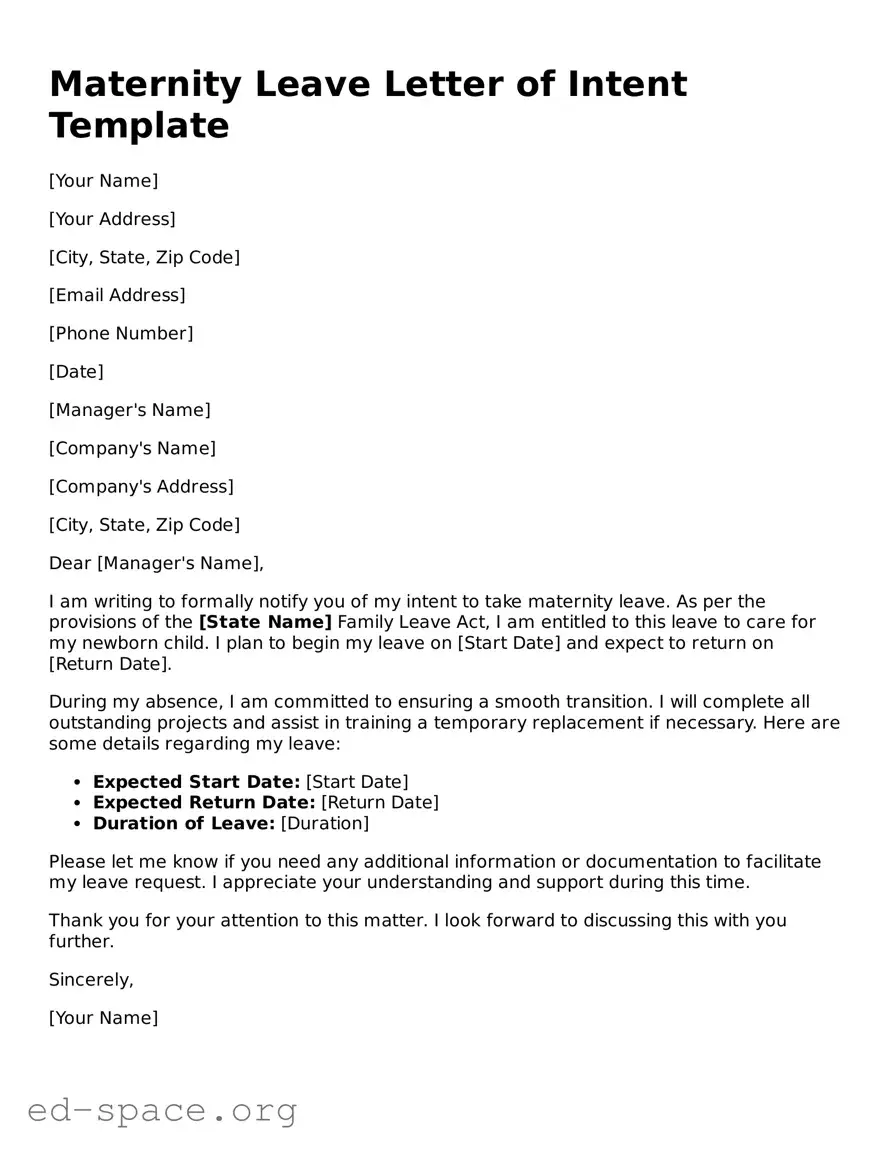
The Maternity Leave Letter of Intent form serves as a crucial document for expecting mothers planning to take maternity leave. This form outlines the employee's intention to request leave, specifying the expected start and end dates. It provides a formal avenue for communication with the employer, ensuring that both parties are aligned on the timeline and expectations surrounding the leave. Additionally, the form often includes sections for detailing the reason for the leave, which may be necessary for compliance with company policies or state laws. By completing this form, employees can initiate the process of securing their maternity leave, allowing for a smoother transition into this significant life event. Understanding the components of this form can help in effectively managing the leave request process, ensuring that all necessary information is communicated clearly and efficiently.
Maternity Leave Letter of Intent Template
[Your Name]
[Your Address]
[City, State, Zip Code]
[Email Address]
[Phone Number]
[Date]
[Manager's Name]
[Company's Name]
[Company's Address]
[City, State, Zip Code]
Dear [Manager's Name],
I am writing to formally notify you of my intent to take maternity leave. As per the provisions of the [State Name] Family Leave Act, I am entitled to this leave to care for my newborn child. I plan to begin my leave on [Start Date] and expect to return on [Return Date].
During my absence, I am committed to ensuring a smooth transition. I will complete all outstanding projects and assist in training a temporary replacement if necessary. Here are some details regarding my leave:
Please let me know if you need any additional information or documentation to facilitate my leave request. I appreciate your understanding and support during this time.
Thank you for your attention to this matter. I look forward to discussing this with you further.
Sincerely,
[Your Name]
| Fact Name | Description |
|---|---|
| Purpose | The Maternity Leave Letter of Intent form is used to formally notify an employer about an employee's intention to take maternity leave. |
| Timing | Employees typically submit this letter at least 30 days before the expected leave date, allowing employers to plan for coverage. |
| State-Specific Regulations | Each state may have different laws governing maternity leave, such as the Family and Medical Leave Act (FMLA) or state-specific family leave laws. |
| Required Information | The form generally requires details like the expected due date, the start and end dates of the leave, and any relevant medical documentation. |
| Confidentiality | Employers must handle the information provided in the letter with care, ensuring that it remains confidential and is only shared with necessary personnel. |
Once you have your Maternity Leave Letter of Intent form ready, it's time to fill it out carefully. This form serves as a formal notification to your employer regarding your upcoming maternity leave. Completing it accurately ensures that your employer can plan accordingly and that you receive the benefits you are entitled to during your time away.
What is a Maternity Leave Letter of Intent form?
The Maternity Leave Letter of Intent form is a document that employees submit to formally notify their employer of their intention to take maternity leave. This form typically outlines the expected start and end dates of the leave, as well as any relevant details regarding the employee's return to work. It serves as a way to communicate plans and ensure that both the employee and employer are on the same page regarding the leave process.
Who needs to complete the Maternity Leave Letter of Intent form?
Any employee who is expecting a child and plans to take maternity leave should complete this form. It is important for employees to inform their employer of their plans as early as possible. This allows the employer to make necessary arrangements for coverage during the employee's absence and ensures that the employee's rights and benefits are protected under maternity leave policies.
When should I submit the Maternity Leave Letter of Intent form?
It is advisable to submit the Maternity Leave Letter of Intent form as soon as you are aware of your pregnancy and your need for maternity leave. Many companies recommend giving at least 30 days’ notice before the start of your leave. This advance notice helps employers prepare for your absence and makes the transition smoother for everyone involved.
What information should I include in the form?
The form should include your name, position, and department, along with the expected start and end dates of your maternity leave. It may also be helpful to provide information about your plans for transitioning your responsibilities during your absence. Additionally, if you have any specific requests or questions regarding your leave, include those in the letter as well.
What happens after I submit the Maternity Leave Letter of Intent form?
After you submit the form, your employer will typically review it and may schedule a meeting to discuss your leave in more detail. They may provide you with information about your rights, benefits, and any necessary paperwork that needs to be completed. It is important to maintain open communication during this process to ensure that all parties are informed and any concerns are addressed.
Can I change my leave dates after submitting the form?
Yes, you can request to change your leave dates after submitting the Maternity Leave Letter of Intent form. However, it is essential to communicate any changes to your employer as soon as possible. Changes may be accommodated depending on the company's policies and staffing needs. Always ensure that you document any modifications to your original request in writing for clarity and record-keeping.
Failing to include the expected due date. This date is crucial for employers to plan for your absence.
Not specifying the duration of the leave. Clearly state how long you intend to be away from work.
Omitting contact information during the leave. Provide a way for your employer to reach you if necessary.
Neglecting to mention any additional leave you may need beyond maternity leave. This helps in planning for coverage.
Using vague language instead of clear, direct statements. Be specific about your intentions and needs.
Not reviewing the company’s maternity leave policy beforehand. Understanding the policy can prevent misunderstandings.
Submitting the form late. Timeliness is important to ensure your leave is approved and arrangements are made.
The Maternity Leave Letter of Intent form is an essential document for employees planning to take maternity leave. However, several other forms and documents often accompany it to ensure a smooth transition and compliance with company policies and legal requirements. Below is a list of these documents, each serving a specific purpose in the maternity leave process.
Each of these documents plays a vital role in the maternity leave process, ensuring that both the employee and employer are aligned on expectations and responsibilities. Properly managing these forms can facilitate a smoother transition into and out of maternity leave, ultimately benefiting both parties.
When filling out the Maternity Leave Letter of Intent form, it's crucial to approach the task with care. Here are some essential do's and don'ts to guide you:
Taking these steps can help ensure a smoother process as you prepare for your maternity leave. Pay attention to the details, and act promptly.
Understanding the Maternity Leave Letter of Intent form is crucial for expecting parents. However, several misconceptions can lead to confusion. Here are ten common misunderstandings about this important document:
Addressing these misconceptions can help ensure a smoother transition into maternity leave. Always consult with your employer’s HR department for specific guidelines and requirements.
When filling out and using the Maternity Leave Letter of Intent form, keep these key takeaways in mind: