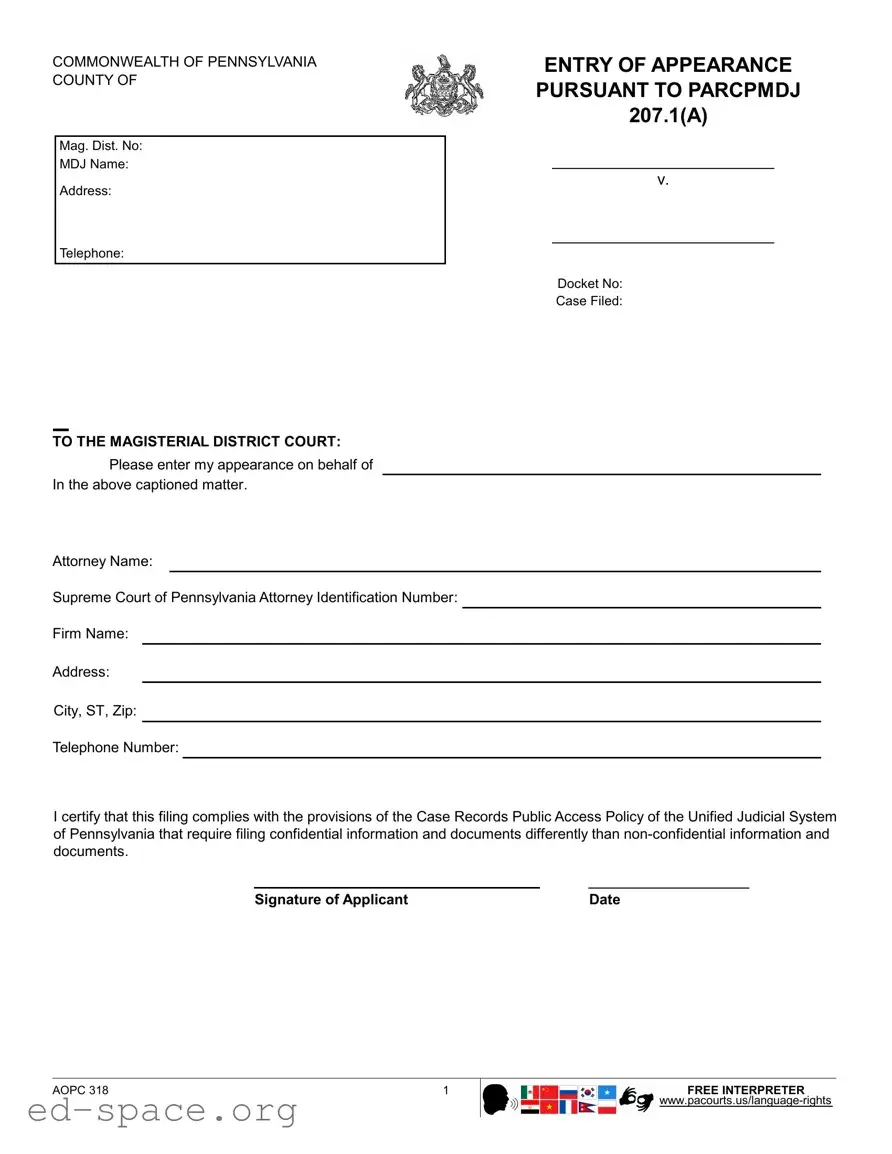
The Magisterial Appearance Pennsylvania form serves as a vital document within the state's judicial system, particularly in the context of civil and criminal matters. This form is used by attorneys to officially notify the Magisterial District Court of their representation in a specific case. It includes essential information such as the names of the parties involved, the docket number, and the attorney's identification details, ensuring that all relevant parties are aware of who is representing whom. Additionally, the form emphasizes compliance with the Case Records Public Access Policy, which mandates the careful handling of confidential information. By signing this document, attorneys affirm their commitment to adhering to these guidelines. The form also provides a space for the attorney's contact information, making communication straightforward and efficient. This straightforward yet crucial document helps streamline the legal process, ensuring that all procedural requirements are met from the outset of a case.

COMMONWEALTH OF PENNSYLVANIA COUNTY OF
Mag. Dist. No:
MDJ Name:
Address:
Telephone:
TO THE MAGISTERIAL DISTRICT COURT:
Please enter my appearance on behalf of In the above captioned matter.
Attorney Name:
ENTRY OF APPEARANCE PURSUANT TO PARCPMDJ 207.1(A)
_________________________
v.
_________________________
Docket No:
Case Filed:
Supreme Court of Pennsylvania Attorney Identification Number:
Firm Name:
Address:
City, ST, Zip:
Telephone Number:
I certify that this filing complies with the provisions of the Case Records Public Access Policy of the Unified Judicial System of Pennsylvania that require filing confidential information and documents differently than
Signature of Applicant |
Date |
AOPC 318 |
1 |
FREE INTERPRETER
| Fact Name | Description |
|---|---|
| Governing Law | The Magisterial Appearance form is governed by the Pennsylvania Rules of Civil Procedure, specifically PARCPMDJ 207.1(A). |
| Purpose | This form allows an attorney to officially enter their appearance on behalf of a client in a magisterial district court case. |
| Required Information | Essential details include the attorney's name, contact information, and the docket number of the case. |
| Filing Compliance | The form certifies compliance with the Case Records Public Access Policy, ensuring proper handling of confidential information. |
| Signature Requirement | A signature from the applicant is mandatory, indicating their acknowledgment and agreement to the contents of the form. |
| Interpreter Services | The form provides information about free interpreter services available through the Pennsylvania court system. |
Once you have gathered the necessary information, you can begin filling out the Magisterial Appearance form. This form is essential for officially entering your appearance in a legal matter. After completing the form, you will submit it to the appropriate Magisterial District Court. Ensure all information is accurate and complete to avoid any delays in processing.
What is the purpose of the Magisterial Appearance form in Pennsylvania?
The Magisterial Appearance form is used to formally notify the Magisterial District Court of an attorney's representation in a case. By submitting this form, the attorney indicates their intention to appear on behalf of a client in a specific legal matter. This is an essential step in ensuring that all parties involved are aware of who is representing whom in court proceedings.
Who needs to fill out the Magisterial Appearance form?
What information is required on the form?
The form requires several key pieces of information. This includes the name of the attorney entering the appearance, the name of the client being represented, the docket number of the case, and the attorney's identification number. Additionally, the attorney must provide their firm name, address, and contact information. Accurate completion of these fields is crucial for the court's records.
Is there a filing fee associated with the Magisterial Appearance form?
No, there is typically no filing fee for submitting the Magisterial Appearance form itself. However, other associated costs may arise depending on the nature of the case or additional filings. It is wise to consult with your attorney regarding any potential fees that may apply in your specific situation.
How does one ensure compliance with confidentiality requirements?
The form includes a certification statement that the filing complies with the Case Records Public Access Policy of the Unified Judicial System of Pennsylvania. Attorneys must ensure that any confidential information is handled appropriately. This may involve filing certain documents separately or in a different manner. It is important to be aware of these requirements to protect sensitive information.
What should I do if I need assistance with the form?
If you need help completing the Magisterial Appearance form, it is best to reach out to your attorney. They can provide guidance and ensure that the form is filled out correctly. Additionally, resources are available through the Pennsylvania courts' website, including information on language rights and interpreter services, should you need further assistance.
Failing to provide the correct Magisterial District Number. This number is crucial for identifying the appropriate court.
Omitting the Attorney Identification Number. This number is essential for verifying the attorney's credentials.
Not including the correct Docket Number. Each case has a unique identifier, and inaccuracies can lead to delays.
Neglecting to sign the form. A signature is mandatory for the submission to be considered valid.
Using an outdated version of the form. Always ensure you are using the most current version to avoid issues.
Failing to provide a complete address for both the attorney and the firm. Incomplete addresses can hinder communication.
Not certifying compliance with the Case Records Public Access Policy. This certification is necessary to protect confidential information.
Leaving out the case filed date. This date is important for tracking the timeline of the case.
Providing incorrect or incomplete contact information. Accurate telephone numbers are essential for court communication.
Failing to check for spelling errors in names and addresses. Such errors can lead to complications in the court process.
When navigating the legal system in Pennsylvania, several forms and documents accompany the Magisterial Appearance form. Each document serves a specific purpose in the legal process, ensuring that all parties are properly informed and that proceedings can move forward efficiently. Below is a list of commonly used forms alongside the Magisterial Appearance form.
Understanding these documents can significantly aid individuals in managing their legal affairs. Each form plays a vital role in ensuring that the legal process is transparent and fair, allowing for effective communication between all parties involved.
The Magisterial Appearance form in Pennsylvania serves a specific purpose in the legal process. Several other documents share similarities with this form, each playing a role in court proceedings. Here are six such documents:
When filling out the Magisterial Appearance form in Pennsylvania, it's important to follow certain guidelines to ensure accuracy and compliance. Here are seven things you should and shouldn't do:
Following these guidelines will help ensure that your appearance is properly recorded and that you comply with the necessary legal standards.
Misconceptions about the Magisterial Appearance Pennsylvania form can lead to confusion. Here are six common misunderstandings:
When filling out the Magisterial Appearance form in Pennsylvania, keep the following key takeaways in mind:
By following these steps, you can ensure a smoother process when filing your appearance in court.