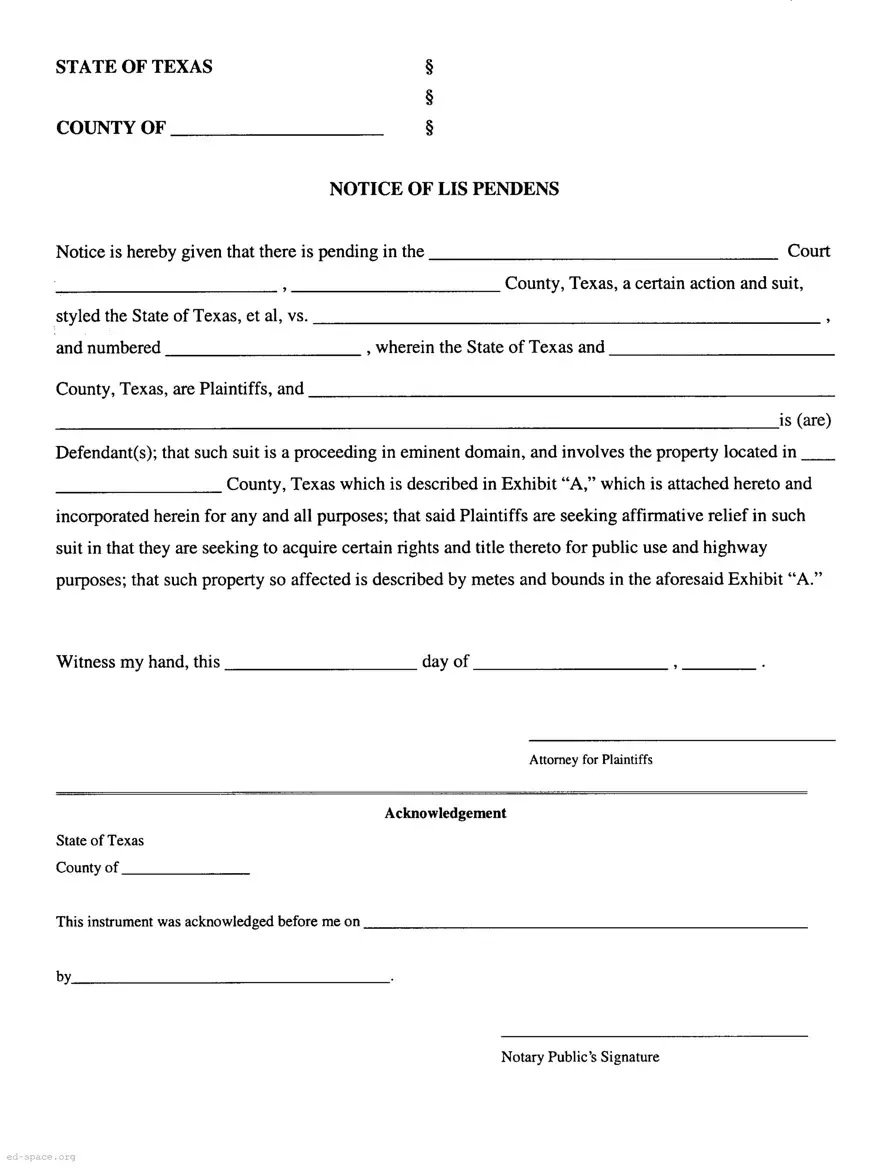
In Texas, the Lis Pendens form serves as a crucial legal notice that alerts potential buyers and interested parties about ongoing litigation concerning a specific property. This notice indicates that a legal action is pending, specifically in cases involving eminent domain, where the state seeks to acquire private property for public use, such as highway construction. The form outlines essential details, including the names of the parties involved, the court where the case is filed, and a description of the property in question, which is typically attached as an exhibit. By filing this notice, the plaintiffs aim to protect their interests and ensure that any subsequent transactions regarding the property are aware of the pending legal claims. The form not only serves as a warning but also establishes a public record of the dispute, thereby safeguarding the rights of the parties involved. This proactive step is vital for maintaining transparency in real estate transactions and helps prevent potential conflicts arising from unawareness of legal proceedings.
| Fact Name | Description |
|---|---|
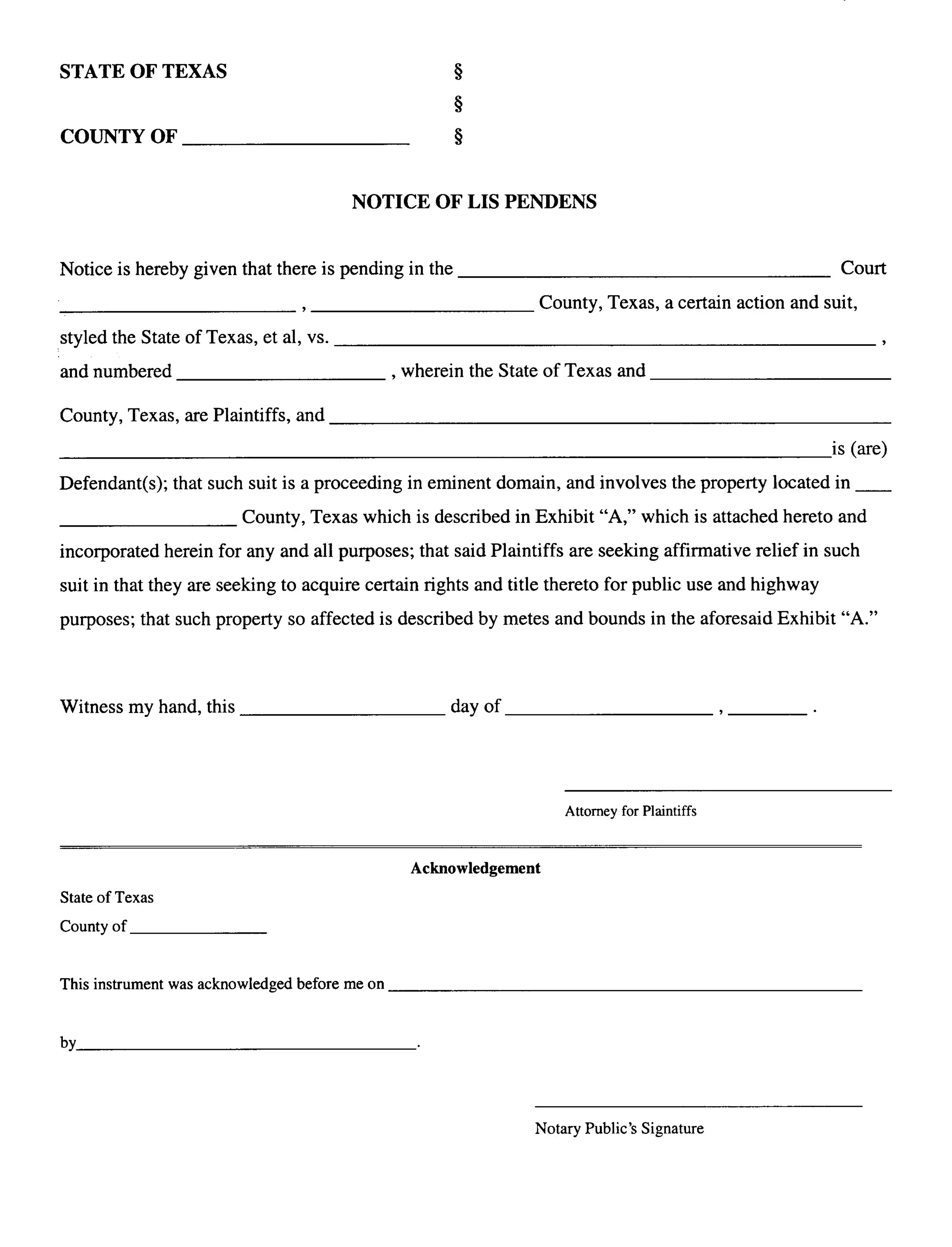
| Purpose | The Lis Pendens form serves as a public notice that a legal action is pending regarding a specific property. |
| Governing Law | This form is governed by Texas Property Code, Section 12.007. |
| Parties Involved | The form identifies the plaintiffs and defendants involved in the legal action. |
| Property Description | The property affected by the legal action is described in detail in Exhibit "A" attached to the form. |
| Type of Action | This notice is typically used in eminent domain proceedings, where the government seeks to acquire private property for public use. |
| Filing Location | The Lis Pendens must be filed in the county where the property is located. |
| Legal Effect | Once filed, the notice provides a warning to potential buyers or lenders that the property is subject to a legal dispute. |
| Signature Requirement | The form must be signed by the attorney for the plaintiffs and acknowledged by a notary public. |
Completing the Lis Pendens Texas form requires careful attention to detail. This document serves as a public notice of a pending legal action affecting a property. Ensure all information is accurate and complete to avoid any delays in processing.
After completing the form, it is important to file it with the appropriate court and ensure that all parties involved receive proper notice. Timely filing can help protect the rights associated with the property in question.
What is a Lis Pendens in Texas?
A Lis Pendens is a legal notice that indicates a lawsuit has been filed concerning a specific piece of property. It serves to inform potential buyers or interested parties that there is a pending legal claim affecting the property. This notice is crucial as it can affect the property’s marketability and any future transactions involving the property.
Why would someone file a Lis Pendens?
A Lis Pendens is typically filed in cases where a party seeks to assert a claim against a property, such as in eminent domain actions or disputes over property ownership. By filing this notice, the party ensures that anyone interested in the property is aware of the ongoing legal proceedings that may impact their rights or interests.
How do I file a Lis Pendens in Texas?
To file a Lis Pendens in Texas, you need to prepare the notice and include specific details such as the court where the lawsuit is pending, the names of the parties involved, and a description of the property affected. After preparing the document, you must file it with the county clerk's office in the county where the property is located. It’s advisable to consult with a legal professional to ensure compliance with all requirements.
What information must be included in the Lis Pendens form?
The Lis Pendens form must include the court's name, the parties involved in the lawsuit, the case number, and a description of the property in question. Additionally, it should state the nature of the lawsuit and the relief sought. Accurate details are essential to ensure that the notice is effective and legally binding.
What happens after a Lis Pendens is filed?
Once a Lis Pendens is filed, it becomes a matter of public record. This means that anyone searching for information about the property will see the notice. The presence of a Lis Pendens can deter potential buyers, as it indicates that there are legal issues that could affect the property’s ownership or use.
Can a Lis Pendens be removed?
Yes, a Lis Pendens can be removed. This typically occurs when the underlying lawsuit is resolved, either through a court decision or a settlement. The party who filed the Lis Pendens can also voluntarily withdraw it. To remove the notice, a new document must be filed with the county clerk's office, stating that the Lis Pendens is no longer valid.
How long does a Lis Pendens last in Texas?
A Lis Pendens remains in effect as long as the lawsuit is pending. If the case is resolved, the Lis Pendens should be removed promptly. In Texas, if the lawsuit is not resolved within a certain timeframe, it may be necessary to take further action to maintain the validity of the Lis Pendens.
What are the consequences of not filing a Lis Pendens?
If a party fails to file a Lis Pendens when there is a pending lawsuit affecting property, they risk losing their claim to the property. Without this notice, potential buyers may not be aware of the legal issues, and the party may have difficulty enforcing their rights in the future. Filing a Lis Pendens is a protective measure to safeguard interests in the property.
Incomplete Information: Failing to fill in all required fields can lead to delays or rejections. Ensure that every section is completed accurately.
Incorrect Court Name: Listing the wrong court can invalidate the notice. Double-check the court name and ensure it matches the jurisdiction where the action is pending.
Missing Exhibit “A”: The property description must be included as Exhibit “A.” Omitting this can create confusion regarding the property involved in the case.
Improper Notarization: The document must be properly acknowledged by a notary public. Ensure that the notary's signature and seal are present to validate the document.
Incorrect Party Names: Ensure that the names of all parties involved are spelled correctly and match official records. Errors can lead to complications in the legal process.
Failure to File Timely: Submitting the Lis Pendens after the deadline can jeopardize your rights. Be aware of any time limits associated with filing.
Not Keeping Copies: Always retain copies of the filed Lis Pendens for your records. This can be crucial for future reference or if any disputes arise.
When dealing with a Lis Pendens in Texas, several other forms and documents may be required to support the legal process. Each of these documents plays a crucial role in ensuring that all parties involved are informed and that the legal proceedings are properly documented. Below is a list of common forms associated with a Lis Pendens in Texas.
Understanding these documents can help individuals navigate the complexities of legal proceedings more effectively. Each form serves a specific purpose and contributes to the overall process, ensuring that all parties are aware of their rights and obligations. It is essential to handle these documents carefully to protect your interests and those of others involved.
The Lis Pendens form in Texas serves a specific purpose in legal proceedings, particularly in property disputes. However, several other documents share similarities with it, each playing a unique role in legal contexts. Here’s a look at seven such documents:
Understanding these documents can help individuals navigate property-related legal matters more effectively. Each serves to protect the interests of parties involved in various legal actions, ensuring that all stakeholders are aware of pending claims or disputes.
When filling out the Lis Pendens Texas form, it is important to follow specific guidelines to ensure accuracy and compliance. Here are some dos and don'ts to consider:
Understanding the Lis Pendens form in Texas can be crucial for anyone involved in real estate or legal disputes. However, several misconceptions often cloud the clarity of this important document. Here are five common misunderstandings:
Being aware of these misconceptions can help individuals navigate the complexities surrounding property disputes and legal actions more effectively.
When dealing with the Lis Pendens form in Texas, it’s important to understand its purpose and how to fill it out correctly. Here are some key takeaways:
By keeping these points in mind, you can effectively navigate the process of filling out and using the Lis Pendens form in Texas.