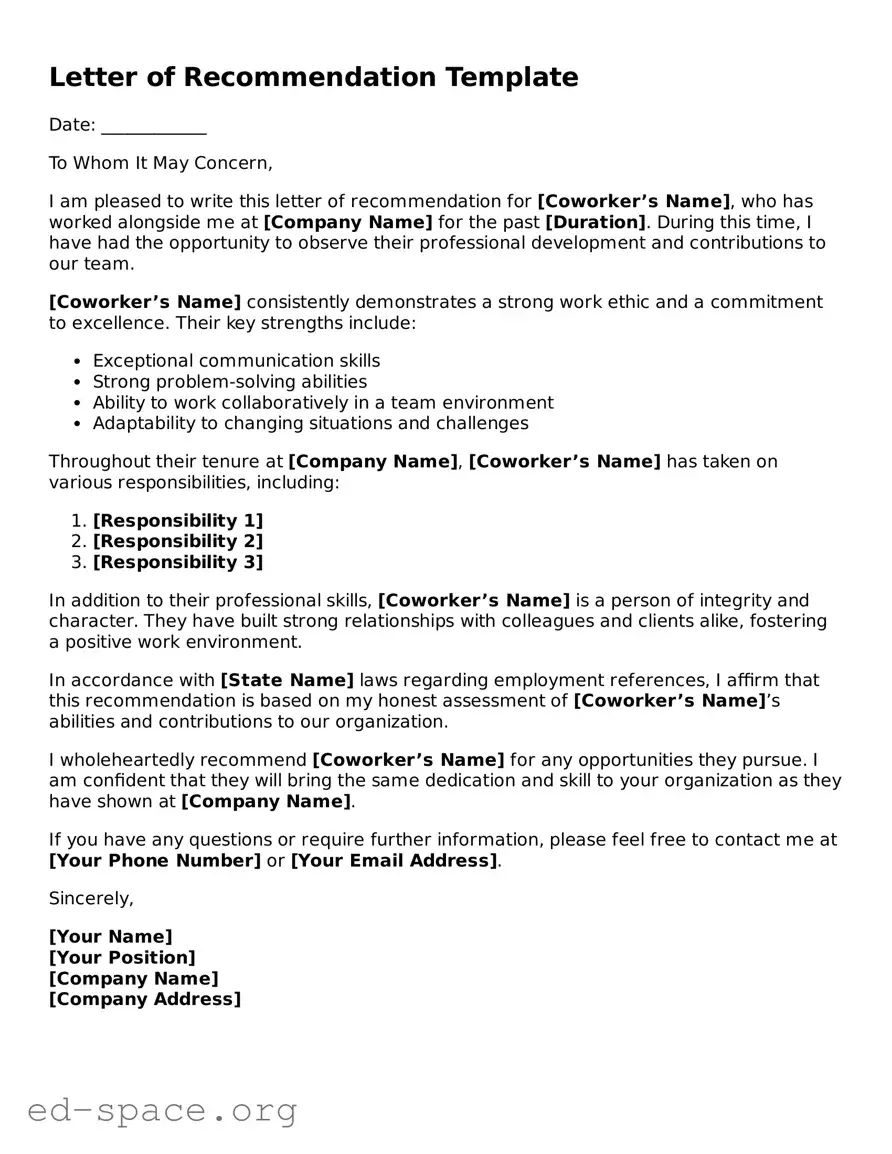
When it comes to advancing in a career or seeking new job opportunities, a Letter of Recommendation can make a significant difference. This document serves as a powerful endorsement from a colleague, highlighting an individual's skills, work ethic, and accomplishments. A well-crafted Letter of Recommendation for a coworker not only showcases their strengths but also provides insight into their character and contributions to the workplace. The form typically includes key sections such as the recommender's information, the recipient's details, and a structured format for detailing specific examples of the coworker's achievements and abilities. Additionally, it may offer a space for personal anecdotes that illustrate the coworker's impact on the team and organization. By utilizing this form, both the recommender and the recipient can ensure that the letter is comprehensive, professional, and tailored to the intended purpose, ultimately enhancing the coworker's prospects in their career journey.
Letter of Recommendation Template
Date: ____________
To Whom It May Concern,
I am pleased to write this letter of recommendation for [Coworker’s Name], who has worked alongside me at [Company Name] for the past [Duration]. During this time, I have had the opportunity to observe their professional development and contributions to our team.
[Coworker’s Name] consistently demonstrates a strong work ethic and a commitment to excellence. Their key strengths include:
Throughout their tenure at [Company Name], [Coworker’s Name] has taken on various responsibilities, including:
In addition to their professional skills, [Coworker’s Name] is a person of integrity and character. They have built strong relationships with colleagues and clients alike, fostering a positive work environment.
In accordance with [State Name] laws regarding employment references, I affirm that this recommendation is based on my honest assessment of [Coworker’s Name]’s abilities and contributions to our organization.
I wholeheartedly recommend [Coworker’s Name] for any opportunities they pursue. I am confident that they will bring the same dedication and skill to your organization as they have shown at [Company Name].
If you have any questions or require further information, please feel free to contact me at [Your Phone Number] or [Your Email Address].
Sincerely,
[Your Name]
[Your Position]
[Company Name]
[Company Address]
| Fact Name | Description |
|---|---|
| Purpose | The Letter of Recommendation for Coworker form is used to provide a formal endorsement of a colleague's skills, work ethic, and contributions to the workplace. |
| Format | This document typically follows a standard business letter format, including the date, recipient's address, salutation, body, and closing. |
| Content Requirements | It should include specific examples of the coworker's accomplishments, skills, and personal attributes that make them a strong candidate for future opportunities. |
| Signature | The form must be signed by the person providing the recommendation, indicating authenticity and personal endorsement. |
| State-Specific Variations | Some states may have specific guidelines or preferences for the content or format of recommendation letters; however, there is no uniform governing law. |
| Confidentiality | While the form is generally shared with potential employers, it is advisable to maintain confidentiality regarding sensitive information about the coworker. |
Completing the Letter of Recommendation for Coworker form requires careful attention to detail. This form is an opportunity to provide insight into a colleague's skills, work ethic, and contributions. Follow the steps below to ensure the form is filled out accurately and effectively.
Once the form is completed, it should be submitted according to the instructions provided, ensuring it reaches the appropriate recipient in a timely manner.
What is a Letter of Recommendation for Coworker form?
A Letter of Recommendation for Coworker form is a document used to formally endorse a colleague's skills, work ethic, and contributions in a professional setting. This letter is often requested when a coworker is applying for a new job or seeking a promotion, and it serves to provide insight into their abilities and character from someone who has worked closely with them.
Who should write a Letter of Recommendation for Coworker?
Typically, a supervisor, manager, or a peer who has collaborated with the individual can write this letter. The writer should have a good understanding of the coworker's work performance, strengths, and overall contributions to the team. It's important that the recommender can provide specific examples to support their claims.
What should be included in the Letter of Recommendation?
The letter should include the recommender's relationship to the coworker, specific skills and accomplishments, examples of successful projects or tasks, and an overall assessment of the coworker's character and work ethic. Additionally, it should conclude with a strong endorsement of the coworker for the position they are seeking.
How long should the Letter of Recommendation be?
A well-crafted Letter of Recommendation typically ranges from one to two pages. It should be concise yet detailed enough to provide a clear picture of the coworker's qualifications. Aim for clarity and relevance, avoiding unnecessary fluff.
Is there a specific format for the Letter of Recommendation?
While there is no strict format, a professional layout is recommended. Start with the date, followed by the recommender's contact information, the recipient's information, a formal greeting, the body of the letter, and a closing signature. Using a standard font and size ensures readability.
Can I use a template for the Letter of Recommendation?
Yes, using a template can be helpful. It provides a structure to follow, ensuring that all necessary components are included. However, it's crucial to personalize the letter with specific details about the coworker to make it more impactful and genuine.
How should I ask someone for a Letter of Recommendation?
When requesting a Letter of Recommendation, approach the person in a respectful and professional manner. Explain why you are seeking their endorsement and provide context about the position you are applying for. Giving them ample time to write the letter is also considerate, as it allows them to craft a thoughtful response.
What if the coworker has not performed well?
If a coworker has not performed well, it may be more appropriate to decline the request for a recommendation. Writing a letter that lacks positive attributes can harm both the recommender's credibility and the coworker's chances. It's better to be honest and supportive in other ways, such as offering constructive feedback or suggesting they seek a recommendation from someone else.
How does a Letter of Recommendation impact job applications?
A strong Letter of Recommendation can significantly enhance a job application. It provides potential employers with third-party validation of the candidate's skills and experiences. A well-written letter can set a candidate apart from others, reinforcing their qualifications and making a positive impression on hiring managers.
Failing to provide specific examples of the coworker’s achievements can weaken the recommendation. General praise lacks the impact of detailed illustrations of their skills and contributions.
Using vague language or clichés can make the letter feel insincere. Phrases like “great team player” or “hard worker” do not provide meaningful insights into the coworker’s capabilities.
Neglecting to tailor the recommendation to the specific job or opportunity can diminish its relevance. Each position may require different skills and attributes.
Overlooking the importance of structure can lead to a disorganized letter. A clear introduction, body, and conclusion help convey the message effectively.
Including too much personal information can detract from the professional focus of the letter. Recommendations should center on work-related qualities and accomplishments.
Forgetting to proofread for grammar and spelling errors can undermine the credibility of the recommendation. A polished letter reflects attention to detail.
Using an inappropriate tone can misrepresent the relationship between the recommender and the coworker. Maintaining professionalism is essential.
Being overly critical or including negative comments can harm the coworker’s chances. Focus should remain on positive attributes and contributions.
Failing to mention relevant skills or experiences can leave out important information. Highlighting specific competencies can enhance the recommendation’s effectiveness.
Not signing the letter or providing contact information can limit its usefulness. A signature adds authenticity, while contact details allow for follow-up questions.
When preparing a Letter of Recommendation for a coworker, several other documents may complement the recommendation and provide a more comprehensive view of the individual's qualifications and character. Below is a list of forms and documents that are often used alongside the recommendation letter.
Including these documents alongside a Letter of Recommendation can create a well-rounded picture of the coworker’s qualifications. Each piece of information adds depth and context, enhancing the overall impact of the recommendation.
When filling out a Letter of Recommendation for a coworker, there are several important guidelines to follow. Here’s a list of things you should and shouldn’t do:
Following these guidelines will help create a strong and effective letter of recommendation.
Many people have misunderstandings about the Letter of Recommendation for Coworker form. Here are nine common misconceptions:
While often associated with job searches, this form can also be used for promotions, internships, and educational opportunities.
Peers and colleagues can also provide valuable insights about a coworker's skills and contributions.
A personal touch can make the recommendation more genuine and relatable.
A concise letter that clearly highlights strengths is often more impactful than a lengthy one.
Even well-known individuals benefit from personalized recommendations that detail specific strengths.
Constructive feedback can provide a balanced view and enhance credibility.
Soft skills, teamwork, and character traits are equally important to highlight.
Each letter should be tailored to the specific opportunity and individual being recommended.
Recommendations can and should be updated as the individual grows and takes on new roles.
When filling out and using the Letter of Recommendation for Coworker form, several important considerations can enhance the effectiveness of the recommendation. Below are key takeaways to keep in mind: