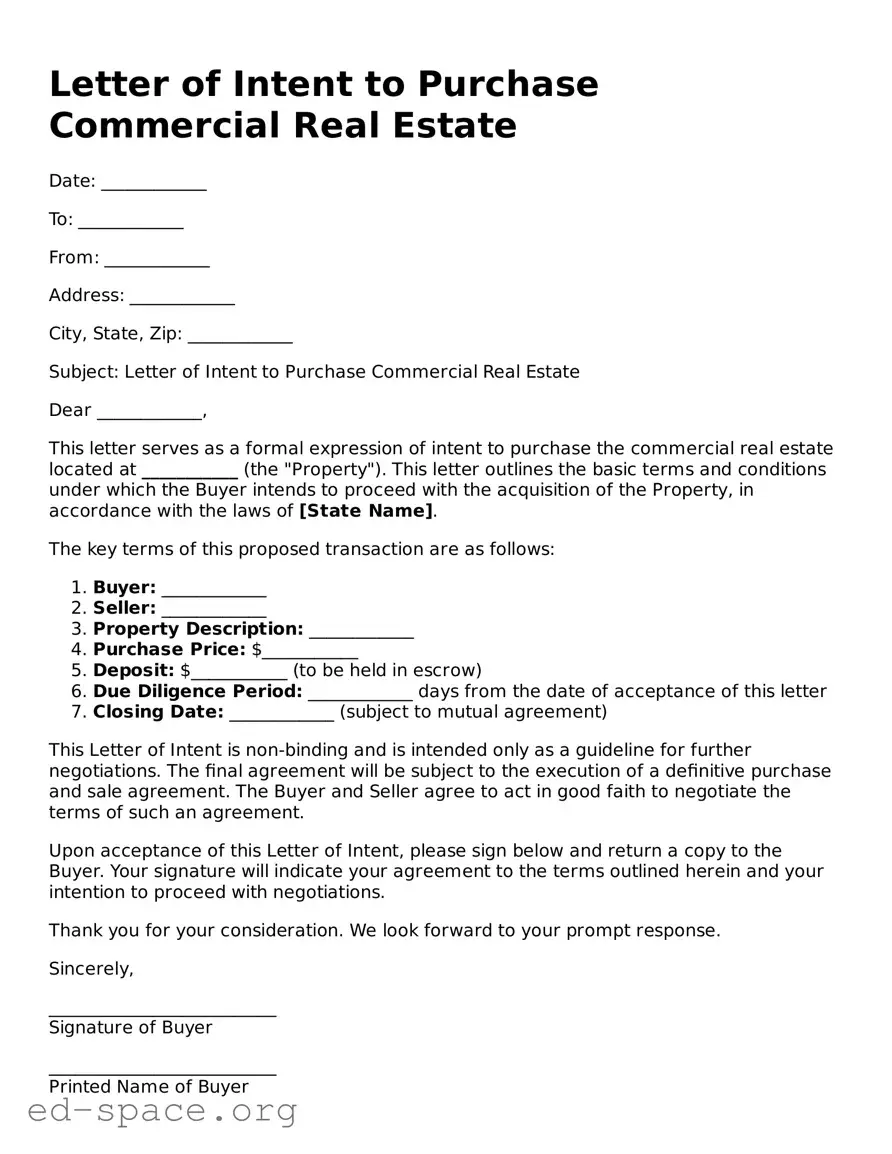
When considering the purchase of commercial real estate, a Letter of Intent (LOI) serves as a crucial first step in the negotiation process. This document outlines the key terms and conditions that both the buyer and seller agree to discuss further. It typically includes important details such as the purchase price, property description, and proposed closing date. Additionally, the LOI may address contingencies, such as financing and inspections, which are essential for protecting the interests of the buyer. While the Letter of Intent is not a legally binding contract, it demonstrates a serious commitment to the transaction and sets the stage for drafting a formal purchase agreement. Understanding the elements of this document can help both parties navigate the complexities of commercial real estate transactions with clarity and confidence.
Letter of Intent to Purchase Commercial Real Estate
Date: ____________
To: ____________
From: ____________
Address: ____________
City, State, Zip: ____________
Subject: Letter of Intent to Purchase Commercial Real Estate
Dear ____________,
This letter serves as a formal expression of intent to purchase the commercial real estate located at ___________ (the "Property"). This letter outlines the basic terms and conditions under which the Buyer intends to proceed with the acquisition of the Property, in accordance with the laws of [State Name].
The key terms of this proposed transaction are as follows:
This Letter of Intent is non-binding and is intended only as a guideline for further negotiations. The final agreement will be subject to the execution of a definitive purchase and sale agreement. The Buyer and Seller agree to act in good faith to negotiate the terms of such an agreement.
Upon acceptance of this Letter of Intent, please sign below and return a copy to the Buyer. Your signature will indicate your agreement to the terms outlined herein and your intention to proceed with negotiations.
Thank you for your consideration. We look forward to your prompt response.
Sincerely,
__________________________
Signature of Buyer
__________________________
Printed Name of Buyer
Accepted and Agreed:
__________________________
Signature of Seller
__________________________
Printed Name of Seller
| Fact Name | Description |
|---|---|
| Purpose | A Letter of Intent (LOI) outlines the preliminary agreement between a buyer and seller for commercial real estate. |
| Non-Binding | The LOI is typically non-binding, meaning it does not create a legal obligation to complete the purchase. |
| Key Terms | It includes essential terms such as purchase price, property description, and proposed closing date. |
| Confidentiality | Many LOIs contain confidentiality clauses to protect sensitive information during negotiations. |
| Due Diligence | The LOI often specifies a due diligence period, allowing the buyer to inspect the property and assess risks. |
| State-Specific Forms | LOIs may vary by state. For example, California's LOI is governed by California Civil Code. |
| Negotiation Tool | The LOI serves as a negotiation tool, helping both parties clarify their intentions before formalizing the contract. |
| Expiration Date | It often includes an expiration date, after which the terms may no longer be valid. |
| Financing Contingency | Buyers can include a financing contingency, ensuring they can secure funds before the purchase is finalized. |
| Legal Review | While not required, having legal counsel review the LOI is advisable to ensure clarity and protect interests. |
Completing the Letter of Intent to Purchase Commercial Real Estate form is an important step in the process of acquiring property. This document outlines your intentions and sets the stage for further negotiations. Once you have filled out the form, you will be ready to move forward with discussions and potentially drafting a more formal purchase agreement.
After completing the form, review it for accuracy before sending it to the seller. Ensure that all information is correct and reflects your intentions clearly. This will help facilitate a smooth negotiation process.
What is a Letter of Intent to Purchase Commercial Real Estate?
A Letter of Intent (LOI) to purchase commercial real estate is a document that outlines the preliminary terms and conditions under which a buyer intends to purchase a property. It serves as a starting point for negotiations and provides a framework for the eventual purchase agreement. While it is not legally binding, it demonstrates the buyer's serious interest in the property and can help to facilitate discussions between the buyer and seller.
What key elements should be included in the Letter of Intent?
Essential elements of a Letter of Intent include the identification of the property, the proposed purchase price, and the intended timeline for the transaction. Additionally, it should outline any contingencies, such as financing or inspections, that must be satisfied before the sale can proceed. Including terms regarding earnest money deposits and the closing date can also be beneficial, as these details help clarify the buyer's intentions and expectations.
Is a Letter of Intent legally binding?
Generally, a Letter of Intent is not legally binding; however, certain sections may create enforceable obligations, especially if they pertain to confidentiality or exclusivity. It is important for both parties to clearly understand which aspects of the LOI are binding and which are not. Consulting with a legal professional can provide clarity and ensure that the LOI accurately reflects the intentions of both the buyer and the seller.
How does a Letter of Intent benefit both buyers and sellers?
A Letter of Intent benefits buyers by allowing them to outline their terms and demonstrate their commitment to the transaction. For sellers, it provides an opportunity to gauge the seriousness of potential buyers and understand their expectations. This initial document can streamline negotiations and help both parties identify any issues before entering into a formal purchase agreement. By fostering open communication, the LOI can lead to a smoother transaction process.
Incomplete Information: Failing to provide all necessary details about the buyer, seller, and property can lead to misunderstandings. Each section must be filled out accurately.
Omitting Key Terms: Important terms such as purchase price, contingencies, and closing date should not be overlooked. These terms establish the framework for negotiations.
Neglecting to Include Contingencies: Not specifying contingencies can expose buyers to risks. Common contingencies include financing, inspections, and zoning approvals.
Using Vague Language: Ambiguities can create confusion. Clear and precise language helps ensure that all parties have the same understanding of the agreement.
Ignoring Local Laws and Regulations: Each jurisdiction may have specific requirements for real estate transactions. Familiarity with local laws is crucial to avoid legal issues.
Failing to Review the Document: Skipping a thorough review before submission can lead to mistakes. A careful examination helps catch errors and ensures completeness.
Not Seeking Professional Assistance: Attempting to navigate the process without expert guidance can be detrimental. Consulting with a real estate attorney or broker can provide valuable insights.
A Letter of Intent to Purchase Commercial Real Estate is often accompanied by various other documents that help clarify the terms and conditions of the transaction. These documents serve different purposes, from outlining specific terms to formalizing agreements between parties. Below is a list of commonly used forms and documents in conjunction with a Letter of Intent.
These documents work together to ensure a smooth transaction process in commercial real estate. Each serves a specific purpose, helping both buyers and sellers understand their rights and obligations while protecting their interests.
The Letter of Intent (LOI) to Purchase Commercial Real Estate serves as an important preliminary document in real estate transactions. It outlines the key terms and intentions of the parties involved before moving forward with a formal contract. There are several other documents that share similarities with the LOI, each serving a unique purpose in the realm of real estate and business negotiations. Below is a list of eight such documents:
Each of these documents plays a crucial role in the process of negotiating and finalizing real estate transactions. Understanding their similarities and differences can help parties navigate the complexities of commercial real estate deals more effectively.
When filling out a Letter of Intent to Purchase Commercial Real Estate, it is essential to approach the task with care. Here are ten important dos and don’ts to consider:
When considering the Letter of Intent (LOI) to Purchase Commercial Real Estate, it is essential to approach the process with clarity and understanding. Here are key takeaways to keep in mind:
By keeping these points in mind, you can navigate the process of purchasing commercial real estate more effectively.