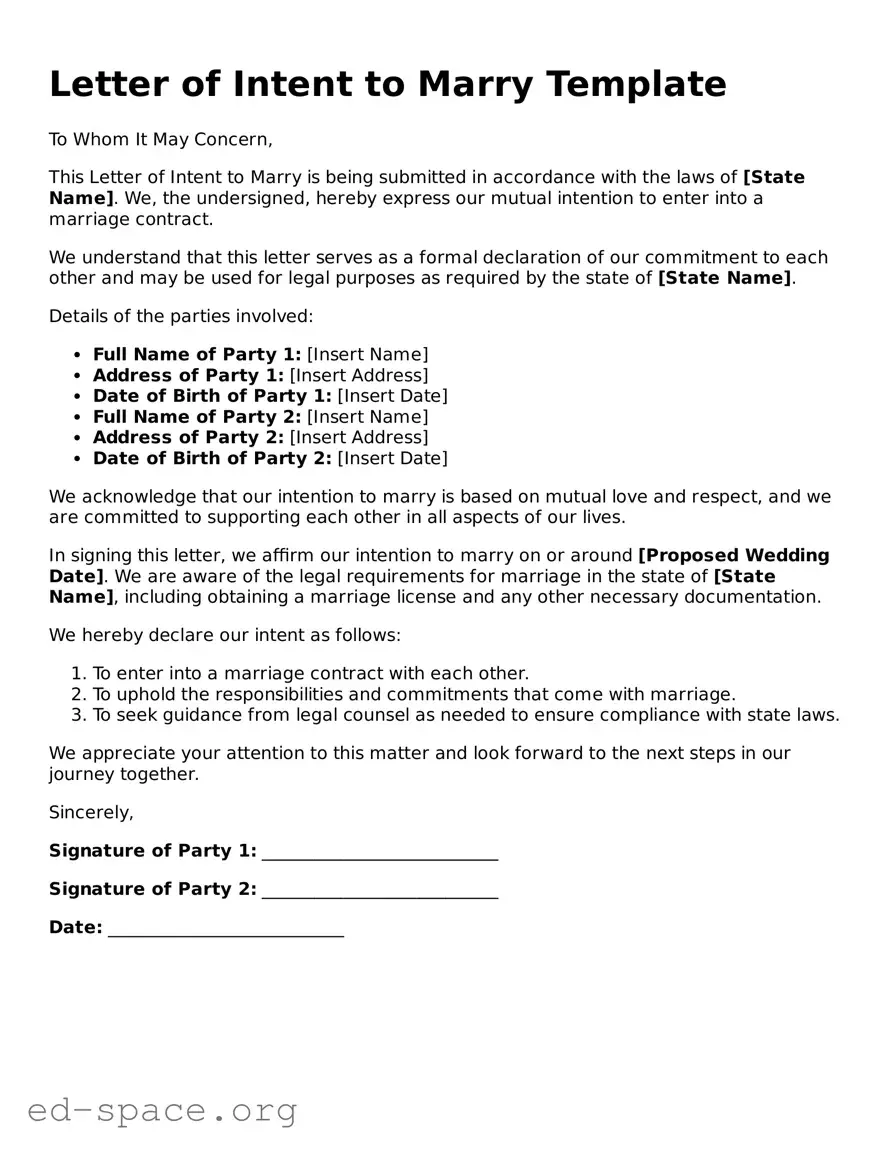
When two individuals decide to take a significant step toward marriage, a Letter of Intent to Marry can serve as an important document in their journey. This form typically outlines the mutual agreement between both parties to enter into a marital relationship, reflecting their commitment and intentions. It often includes essential details such as the names of the individuals, their intentions regarding marriage, and sometimes even the proposed timeline for the wedding. While it may not hold the same legal weight as a marriage license, the Letter of Intent to Marry can provide clarity and serve as a symbolic gesture of commitment. Couples may choose to create this document to formalize their intentions, ensuring that both partners are on the same page as they move forward. Additionally, it can help in discussions about future plans, finances, and family considerations, fostering open communication during this exciting time. Overall, this form can act as a foundation for the relationship, reinforcing the commitment to one another as they prepare for a shared future.
Letter of Intent to Marry Template
To Whom It May Concern,
This Letter of Intent to Marry is being submitted in accordance with the laws of [State Name]. We, the undersigned, hereby express our mutual intention to enter into a marriage contract.
We understand that this letter serves as a formal declaration of our commitment to each other and may be used for legal purposes as required by the state of [State Name].
Details of the parties involved:
We acknowledge that our intention to marry is based on mutual love and respect, and we are committed to supporting each other in all aspects of our lives.
In signing this letter, we affirm our intention to marry on or around [Proposed Wedding Date]. We are aware of the legal requirements for marriage in the state of [State Name], including obtaining a marriage license and any other necessary documentation.
We hereby declare our intent as follows:
We appreciate your attention to this matter and look forward to the next steps in our journey together.
Sincerely,
Signature of Party 1: ___________________________
Signature of Party 2: ___________________________
Date: ___________________________
| Fact Name | Description |
|---|---|
| Definition | A Letter of Intent to Marry is a document expressing the intention of two individuals to enter into marriage. |
| Purpose | This form can help clarify intentions and may be used in legal or financial discussions. |
| Not Legally Binding | While it expresses intent, it does not create a legally binding contract for marriage. |
| State Variations | Different states may have specific requirements or formats for this document. |
| Governing Law | In California, for example, family law governs the use of Letters of Intent to Marry. |
| Common Uses | Couples often use it to discuss prenuptial agreements or financial arrangements. |
| Emotional Significance | It can serve as a romantic gesture, symbolizing commitment before marriage. |
| Notarization | Some couples choose to have the document notarized to add a level of formality. |
| Personalization | Couples can customize the letter to reflect their unique relationship and intentions. |
| Consultation Recommended | It's advisable to consult with a legal professional to understand implications fully. |
After obtaining the Letter of Intent to Marry form, you will need to complete it accurately. This form is essential for documenting your intention to marry and may be required by your local jurisdiction. Follow these steps to fill it out correctly.
Once the form is filled out, review it for any errors or omissions. After confirming that all information is correct, submit it as required by your local jurisdiction.
What is a Letter of Intent to Marry?
A Letter of Intent to Marry is a formal document that expresses the intention of two individuals to enter into a marriage. While it is not a legally binding contract, it serves as a declaration of commitment and can be used to outline any agreements or understandings between the parties involved. This letter can help clarify expectations and intentions as the couple prepares for marriage.
Is the Letter of Intent to Marry legally binding?
No, the Letter of Intent to Marry is not legally binding. It is primarily a personal declaration that signifies the couple's commitment to each other. While it can outline certain agreements, it does not hold the same legal weight as a marriage certificate or other legal documents. Couples should consult legal professionals if they require formal contracts regarding their relationship.
Do I need to have a Letter of Intent to Marry to get married?
No, you do not need a Letter of Intent to Marry to legally marry. The only requirements for marriage typically include obtaining a marriage license and fulfilling any other legal obligations set by your state. However, some couples choose to create this letter to express their intentions and solidify their commitment before the wedding.
What should be included in a Letter of Intent to Marry?
A Letter of Intent to Marry may include several key elements. Couples often start with a statement of intent, followed by personal reflections on their relationship. It can also outline any agreements regarding finances, living arrangements, or shared responsibilities. Additionally, couples may choose to include a timeline for their marriage plans and any other pertinent details that reflect their unique relationship.
Can the Letter of Intent to Marry be modified after it is written?
Yes, the Letter of Intent to Marry can be modified at any time. As relationships evolve, so too may the intentions and agreements outlined in the letter. Couples should communicate openly about any changes they wish to make and can revise the document to reflect their current understanding and commitments.
Is it necessary to have witnesses sign the Letter of Intent to Marry?
No, it is not necessary to have witnesses sign the Letter of Intent to Marry. The document is primarily a personal declaration between the two individuals involved. However, some couples may choose to have a trusted friend or family member sign as a witness to add a level of formality or support to the commitment they are making to each other.
How can I ensure that my Letter of Intent to Marry is meaningful?
To ensure that the Letter of Intent to Marry is meaningful, take the time to reflect on your relationship and what marriage means to both of you. Use heartfelt language and be honest about your feelings and intentions. Consider discussing the letter together, which can help deepen your connection and clarify your shared goals. Personal touches, such as including memories or future aspirations, can also enhance its significance.
Where should I keep my Letter of Intent to Marry?
It is advisable to keep the Letter of Intent to Marry in a safe place where both partners can access it easily. Some couples choose to keep it in a shared location, such as a filing cabinet or a safe, while others may want to store it in a personal keepsake box. The important thing is that both individuals know where it is and can revisit it as needed, especially as they approach their wedding day.
Not providing complete personal information. Ensure all names, addresses, and contact details are accurate and complete.
Forgetting to include witness information. Many forms require details about witnesses who will sign the document.
Failing to sign the form. It's essential that both parties sign the document to validate it.
Not checking for required documents. Some jurisdictions may require additional paperwork to accompany the form.
Using outdated forms. Always ensure you are using the most current version of the Letter of Intent to Marry form.
Overlooking the need for notarization. In some cases, a notary public may need to witness the signing of the document.
Misunderstanding the purpose of the form. This document is a formal declaration of intent, not a marriage license.
Ignoring local laws. Each state may have different requirements, so it's important to check local regulations.
When preparing to submit a Letter of Intent to Marry, there are several other forms and documents that may be required or helpful in the process. These documents can provide additional information and clarify intentions, ensuring a smoother experience for all parties involved. Below is a list of commonly used forms and documents that accompany the Letter of Intent to Marry.
Gathering these documents can help streamline the process of getting married. Ensure that all forms are completed accurately and submitted on time to avoid any delays. Proper preparation sets a positive tone for the upcoming marriage.
The Letter of Intent to Marry form shares similarities with several other documents. Each of these documents serves a specific purpose in relation to relationships, commitments, or legal agreements. Below is a list of eight documents that are comparable to the Letter of Intent to Marry:
When filling out the Letter of Intent to Marry form, it's important to get it right. Here are some things you should and shouldn't do:
Following these guidelines will help ensure that your form is processed smoothly. Good luck with your upcoming marriage!
The Letter of Intent to Marry form is often misunderstood. Here are ten common misconceptions about this document:
Understanding these misconceptions can help couples navigate their intentions more clearly and ensure they are prepared for the legal aspects of marriage.
When filling out and using the Letter of Intent to Marry form, consider the following key takeaways:
Taking these steps will help streamline the process and ensure that both parties are aligned in their intentions.