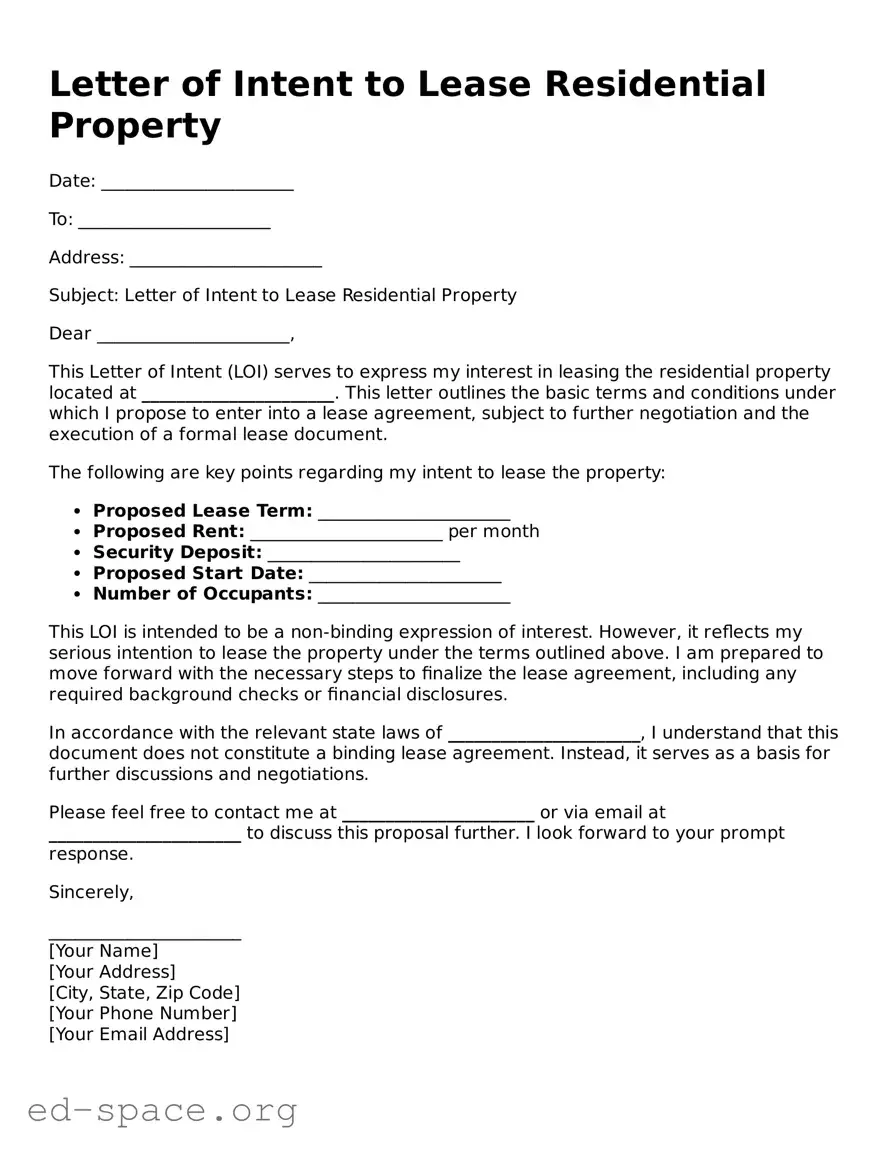
When considering a new rental property, a Letter of Intent to Lease Residential Property can be a vital first step in the leasing process. This document serves as a preliminary agreement between a potential tenant and a landlord, outlining the basic terms and intentions for a lease before the final contract is drafted. It typically includes essential details such as the proposed rental amount, the duration of the lease, and any special conditions or requests from either party. By clarifying these key points early on, both tenants and landlords can ensure they are on the same page, reducing the likelihood of misunderstandings down the line. Additionally, this letter may serve as a negotiating tool, allowing both parties to discuss and modify terms before committing to a legally binding lease. Understanding the purpose and components of this form can significantly streamline the rental process, making it a valuable resource for anyone looking to secure a new home.
Letter of Intent to Lease Residential Property
Date: ______________________
To: ______________________
Address: ______________________
Subject: Letter of Intent to Lease Residential Property
Dear ______________________,
This Letter of Intent (LOI) serves to express my interest in leasing the residential property located at ______________________. This letter outlines the basic terms and conditions under which I propose to enter into a lease agreement, subject to further negotiation and the execution of a formal lease document.
The following are key points regarding my intent to lease the property:
This LOI is intended to be a non-binding expression of interest. However, it reflects my serious intention to lease the property under the terms outlined above. I am prepared to move forward with the necessary steps to finalize the lease agreement, including any required background checks or financial disclosures.
In accordance with the relevant state laws of ______________________, I understand that this document does not constitute a binding lease agreement. Instead, it serves as a basis for further discussions and negotiations.
Please feel free to contact me at ______________________ or via email at ______________________ to discuss this proposal further. I look forward to your prompt response.
Sincerely,
______________________
[Your Name]
[Your Address]
[City, State, Zip Code]
[Your Phone Number]
[Your Email Address]
| Fact Name | Description |
|---|---|
| Purpose | The Letter of Intent to Lease Residential Property serves as a preliminary agreement between a landlord and a tenant, outlining the basic terms of a potential lease. |
| Binding Nature | This document is generally not legally binding but indicates the parties' intent to negotiate a formal lease agreement. |
| Common Elements | Typical elements include the proposed rental amount, lease duration, and any conditions that must be met before the lease is finalized. |
| State-Specific Forms | Different states may have specific forms or requirements. For example, in California, the governing law includes the California Civil Code. |
| Negotiation Tool | It acts as a negotiation tool, helping both parties clarify their expectations before entering into a formal lease. |
| Importance of Clarity | Clear and concise language in the letter can prevent misunderstandings and facilitate smoother negotiations. |
Filling out the Letter of Intent to Lease Residential Property form is an important step in the leasing process. After completing this form, you will typically present it to the landlord or property manager. This document serves as a formal indication of your interest in renting a specific property and outlines the basic terms you hope to negotiate.
Once you have completed the form, review it carefully for any errors or omissions. It’s advisable to keep a copy for your records before submitting it to the landlord or property manager.
What is a Letter of Intent to Lease Residential Property?
A Letter of Intent to Lease Residential Property is a document that outlines the preliminary agreement between a prospective tenant and a landlord. It indicates the tenant's intention to lease a specific property and includes essential terms such as rental amount, lease duration, and any special conditions. This letter serves as a starting point for negotiations before a formal lease agreement is drafted.
Is a Letter of Intent legally binding?
Generally, a Letter of Intent is not legally binding. It expresses the intent to enter into a lease agreement, but it does not create a legal obligation to sign the lease. However, some specific terms included in the letter may be binding if both parties agree. Always consider consulting a legal expert if you have concerns about binding terms.
What should be included in the Letter of Intent?
The Letter of Intent should include key details such as the property address, proposed rental amount, lease term, security deposit amount, and any special requests or conditions. It’s also beneficial to include timelines for when the lease should be signed and any contingencies that may affect the agreement.
How does a Letter of Intent benefit tenants?
A Letter of Intent benefits tenants by clearly outlining their intentions and expectations. It helps establish a mutual understanding with the landlord and can facilitate smoother negotiations. Additionally, it can demonstrate to the landlord that the tenant is serious about leasing the property.
Can a landlord reject a Letter of Intent?
Yes, a landlord can reject a Letter of Intent. Since the letter is a preliminary document, the landlord has the right to accept or decline it based on their criteria, such as the proposed rental amount or lease terms. If the landlord is not satisfied, they may counter with different terms or choose to pursue other potential tenants.
What happens after a Letter of Intent is signed?
After a Letter of Intent is signed by both parties, the next step is typically drafting a formal lease agreement. This document will include all the terms discussed in the Letter of Intent and any additional conditions necessary for the lease. It’s crucial for both parties to review the lease carefully before signing.
How long is a Letter of Intent valid?
The validity period of a Letter of Intent can vary based on what the parties agree upon. Typically, it may be valid for a few days to a couple of weeks. It’s important to specify the timeframe within the letter to ensure both parties are on the same page regarding timelines for moving forward.
Can I change my mind after signing a Letter of Intent?
While a Letter of Intent is generally not binding, changing your mind can still have implications. If you decide not to proceed, it’s best to communicate with the landlord as soon as possible. Open communication can help maintain a good relationship and avoid misunderstandings.
Where can I obtain a Letter of Intent to Lease Residential Property form?
You can often find a Letter of Intent template online or through real estate websites. Additionally, local real estate offices may provide forms tailored to your area. It’s advisable to ensure that any template you use complies with local laws and regulations.
Failing to include complete personal information. It’s essential to provide your full name, contact details, and any relevant identification numbers.
Not specifying the desired lease term. Clearly stating how long you wish to lease the property helps set expectations for both parties.
Overlooking financial details. Include your proposed rent amount and any additional costs, such as utilities or maintenance fees.
Ignoring property details. Ensure you accurately describe the property, including the address and any specific features that are important to you.
Neglecting to mention special requests or conditions. If you have specific needs, such as pet policies or modifications, outline these clearly.
Using vague language. Be as clear and concise as possible. Ambiguities can lead to misunderstandings later on.
Failing to sign and date the form. Without your signature and the date, the letter may not be considered valid.
Not providing contact information for references. If you have previous landlords or personal references, include their details to support your application.
Submitting the form without reviewing it. Always double-check for errors or omissions before sending it off.
When entering into a lease agreement for residential property, the Letter of Intent to Lease is often accompanied by several other important documents. These forms help clarify the terms of the agreement and ensure that both parties are on the same page. Below are some commonly used documents that you may encounter alongside the Letter of Intent.
Understanding these documents can significantly smooth the leasing process. Each form plays a unique role in establishing a clear and fair relationship between landlords and tenants, promoting transparency and accountability.
When completing the Letter of Intent to Lease Residential Property form, it is essential to approach the task with care and attention to detail. Below is a list of recommended practices as well as common pitfalls to avoid.
Things You Should Do:
Things You Shouldn't Do:
When it comes to the Letter of Intent to Lease Residential Property, there are several misconceptions that people often have. Understanding these can help clarify its purpose and importance in the leasing process. Here are six common misconceptions:
By clearing up these misconceptions, individuals can approach the leasing process with a better understanding and greater confidence.
When filling out and using the Letter of Intent to Lease Residential Property form, consider the following key takeaways: