When embarking on an internship journey, clarity and communication are key. The Letter of Intent for Internship form serves as a vital tool for both interns and employers, outlining expectations and intentions before the internship begins. This document typically includes essential details such as the intern's name, contact information, and the specific internship position being applied for. It may also highlight the duration of the internship, the anticipated start date, and any relevant academic or professional background that supports the candidate's application. Additionally, the form often contains a section where the intern can express their goals and what they hope to achieve during the internship. By clearly stating these intentions, both parties can align their expectations and foster a productive working relationship. Understanding the components of this form can significantly enhance the internship experience, ensuring that all involved are on the same page from the outset.
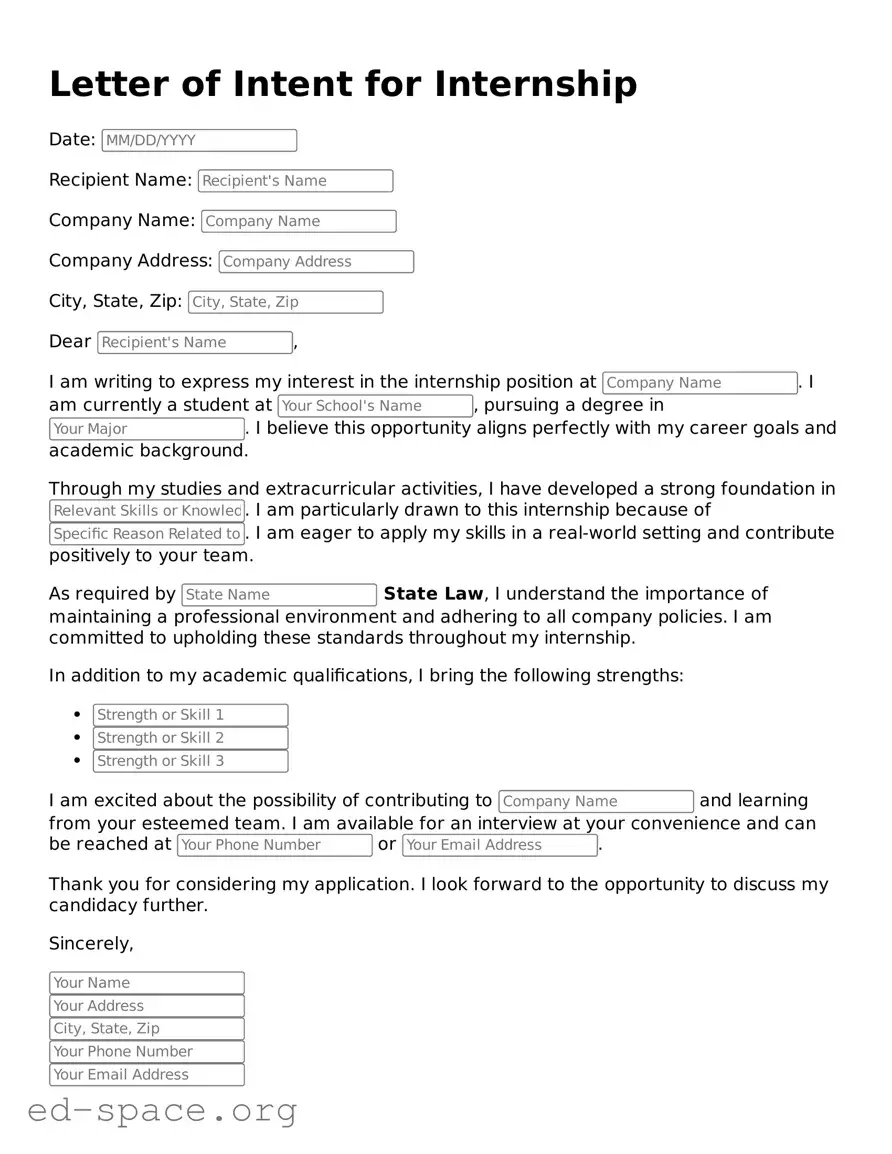
Letter of Intent for Internship
Date:
Recipient Name:
Company Name:
Company Address:
City, State, Zip:
Dear ,
I am writing to express my interest in the internship position at . I am currently a student at , pursuing a degree in . I believe this opportunity aligns perfectly with my career goals and academic background.
Through my studies and extracurricular activities, I have developed a strong foundation in . I am particularly drawn to this internship because of . I am eager to apply my skills in a real-world setting and contribute positively to your team.
As required by State Law, I understand the importance of maintaining a professional environment and adhering to all company policies. I am committed to upholding these standards throughout my internship.
In addition to my academic qualifications, I bring the following strengths:
I am excited about the possibility of contributing to and learning from your esteemed team. I am available for an interview at your convenience and can be reached at or .
Thank you for considering my application. I look forward to the opportunity to discuss my candidacy further.
Sincerely,
| Fact Name | Description |
|---|---|
| Purpose | The Letter of Intent for Internship serves as a preliminary agreement outlining the terms of an internship between the intern and the organization. |
| Content | Typically includes details such as the internship's duration, responsibilities, and any compensation or benefits. |
| Binding Nature | Generally, a Letter of Intent is not legally binding but shows a mutual interest in pursuing the internship. |
| State-Specific Forms | Some states may have specific requirements or forms for internship agreements, which should be reviewed. |
| Governing Laws | In California, for example, the governing law includes the California Labor Code, which outlines internship regulations. |
| Signatures | Both parties should sign the Letter of Intent to acknowledge their agreement to the outlined terms. |
Once you have the Letter of Intent for Internship form in hand, you’re ready to begin the process of filling it out. This form serves as a means to express your interest in an internship opportunity and outlines your qualifications and goals. Completing it accurately and thoughtfully will set the stage for your next steps in securing an internship.
What is a Letter of Intent for Internship?
A Letter of Intent for Internship is a formal document that expresses a candidate's interest in securing an internship position. It outlines the applicant's qualifications, goals, and reasons for wanting to join a specific organization. This letter serves as an introduction and helps the candidate stand out among other applicants.
Why is a Letter of Intent important?
This letter is important because it provides a platform for candidates to articulate their aspirations and demonstrate their enthusiasm for the role. It allows them to highlight relevant skills and experiences that may not be fully captured in a resume. Additionally, it shows the employer that the candidate is proactive and genuinely interested in the opportunity.
What should be included in a Letter of Intent for Internship?
A well-crafted Letter of Intent should include several key elements. Start with a formal greeting, followed by an introduction that states the position being applied for. The body should detail the candidate's educational background, relevant experiences, and specific skills. It’s also beneficial to mention why the candidate is interested in that particular organization and how they can contribute. Finally, conclude with a professional closing statement and contact information.
How long should a Letter of Intent be?
Typically, a Letter of Intent should be concise and to the point, ideally one page in length. This allows candidates to convey their message effectively without overwhelming the reader. A focused letter that respects the reader’s time is more likely to leave a positive impression.
Is a Letter of Intent the same as a cover letter?
While a Letter of Intent and a cover letter serve similar purposes, they are not identical. A cover letter is often tailored to a specific job posting and includes details about the applicant’s qualifications for that position. In contrast, a Letter of Intent may be used for more general inquiries about internship opportunities, expressing interest without a specific job listing in mind.
When should I submit my Letter of Intent?
Submitting a Letter of Intent should align with the application timeline for the internship. It is advisable to send it as early as possible, especially if the internship has rolling admissions. This demonstrates eagerness and allows the organization ample time to consider the candidate's application.
Can I use the same Letter of Intent for different internships?
While it is tempting to use a generic Letter of Intent for multiple applications, personalizing each letter is crucial. Tailoring the content to reflect the specific organization and internship position can significantly enhance the effectiveness of the letter. Employers appreciate candidates who take the time to show genuine interest in their organization.
Not Personalizing the Letter: Many applicants forget to tailor their letter to the specific internship. A generic letter can make it seem like you’re not genuinely interested in the position.
Ignoring Formatting Guidelines: Each organization may have its own formatting preferences. Failing to follow these can lead to a letter that looks unprofessional.
Using a Casual Tone: While it’s important to be approachable, a casual tone can come off as unprofessional. Striking the right balance is crucial.
Overlooking Spelling and Grammar: Typos and grammatical errors can undermine your credibility. Always proofread your letter or ask someone else to review it.
Being Too Vague: Some applicants write in broad terms without providing specific examples of their skills or experiences. Specificity can help your application stand out.
Failing to Highlight Relevant Experience: It’s important to connect your previous experiences to the internship. Not doing so can leave the reader unsure of your qualifications.
Neglecting to Express Enthusiasm: A lack of enthusiasm can be a red flag for employers. Showing genuine interest in the internship can make a positive impression.
Not Including Contact Information: Forgetting to add your contact details can hinder communication. Make sure your email and phone number are clearly stated.
Submitting Without a Review: Rushing to submit the letter without a final review can lead to missed errors or omissions. Take the time to ensure everything is in order.
Ignoring the Deadline: Submitting your letter late can disqualify you from consideration. Always be aware of the submission timeline.
When applying for an internship, it's crucial to have all necessary documents ready to present yourself effectively. Alongside the Letter of Intent for Internship, several other forms and documents can enhance your application and provide important information to potential employers.
Having these documents prepared and organized can significantly improve your chances of securing the internship you desire. Ensure each document is tailored to the specific opportunity, showcasing your strengths and dedication.
When filling out the Letter of Intent for an internship, it’s important to present yourself effectively. Here are some key dos and don'ts to keep in mind:
When it comes to the Letter of Intent for Internship form, many people hold misconceptions that can lead to confusion. Here are nine common misunderstandings about this important document:
Understanding these misconceptions can help applicants create a more effective Letter of Intent, ultimately enhancing their chances of securing an internship.
When filling out the Letter of Intent for Internship form, it is essential to keep several key points in mind to ensure a smooth process. Below are important takeaways that can guide you through this task.
By keeping these points in mind, you can create a compelling Letter of Intent that enhances your chances of securing the internship you desire.