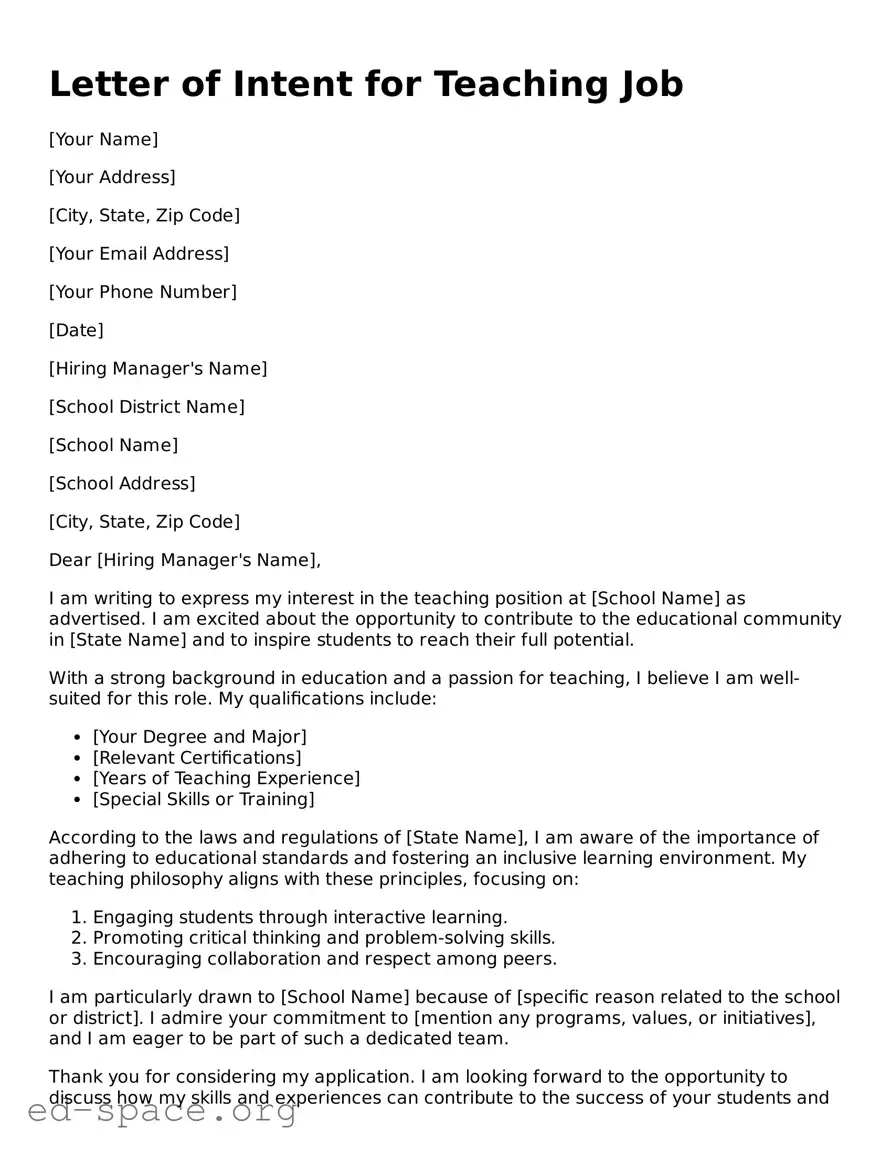
When pursuing a teaching position, a Letter of Intent serves as a vital tool for candidates to express their interest and qualifications to potential employers. This document outlines the applicant's educational background, teaching philosophy, and relevant experiences that make them a suitable fit for the role. It typically includes specific details about the candidate's commitment to fostering a positive learning environment and their approach to engaging students. Additionally, the Letter of Intent often highlights the applicant's understanding of the school's mission and values, demonstrating alignment with the institution's goals. By articulating their passion for education and their readiness to contribute to the school community, candidates can create a compelling case for their candidacy. Ultimately, this form not only facilitates communication between job seekers and hiring committees but also sets the stage for a meaningful connection that can influence hiring decisions.
Letter of Intent for Teaching Job
[Your Name]
[Your Address]
[City, State, Zip Code]
[Your Email Address]
[Your Phone Number]
[Date]
[Hiring Manager's Name]
[School District Name]
[School Name]
[School Address]
[City, State, Zip Code]
Dear [Hiring Manager's Name],
I am writing to express my interest in the teaching position at [School Name] as advertised. I am excited about the opportunity to contribute to the educational community in [State Name] and to inspire students to reach their full potential.
With a strong background in education and a passion for teaching, I believe I am well-suited for this role. My qualifications include:
According to the laws and regulations of [State Name], I am aware of the importance of adhering to educational standards and fostering an inclusive learning environment. My teaching philosophy aligns with these principles, focusing on:
I am particularly drawn to [School Name] because of [specific reason related to the school or district]. I admire your commitment to [mention any programs, values, or initiatives], and I am eager to be part of such a dedicated team.
Thank you for considering my application. I am looking forward to the opportunity to discuss how my skills and experiences can contribute to the success of your students and the school community. I am available for an interview at your earliest convenience.
Sincerely,
[Your Name]
| Fact Name | Description |
|---|---|
| Purpose | A Letter of Intent for a Teaching Job expresses a candidate's interest in a specific teaching position, outlining their qualifications and intent to apply. |
| Format | The letter should be formatted as a formal business letter, including the candidate's contact information, date, recipient's information, and a closing signature. |
| Content Requirements | It should include a brief introduction, a summary of relevant experience, and a statement of why the candidate is a good fit for the position. |
| Timing | Submitting a Letter of Intent is often recommended before the official job posting to express proactive interest in upcoming teaching opportunities. |
| State-Specific Considerations | Some states may have specific requirements or guidelines regarding the submission of Letters of Intent. For example, in California, it’s advisable to reference the California Education Code. |
| Follow-Up | After sending the letter, candidates should consider following up with the school or district to reiterate their interest and inquire about the hiring process. |
After obtaining the Letter of Intent for a Teaching Job form, you are ready to proceed with filling it out. This form is essential for expressing your interest in a teaching position, and completing it accurately will help convey your qualifications and enthusiasm to potential employers.
What is a Letter of Intent for a Teaching Job?
A Letter of Intent for a Teaching Job is a formal document submitted by an applicant expressing their interest in a specific teaching position. This letter outlines the candidate's qualifications, teaching philosophy, and reasons for wanting to join the educational institution. It serves as an introduction to the applicant and highlights their suitability for the role.
Why is a Letter of Intent important?
The Letter of Intent is crucial because it provides the hiring committee with insight into the applicant's personality and professional aspirations. It allows candidates to articulate their passion for teaching and their commitment to student success. This document can significantly influence the selection process, as it complements the resume and other application materials.
What should be included in a Letter of Intent for a Teaching Job?
Essential components of a Letter of Intent include a clear introduction stating the position being applied for, a brief overview of the applicant's educational background and teaching experience, a discussion of their teaching philosophy, and specific reasons for wanting to work at the particular institution. Additionally, it is beneficial to express enthusiasm for the role and a desire to contribute to the school community.
How long should a Letter of Intent be?
Typically, a Letter of Intent should be concise, ideally one page in length. It should be long enough to cover the key points without overwhelming the reader. A focused letter that clearly communicates the applicant's qualifications and enthusiasm is more effective than a lengthy one filled with unnecessary details.
Is it necessary to address the Letter of Intent to a specific person?
Whenever possible, addressing the Letter of Intent to a specific individual, such as the hiring manager or principal, is recommended. This personal touch demonstrates attention to detail and genuine interest in the position. If a name is not available, a general greeting such as "Dear Hiring Committee" can be used.
How should the Letter of Intent be submitted?
The submission method for the Letter of Intent may vary depending on the school's application process. It is often submitted electronically through an online application system or emailed directly to the hiring committee. If a physical application is required, the letter should be printed, signed, and included with other required documents. Always follow the specific instructions provided in the job posting.
When applying for a teaching position, the Letter of Intent is a crucial component of your application. Mistakes made in this document can significantly impact your chances of securing an interview. Below are eight common errors to avoid:
Not including the correct recipient's name or title can make your application seem impersonal. Always ensure you address the letter to the appropriate person, such as the hiring principal or school district official.
Using a generic letter can undermine your application. Each letter should reflect your enthusiasm for the specific position and the unique attributes of the school.
Failing to highlight your teaching experience or relevant skills can leave your application incomplete. Include specific examples that demonstrate your qualifications.
Maintaining a professional tone is essential. Avoid casual language or overly informal expressions that may detract from your professionalism.
Not adhering to formatting standards can make your letter difficult to read. Use a clear, professional font and standard margins to enhance readability.
Spelling and grammatical errors can create a negative impression. Always review your letter multiple times or ask someone else to proofread it before submission.
A strong closing statement reinforces your interest in the position. Failing to include one can leave your letter feeling incomplete.
After submitting your letter, not following up can be a missed opportunity. A brief email or phone call can demonstrate your continued interest in the position.
Avoiding these mistakes can enhance the effectiveness of your Letter of Intent and increase your chances of making a positive impression on potential employers. Take the time to craft a thoughtful and polished document that showcases your qualifications and enthusiasm for the teaching position.
When applying for a teaching position, a Letter of Intent is often just the starting point. Along with this letter, several other documents can enhance your application and provide a more complete picture of your qualifications. Here’s a list of common forms and documents you might consider including:
Including these documents along with your Letter of Intent can strengthen your application and present a comprehensive view of your qualifications. Each piece plays a role in showcasing your readiness to contribute to a school community.
When filling out the Letter of Intent for a Teaching Job form, attention to detail is crucial. Here are some essential do's and don'ts to guide you through the process.
By following these guidelines, you can create a compelling Letter of Intent that stands out to hiring committees. Make your application count!
Misconception 1: A Letter of Intent is the same as a cover letter.
While both documents serve to express interest in a position, a Letter of Intent is typically broader in scope. It outlines the candidate's philosophy, goals, and reasons for wanting to join a specific institution, rather than simply detailing qualifications.
Misconception 2: A Letter of Intent is not necessary if a resume is submitted.
Many applicants believe that a resume alone suffices. However, a Letter of Intent provides context to the resume, allowing candidates to convey their passion and vision for education, which a resume cannot fully capture.
Misconception 3: A Letter of Intent should be generic and applicable to multiple positions.
Some candidates think a one-size-fits-all approach works best. In reality, tailoring the letter to each specific teaching job demonstrates genuine interest and shows the hiring committee that the candidate has invested time in understanding the institution's values and needs.
Misconception 4: A Letter of Intent is only important for new teachers.
Experienced educators may also underestimate its value. A well-crafted Letter of Intent can help seasoned professionals articulate their evolving teaching philosophy and how their experiences align with the goals of the new institution.
When filling out and using the Letter of Intent for a Teaching Job form, consider the following key takeaways: