A Lease-to-Own Agreement serves as a bridge between renting and purchasing property, offering a unique opportunity for tenants to eventually become homeowners. This agreement outlines the terms under which a tenant can lease a property with the option to buy it at a later date, typically after a specified rental period. Key components of the form include the duration of the lease, the purchase price, and the amount of rent that may be credited toward the eventual purchase. Additionally, it addresses maintenance responsibilities, the process for exercising the purchase option, and any contingencies that may affect the agreement. By clearly defining these elements, the Lease-to-Own Agreement aims to protect both the tenant's and landlord's interests, ensuring a transparent and mutually beneficial arrangement. Understanding these aspects is crucial for both parties to navigate the complexities of transitioning from a rental situation to homeownership.
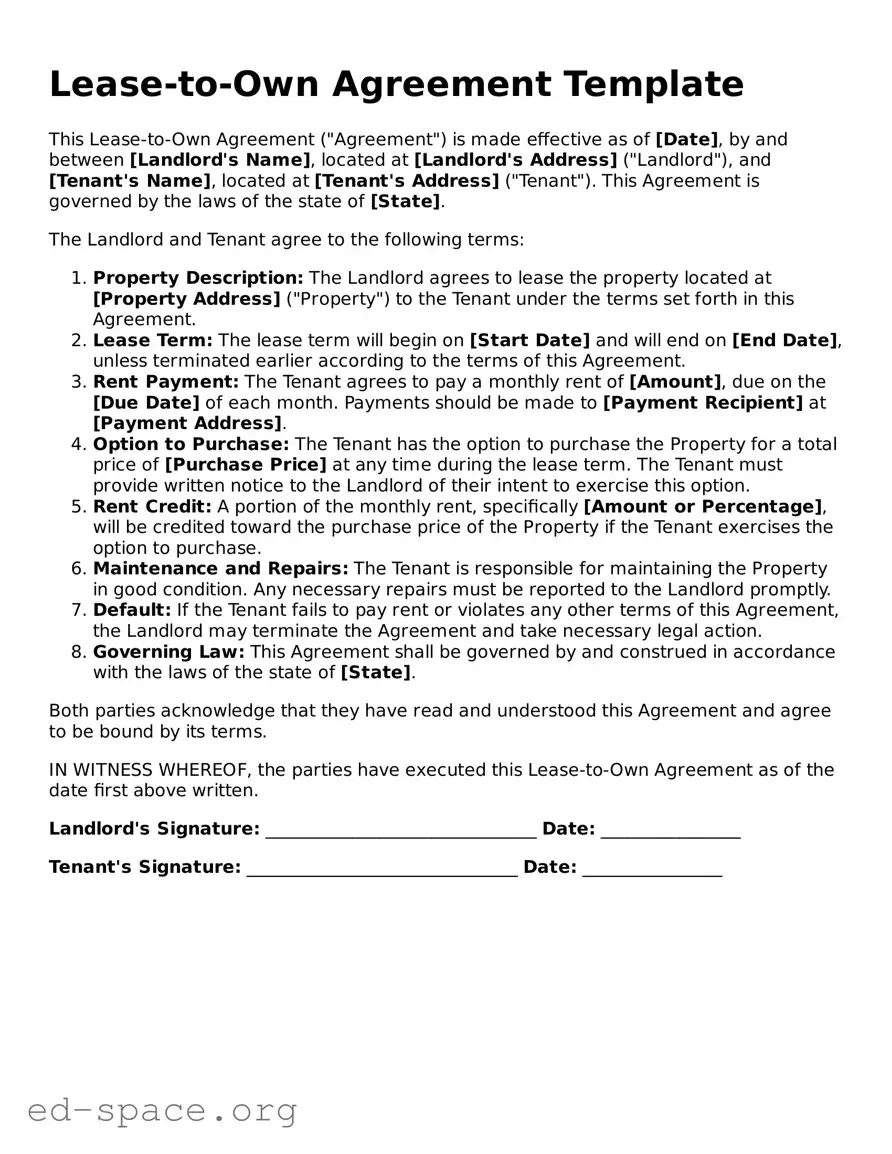
Lease-to-Own Agreement Template
This Lease-to-Own Agreement ("Agreement") is made effective as of [Date], by and between [Landlord's Name], located at [Landlord's Address] ("Landlord"), and [Tenant's Name], located at [Tenant's Address] ("Tenant"). This Agreement is governed by the laws of the state of [State].
The Landlord and Tenant agree to the following terms:
Both parties acknowledge that they have read and understood this Agreement and agree to be bound by its terms.
IN WITNESS WHEREOF, the parties have executed this Lease-to-Own Agreement as of the date first above written.
Landlord's Signature: _______________________________ Date: ________________
Tenant's Signature: _______________________________ Date: ________________
| Fact Name | Description |
|---|---|
| Definition | A Lease-to-Own Agreement allows a tenant to rent a property with the option to purchase it after a specified period. |
| Payment Structure | Typically, a portion of the rent paid may be credited toward the purchase price of the property. |
| Governing Law | In California, for example, the agreement is governed by the California Civil Code. |
| Duration | The lease term usually ranges from one to three years, allowing tenants time to secure financing. |
| Legal Considerations | Both parties should understand their rights and obligations, as these agreements can vary significantly by state. |
Filling out a Lease-to-Own Agreement form is a straightforward process that requires careful attention to detail. Once you have gathered all necessary information, you will be ready to complete the form and move forward with your agreement.
What is a Lease-to-Own Agreement?
A Lease-to-Own Agreement is a contract that allows a tenant to rent a property with the option to purchase it later. This type of agreement typically outlines the rental terms, the purchase price, and the timeframe for the tenant to buy the property.
How does a Lease-to-Own Agreement work?
In a Lease-to-Own Agreement, the tenant pays rent for a specified period. A portion of the rent may go toward the eventual purchase price of the home. At the end of the lease term, the tenant has the option to buy the property at a pre-agreed price.
What are the benefits of a Lease-to-Own Agreement?
This agreement can be beneficial for both parties. Tenants can secure a future home without immediate full payment. They can also build equity while renting. For sellers, it can attract more potential buyers and provide steady rental income.
What should be included in a Lease-to-Own Agreement?
The agreement should clearly state the rental terms, purchase price, duration of the lease, and how much rent will contribute to the purchase price. It should also outline the responsibilities of both the tenant and the landlord, including maintenance obligations.
Can I negotiate the terms of a Lease-to-Own Agreement?
Yes, you can negotiate the terms. Discussing the purchase price, rental payments, and any other conditions with the landlord is important. Both parties should feel comfortable with the agreement before signing.
What happens if I decide not to buy the property?
If you choose not to purchase the property at the end of the lease term, you can simply move out. However, you may lose any rent credits that were set aside for the purchase. Review the agreement to understand any potential financial implications.
Are there risks associated with a Lease-to-Own Agreement?
Yes, there are risks. If property values decline, you may end up paying more than the market value. Additionally, if you cannot secure financing by the end of the lease, you may lose your investment in rent credits.
How can I protect myself in a Lease-to-Own Agreement?
To protect yourself, ensure the agreement is in writing and includes all essential terms. It is also wise to consult with a real estate professional or attorney to review the contract before signing.
Is a Lease-to-Own Agreement legally binding?
Yes, once signed, a Lease-to-Own Agreement is legally binding. Both parties are expected to fulfill their obligations as outlined in the contract. Failing to do so could result in legal consequences.
What should I do if I have more questions about the Lease-to-Own Agreement?
If you have additional questions, consider reaching out to a legal professional or a real estate expert. They can provide personalized guidance based on your specific situation and help clarify any concerns you may have.
Not Reading the Entire Agreement: Many people skim through the document without understanding all terms and conditions. This can lead to misunderstandings later on.
Failing to Specify the Purchase Price: It's essential to clearly state the price at which the property can be purchased. Leaving this blank can create confusion.
Ignoring the Payment Schedule: Some individuals overlook the importance of detailing payment amounts and due dates. This can result in missed payments and penalties.
Not Including Maintenance Responsibilities: The agreement should specify who is responsible for property maintenance. Failing to do so can lead to disputes.
Overlooking Default Terms: It’s crucial to understand what happens in the event of a default. Not addressing this can leave one party at a disadvantage.
Neglecting to Include Option Fee Details: If there’s an option fee, it should be documented clearly. This fee can affect the overall purchase price.
Not Clarifying Lease Duration: The length of the lease period should be clearly defined. Ambiguity here can lead to disputes about the end date.
Failing to Sign and Date: A common mistake is not signing or dating the agreement. Without these, the document may not be legally binding.
Not Keeping Copies: After filling out the form, some forget to keep a copy for their records. Having a copy is essential for future reference.
When engaging in a Lease-to-Own Agreement, several accompanying documents can enhance clarity and protect the interests of both parties involved. These documents provide essential details regarding the terms, conditions, and responsibilities associated with the lease and eventual purchase of the property. Below is a list of commonly used forms and documents that often accompany a Lease-to-Own Agreement.
Utilizing these documents in conjunction with a Lease-to-Own Agreement can help clarify expectations and responsibilities, ultimately fostering a smoother transaction for both the tenant and the property owner. Each document plays a vital role in ensuring that all parties are well-informed and protected throughout the lease and purchase process.
When filling out a Lease-to-Own Agreement form, it is important to approach the task with care. Here are some essential do's and don'ts to keep in mind:
Lease-to-own agreements can be a great way to eventually own a home or an item, but many misconceptions surround them. Here are eight common misunderstandings that people often have about these agreements:
This is not true. While lease-to-own agreements often include an option to purchase, you are not guaranteed ownership unless you fulfill all the terms of the agreement, including any payments or conditions outlined.
In reality, the terms can vary significantly. Each agreement can have different conditions, payment structures, and timelines. It's essential to read and understand the specific terms of any lease-to-own contract.
Many people believe that lease-to-own agreements are set in stone, but this is not the case. Negotiating terms, such as the purchase price or monthly payments, is often possible.
While these agreements are commonly associated with real estate, they can also apply to vehicles, appliances, and other items. The concept can be utilized in various contexts.
While it’s true that you may not get back all the money spent on rent or fees if you choose not to purchase, some agreements allow for a portion of those payments to be applied toward the purchase price.
This is misleading. The process can take time, and it often requires careful planning and consideration. Rushing into a lease-to-own agreement without understanding the terms can lead to complications.
This misconception can lead to issues. Most lease-to-own agreements require the lessee to maintain the property or item in good condition. Neglecting this responsibility can result in penalties or loss of the option to purchase.
Investing in a lease-to-own agreement does carry risks. Market conditions can change, and the property or item may not appreciate in value as expected. It's important to conduct thorough research and consider potential risks.
Understanding these misconceptions can help individuals make informed decisions about entering into lease-to-own agreements. Always approach such agreements with caution and seek clarity on any terms that seem unclear.
When filling out and using the Lease-to-Own Agreement form, consider the following key takeaways: