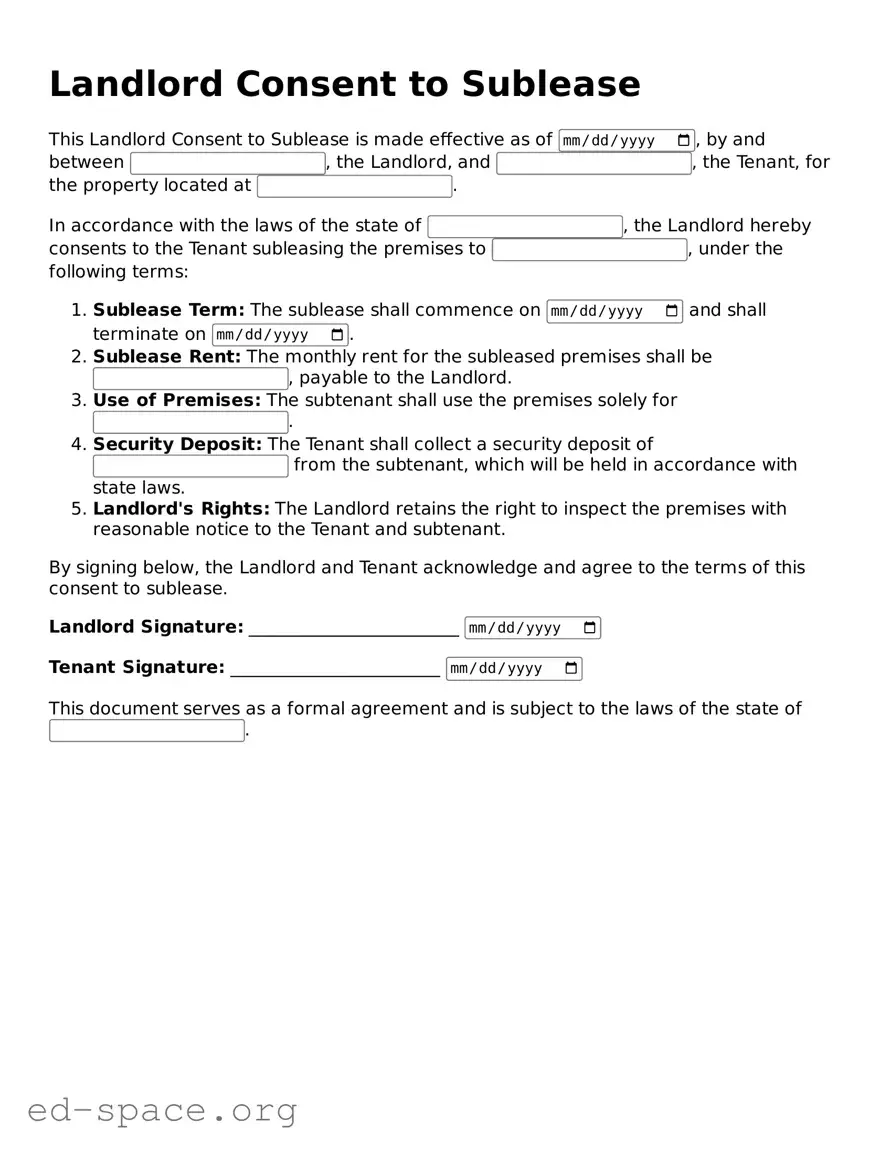
When navigating the complexities of rental agreements, understanding the Landlord Consent to Sublease form is crucial for both tenants and landlords. This form serves as a formal acknowledgment from a landlord, granting permission for a tenant to sublease their rental unit to another individual. It outlines essential details, such as the identity of the new subtenant, the duration of the sublease, and any specific conditions that must be met. Additionally, the form typically includes provisions regarding the responsibilities of both the original tenant and the subtenant, ensuring that all parties are aware of their obligations. By requiring this consent, landlords maintain control over who occupies their property, while tenants gain the flexibility to transfer their lease rights temporarily. Understanding the nuances of this form can help prevent disputes and foster clear communication between all involved parties.
Landlord Consent to Sublease
This Landlord Consent to Sublease is made effective as of , by and between , the Landlord, and , the Tenant, for the property located at .
In accordance with the laws of the state of , the Landlord hereby consents to the Tenant subleasing the premises to , under the following terms:
By signing below, the Landlord and Tenant acknowledge and agree to the terms of this consent to sublease.
Landlord Signature: ________________________
Tenant Signature: ________________________
This document serves as a formal agreement and is subject to the laws of the state of .
| Fact Name | Description |
|---|---|
| Purpose | The Landlord Consent to Sublease form allows a tenant to obtain permission from their landlord to sublease their rental property to another individual. |
| Importance | Obtaining consent protects both the tenant and landlord by ensuring that all parties are aware of and agree to the subleasing arrangement. |
| State-Specific Forms | Many states have their own specific forms and requirements. For instance, California has specific guidelines outlined in the California Civil Code. |
| Governing Laws | Each state has laws governing landlord-tenant relationships, including subleasing. These laws dictate the rights and responsibilities of both parties. |
| Tenant Obligations | The tenant must typically provide the landlord with details about the proposed subtenant and the terms of the sublease. |
| Landlord's Rights | Landlords have the right to approve or deny a sublease request, often based on the subtenant’s financial stability or rental history. |
| Written Consent | It is advisable for the landlord’s consent to be in writing to avoid any misunderstandings or disputes in the future. |
| Potential Fees | Some landlords may charge a fee for processing the sublease request, which should be outlined in the original lease agreement. |
| Impact on Lease | Subleasing does not typically relieve the original tenant from their obligations under the lease unless explicitly stated in the consent agreement. |
Completing the Landlord Consent to Sublease form is essential for ensuring that both the landlord and tenant are on the same page regarding the subleasing arrangement. Follow these steps carefully to fill out the form accurately.
What is a Landlord Consent to Sublease form?
The Landlord Consent to Sublease form is a document that allows a tenant to sublease their rental unit to another individual. This form must be signed by the landlord to ensure that they approve of the new tenant taking over the lease responsibilities for a specified period.
Why do I need my landlord's consent to sublease?
What information is typically required in the form?
Can a landlord refuse to consent to a sublease?
What happens if my landlord does not respond to my request for consent?
Is there a fee associated with the consent process?
What should I do if my subtenant causes problems?
Can I sublease my apartment more than once?
What if I need to terminate the sublease early?
Failing to provide accurate information about the subtenant. It is essential to include the full name, contact information, and rental history of the person who will be subleasing the property.
Not specifying the duration of the sublease. Clearly stating the start and end dates of the sublease helps avoid confusion and ensures all parties are aware of the timeline.
Overlooking the need for the landlord's signature. Without the landlord's approval, the sublease may not be valid, and the tenant could face legal issues.
Ignoring the lease agreement terms. Some leases have specific clauses regarding subleasing. It is important to review the original lease to ensure compliance.
Not disclosing the reason for the sublease. Transparency about why the tenant is subleasing can help build trust with the landlord.
Failing to communicate any changes to the sublease. If there are updates or modifications after submitting the form, informing the landlord is crucial.
When a tenant wishes to sublease their rental property, several documents may accompany the Landlord Consent to Sublease form. Each of these documents serves a specific purpose and helps ensure that all parties are aware of their rights and responsibilities. Below is a list of common forms and documents that are often used in conjunction with the sublease process.
These documents work together to create a clear understanding among all parties involved in the subleasing process. By ensuring that each document is properly completed and understood, tenants, subtenants, and landlords can help foster a smoother rental experience.
The Landlord Consent to Sublease form is an important document for tenants looking to sublease their rental property. It serves a specific purpose, but there are other documents that share similarities in function or intent. Below are four such documents:
Understanding these documents can help clarify the rights and responsibilities involved in rental agreements. Each serves a unique purpose, but they all contribute to maintaining clear communication and agreements between landlords and tenants.
When completing a Landlord Consent to Sublease form, it is important to follow certain guidelines to ensure the process goes smoothly. Here are five things you should and shouldn't do:
Following these tips can help ensure that your sublease process is clear and efficient. Take your time to understand the requirements and communicate openly with your landlord throughout the process.
Understanding the Landlord Consent to Sublease form is crucial for both tenants and landlords. However, several misconceptions can lead to confusion and complications. Here are nine common misconceptions explained:
Not all landlords are required to consent to a sublease. The lease agreement may specify conditions under which a sublease is allowed, and some landlords may have policies against subleasing altogether.
Silence from a landlord does not equate to consent. Tenants should not assume they can proceed with a sublease without explicit approval, even if the landlord does not respond.
Written consent is typically required. Relying on verbal agreements can lead to disputes and misunderstandings later on.
The original tenant remains responsible for the lease terms, even after subleasing. If the subtenant fails to pay rent or damages the property, the original tenant is still liable.
While landlords have the right to deny consent, they cannot do so arbitrarily. Many jurisdictions require a valid reason for refusal, such as the subtenant's financial stability or rental history.
Subleases can be for a shorter or longer duration, but they cannot exceed the term of the original lease. It's essential to clarify the timeline with the landlord.
A separate lease agreement is not always necessary. Some landlords may allow subleasing under the original lease terms, provided the landlord approves the subtenant.
Subleasing does not exempt the original tenant from their financial obligations. Rent must still be paid in full, regardless of whether the subtenant pays their share.
Landlords may revoke consent under certain circumstances, especially if the subtenant violates lease terms or if the original tenant fails to comply with the agreement.
Being aware of these misconceptions can help both tenants and landlords navigate the subleasing process more effectively. Clear communication and understanding of the lease terms are essential.
When filling out and using the Landlord Consent to Sublease form, it is important to keep the following key takeaways in mind: