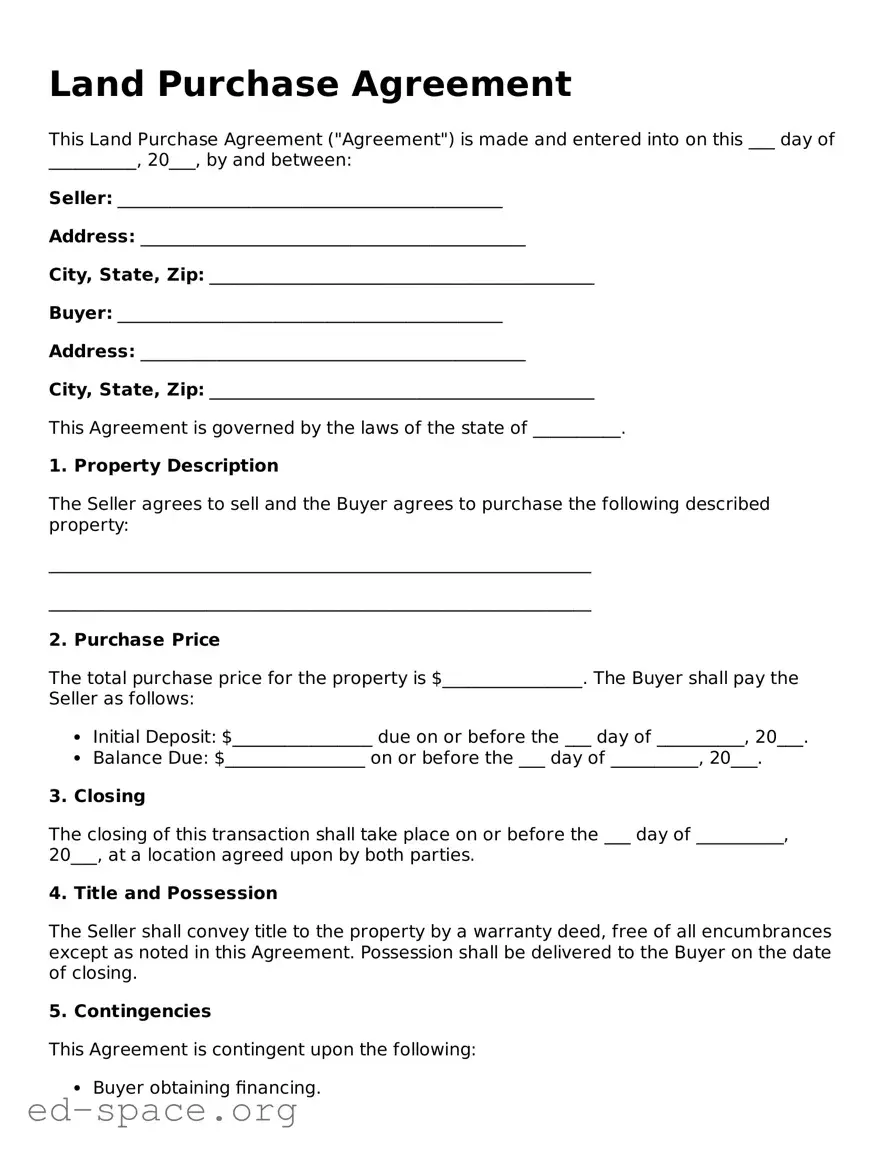
When considering the acquisition of real estate, a Land Purchase Agreement form serves as a critical tool for both buyers and sellers. This document outlines the essential terms and conditions of the transaction, ensuring that all parties have a clear understanding of their rights and obligations. Typically, it includes details such as the purchase price, payment terms, and the legal description of the property. Additionally, contingencies may be specified, allowing for inspections, financing, or other necessary conditions to be met before the sale is finalized. The agreement also addresses the timeline for closing and any earnest money deposits required to secure the deal. By carefully reviewing and completing this form, individuals can protect their interests and foster a smoother transaction process, ultimately leading to a successful transfer of property ownership.
Land Purchase Agreement
This Land Purchase Agreement ("Agreement") is made and entered into on this ___ day of __________, 20___, by and between:
Seller: ____________________________________________
Address: ____________________________________________
City, State, Zip: ____________________________________________
Buyer: ____________________________________________
Address: ____________________________________________
City, State, Zip: ____________________________________________
This Agreement is governed by the laws of the state of __________.
1. Property Description
The Seller agrees to sell and the Buyer agrees to purchase the following described property:
______________________________________________________________
______________________________________________________________
2. Purchase Price
The total purchase price for the property is $________________. The Buyer shall pay the Seller as follows:
3. Closing
The closing of this transaction shall take place on or before the ___ day of __________, 20___, at a location agreed upon by both parties.
4. Title and Possession
The Seller shall convey title to the property by a warranty deed, free of all encumbrances except as noted in this Agreement. Possession shall be delivered to the Buyer on the date of closing.
5. Contingencies
This Agreement is contingent upon the following:
6. Default
If either party defaults in the performance of this Agreement, the non-defaulting party may pursue any legal remedies available under state law.
7. Governing Law
This Agreement shall be governed by and construed in accordance with the laws of the state of __________.
IN WITNESS WHEREOF, the parties hereto have executed this Land Purchase Agreement as of the day and year first above written.
Seller's Signature: ________________________________
Date: ________________________________
Buyer's Signature: ________________________________
Date: ________________________________
| Fact Name | Description |
|---|---|
| Definition | A Land Purchase Agreement is a legally binding contract between a buyer and a seller outlining the terms for the sale of real property. |
| Key Components | The agreement typically includes the purchase price, property description, closing date, and contingencies. |
| State Variations | Each state may have specific requirements for the form, including disclosures and additional clauses. |
| Governing Law | The agreement is governed by state law, which varies; for example, California follows the California Civil Code. |
| Signatures Required | Both parties must sign the agreement for it to be enforceable, along with any necessary witnesses or notarization. |
| Contingencies | Common contingencies may include financing, inspections, and the sale of the buyer's current home. |
Filling out the Land Purchase Agreement form is an important step in the process of purchasing property. It is essential to provide accurate information to ensure a smooth transaction. Once the form is completed, it will need to be reviewed and signed by all parties involved before proceeding to the next steps in the purchasing process.
What is a Land Purchase Agreement?
A Land Purchase Agreement is a legal document that outlines the terms and conditions under which a buyer agrees to purchase a piece of land from a seller. It serves to protect the interests of both parties by clearly stating the obligations, rights, and expectations involved in the transaction.
What key elements should be included in a Land Purchase Agreement?
Essential elements of a Land Purchase Agreement typically include the names of the buyer and seller, a description of the property, the purchase price, payment terms, contingencies (such as financing or inspections), and the closing date. Additionally, it may include clauses related to property disclosures, zoning, and any easements or restrictions on the land.
Is a Land Purchase Agreement legally binding?
Yes, once both parties sign the Land Purchase Agreement, it becomes a legally binding contract. This means that both the buyer and seller are obligated to adhere to the terms outlined in the agreement. If either party fails to meet their obligations, the other party may have legal recourse.
Do I need a lawyer to draft a Land Purchase Agreement?
While it is not legally required to have a lawyer draft a Land Purchase Agreement, it is highly recommended. A lawyer can ensure that the agreement complies with state laws, adequately protects your interests, and addresses any specific concerns you may have regarding the property.
What happens if the buyer backs out of the agreement?
If a buyer decides to back out of the Land Purchase Agreement without a valid reason, they may face legal consequences. This could include losing their earnest money deposit or being sued for breach of contract. However, if the buyer withdraws due to contingencies outlined in the agreement, they may do so without penalty.
Can a Land Purchase Agreement be modified after it is signed?
Yes, a Land Purchase Agreement can be modified after it is signed, but both parties must agree to the changes. It is important to document any modifications in writing and have both parties sign the updated agreement to ensure that the changes are enforceable.
What is an earnest money deposit?
An earnest money deposit is a sum of money that the buyer provides to demonstrate their commitment to purchasing the property. This deposit is typically held in escrow and is applied toward the purchase price at closing. If the buyer backs out without a valid reason, the seller may keep the earnest money as compensation for taking the property off the market.
How long does it take to finalize a Land Purchase Agreement?
The time it takes to finalize a Land Purchase Agreement can vary depending on several factors, including the complexity of the transaction and the responsiveness of both parties. Generally, the process can take anywhere from a few days to several weeks. Once all terms are agreed upon and contingencies are satisfied, the closing process can begin.
Failing to include all necessary parties. Ensure that all buyers and sellers are listed with their full names. Missing someone can lead to legal issues later.
Not providing accurate property details. Double-check the property description, including the address and parcel number. Inaccuracies can create confusion.
Overlooking the purchase price. Clearly state the agreed-upon amount. Ambiguities regarding price can lead to disputes.
Neglecting to specify payment terms. Outline how the payment will be made, whether in full or through financing. Vague terms can complicate the transaction.
Ignoring contingencies. Include any conditions that must be met before the sale is finalized, such as inspections or financing. Omitting these can jeopardize the agreement.
Not signing the document correctly. All parties must sign and date the agreement. An unsigned document is not legally binding.
Forgetting to consult with a professional. Seek advice from a real estate agent or attorney. Their expertise can help avoid costly mistakes.
When engaging in a land purchase, several important documents accompany the Land Purchase Agreement. Each document plays a crucial role in ensuring that the transaction is smooth and legally sound. Below is a list of commonly used forms and documents that you may encounter in this process.
Understanding these documents is essential for anyone involved in a land purchase. Each plays a significant role in protecting the interests of both buyers and sellers, ensuring that the transaction proceeds smoothly and in accordance with the law.
Real Estate Purchase Agreement: This document outlines the terms and conditions of a real estate transaction, similar to a Land Purchase Agreement, but it may encompass various types of properties beyond just land.
Lease Agreement: While primarily used for rental situations, a lease agreement can also contain terms related to land use, making it similar in purpose to a Land Purchase Agreement.
Option to Purchase Agreement: This document grants a buyer the right, but not the obligation, to purchase land at a later date, sharing similarities in the intent to acquire property.
Joint Venture Agreement: Often used in real estate development, this agreement can include terms for land acquisition, making it relevant to land purchase transactions.
Purchase and Sale Agreement: This document specifies the sale of property, including land, and details the responsibilities of both the buyer and seller, akin to a Land Purchase Agreement.
Deed of Trust: While primarily a security instrument, it can relate to land transactions by detailing the terms under which a buyer secures financing for a land purchase.
Title Transfer Document: This document facilitates the transfer of ownership from seller to buyer, serving a similar purpose to that of a Land Purchase Agreement.
Land Use Agreement: This agreement outlines how a piece of land can be used, often aligning with the terms found in a Land Purchase Agreement regarding future land use.
When filling out a Land Purchase Agreement form, it's essential to approach the process with care. Here’s a list of dos and don’ts that can guide you through this important task.
By following these guidelines, you can help ensure that your Land Purchase Agreement is filled out correctly and comprehensively.
When it comes to Land Purchase Agreements, many people have misunderstandings that can lead to confusion or even legal issues. Here are seven common misconceptions:
This is not true. Each agreement can vary significantly based on the specific terms negotiated between the buyer and seller, including price, contingencies, and timelines.
Many believe that a handshake or verbal promise suffices. However, without a written document, it can be challenging to enforce any agreement in court.
While it's true that signed agreements are binding, parties can negotiate amendments. Changes can be made if both parties agree and document the modifications properly.
In reality, closing costs can be negotiated. The seller may agree to cover some or all of these expenses, depending on the agreement terms.
This is a common misconception. These agreements can apply to any type of land transaction, including commercial, agricultural, and undeveloped land.
Typically, possession of the property is not granted until the closing process is complete. This often includes the transfer of funds and the recording of the deed.
Many individuals think they can navigate the process without professional help. However, consulting with a legal expert can provide valuable insights and help avoid potential pitfalls.
Understanding these misconceptions can help buyers and sellers navigate the complexities of land transactions more effectively.
When filling out and using a Land Purchase Agreement form, keep these key takeaways in mind: