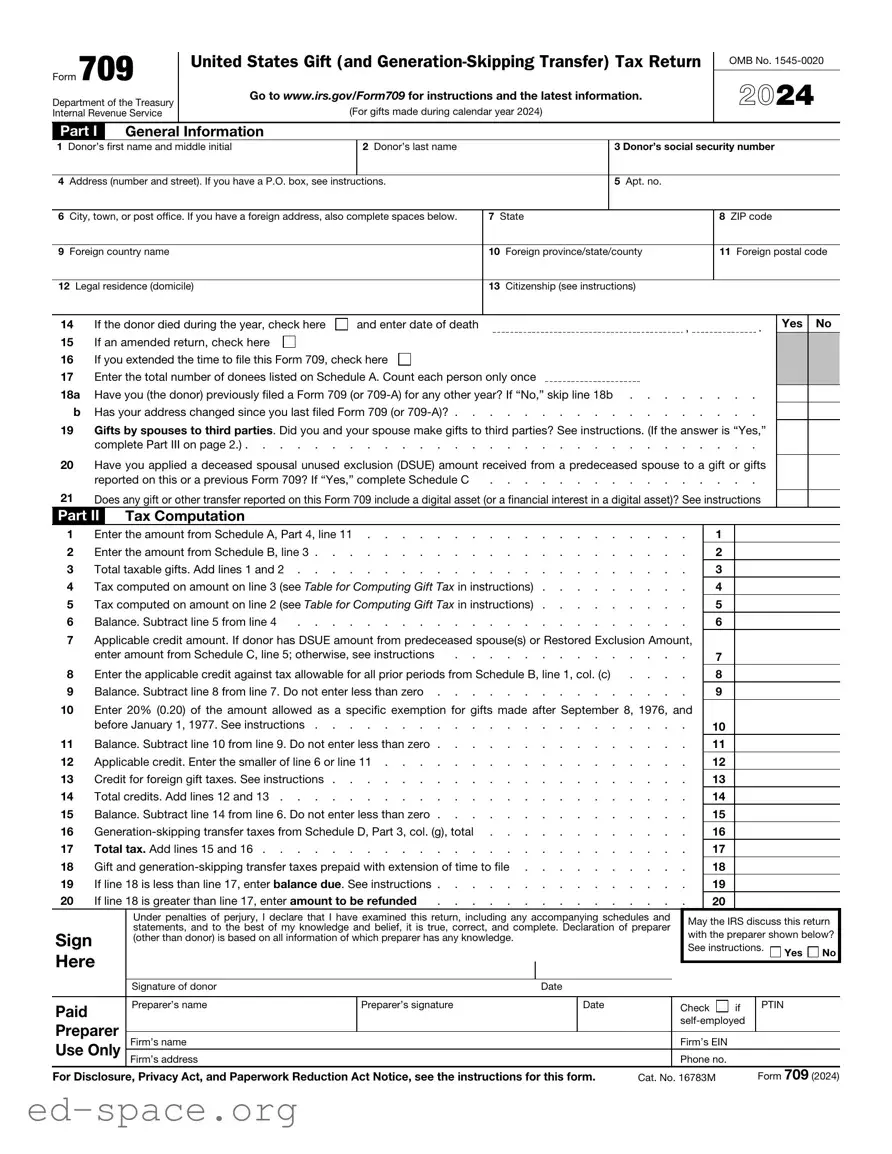
The IRS 709 form plays a crucial role in the realm of gift and estate planning. It is primarily used to report gifts made during the tax year that exceed the annual exclusion limit set by the IRS. Understanding the nuances of this form can help individuals navigate their financial responsibilities effectively. Each year, taxpayers must consider their gifting strategies, especially when large sums of money or valuable assets are involved. This form not only helps in tracking gifts but also ensures compliance with federal tax regulations. Additionally, it provides a mechanism for individuals to utilize their lifetime gift tax exemption, which can significantly impact estate planning. Knowing when and how to file the IRS 709 form can alleviate potential tax burdens and ensure that individuals make informed decisions about their wealth transfer strategies.
Form 709 |
United States Gift (and |
|
|
||
Department of the Treasury |
Go to www.irs.gov/Form709 for instructions and the latest information. |
|
(For gifts made during calendar year 2024) |
||
Internal Revenue Service |
Part I General Information
OMB No.
2024
1Donor’s first name and middle initial
2Donor’s last name
3 Donor’s social security number
4Address (number and street). If you have a P.O. box, see instructions.
5Apt. no.
6City, town, or post office. If you have a foreign address, also complete spaces below.
7State
8ZIP code
9Foreign country name
10Foreign province/state/county
11Foreign postal code
12Legal residence (domicile)
13Citizenship (see instructions)
14 |
If the donor died during the year, check here |
and enter date of death |
, |
. |
15 |
If an amended return, check here |
|
|
|
16 |
If you extended the time to file this Form 709, check here |
|
|
|
17Enter the total number of donees listed on Schedule A. Count each person only once
18a |
Have you (the donor) previously filed a Form 709 (or |
b |
Has your address changed since you last filed Form 709 (or |
19Gifts by spouses to third parties. Did you and your spouse make gifts to third parties? See instructions. (If the answer is “Yes,”
complete Part III on page 2.) . . . . . . . . . . . . . . . . . . . . . . . . . . . . . .
20Have you applied a deceased spousal unused exclusion (DSUE) amount received from a predeceased spouse to a gift or gifts
reported on this or a previous Form 709? If “Yes,” complete Schedule C |
. . . . . . . . . . . . . . . . |
21Does any gift or other transfer reported on this Form 709 include a digital asset (or a financial interest in a digital asset)? See instructions
Part II Tax Computation
Yes No
1 |
Enter the amount from Schedule A, Part 4, line 11 |
|
2 |
Enter the amount from Schedule B, line 3 |
|
3 |
Total taxable gifts. Add lines 1 and 2 |
|
4 |
Tax computed on amount on line 3 (see Table for Computing Gift Tax in instructions) |
|
5 |
Tax computed on amount on line 2 (see Table for Computing Gift Tax in instructions) |
|
6 |
Balance. Subtract line 5 from line 4 |
. . . . . . . . . . . . . . . . . . . . . . . |
7Applicable credit amount. If donor has DSUE amount from predeceased spouse(s) or Restored Exclusion Amount,
|
enter amount from Schedule C, line 5; otherwise, see instructions |
. . . . . . . . . . . . . . |
|
8 |
Enter the applicable credit against tax allowable for all prior periods from Schedule B, line 1, col. (c) |
. . . . |
|
9 |
Balance. Subtract line 8 from line 7. Do not enter less than zero |
||
10Enter 20% (0.20) of the amount allowed as a specific exemption for gifts made after September 8, 1976, and
|
before January 1, 1977. See instructions |
|
11 |
Balance. Subtract line 10 from line 9. Do not enter less than zero |
|
12 |
Applicable credit. Enter the smaller of line 6 or line 11 |
|
13 |
Credit for foreign gift taxes. See instructions |
|
14 |
Total credits. Add lines 12 and 13 |
|
15 |
Balance. Subtract line 14 from line 6. Do not enter less than zero |
|
16 |
||
17 |
Total tax. Add lines 15 and 16 |
|
18 |
Gift and |
|
19 |
If line 18 is less than line 17, enter balance due. See instructions |
|
20 |
If line 18 is greater than line 17, enter amount to be refunded |
. . . . . . . . . . . . . . . |
1
2
3
4
5
6
7
8
9
10
11
12
13
14
15
16
17
18
19
20
|
Under penalties of perjury, I declare that I have examined this return, including any accompanying schedules and |
|
May the IRS discuss this return |
||||||||
|
statements, and to the best of my knowledge and belief, it is true, correct, and complete. Declaration of preparer |
|
|||||||||
Sign |
|
with the preparer shown below? |
|||||||||
(other than donor) is based on all information of which preparer has any knowledge. |
|
|
|
|
|||||||
|
|
|
|
|
See instructions. |
|
|
||||
Here |
|
|
|
|
|
|
Yes |
No |
|||
|
|
|
|
|
|
|
|
|
|||
|
|
|
|
|
|
|
|
|
|
|
|
|
|
|
|
|
|
|
|
|
|
|
|
|
|
|
|
|
|
|
|
|
|
|
|
|
Signature of donor |
|
Date |
|
|
|
|
|
|
|
|
|
|
|
|
|
|
|
|
|
|
|
|
Paid |
Preparer’s name |
Preparer’s signature |
|
Date |
|
Check |
if |
PTIN |
|
|
|
|
|
|
|
|
|
|
|
||||
|
|
|
|
|
|
|
|
|
|||
Preparer |
|
|
|
|
|
|
|
|
|||
|
|
|
|
|
|
|
|
|
|
|
|
Firm’s name |
|
|
|
|
Firm’s EIN |
|
|
|
|
||
Use Only |
|
|
|
|
|
|
|
|
|||
Firm’s address |
|
|
|
|
Phone no. |
|
|
|
|
||
|
|
|
|
|
|
|
|
|
|||
For Disclosure, Privacy Act, and Paperwork Reduction Act Notice, see the instructions for this form. |
Cat. No. 16783M |
|
Form 709 (2024) |
||||||||

Form 709 (2024) |
|
Page 2 |
|
Part III |
Spouse’s Consent on Gifts to Third Parties |
|
|
1 Gifts by spouses to third parties. Do you consent to have the gifts (including |
Yes |
No |
|
|
|
||
by your spouse to third parties during the calendar year considered as made |
|
|
|
answer is “Yes,” the following information must be furnished. If the answer is “No,” skip lines |
|
|
|
2Name of consenting spouse
3SSN of consenting spouse
4 |
Were you married to one another during the entire calendar year? See instructions |
. . . . . . . . . . . . . |
||||
5 |
If line 4 is “No,” check whether |
married |
divorced or |
widowed/deceased, and give date. See instructions |
|
|
6 |
Will a gift tax return for this year be filed by your spouse? If “Yes,” mail both returns in the same envelope |
. . . . . . |
||||
7Consent of Spouse. Have you obtained required spousal consent for gifts made to third parties to be considered as made
Form 709 (2024)
Form 709 (2024) |
Page 3 |
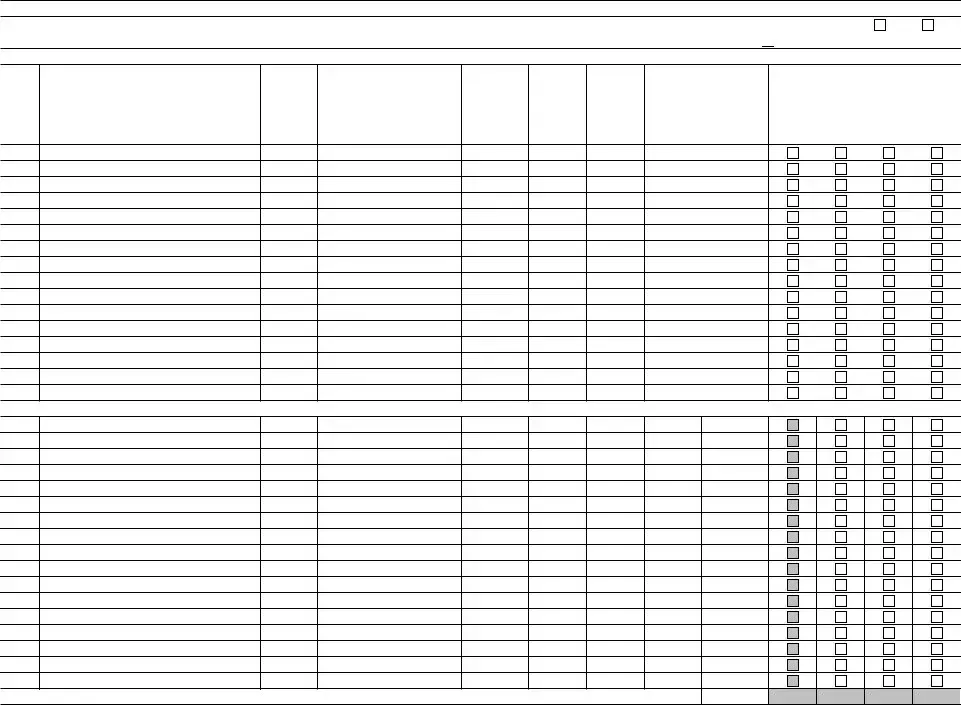
SCHEDULE A Computation of Taxable Gifts (Including transfers in trust) (see instructions)
A |
Does the value of any item listed on Schedule A reflect any valuation discount? If “Yes,” attach explanation |
Yes |
No |
BIf you elect under section 529(c)(2)(B) to treat any transfers made this year to a qualified tuition program as made ratably over a
(a)
Item
number
(b)
Donee’s name and address
(c)
Relationship
to donor
(if any)
(d)
Description of gift
(e)
Donor’s
adjusted basis
of gift
(f) |
(g) |
Date of gift |
Value at |
date of gift
(h) |
(i) |
For split |
Net transfer |
gifts, enter |
(subtract col. |
1/2 of |
(h) from col. |
column (g) |
(g)) |
|
|
Check boxes where applicable
|
(j) |
(k) |
(l) |
(m) |
|
Reserved |
Charitable |
Deductible |
2652(a)(3) |
||
for future |
gift |
gift to |
election |
||
use |
|
spouse |
|
||
|
|
|
|
|
|
|
|
|
|
|
|
|
|
|
|
|
|
|
|
|
|
|
|
|
|
|
|
|
|
|
|
|
|
|
|
|
|
|
|
|
|
|
|
|
|
|
|
|
|
|
|
|
|
|
|
|
|
|
|
|
|
|
|
|
|
|
|
|
|
|
|
|
|
|
|
|
|
|
|
|
|
|
|
|
|
|
|
|
|
|
|
|
|
|
|
|
|
|
|
|
|
|
|
|
|
|
|
|
|
|
|
|
|
|
|
|
|
|
|
|
|
|
|
|
|
|
|
|
|
|
|
|
|
|
|
|
|
|
|
|
|
|
|
|
|
|
|
|
|
|
|
|
|
|
|
|
|
|
|
|
|
|
|
|
|
|
|
|
|
|
|
|
|
|
|
|
|
|
|
|
|
|
|
|
|
|
|
|
|
|
|
|
|
|
|
|
|
Gifts made by
Total of Part 1. Add amounts from Part 1, column (i) . . . . . . . . . . . . . . . . . . . . . . . . . . .
(If more space is needed, attach additional statements.)
Form 709 (2024)
Form 709 (2024) |
Page 4 |
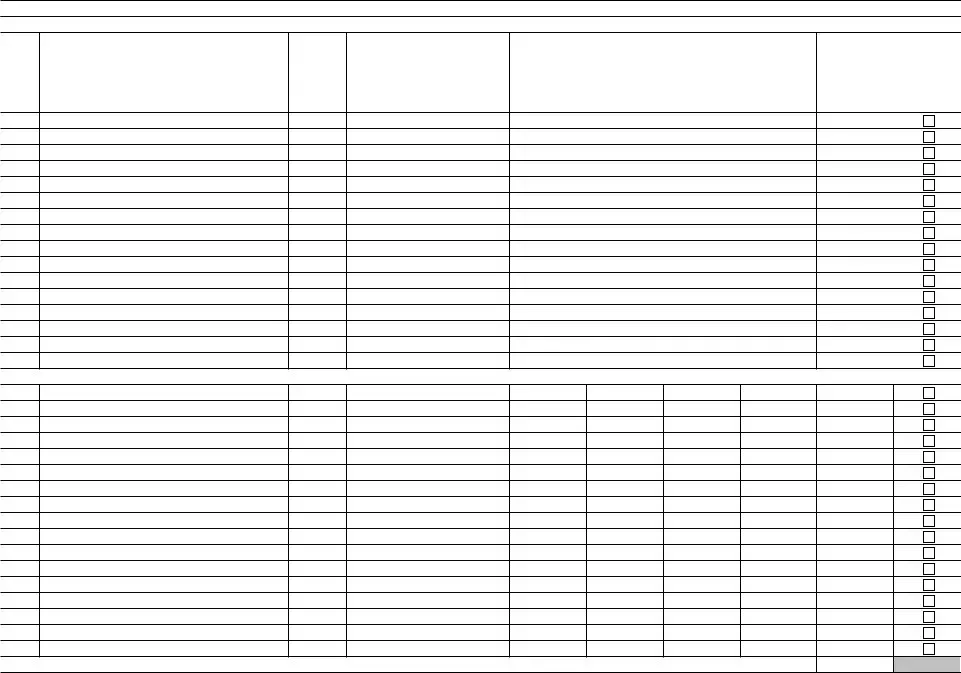
SCHEDULE A Computation of Taxable Gifts (Including transfers in trust) (see instructions) (continued)
Part
(a)
Item
number
(b)
Donee’s name and address
(c)
Relationship
to donor (if
any)
(d)
Description of gift
(e) |
(f) |
(g) |
(h) |
Donor’s adjusted |
Date of gift |
Value at date of |
For split gifts, |
basis of gift |
|
gift |
enter 1/2 of |
|
|
|
column (g) |
|
|
|
|
(i) |
Check boxes |
|
Net transfer |
where applicable |
|
(subtract col. (h) |
|
|
(j) |
||
from col. (g)) |
||
|
2632(b) |
|
|
election out |
|
|
|
Gifts made by
Total of Part 2. Add amounts from Part 2, column (i) |
|
(If more space is needed, attach additional statements.) |
Form 709 (2024) |
Form 709 (2024) |
Page 5 |
SCHEDULE A Computation of Taxable Gifts (Including transfers in trust) (see instructions) (continued)
Part
(a)
Item
number
(b)
Donee’s name and address
(c)
Relationship
to donor (if
any)
(d)
Description of gift
(e)
Donor’s
adjusted basis
of gift
(f) |
(g) |
(h) |
(i) |
Date of gift |
Value at |
For split |
Net transfer |
|
date of gift |
gifts, enter |
(subtract col. |
|
|
1/2 of |
(h) from col. |
|
|
column (g) |
(g)) |
|
|
|
|
Check boxes where applicable
|
(j) |
(k) |
|
(l) |
(m) |
(n) |
||||||
Reserved |
Charitable |
Deductible |
2652(a)(3) |
2632(c) |
||||||||
for future |
gift |
gift to |
election |
election |
||||||||
use |
|
|
|
spouse |
|
|
|
|
||||
|
|
|
|
|
|
|
|
|
|
|
|
|
|
|
|
|
|
|
|
|
|
|
|
|
|
|
|
|
|
|
|
|
|
|
|
|
|
|
|
|
|
|
|
|
|
|
|
|
|
|
|
|
|
|
|
|
|
|
|
|
|
|
|
|
|
|
|
|
|
|
|
|
|
|
|
|
|
|
|
|
|
|
|
|
|
|
|
|
|
|
|
|
|
|
|
|
|
|
|
|
|
|
|
|
|
|
|
|
|
|
|
|
|
|
|
|
|
|
|
|
|
|
|
|
|
|
|
|
|
|
|
|
|
|
|
|
|
|
|
|
|
|
|
|
|
|
|
|
|
|
|
|
|
|
|
|
|
|
|
|
|
|
|
|
|
|
|
|
|
|
|
|
|
|
|
|
|
|
|
|
|
|
|
|
|
|
|
|
|
|
|
|
|
|
|
|
|
|
|
|
|
|
|
|
|
|
|
|
|
|
|
|
|
|
|
|
|
|
|
|
|
|
|
|
|
|
|
|
|
|
|
|
|
|
|
|
|
|
|
|
|
|
|
|
|
|
|
|
|
|
|
|
|
|
|
|
|
|
|
|
|
|
|
|
|
|
|
|
|
|
|
|
|
|
|
|
|
|
|
|
|
|
|
|
|
|
|
|
|
|
|
|
|
|
|
|
|
|
|
|
|
|
|
|
|
|
|
|
|
|
|
|
|
|
|
|
|
|
|
|
|
|
|
|
|
|
|
|
|
|
|
|
|
|
|
|
|
|
|
|
|
|
|
|
|
|
|
|
|
|
|
|
|
|
|
|
|
|
|
|
|
|
|
|
|
|
|
|
|
|
|
|
|
|
|
|
|
|
|
|
|
|
|
|
|
|
|
|
|
|
|
|
|
|
|
|
|
|
|
|
|
|
|
|
|
|
|
|
|
|
|
|
|
|
|
|
|
|
|
|
|
|
|
|
|
|
|
|
Gifts made by
Total of Part 3. Add amounts from Part 3, column (i) . . . . . . . . . . . . . . . . . . . . . . . .
(If more space is needed, attach additional statements.)
Form 709 (2024)
Form 709 (2024) |
Page 6 |
SCHEDULE A Computation of Taxable Gifts (Including transfers in trust) (see instructions) (continued)
Part
1 |
Total value of gifts of donor. Add totals from column (i) of Parts 1, 2, and 3 |
2 |
Total annual exclusions for gifts listed on line 1 (see instructions) |
3Total included amount of gifts. Subtract line 2 from line 1 . . . . . . . . . . . . . . . . . . . . . . . . .
Deductions (see instructions)
4Gifts of interests to spouse for which a marital deduction will be claimed. Enter the total value of items on Parts 1 and 3 of Schedule A for which the box in column (l) is checked . . . . . . . . . . . . . . . . . . . . . . . . . . . . .
5 |
Exclusions attributable to gifts on line 4 |
6 |
Marital deduction. Subtract line 5 from line 4 |
7Charitable deduction. Enter the total value of items on Parts 1 and 3 of Schedule A for which the box in column (k) is checked, less
|
exclusions |
8 |
Total deductions. Add lines 6 and 7 |
9 |
Subtract line 8 from line 3 |
10 |
|
11 |
Taxable gifts. Add lines 9 and 10. Enter here and on page 1, Part |
. |
. |
. |
. |
. |
. |
. |
. |
. |
. |
. |
. |
. |
. |
. |
. |
. |
. |
. |
. |
. |
4
5
6
7
. |
. |
. |
. |
. |
. |
. |
. |
. |
. |
. |
. |
. |
. |
. |
. |
. |
. |
. |
. |
. |
. |
. |
. |
. |
. |
. |
. |
1
2
3
8
9
10
11
Qualified Terminable Interest Property (QTIP) Marital Deduction (See instructions for Schedule A, Part 4, line 4.)
If a trust (or other property) meets the requirements of qualified terminable interest property under section 2523(f), and: a. The trust (or other property) is listed on Schedule A; and
b. The value of the trust (or other property) is entered in whole or in part as a deduction on Schedule A, Part 4, line 4, then the donor shall be deemed to have made an election to have such trust (or other property) treated as qualified terminable interest property under section 2523(f).
If less than the entire value of the trust (or other property) that the donor has included in Parts 1 and 3 of Schedule A is entered as a deduction on line 4, the donor shall be considered to have made an election only as to a fraction of the trust (or other property). The numerator of this fraction is equal to the amount of the trust (or other property) deducted on Schedule A, Part 4, line 6. The denominator is equal to the total value of the trust (or other property) listed in Parts 1 and 3 of Schedule A.
If you make the QTIP election, the terminable interest property involved will be included in your spouse’s gross estate upon your spouse’s death (section 2044). See instructions for line 4 of Schedule A. If your spouse disposes (by gift or otherwise) of all or part of the qualifying life income interest, your spouse will be considered to have made a transfer of the entire property that is subject to the gift tax. See Transfer of Certain Life Estates Received From Spouse in the instructions.
12Election Out of QTIP Treatment of Annuities
Check here if you elect under section 2523(f)(6) not to treat as qualified terminable interest property any joint and survivor annuities that are reported on Schedule A and would otherwise be treated as qualified terminable interest property under section 2523(f). See instructions. Enter the item numbers from Schedule A for the annuities for which you are making this election.
Form 709 (2024)
Form 709 (2024) |
Page 7 |
SCHEDULE B Gifts From Prior Periods
If you answered “Yes” on line 18a of page 1, Part I, see the instructions for completing Schedule B. If you answered “No,” skip to Part II, Tax Computation on page 1 (or Schedule C or D, if applicable). Complete Schedule A before beginning Schedule B. See instructions for recalculation of the column (c) amounts. Attach calculations.
(a)
Calendar year or calendar quarter (see instructions)
(b)
Internal Revenue office
where prior return was filed
(c)
Amount of applicable credit (unified credit) against gift tax for periods after December 31, 1976
(d)
Amount of specific exemption for prior periods ending before January 1, 1977
(e)
Amount of
taxable gifts
1 |
Totals for prior periods |
|
1 |
|
2 |
Amount, if any, by which total specific exemption, line 1, column (d), is more than $30,000 . . . |
. . . . . . . . . . . . . . . . |
2 |
|
3Total amount of taxable gifts for prior periods. Add amount on line 1, column (e), and amount, if any, on line 2. Enter here and on page 1, Part
Computation, line 2 |
3 |
(If more space is needed, attach additional statements.) |
Form 709 (2024) |
Form 709 (2024) |
Page 8 |
SCHEDULE C Deceased Spousal Unused Exclusion (DSUE) Amount and Restored Exclusion
Provide the following information to determine the DSUE amount and applicable credit received from prior spouses. Complete Schedule A before beginning Schedule C.
(a) |
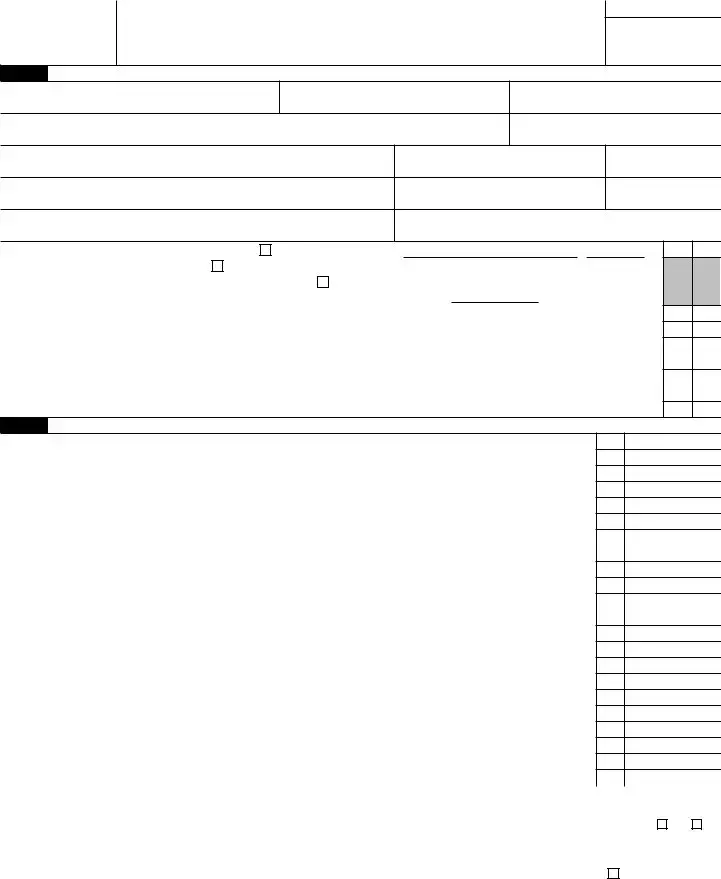
|
(b) |
|
(c) |
(d) |
(e) |
(f) |
|
Name of deceased spouse |
|
Date of death |
Portability election made? |
If “Yes,” DSUE |
DSUE amount applied by |
Date of gift(s) (enter as |
||
(dates of death after December 31, 2010, only) |
|
|
|
|
|
amount received |
donor to lifetime gifts (list |
mm/dd/yy for Part 1 and |
|
|
|
|
|
|
from spouse |
current |
as yyyy for Part 2) |
|
|
|
Yes |
|
No |
|
and prior gifts) |
|
|
|
|
|
|
|
|
||
|
|
|
|
|
|
|
|
|
Part |
|
|
|
|
|
|
|
|
|
|
|
|
|
|
|
|
|
Part |
|
|
|
|
|
|
|
|
TOTAL (for all DSUE amounts applied from column (e) for Part 1 and Part 2. Enter here and on line 2 below) |
|
|
|
1 |
Donor’s basic exclusion amount (see instructions) |
1 |
|
2 |
Total from column (e), Parts 1 and 2 |
2 |
|
3 |
Restored Exclusion Amount (see instructions) |
3 |
|
4 |
Add lines 1, 2, and 3 |
4 |
|
5 |
Applicable credit on amount on line 4 (see Table for Computing Gift Tax in the instructions). Enter here and on line 7, Part |
5 |
|
(If more space is needed, attach additional statements.) |
|
Form 709 (2024) |
|
Form 709 (2024) |
Page 9 |
SCHEDULE D Computation of
Note: Inter vivos direct skips that are completely excluded by the GST exemption must still be fully reported (including value and exemptions claimed) on Schedule D.
Part
(a) |
(b) |
(c) |
(d) |
(e) |
Item number (from |
Description |
Value (from Schedule A, Part 2, |
Nontaxable portion of transfer |
Net transfer (subtract |
Schedule A, Part 2, col. (a), |
(only for ETIP transfers) |
col. (i), or close of ETIP |
|
col. (d) from col. (c)) |
then ETIP transfers, if any) |
|
described in col. (b)) |
|
|
1
Gifts made by spouse (for gift splitting only)
|
|
|
|
|
|
|
|
|
|
|
|
|
|
|
|
|
|
|
|
|
|
|
|
|
|
|
|
|
|
|
|
|
|
|
|
|
|
|
|
|
|
|
|
|
|
|
|
|
|
|
|
|
|
|
|
|
|
|
|
|
|
|
|
|
|
|
|
|
|
|
|
|
|
|
|
|
|
|
|
|
|
|
|
|
(If more space is needed, attach additional statements.) |
|
|
Form 709 (2024) |
|

Form 709 (2024) |
Page 10 |
||
SCHEDULE D |
Computation of |
|
|
Part |
|
||
Complete items |
|
||
1 |
Maximum allowable exemption (see instructions) |
1 |
|
2 |
Total exemption used for periods before filing this return |
2 |
|
3 |
Exemption available for this return. Subtract line 2 from line 1 |
3 |
|
4 |
Exemption claimed on this return from Part 3, column (c), total below |
4 |
|
5Automatic allocation of exemption to transfers reported on Schedule A, Part 3. To opt out of the automatic allocation rules, you must attach an “Election Out”
|
statement. See instructions |
5 |
6 |
Exemption allocated to transfers not shown on line 4 or line 5 above. You must attach a “Notice of Allocation.” See instructions |
6 |
7 |
Add lines 4, 5, and 6 |
7 |
8 |
Exemption available for future transfers. Subtract line 7 from line 3 |
8 |
Part
(a) |
(b) |
(c) |
(d) |
(e) |
(f) |
(g) |
Item number |
Net transfer |
GST exemption allocated |
Divide col. (c) |
Inclusion ratio |
Applicable rate |
|
(from Schedule D, |
(from Schedule D, |
|
by col. (b) |
(subtract col. (d) |
(multiply col. (e) |
transfer tax |
Part 1) |
Part 1, col. (e)) |
|
|
from 1.000) |
by 40% (0.40)) |
(multiply col. (b) |
|
|
|
|
|
|
by col. (f)) |
|
|
|
|
|
|
|
1 |
|
|
|
|
|
|
|
|
|
|
|
|
|
|
|
|
|
|
|
|
|
|
|
|
|
|
|
|
|
|
|
|
|
|
|
|
|
|
|
|
|
|
|
|
|
|
|
|
|
|
|
|
|
|
|
|
|
|
|
|
|
|
|
|
|
|
|
|
|
Gifts made by spouse (for gift splitting only)
|
|
|
|
|
|
|
|
|
|
|
|
|
|
|
|
|
|
|
|
|
|
|
|
|
|
|
|
|
|
|
|
|
|
|
|
|
|
|
|
|
|
|
|
|
|
|
|
|
|
|
|
|
|
|
|
|
|
|
|
|
|
|
|
|
|
|
|
|
|
Total exemption claimed. Enter here and on Part |
|
|
|
|
|
|
2, line 4, above. May not exceed Part 2, line 3, |
|
Total |
|
|||
above |
|
10; and on page 1, Part |
|
|||
|
|
|
|
|
|
|
(If more space is needed, attach additional statements.) |
|
|
|
Form 709 (2024) |
||
| Fact Name | Description |
|---|---|
| Purpose | The IRS Form 709 is used to report gifts and to calculate any gift tax owed. |
| Filing Requirement | Individuals must file Form 709 if they give gifts exceeding the annual exclusion amount, which is $17,000 per recipient for 2023. |
| Gift Splitting | Married couples can choose to split gifts, allowing them to combine their annual exclusions for a single recipient. |
| Lifetime Exemption | Form 709 also tracks the lifetime gift tax exemption, which is $12.92 million for 2023. |
| State-Specific Forms | Some states have their own gift tax forms, like California, which does not impose a gift tax, while New York has its own requirements under the New York Estate Tax Law. |
| Filing Deadline | The form is due on April 15 of the year following the gift, similar to income tax returns. |
| Penalties | Failure to file Form 709 when required can lead to penalties and interest on any unpaid taxes. |
| Record Keeping | Taxpayers should maintain records of all gifts made, including appraisals and other documentation, to support their filings. |
Filling out the IRS Form 709 is an important step for individuals who are gifting assets above a certain value. Once you have completed the form, you will need to submit it to the IRS along with your tax return. This process helps ensure that your financial contributions are properly documented and accounted for.
What is the IRS 709 form?
The IRS 709 form, also known as the United States Gift (and Generation-Skipping Transfer) Tax Return, is used to report gifts made during the tax year. It is essential for individuals who give gifts exceeding the annual exclusion amount, which is $17,000 per recipient for 2023. This form helps the IRS track gifts that may be subject to gift tax, ensuring compliance with federal tax laws.
Who needs to file the IRS 709 form?
If you have made gifts that surpass the annual exclusion limit to any individual, you must file the IRS 709 form. This requirement applies to gifts of cash, property, or other assets. Additionally, if you are a U.S. citizen or resident and have made gifts to non-U.S. citizens, you may also need to file this form. Understanding your filing obligations is crucial to avoid potential penalties.
When is the IRS 709 form due?
The IRS 709 form is typically due on April 15 of the year following the tax year in which the gifts were made. However, if you file for an extension on your personal income tax return, you automatically receive an extension for the 709 form as well. Keep in mind that any gift tax owed must still be paid by the original due date to avoid interest and penalties.
What information do I need to provide on the IRS 709 form?
When completing the IRS 709 form, you will need to provide detailed information about the gifts you made, including the recipient's name, the date of the gift, and the value of the gift at the time it was given. Additionally, you may need to report any prior gifts that affect your lifetime gift tax exemption. Accurate reporting is vital, as errors can lead to complications with the IRS.
What happens if I don’t file the IRS 709 form when required?
Failing to file the IRS 709 form when required can result in significant consequences. The IRS may impose penalties, including fines and interest on any unpaid gift tax. Furthermore, not filing can complicate your tax situation and lead to disputes with the IRS. It is in your best interest to stay informed about your filing requirements to avoid these issues.
Failing to report all gifts. Some individuals overlook gifts made to multiple recipients or gifts that exceed the annual exclusion amount.
Incorrectly calculating the total value of gifts. It's important to accurately assess the fair market value of gifts at the time they were given.
Not including required information about the recipient. Ensure that names, addresses, and relationships to the donor are complete and accurate.
Missing signatures. The form must be signed by the donor. Omitting this step can delay processing.
Using outdated forms. Always check that you are using the most current version of the IRS 709 form.
Failing to file on time. Be aware of deadlines to avoid penalties and interest.
Not keeping copies of the submitted form. Retain a copy for your records to reference in the future.
Ignoring state gift tax requirements. Some states have their own gift tax laws that may apply.
Assuming that all gifts are tax-free. Understand the limits and exclusions to avoid unexpected tax liabilities.
The IRS Form 709 is essential for reporting gifts and generation-skipping transfers. However, it often accompanies other forms and documents that help provide a complete picture of an individual's financial transactions. Understanding these additional documents can ensure compliance and streamline the filing process.
Being aware of these additional forms and documents is crucial. They not only support the accurate filing of the IRS Form 709 but also help in navigating the complexities of gift and estate tax regulations. Proper preparation can prevent potential issues and ensure compliance with federal requirements.
The IRS Form 709 is used for reporting gifts and generation-skipping transfers. Here are nine other documents that share similarities with Form 709:
When completing the IRS 709 form, it is essential to adhere to specific guidelines to ensure accuracy and compliance. Below is a list of five important do's and don'ts.
Following these guidelines will help ensure that the form is completed correctly and submitted on time.
The IRS Form 709, also known as the United States Gift (and Generation-Skipping Transfer) Tax Return, often leads to confusion. Here are six common misconceptions about this form:
Understanding these misconceptions can help individuals navigate their gifting strategies more effectively and ensure compliance with IRS regulations.
The IRS Form 709 is essential for reporting gifts and calculating any potential gift tax. Here are some key takeaways to keep in mind when filling out and using this form:
Being informed about these key points can help ensure that you correctly complete and file Form 709, minimizing any potential issues with the IRS.