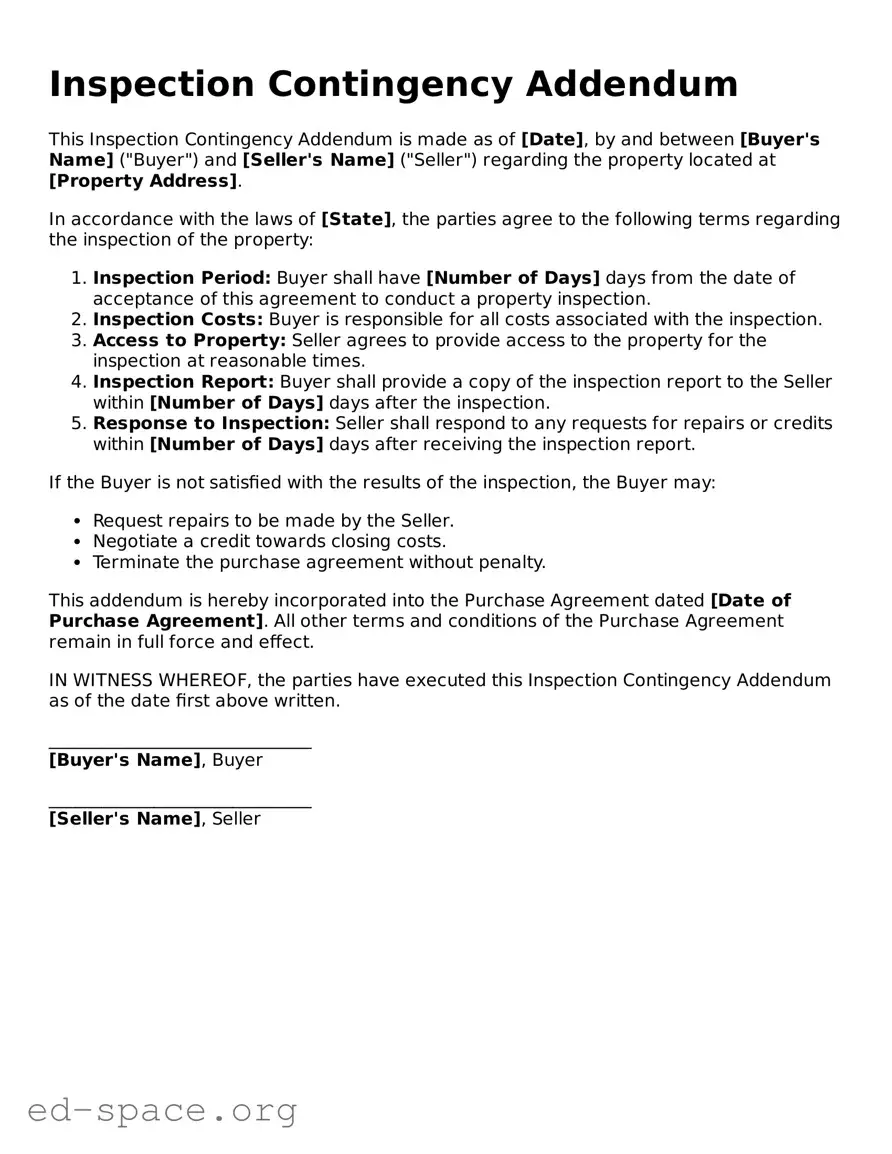
The Inspection Contingency Addendum form serves as a crucial component in real estate transactions, offering buyers an opportunity to conduct thorough inspections of a property before finalizing the purchase. This addendum outlines the specific conditions under which a buyer can request repairs or negotiate the terms of the sale based on the findings of the inspection. Typically, it includes timelines for completing the inspection, the types of inspections permitted, and the process for addressing any issues that may arise. By clearly defining these parameters, the addendum protects the buyer's interests while ensuring that both parties understand their obligations. Additionally, it often stipulates what happens if significant defects are discovered, providing a pathway for either renegotiation or, in some cases, the ability to withdraw from the contract without penalties. Understanding the nuances of this form is essential for anyone involved in a real estate transaction, as it lays the groundwork for a transparent and fair process.
Inspection Contingency Addendum
This Inspection Contingency Addendum is made as of [Date], by and between [Buyer's Name] ("Buyer") and [Seller's Name] ("Seller") regarding the property located at [Property Address].
In accordance with the laws of [State], the parties agree to the following terms regarding the inspection of the property:
If the Buyer is not satisfied with the results of the inspection, the Buyer may:
This addendum is hereby incorporated into the Purchase Agreement dated [Date of Purchase Agreement]. All other terms and conditions of the Purchase Agreement remain in full force and effect.
IN WITNESS WHEREOF, the parties have executed this Inspection Contingency Addendum as of the date first above written.
______________________________
[Buyer's Name], Buyer
______________________________
[Seller's Name], Seller
| Fact Name | Description |
|---|---|
| Purpose | The Inspection Contingency Addendum allows buyers to conduct inspections on a property before finalizing the purchase. |
| Timeframe | Typically, buyers have a specified number of days to complete inspections and request repairs or negotiate terms. |
| Negotiation | After inspections, buyers can negotiate repairs or credits with the seller based on the findings. |
| State-Specific Forms | Different states may have their own versions of the form, governed by local real estate laws. |
| Legal Implications | Failing to include an inspection contingency could result in buyers purchasing a property with undisclosed issues. |
| Seller Obligations | Sellers may be required to disclose known issues, which can be verified through the inspection process. |
Completing the Inspection Contingency Addendum form is an important step in the real estate process. This form allows you to outline the terms under which you can conduct inspections on a property. After filling it out, you will submit it to the relevant parties involved in the transaction for review and agreement.
What is an Inspection Contingency Addendum?
The Inspection Contingency Addendum is a crucial document in real estate transactions. It allows buyers to conduct inspections on a property before finalizing the purchase. This addendum outlines the conditions under which a buyer can request repairs or negotiate terms based on the findings of the inspection. It serves as a protective measure for buyers, ensuring they have the opportunity to assess the property's condition and make informed decisions.
Why is an Inspection Contingency important for buyers?
An Inspection Contingency is vital because it safeguards the buyer’s investment. By including this addendum, buyers can identify any significant issues with the property, such as structural problems, plumbing issues, or electrical concerns. If the inspection reveals serious defects, the buyer can negotiate repairs with the seller or, in some cases, withdraw from the transaction without penalty. This addendum provides peace of mind and helps prevent unexpected expenses after the purchase.
What should buyers look for during the inspection process?
During the inspection, buyers should pay attention to various aspects of the property. Key areas to evaluate include the roof, foundation, plumbing, electrical systems, and appliances. Buyers should also consider potential environmental hazards, such as mold or asbestos. It is advisable to accompany the inspector to ask questions and gain a better understanding of any issues. Thoroughly reviewing the inspection report is essential, as it will guide negotiations and decisions moving forward.
Can sellers refuse to make repairs identified in the inspection?
Sellers can refuse to make repairs identified during the inspection, but this often depends on the terms agreed upon in the Inspection Contingency Addendum. If the addendum specifies that repairs must be made or credits provided for certain issues, the seller may be legally obligated to comply. However, in many cases, sellers may negotiate with buyers, offering partial repairs or credits instead. Open communication is key, and both parties should strive for a fair resolution.
Failing to Specify the Inspection Period: Many people overlook the importance of clearly stating the duration of the inspection period. This can lead to confusion and potential disputes about when the inspection must be completed.
Not Identifying the Inspector: Some individuals forget to name a specific inspector or inspection company. Without this information, the buyer may face challenges in coordinating the inspection process.
Ignoring Required Repairs: A common mistake is not detailing which repairs or issues must be addressed if the inspection uncovers problems. This omission can result in disagreements later on.
Overlooking Contingency Conditions: Buyers often fail to include necessary conditions that allow them to back out of the deal if the inspection reveals significant issues. This can leave them vulnerable.
Not Understanding Local Laws: Some individuals do not take the time to familiarize themselves with local real estate laws regarding inspections. This can lead to non-compliance and legal complications.
The Inspection Contingency Addendum is a critical document in real estate transactions, particularly for buyers who want to ensure the property meets their expectations before finalizing the purchase. Alongside this addendum, several other forms and documents may be utilized to clarify terms, protect interests, and facilitate a smooth transaction. Below is a list of commonly used documents that often accompany the Inspection Contingency Addendum.
Understanding these documents can significantly enhance the buyer's experience and protect their interests throughout the real estate transaction. Each form serves a specific purpose, contributing to a comprehensive understanding of the property and the terms of sale.
The Inspection Contingency Addendum form is a vital document in real estate transactions. It serves a specific purpose but shares similarities with several other forms. Here are six documents that are comparable to the Inspection Contingency Addendum:
When filling out the Inspection Contingency Addendum form, it is essential to approach the task with care. Below is a list of things to do and avoid to ensure accuracy and clarity.
By following these guidelines, you can help ensure that the Inspection Contingency Addendum is filled out correctly and effectively.
Understanding the Inspection Contingency Addendum form is crucial for anyone involved in real estate transactions. However, several misconceptions can lead to confusion and potentially impact the buying or selling process. Here are five common misconceptions:
Many buyers believe that including an inspection contingency is not necessary. However, this addendum serves as a critical safeguard, allowing buyers to back out of a deal if significant issues arise during the inspection.
Not all inspection contingencies are created equal. Different contracts may have varying terms, timelines, and conditions. It's essential to review the specific language of your addendum to understand your rights and obligations fully.
While buyers often focus on inspections, sellers should also be aware of the implications. A seller may face negotiations or repairs based on the inspection findings, making it vital for both parties to understand the process.
Although it's highly recommended to hire a licensed inspector, some buyers mistakenly believe that they must. In some cases, buyers can conduct their own inspections, but this may lead to oversights or misinterpretations.
This is a common misconception. While the contingency period does set a timeline, there may still be opportunities for negotiation after it ends. Open communication can lead to resolutions even after the formal inspection period.
Being aware of these misconceptions can help buyers and sellers navigate the complexities of real estate transactions more effectively. Understanding the Inspection Contingency Addendum is key to making informed decisions.
When filling out and using the Inspection Contingency Addendum form, keep these key takeaways in mind: