When entering into a working relationship with an independent contractor, clarity is key. An Independent Contractor Agreement serves as a vital document that outlines the terms and conditions of the engagement. This agreement typically includes essential elements such as the scope of work, payment terms, and deadlines. It also addresses confidentiality, intellectual property rights, and the independent contractor's status, ensuring both parties understand their rights and obligations. By defining the nature of the relationship, the agreement helps to prevent misunderstandings and disputes down the line. Additionally, it often includes provisions for termination, allowing either party to exit the agreement under specified circumstances. Overall, a well-crafted Independent Contractor Agreement is crucial for fostering a professional and productive working relationship, protecting both the contractor and the hiring party.
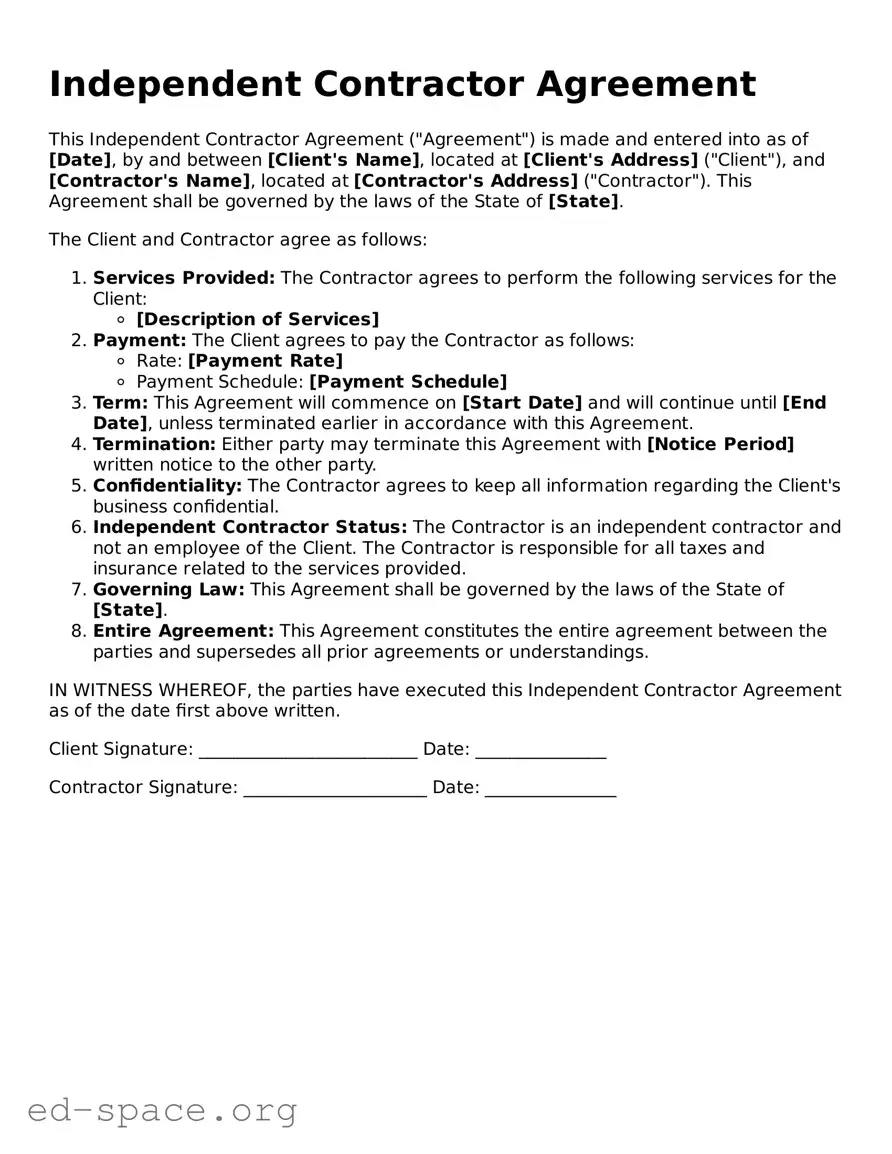
Independent Contractor Agreement
This Independent Contractor Agreement ("Agreement") is made and entered into as of [Date], by and between [Client's Name], located at [Client's Address] ("Client"), and [Contractor's Name], located at [Contractor's Address] ("Contractor"). This Agreement shall be governed by the laws of the State of [State].
The Client and Contractor agree as follows:
IN WITNESS WHEREOF, the parties have executed this Independent Contractor Agreement as of the date first above written.
Client Signature: _________________________ Date: _______________
Contractor Signature: _____________________ Date: _______________
| Fact Name | Description |
|---|---|
| Definition | An Independent Contractor Agreement is a legal document that outlines the relationship between a contractor and a client, specifying the terms of work, payment, and responsibilities. |
| Purpose | This agreement serves to clarify the nature of the working relationship, ensuring both parties understand their rights and obligations. |
| Governing Law | The agreement is typically governed by the laws of the state where the work is performed, which may vary from state to state. |
| Payment Terms | It includes details on how and when the contractor will be compensated, whether by hourly rate, project fee, or commission. |
| Scope of Work | The agreement outlines the specific tasks and responsibilities of the contractor, helping to avoid misunderstandings. |
| Confidentiality | Many agreements include clauses that protect sensitive information shared during the course of work. |
| Termination Clause | It specifies the conditions under which either party can terminate the agreement, providing clarity on the process. |
| Liability | The agreement often addresses liability issues, outlining who is responsible for damages or losses incurred during the contract period. |
| State-Specific Considerations | Some states have specific regulations regarding independent contractors, which may necessitate additional clauses or considerations in the agreement. |
Completing the Independent Contractor Agreement form is a straightforward process that helps ensure clarity between parties involved. Follow the steps below to accurately fill out the form and establish a solid foundation for your working relationship.
What is an Independent Contractor Agreement?
An Independent Contractor Agreement is a legal document that outlines the relationship between a business and an independent contractor. It specifies the terms of the work to be performed, the payment structure, and the rights and responsibilities of both parties. This agreement helps to clarify expectations and protect the interests of both the contractor and the hiring entity.
Why is it important to have an Independent Contractor Agreement?
Having an Independent Contractor Agreement is crucial for several reasons. It provides clear guidelines on the scope of work, payment terms, and deadlines, which helps prevent misunderstandings. Furthermore, it establishes the contractor's status as an independent entity, which is important for tax purposes and liability issues. By formalizing the relationship, both parties can avoid potential legal disputes down the line.
What should be included in an Independent Contractor Agreement?
An effective Independent Contractor Agreement should include several key components. These typically encompass the scope of work, payment terms, deadlines, confidentiality clauses, and termination conditions. Additionally, it may address intellectual property rights, liability limitations, and any applicable laws governing the agreement. Including these elements ensures that all parties have a clear understanding of their obligations and rights.
How does an Independent Contractor differ from an employee?
The primary distinction between an independent contractor and an employee lies in the level of control and independence. Independent contractors operate their own businesses, set their own hours, and often work for multiple clients simultaneously. Employees, on the other hand, typically work under the direction of their employer, receive benefits, and have taxes withheld from their paychecks. This classification affects tax obligations and legal protections, making it essential to understand the differences.
Can an Independent Contractor Agreement be modified?
Yes, an Independent Contractor Agreement can be modified, but it is important to do so in writing. Both parties should agree to any changes, which should be documented to avoid future disputes. Verbal agreements or informal changes can lead to confusion and potential legal issues. A written amendment provides clarity and serves as a record of the agreed-upon modifications.
What happens if either party breaches the agreement?
If either party breaches the Independent Contractor Agreement, the other party may have legal recourse. The agreement typically outlines the steps to be taken in the event of a breach, which may include mediation, arbitration, or litigation. Remedies for breach can vary, ranging from monetary damages to specific performance, depending on the nature of the breach and the terms of the agreement.
Is it necessary to consult a lawyer when drafting an Independent Contractor Agreement?
While it is not strictly necessary to consult a lawyer when drafting an Independent Contractor Agreement, it is highly advisable. Legal professionals can provide valuable insights into the specific laws applicable in your jurisdiction and help ensure that the agreement is comprehensive and enforceable. Their expertise can prevent potential pitfalls and safeguard the interests of both parties involved.
How can I terminate an Independent Contractor Agreement?
Terminating an Independent Contractor Agreement typically involves following the procedures outlined within the document itself. Most agreements will specify the conditions under which termination can occur, such as breach of contract or completion of the project. It is essential to provide written notice to the contractor, detailing the reasons for termination, and to adhere to any notice periods specified in the agreement.
Failing to include the correct legal name. It is essential to provide the full legal name of both the contractor and the hiring party. Omitting or misspelling names can lead to complications later.
Not specifying the scope of work. Clearly outlining the services to be provided is crucial. Vague descriptions can result in misunderstandings and disputes down the line.
Neglecting to define payment terms. Stipulating how and when payments will be made helps to avoid confusion. This includes detailing the payment method, due dates, and any potential late fees.
Overlooking the importance of confidentiality clauses. If sensitive information will be shared, including a confidentiality agreement protects both parties’ interests.
Ignoring the need for a termination clause. A well-defined termination process can help both parties understand their rights and responsibilities should the agreement need to end prematurely.
Not addressing intellectual property rights. Clarifying who owns the work produced can prevent future disputes over ownership and usage rights.
Failing to include a dispute resolution process. Establishing a method for resolving disagreements can save time and resources if conflicts arise.
Using outdated or generic templates. Each agreement should be tailored to the specific circumstances of the project. Relying on a one-size-fits-all approach can lead to gaps in coverage.
Not reviewing the agreement thoroughly before signing. Both parties should take the time to read and understand every section of the contract to ensure clarity and agreement.
Failing to consult with a legal professional. Seeking legal advice can provide valuable insights and help to identify potential issues before they become problems.
When engaging an independent contractor, several additional documents may be necessary to ensure clarity and protect the interests of both parties. These documents help define the working relationship, outline expectations, and provide legal safeguards. Here are four common forms often used alongside the Independent Contractor Agreement:
These documents play a crucial role in establishing a clear framework for the independent contractor relationship. By utilizing them, both parties can work together more effectively and minimize potential disputes.
When considering the Independent Contractor Agreement, it is helpful to recognize its similarities with other legal documents that serve to outline relationships and expectations between parties. Below is a list of nine such documents, each sharing common features with the Independent Contractor Agreement.
Each of these documents plays a crucial role in formalizing relationships and ensuring that all parties have a clear understanding of their rights and responsibilities. By recognizing their similarities, one can better appreciate the importance of well-drafted agreements in various contexts.
When filling out the Independent Contractor Agreement form, it's important to pay attention to details. Here are five things you should and shouldn't do:
Understanding Independent Contractor Agreements is crucial for both businesses and individuals. However, several misconceptions can lead to confusion and potential issues. Below is a list of ten common misconceptions about these agreements, along with clarifications.
By addressing these misconceptions, individuals and businesses can better navigate the complexities of independent contractor relationships.
When filling out and using the Independent Contractor Agreement form, it’s essential to understand its purpose and how it can protect both parties involved. Here are some key takeaways to consider:
By keeping these points in mind, you can create a comprehensive and effective Independent Contractor Agreement that serves the interests of both parties involved.