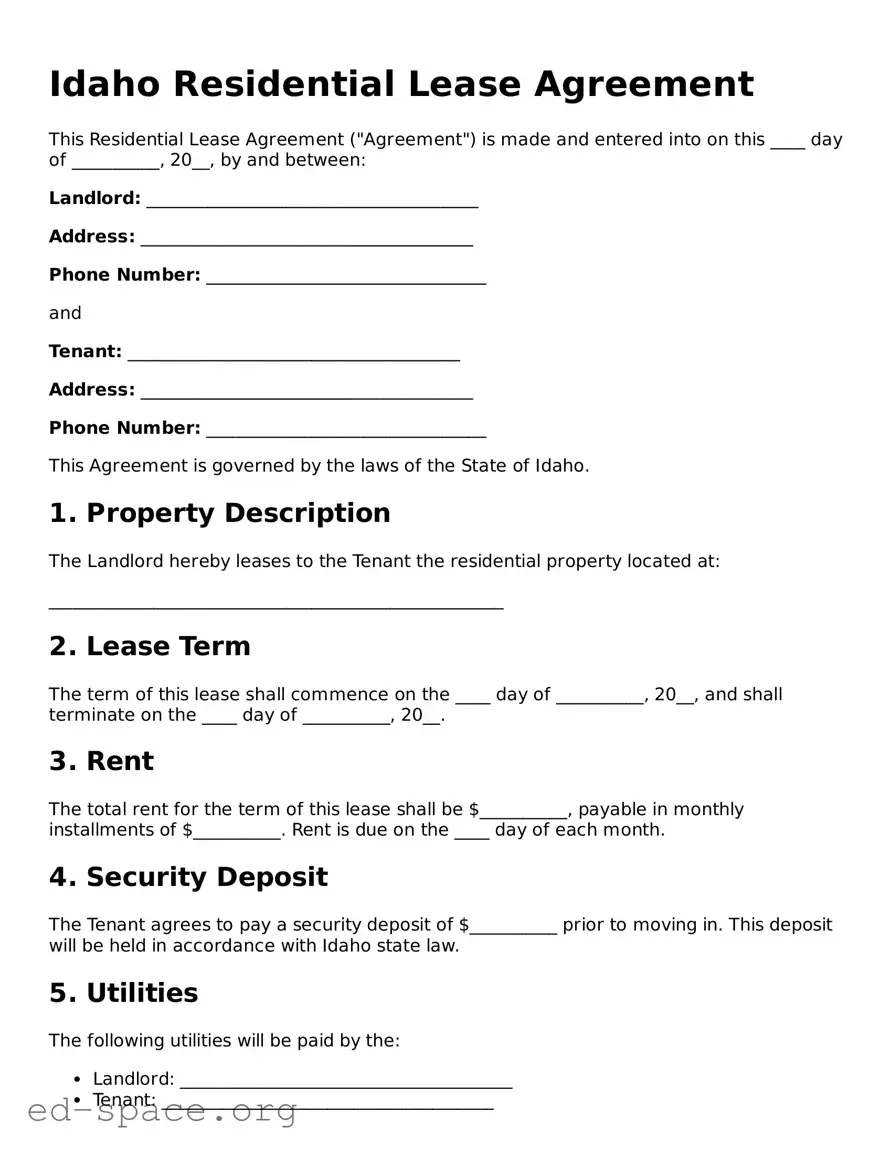
In the realm of residential leasing, the Idaho Residential Lease Agreement form serves as a crucial tool for both landlords and tenants, outlining the rights and responsibilities of each party involved. This document typically encompasses essential elements such as the duration of the lease, the rental amount, and the terms regarding security deposits. It provides clarity on maintenance responsibilities, ensuring that both landlords and tenants understand who is accountable for repairs and upkeep. Additionally, the agreement often includes provisions for termination, addressing how either party may end the lease under specific conditions. By clearly delineating these key aspects, the Idaho Residential Lease Agreement fosters a transparent and respectful relationship between landlords and tenants, ultimately contributing to a harmonious living environment. Understanding this form is vital for anyone engaging in rental agreements within the state, as it helps to prevent disputes and misunderstandings down the line.
Idaho Residential Lease Agreement
This Residential Lease Agreement ("Agreement") is made and entered into on this ____ day of __________, 20__, by and between:
Landlord: ______________________________________
Address: ______________________________________
Phone Number: ________________________________
and
Tenant: ______________________________________
Address: ______________________________________
Phone Number: ________________________________
This Agreement is governed by the laws of the State of Idaho.
1. Property Description
The Landlord hereby leases to the Tenant the residential property located at:
____________________________________________________
2. Lease Term
The term of this lease shall commence on the ____ day of __________, 20__, and shall terminate on the ____ day of __________, 20__.
3. Rent
The total rent for the term of this lease shall be $__________, payable in monthly installments of $__________. Rent is due on the ____ day of each month.
4. Security Deposit
The Tenant agrees to pay a security deposit of $__________ prior to moving in. This deposit will be held in accordance with Idaho state law.
5. Utilities
The following utilities will be paid by the:
6. Maintenance and Repairs
The Tenant agrees to maintain the premises in good condition and to notify the Landlord of any needed repairs. The Landlord is responsible for major repairs unless caused by Tenant negligence.
7. Termination
Either party may terminate this Agreement by providing written notice of ____ days prior to the intended termination date.
8. Governing Law
This Agreement shall be governed by and construed in accordance with the laws of the State of Idaho.
9. Signatures
By signing below, both parties agree to the terms outlined in this Residential Lease Agreement.
Landlord Signature: _____________________________ Date: ________________
Tenant Signature: _____________________________ Date: ________________
| Fact Name | Details |
|---|---|
| Purpose | The Idaho Residential Lease Agreement form is used to outline the terms and conditions of renting a residential property in Idaho. |
| Governing Laws | This agreement is governed by the Idaho Code, specifically Title 55, Chapter 2, which addresses landlord and tenant rights and responsibilities. |
| Duration | The lease can be for a fixed term (e.g., one year) or a month-to-month arrangement, depending on the agreement between the landlord and tenant. |
| Security Deposit | Idaho law allows landlords to collect a security deposit, which cannot exceed one month's rent for residential leases. |
Filling out the Idaho Residential Lease Agreement form is a straightforward process. This form outlines the terms of the rental agreement between the landlord and the tenant. It is essential to complete all sections accurately to ensure clarity and avoid misunderstandings in the future.
What is an Idaho Residential Lease Agreement?
The Idaho Residential Lease Agreement is a legal document that outlines the terms and conditions under which a landlord rents residential property to a tenant. This agreement protects the rights of both parties and provides clarity regarding responsibilities, payment terms, and property use.
What key elements should be included in the lease agreement?
A comprehensive lease agreement typically includes the names of the landlord and tenant, property address, rental amount, payment due date, lease duration, security deposit details, maintenance responsibilities, and rules regarding pets and guests. Including these elements ensures that both parties understand their obligations.
How long is a typical lease term in Idaho?
Can a landlord increase rent during the lease term?
Generally, a landlord cannot increase rent during the lease term unless the lease specifically allows for it. Rent increases are typically only permissible at the end of the lease term, provided the landlord gives proper notice to the tenant as outlined in the lease agreement.
What happens if a tenant needs to break the lease early?
If a tenant needs to break the lease early, they should refer to the lease agreement for the specific terms regarding early termination. Many agreements include clauses that outline penalties or conditions for breaking the lease, such as providing notice or paying a fee. Open communication with the landlord may also lead to a mutually agreeable solution.
Is a security deposit required in Idaho?
Yes, landlords in Idaho often require a security deposit. This deposit serves as protection for the landlord against potential damages or unpaid rent. The amount typically cannot exceed one month's rent, and landlords are required to return the deposit within 21 days after the tenant moves out, minus any legitimate deductions.
What rights do tenants have under Idaho law?
Tenants in Idaho have several rights, including the right to a habitable living environment, the right to privacy, and the right to fair treatment without discrimination. If a tenant believes their rights have been violated, they may seek assistance from local housing authorities or legal aid organizations.
Can a lease agreement be modified once it is signed?
Yes, a lease agreement can be modified after it is signed, but both parties must agree to the changes. It is advisable to document any modifications in writing and have both the landlord and tenant sign the updated agreement to ensure clarity and enforceability.
Failing to provide accurate personal information, such as full names and contact details, can lead to confusion and legal issues later on.
Not specifying the lease term can create uncertainty regarding the duration of the rental agreement. Clearly stating the start and end dates is essential.
Overlooking the inclusion of rent payment details, including the amount, due date, and acceptable payment methods, may result in misunderstandings.
Neglecting to address security deposits can lead to disputes. It is important to outline the amount, conditions for return, and any deductions that may be made.
Not clarifying maintenance responsibilities can create tension between landlords and tenants. Both parties should understand who is responsible for repairs and upkeep.
Leaving out rules regarding pets can lead to issues later. If pets are allowed, stipulating any restrictions or fees is advisable.
Failing to include information about utilities can result in unexpected costs. Clearly stating which utilities are covered in the rent is crucial.
Not addressing the issue of subletting can lead to unauthorized tenants. Clearly defining whether subletting is allowed and under what conditions is important.
Ignoring local laws and regulations when filling out the lease can lead to unenforceable clauses. Familiarity with Idaho's rental laws is essential.
Forgetting to include signatures from both parties can render the lease invalid. All parties involved must sign and date the agreement for it to be legally binding.
When entering into a rental agreement in Idaho, it's important to have the right documents in place. These documents help clarify the terms of the lease and protect both the landlord and tenant. Here’s a list of other forms and documents that are often used alongside the Idaho Residential Lease Agreement.
Having these documents in order can make the leasing process smoother and help avoid misunderstandings between landlords and tenants. Each document plays a vital role in ensuring a fair and transparent rental experience.
When filling out the Idaho Residential Lease Agreement form, it's important to be careful and thorough. Here are some guidelines to help you navigate the process.
Following these tips can help ensure a smoother leasing process. Taking the time to fill out the form properly can save you from potential issues down the line.
When it comes to the Idaho Residential Lease Agreement, several misconceptions can lead to confusion for both landlords and tenants. Understanding these common misunderstandings can help ensure a smoother rental experience. Here are six misconceptions:
By clearing up these misconceptions, both landlords and tenants can engage in a more informed and productive rental relationship. Understanding the details of the Idaho Residential Lease Agreement helps avoid disputes and fosters a better living environment.
When filling out and using the Idaho Residential Lease Agreement form, it is essential to understand several key points to ensure a smooth rental experience. Here are some important takeaways:
By paying attention to these details, both landlords and tenants can establish a clear understanding of their rights and responsibilities, leading to a more positive rental experience.