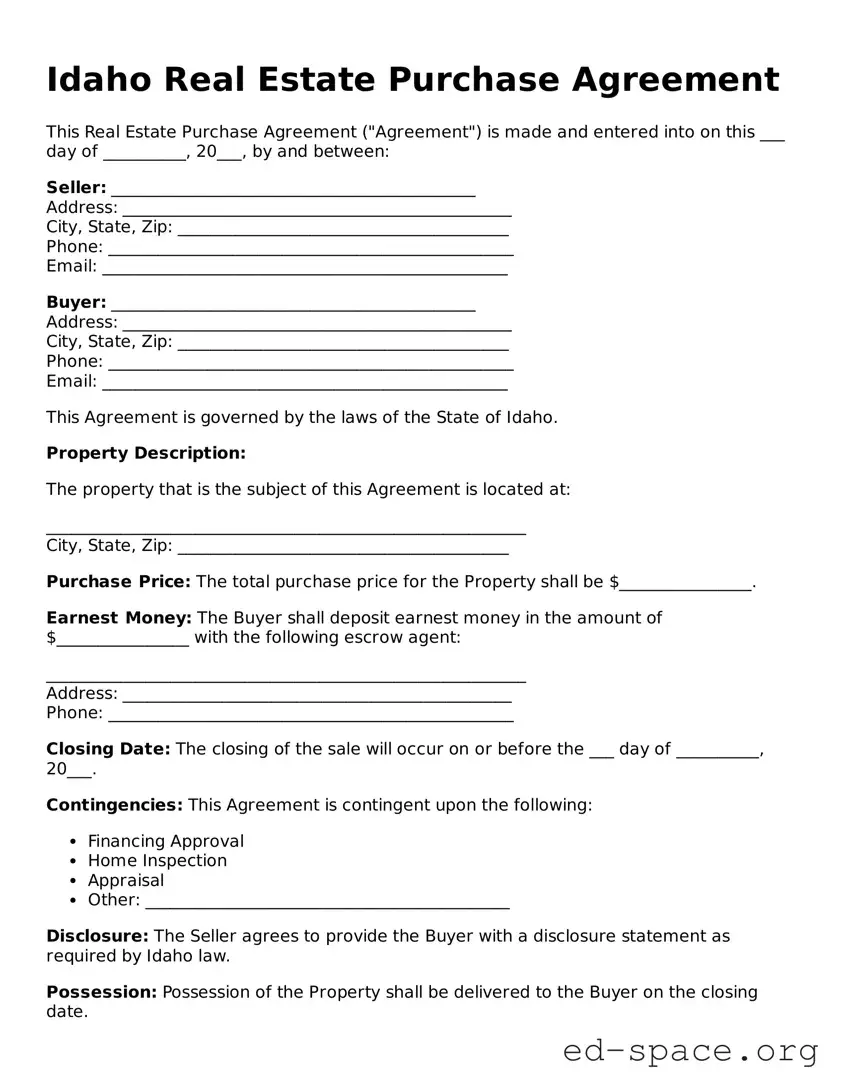
The Idaho Real Estate Purchase Agreement form serves as a crucial document in the process of buying or selling property in the state. This form outlines the terms and conditions agreed upon by both the buyer and the seller, ensuring that each party understands their rights and obligations. Key components include the purchase price, financing details, and the property description, which provides clarity on what is being sold. Additionally, the form addresses contingencies, such as inspections and financing approval, allowing buyers to protect their interests. Important dates, including the closing date and any deadlines for contingencies, are also specified to keep the transaction on track. By using this form, both parties can navigate the complexities of real estate transactions with greater confidence and transparency.
Idaho Real Estate Purchase Agreement
This Real Estate Purchase Agreement ("Agreement") is made and entered into on this ___ day of __________, 20___, by and between:
Seller: ____________________________________________
Address: _______________________________________________
City, State, Zip: ________________________________________
Phone: _________________________________________________
Email: _________________________________________________
Buyer: ____________________________________________
Address: _______________________________________________
City, State, Zip: ________________________________________
Phone: _________________________________________________
Email: _________________________________________________
This Agreement is governed by the laws of the State of Idaho.
Property Description:
The property that is the subject of this Agreement is located at:
__________________________________________________________
City, State, Zip: ________________________________________
Purchase Price: The total purchase price for the Property shall be $________________.
Earnest Money: The Buyer shall deposit earnest money in the amount of $________________ with the following escrow agent:
__________________________________________________________
Address: _______________________________________________
Phone: _________________________________________________
Closing Date: The closing of the sale will occur on or before the ___ day of __________, 20___.
Contingencies: This Agreement is contingent upon the following:
Disclosure: The Seller agrees to provide the Buyer with a disclosure statement as required by Idaho law.
Possession: Possession of the Property shall be delivered to the Buyer on the closing date.
Signatures:
In witness whereof, the parties hereto have executed this Agreement as of the date first above written.
Seller's Signature: _____________________________
Date: ________________
Buyer's Signature: _____________________________
Date: ________________
| Fact Name | Details |
|---|---|
| Governing Law | The Idaho Real Estate Purchase Agreement is governed by the laws of the State of Idaho. |
| Purpose | This form is used to outline the terms and conditions of a real estate transaction between a buyer and a seller. |
| Parties Involved | The agreement includes the names and contact information of both the buyer and the seller. |
| Property Description | A detailed description of the property being sold must be included in the agreement. |
| Purchase Price | The total purchase price of the property is clearly stated, along with any deposit amounts. |
| Closing Date | The agreement specifies a closing date, which is the date when the property transfer will be finalized. |
| Contingencies | Buyers may include contingencies, such as financing or inspection requirements, in the agreement. |
| Disclosures | Sellers are required to provide certain disclosures about the property, including any known defects. |
| Signatures | The agreement must be signed by both parties to be legally binding. |
Filling out the Idaho Real Estate Purchase Agreement form is an important step in the home buying process. It sets the stage for negotiations and helps ensure that both parties are on the same page. Once you have the form ready, you can proceed with the necessary steps to complete it accurately.
After completing the form, review it carefully to ensure all information is accurate and complete. It’s advisable to keep a copy for your records and provide one to the other party involved in the transaction.
What is the Idaho Real Estate Purchase Agreement form?
The Idaho Real Estate Purchase Agreement is a legal document used when buying or selling real estate in Idaho. It outlines the terms and conditions of the sale, including the purchase price, closing date, and any contingencies that must be met before the transaction can be completed. This agreement serves to protect both the buyer and the seller by clearly defining their obligations and expectations throughout the process.
Who should use the Idaho Real Estate Purchase Agreement?
Both buyers and sellers of real estate in Idaho should use this form. It is essential for anyone involved in a real estate transaction to have a written agreement to ensure that all parties are on the same page regarding the sale. Real estate agents often facilitate this process, but individuals can also use the form independently.
What key elements are included in the agreement?
The agreement typically includes important details such as the names of the parties involved, the property address, the purchase price, and the method of payment. It also outlines any contingencies, such as financing or inspections, that must be satisfied before the sale can proceed. Additionally, it specifies the closing date and any other terms relevant to the transaction.
Can the Idaho Real Estate Purchase Agreement be modified?
Yes, the Idaho Real Estate Purchase Agreement can be modified. Both parties must agree to any changes, and those modifications should be documented in writing. This ensures that all parties are aware of the new terms and helps prevent misunderstandings later in the process.
What happens if one party breaches the agreement?
If one party breaches the agreement, the other party may have several options. They can seek to enforce the terms of the contract, negotiate a resolution, or pursue legal action for damages. It is crucial to consult with a legal professional to understand the best course of action in such situations.
Is it necessary to have a lawyer review the agreement?
While it is not legally required to have a lawyer review the Idaho Real Estate Purchase Agreement, it is highly advisable. A lawyer can help ensure that the document is complete, accurate, and in your best interest. Their expertise can provide peace of mind and help avoid potential legal issues down the line.
Failing to include all parties involved in the transaction. Make sure to list everyone who has a legal interest in the property.
Not providing accurate property descriptions. Ensure that the property address and legal description are correct to avoid confusion later.
Overlooking the purchase price. Clearly state the agreed-upon price to prevent disputes.
Missing contingencies. Include any necessary conditions, such as financing or inspection requirements, to protect your interests.
Neglecting to specify the closing date. Agreeing on a timeline helps keep the transaction on track.
Not addressing earnest money. Clearly outline the amount and terms of the earnest money deposit to avoid misunderstandings.
Ignoring additional terms and conditions. If there are specific agreements between the buyer and seller, include them to ensure clarity.
Failing to sign and date the agreement. All parties must sign and date the document for it to be legally binding.
When engaging in real estate transactions in Idaho, several important documents accompany the Real Estate Purchase Agreement. Each document serves a specific purpose and helps ensure that both buyers and sellers understand their rights and responsibilities. Below is a list of commonly used forms and documents that may be needed.
Understanding these documents is essential for a smooth real estate transaction. Each one plays a crucial role in protecting the interests of both buyers and sellers, fostering a transparent and fair process. Always consider seeking professional advice when navigating these forms to ensure compliance and clarity.
When filling out the Idaho Real Estate Purchase Agreement form, there are several important considerations to keep in mind. Following these guidelines can help ensure a smoother transaction and protect your interests.
Here are six things you should do:
On the other hand, here are six things you should avoid doing:
This is not true. While the form provides a standard framework, it can and should be customized to reflect the specific terms and conditions of each transaction. Buyers and sellers often have unique needs that require modifications to the standard language.
This is a common misunderstanding. The agreement can be amended if both parties consent to the changes. It is important to document any modifications in writing to avoid confusion later on.
Signing the agreement does not ensure that the sale will close. Various factors, such as financing issues or inspection results, can affect the closing process. The agreement outlines the terms but does not eliminate potential obstacles.
This is misleading. While buyers typically pay a portion of the closing costs, the agreement can specify how costs will be allocated between the buyer and seller. Negotiation is key, and both parties can agree on who pays what.
This is incorrect. The Idaho Real Estate Purchase Agreement protects the interests of both buyers and sellers. It outlines the rights and responsibilities of each party, ensuring that both sides have a clear understanding of the transaction.
When filling out and using the Idaho Real Estate Purchase Agreement form, keep these key takeaways in mind: