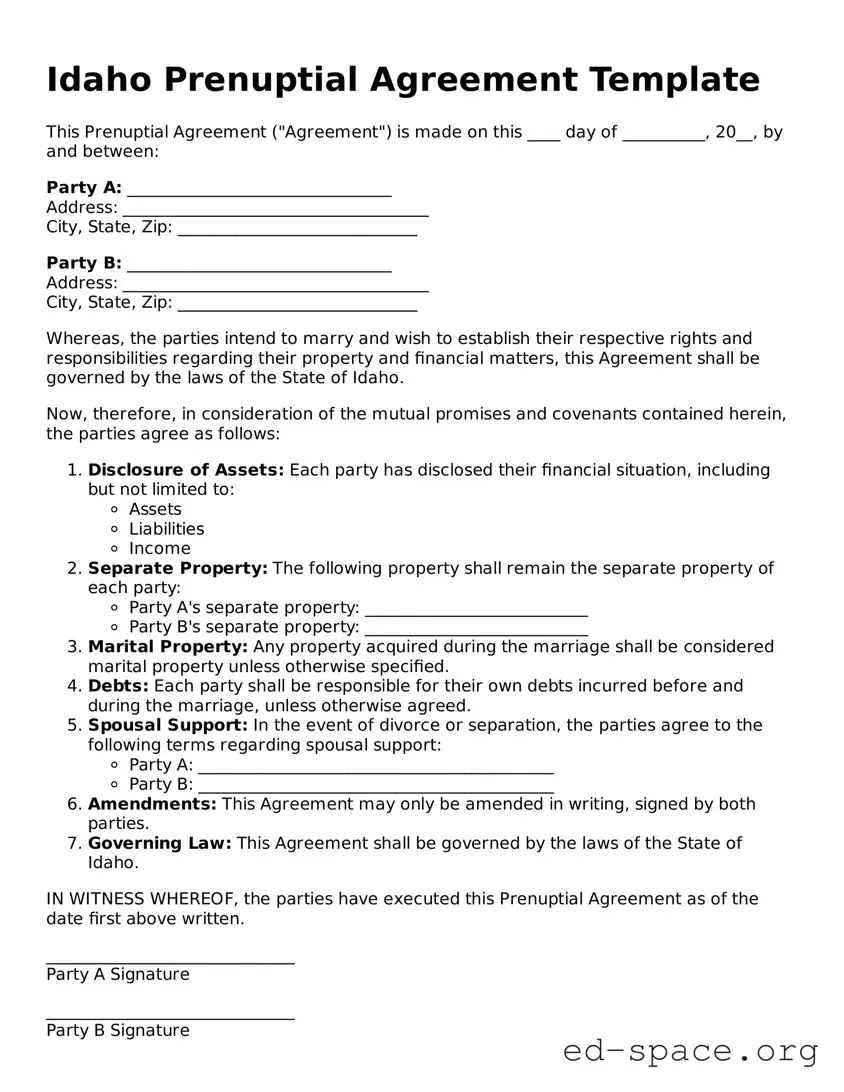
In Idaho, a prenuptial agreement serves as a crucial tool for couples planning to marry, allowing them to outline their financial rights and responsibilities before entering into matrimony. This legally binding document can address a variety of important aspects, including the division of property, spousal support, and debt allocation in the event of a divorce or separation. By clearly defining these elements, the agreement aims to reduce potential conflicts and misunderstandings in the future. Couples can also use the form to protect individual assets acquired before marriage, ensuring that personal property remains separate. Additionally, the prenuptial agreement can establish guidelines for financial management during the marriage, fostering transparency and communication between partners. Understanding the nuances of the Idaho Prenuptial Agreement form is essential for anyone considering this proactive approach to marital planning, as it provides a framework for navigating the complexities of financial matters in a relationship.
Idaho Prenuptial Agreement Template
This Prenuptial Agreement ("Agreement") is made on this ____ day of __________, 20__, by and between:
Party A: ________________________________
Address: _____________________________________
City, State, Zip: _____________________________
Party B: ________________________________
Address: _____________________________________
City, State, Zip: _____________________________
Whereas, the parties intend to marry and wish to establish their respective rights and responsibilities regarding their property and financial matters, this Agreement shall be governed by the laws of the State of Idaho.
Now, therefore, in consideration of the mutual promises and covenants contained herein, the parties agree as follows:
IN WITNESS WHEREOF, the parties have executed this Prenuptial Agreement as of the date first above written.
______________________________
Party A Signature
______________________________
Party B Signature
______________________________
Date
| Fact Name | Description |
|---|---|
| Definition | A prenuptial agreement in Idaho is a legal document that outlines the distribution of assets and responsibilities in the event of divorce or separation. |
| Governing Law | Idaho Code § 32-1401 governs prenuptial agreements, ensuring they are enforceable as long as they meet specific legal requirements. |
| Voluntary Agreement | Both parties must enter into the agreement voluntarily, without any coercion or undue influence from the other party. |
| Full Disclosure | Each party is required to provide a full and fair disclosure of their financial situation, including assets and debts, prior to signing the agreement. |
| Legal Representation | While not mandatory, it is highly recommended that each party consult with their own attorney to ensure that their rights and interests are protected. |
| Modification and Revocation | Prenuptial agreements can be modified or revoked at any time, provided both parties agree to the changes in writing. |
Completing the Idaho Prenuptial Agreement form requires careful attention to detail and a clear understanding of the information needed. Once you have gathered all necessary documents and information, follow these steps to fill out the form accurately.
After completing the form, review it thoroughly to ensure all information is correct. It may also be beneficial to consult with a legal professional to confirm that the agreement meets all legal requirements and adequately protects both parties' interests.
What is a prenuptial agreement in Idaho?
A prenuptial agreement, often called a "prenup," is a legal document that a couple creates before getting married. It outlines how assets and debts will be divided in case of divorce or separation. In Idaho, this agreement can also address issues like spousal support and property rights.
Why should I consider a prenuptial agreement?
Consider a prenuptial agreement if you want to protect your individual assets, clarify financial responsibilities, or ensure a fair division of property in the event of a divorce. It can provide peace of mind and help avoid conflicts later on.
What are the requirements for a valid prenuptial agreement in Idaho?
To be valid in Idaho, a prenuptial agreement must be in writing and signed by both parties. It should be executed voluntarily, without coercion, and both parties should fully disclose their financial situations. It’s also advisable to have independent legal counsel to ensure fairness.
Can I include child custody or child support provisions in a prenup?
No, Idaho law does not allow prenuptial agreements to dictate child custody or child support arrangements. These matters are determined based on the best interests of the child at the time of divorce or separation.
How do I create a prenuptial agreement in Idaho?
Creating a prenuptial agreement involves discussing your financial situation with your partner and drafting the agreement. It’s wise to consult with a lawyer who specializes in family law to ensure that the document meets all legal requirements and is enforceable.
Can I modify or revoke a prenuptial agreement after marriage?
Yes, you can modify or revoke a prenuptial agreement after marriage. Both parties must agree to the changes, and it’s best to document these changes in writing. Consulting with a lawyer during this process is recommended to ensure everything is done correctly.
What happens if we don’t have a prenuptial agreement?
If you don’t have a prenuptial agreement and later divorce, Idaho law will govern the division of your assets and debts. This could lead to a lengthy and potentially contentious process, as the court will decide how to fairly divide your property based on state laws.
Is a prenuptial agreement enforceable in Idaho?
Yes, a prenuptial agreement is generally enforceable in Idaho as long as it meets the legal requirements. However, if a court finds that the agreement was signed under duress, or if it’s deemed unfair or unconscionable, it may not be enforced.
How long does it take to create a prenuptial agreement?
The time it takes to create a prenuptial agreement can vary. It often depends on the complexity of your financial situation and how quickly both parties can reach an agreement. Typically, you should allow several weeks to finalize the document before your wedding.
What should I include in a prenuptial agreement?
Include provisions regarding the division of property, management of debts, and spousal support. You can also address how to handle future income and assets acquired during the marriage. Be thorough and clear to avoid misunderstandings later.
Failing to fully disclose assets and liabilities. Transparency is crucial in a prenuptial agreement. When one party does not provide complete information about their financial situation, it can lead to disputes later on.
Not considering future financial changes. Many individuals overlook the potential for income growth, inheritance, or other financial changes that could occur during the marriage. This oversight can render the agreement outdated.
Using vague language. Ambiguity can create confusion and lead to misinterpretation of the agreement's terms. Clear and specific language should be used to define rights and responsibilities.
Neglecting to include provisions for debt. Many people focus solely on assets, forgetting that debts also need to be addressed. Clearly outlining who is responsible for existing and future debts is essential.
Not seeking legal advice. Some individuals attempt to draft their own agreements without professional guidance. This can result in legally unenforceable terms or omissions that could have been easily addressed by an attorney.
Ignoring state laws. Each state has its own regulations regarding prenuptial agreements. Failing to adhere to Idaho's specific requirements can jeopardize the validity of the document.
Not updating the agreement after significant life events. Major changes such as the birth of a child, a career shift, or significant financial changes should prompt a review and potential update of the prenuptial agreement.
Signing the agreement under pressure. It is essential that both parties enter into the agreement willingly and without coercion. Pressure can lead to claims of unfairness or duress later.
Failing to consider the emotional aspects. A prenuptial agreement is not just a financial document; it can also affect the couple's relationship. Open discussions about the agreement can help mitigate misunderstandings and foster trust.
When preparing a prenuptial agreement in Idaho, several other forms and documents may be necessary to ensure that all legal aspects are addressed. These documents can help clarify financial responsibilities and protect the interests of both parties entering the marriage. Below is a list of commonly used forms and documents that often accompany a prenuptial agreement.
Having these documents prepared and reviewed can greatly enhance the effectiveness of a prenuptial agreement. It is advisable to consult with a legal professional to ensure that all necessary forms are completed accurately and in accordance with Idaho law. This proactive approach can help both parties enter their marriage with confidence and clarity.
When filling out the Idaho Prenuptial Agreement form, it’s essential to approach the process with care. Here’s a list of things you should and shouldn’t do:
Many people have misunderstandings about prenuptial agreements, especially in Idaho. Below are some common misconceptions along with clarifications to help you better understand this important legal document.
Understanding these misconceptions can help couples make informed decisions about prenuptial agreements in Idaho. It’s important to approach this topic with openness and clarity to ensure both parties feel secure in their relationship.
When considering a prenuptial agreement in Idaho, it is essential to understand the following key points: