When starting a business in Idaho, understanding the importance of an Operating Agreement is crucial for any limited liability company (LLC). This document serves as the backbone of your business structure, outlining the management framework and operational guidelines that govern your LLC. It details the roles and responsibilities of members, specifies how profits and losses will be allocated, and establishes procedures for making key decisions. Additionally, the Operating Agreement can address what happens in the event of a member's departure or the addition of new members. While Idaho law does not mandate that LLCs have an Operating Agreement, having one in place can provide clarity and protect the interests of all members involved. By clearly defining the expectations and processes, this agreement helps to prevent misunderstandings and disputes down the road, ensuring smoother operations and a stronger foundation for your business.
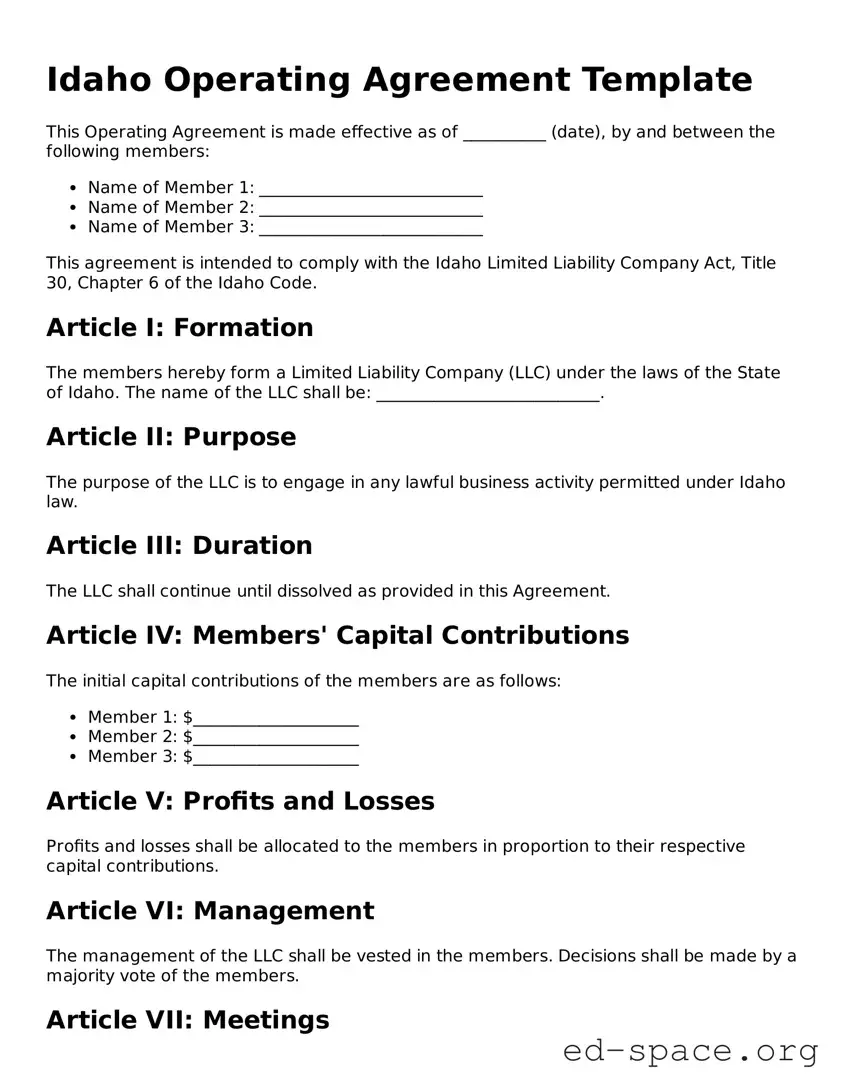
Idaho Operating Agreement Template
This Operating Agreement is made effective as of __________ (date), by and between the following members:
This agreement is intended to comply with the Idaho Limited Liability Company Act, Title 30, Chapter 6 of the Idaho Code.
Article I: Formation
The members hereby form a Limited Liability Company (LLC) under the laws of the State of Idaho. The name of the LLC shall be: ___________________________.
Article II: Purpose
The purpose of the LLC is to engage in any lawful business activity permitted under Idaho law.
Article III: Duration
The LLC shall continue until dissolved as provided in this Agreement.
Article IV: Members' Capital Contributions
The initial capital contributions of the members are as follows:
Article V: Profits and Losses
Profits and losses shall be allocated to the members in proportion to their respective capital contributions.
Article VI: Management
The management of the LLC shall be vested in the members. Decisions shall be made by a majority vote of the members.
Article VII: Meetings
Meetings of the members shall be held at least annually. Notice of meetings shall be given at least __________ (number of days) days in advance.
Article VIII: Indemnification
The LLC shall indemnify any member or manager against expenses and liabilities incurred in connection with the LLC to the fullest extent permitted by Idaho law.
Article IX: Amendments
This Agreement may be amended only by a written agreement signed by all members.
Article X: Governing Law
This Agreement shall be governed by and construed in accordance with the laws of the State of Idaho.
IN WITNESS WHEREOF, the members have executed this Operating Agreement as of the date first above written.
Member 1 Signature: ___________________________ Date: __________
Member 2 Signature: ___________________________ Date: __________
Member 3 Signature: ___________________________ Date: __________
| Fact Name | Description |
|---|---|
| Purpose | The Idaho Operating Agreement outlines the management structure and operational procedures of a limited liability company (LLC). |
| Governing Law | The agreement is governed by the Idaho Limited Liability Company Act. |
| Members | All members of the LLC should be included in the agreement to ensure clarity on ownership and responsibilities. |
| Management Structure | The agreement specifies whether the LLC is member-managed or manager-managed, defining roles and responsibilities. |
| Capital Contributions | It outlines the initial capital contributions made by each member and any future contribution requirements. |
| Profit Distribution | The agreement details how profits and losses will be distributed among members, which can be proportional to ownership or as otherwise agreed. |
| Amendments | It includes provisions for how the agreement can be amended in the future, ensuring flexibility as the business evolves. |
| Dispute Resolution | The agreement may outline procedures for resolving disputes among members, which can help avoid lengthy litigation. |
Completing the Idaho Operating Agreement form is an important step in establishing your business structure. By following the steps outlined below, you can ensure that all necessary information is accurately provided. This process will help clarify the roles and responsibilities of each member involved in the business.
Once the form is completed, it is advisable to keep a copy for your records. This agreement will serve as a foundational document for your LLC, guiding future decisions and operations.
What is an Idaho Operating Agreement?
An Idaho Operating Agreement is a crucial document for Limited Liability Companies (LLCs) operating in Idaho. It outlines the management structure, operational procedures, and ownership details of the LLC. This agreement serves as a roadmap for how the company will function, helping to prevent disputes among members and providing clarity on roles and responsibilities.
Is an Operating Agreement required in Idaho?
While Idaho law does not mandate that LLCs have an Operating Agreement, it is highly recommended. Having one in place can protect your personal assets and clarify the internal workings of the company. It also provides a layer of protection in case of legal disputes, making it easier to resolve issues based on the agreed-upon terms.
Who should create the Operating Agreement?
All members of the LLC should collaborate to create the Operating Agreement. This ensures that everyone’s interests and expectations are considered. It’s beneficial to have open discussions about each member's role, contributions, and how profits and losses will be shared. In some cases, consulting with a legal professional can provide additional guidance and ensure that the agreement meets all necessary requirements.
What should be included in the Operating Agreement?
Key elements of an Operating Agreement typically include the LLC's name, purpose, member details, management structure, voting rights, and procedures for adding or removing members. It should also outline how profits and losses will be distributed and detail the process for handling disputes. Including these elements helps to create a comprehensive framework for the business.
Can the Operating Agreement be changed?
Yes, the Operating Agreement can be amended. Changes may be necessary as the business evolves or as members’ needs shift. It’s important to document any amendments in writing and ensure that all members agree to the changes. This practice helps maintain transparency and keeps everyone on the same page.
How does the Operating Agreement affect taxes?
The Operating Agreement itself does not directly affect taxes, but it can influence how the LLC is taxed. For example, the agreement may specify how profits are distributed, which can impact each member's tax obligations. It’s wise to consult with a tax professional to understand the implications of your agreement on your tax situation.
What happens if there is no Operating Agreement?
If an LLC does not have an Operating Agreement, Idaho's default laws will govern the business. This can lead to outcomes that may not align with the members' intentions. For instance, default laws may dictate how profits are shared or how decisions are made, which could cause misunderstandings or disputes among members.
How can I obtain an Idaho Operating Agreement template?
Many resources are available online for obtaining an Idaho Operating Agreement template. Websites that specialize in legal documents often provide customizable templates. Additionally, legal professionals can create tailored agreements that fit your LLC’s specific needs. It’s important to ensure that any template you use complies with Idaho laws.
Is it necessary to file the Operating Agreement with the state?
No, you do not need to file the Operating Agreement with the state of Idaho. This document is kept internally among the members of the LLC. However, it’s crucial to maintain a copy for your records and ensure that all members have access to it. This practice helps facilitate smooth operations and can be invaluable in the event of a dispute.
Failing to include all members of the LLC. It is important to list every member involved in the business.
Not specifying the ownership percentages. Each member's ownership share should be clearly defined to avoid future disputes.
Omitting the purpose of the LLC. Clearly stating the business purpose helps clarify the intent of the organization.
Using vague language. Specific terms and definitions should be used to ensure clarity in the agreement.
Neglecting to outline the management structure. It is essential to describe how the LLC will be managed and who will make decisions.
Not including provisions for adding or removing members. Future changes should be anticipated and addressed in the agreement.
Failing to establish a process for resolving disputes. A clear dispute resolution process can prevent conflicts from escalating.
Ignoring state-specific requirements. Each state may have unique regulations that must be followed when completing the form.
Not having the agreement reviewed by a professional. Consulting with a legal expert can help ensure that the document is complete and accurate.
When establishing a limited liability company (LLC) in Idaho, several key documents complement the Operating Agreement. Each of these forms serves a specific purpose and is essential for ensuring compliance with state laws and regulations. Below is a list of commonly used documents alongside the Idaho Operating Agreement.
Understanding these documents and their purposes can facilitate a smoother formation process for an LLC in Idaho. Each form plays a vital role in establishing a solid foundation for the business and ensuring compliance with legal requirements.
When filling out the Idaho Operating Agreement form, it is essential to approach the task with care. The following list outlines ten important do's and don'ts to ensure accuracy and compliance.
By adhering to these guidelines, individuals can effectively complete the Idaho Operating Agreement form, paving the way for a smooth business operation.
Understanding the Idaho Operating Agreement form is crucial for anyone involved in a limited liability company (LLC) in the state. However, several misconceptions can lead to confusion. Here are seven common misunderstandings:
Addressing these misconceptions can help ensure that LLC members in Idaho make informed decisions regarding their Operating Agreement. Understanding its purpose and importance is key to successful business management.
When filling out and using the Idaho Operating Agreement form, keep these key takeaways in mind:
By following these takeaways, you can ensure that your Operating Agreement is comprehensive and effective.