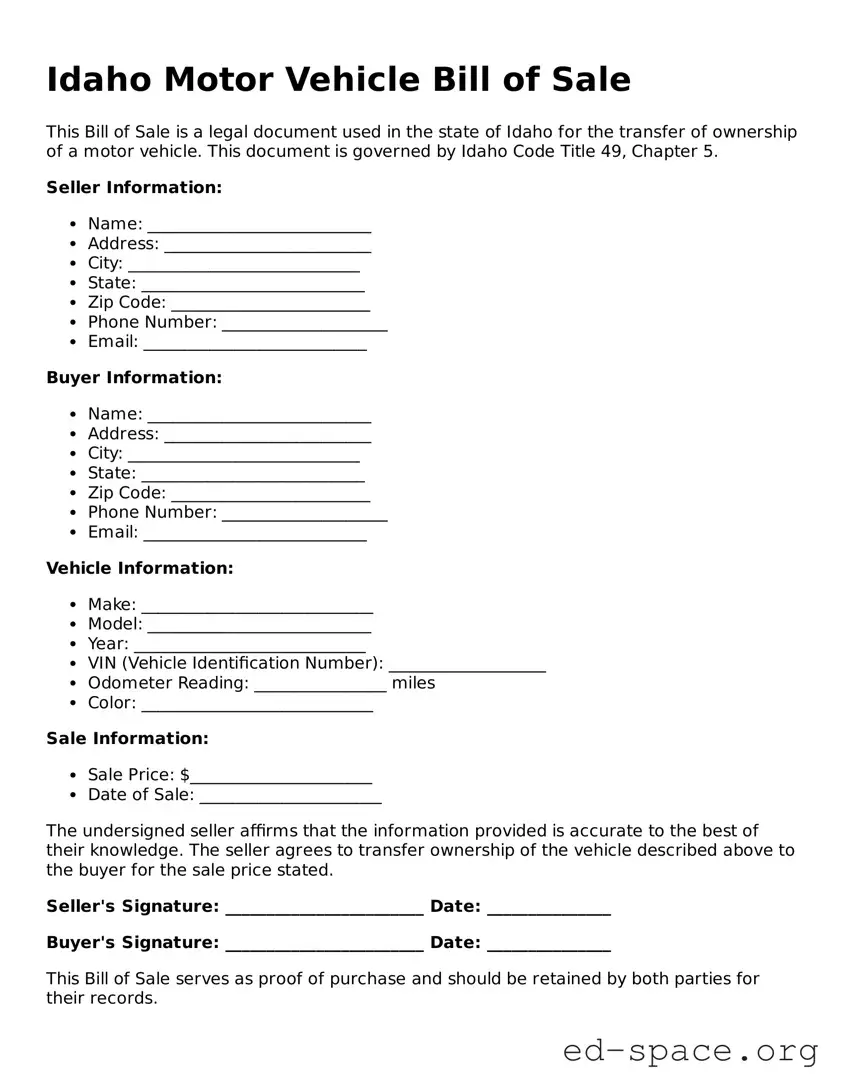
When it comes to buying or selling a vehicle in Idaho, having the right documentation is crucial to ensure a smooth transaction. One of the key documents you'll need is the Idaho Motor Vehicle Bill of Sale form. This form serves as a legal record of the sale, capturing essential details such as the vehicle's make, model, year, and Vehicle Identification Number (VIN). It also includes information about both the buyer and seller, including their names and addresses, which helps establish ownership and provides a clear trail of the transaction. Additionally, the form may outline the sale price and any terms agreed upon by both parties, offering protection for everyone involved. Whether you're a seasoned buyer or a first-time seller, understanding the importance of this document can help you navigate the process with confidence and clarity.
Idaho Motor Vehicle Bill of Sale
This Bill of Sale is a legal document used in the state of Idaho for the transfer of ownership of a motor vehicle. This document is governed by Idaho Code Title 49, Chapter 5.
Seller Information:
Buyer Information:
Vehicle Information:
Sale Information:
The undersigned seller affirms that the information provided is accurate to the best of their knowledge. The seller agrees to transfer ownership of the vehicle described above to the buyer for the sale price stated.
Seller's Signature: ________________________ Date: _______________
Buyer's Signature: ________________________ Date: _______________
This Bill of Sale serves as proof of purchase and should be retained by both parties for their records.
| Fact Name | Description |
|---|---|
| Purpose | The Idaho Motor Vehicle Bill of Sale form is used to document the sale of a vehicle between a buyer and a seller. |
| Governing Law | This form is governed by Idaho Code § 49-505, which outlines the requirements for vehicle sales in the state. |
| Required Information | The form requires details such as the vehicle's make, model, year, VIN, sale price, and the names and addresses of both the buyer and seller. |
| Signature Requirement | Both the buyer and seller must sign the form to validate the transaction. |
| Record Keeping | It is recommended that both parties keep a copy of the completed Bill of Sale for their records. |
| Usage | This form can be used for various types of vehicles, including cars, trucks, motorcycles, and trailers. |
Filling out the Idaho Motor Vehicle Bill of Sale form is a straightforward process. Once completed, this document serves as proof of the sale and transfer of ownership for a vehicle. Make sure to have all necessary information ready before you begin.
What is a Motor Vehicle Bill of Sale in Idaho?
A Motor Vehicle Bill of Sale is a legal document that records the sale of a vehicle from one party to another. In Idaho, this form serves as proof of the transaction and includes important details about the vehicle, such as its make, model, year, and Vehicle Identification Number (VIN). It also captures the names and signatures of both the buyer and seller, ensuring that both parties acknowledge the sale.
Do I need a Bill of Sale to sell a vehicle in Idaho?
While a Bill of Sale is not strictly required for every vehicle sale in Idaho, it is highly recommended. This document protects both the seller and the buyer by providing a written record of the transaction. It can be especially useful if any disputes arise later regarding ownership or payment. Additionally, some buyers may request a Bill of Sale for their records or to assist with vehicle registration.
What information should be included in the Idaho Motor Vehicle Bill of Sale?
The Idaho Motor Vehicle Bill of Sale should include several key pieces of information. This includes the full names and addresses of both the buyer and seller, a description of the vehicle (make, model, year, color, and VIN), the sale price, and the date of the transaction. Both parties should sign the document, and it’s a good idea to keep a copy for personal records.
Is there a specific format for the Bill of Sale in Idaho?
Idaho does not mandate a specific format for the Bill of Sale, but it must include the essential information mentioned earlier. Many sellers and buyers choose to use a template or form that is readily available online to ensure all necessary details are covered. This can help streamline the process and reduce the risk of missing important information.
Can I create my own Bill of Sale, or do I need a specific form?
You can create your own Bill of Sale as long as it contains all required information. However, using a pre-made form can simplify the process and ensure that you don’t overlook any critical details. Various resources online offer templates specifically designed for Idaho, which can make it easier to fill out and understand.
What should I do with the Bill of Sale after the transaction?
After the transaction is complete, both the buyer and seller should keep a copy of the Bill of Sale for their records. The buyer may need it for vehicle registration, while the seller should retain it as proof of the sale. It’s also a good idea to notify the Idaho Department of Transportation about the sale to ensure that the vehicle’s registration is updated accordingly.
Incomplete Information: Failing to provide all required details, such as the vehicle identification number (VIN) or the buyer's name, can lead to issues later on.
Incorrect VIN: Entering an incorrect vehicle identification number can create confusion and may prevent the transfer of ownership.
Missing Signatures: Both the seller and buyer must sign the form. Omitting a signature can render the bill of sale invalid.
Not Dating the Document: Failing to include the date of the transaction can cause complications in proving when the sale occurred.
Ignoring Odometer Disclosure: Not providing the odometer reading can lead to legal issues regarding mileage misrepresentation.
Using Incorrect Payment Method: Not specifying how payment was made, whether cash, check, or another method, can lead to disputes later.
Not Keeping a Copy: Failing to retain a copy of the completed bill of sale can create difficulties for both parties in the future.
Not Understanding State Requirements: Each state has specific regulations regarding vehicle sales. Ignoring Idaho's requirements can result in legal complications.
When buying or selling a vehicle in Idaho, the Motor Vehicle Bill of Sale form is essential, but it's not the only document you may need. Several other forms and documents can help facilitate the transaction and ensure that all legal requirements are met. Below is a list of commonly used documents that accompany the Motor Vehicle Bill of Sale.
These documents play a crucial role in ensuring a smooth and legally compliant vehicle transaction in Idaho. Having them prepared and organized can save time and prevent potential issues down the line.
When completing the Idaho Motor Vehicle Bill of Sale form, it is essential to follow specific guidelines to ensure accuracy and compliance. Here are eight important dos and don'ts to consider:
The Idaho Motor Vehicle Bill of Sale form is an important document for anyone buying or selling a vehicle in the state. However, several misconceptions surround this form that can lead to confusion. Below are seven common misconceptions, along with clarifications to help ensure a smooth transaction.
While it is not legally required to have a Bill of Sale in Idaho, it is highly recommended. This document serves as proof of the transaction and can protect both the buyer and seller.
In Idaho, notarization of the Bill of Sale is not a requirement. However, having it notarized can add an extra layer of authenticity and may be requested by some buyers or sellers.
Many believe that the Bill of Sale is only applicable for private sales. In reality, it can also be used for transactions involving dealerships or other businesses.
While both documents are important, they serve different purposes. The Bill of Sale is a record of the transaction, while the title transfer officially changes ownership of the vehicle.
Although it is typically the seller’s responsibility to provide the Bill of Sale, the buyer can also create one. It is essential that both parties agree on the content of the document.
This form is useful for both used and new vehicles. It documents the sale regardless of the vehicle's condition, providing clarity for both parties involved.
While there are common elements that should be included, such as the vehicle description and sale price, the format can vary. It is important to ensure that all necessary information is clearly presented.
Understanding these misconceptions can help facilitate a smoother transaction process when dealing with vehicle sales in Idaho. Always ensure that both parties are on the same page regarding the documentation involved.
When completing and utilizing the Idaho Motor Vehicle Bill of Sale form, it is essential to keep the following key points in mind:
By adhering to these guidelines, you can ensure a smooth and legally compliant transfer of vehicle ownership in Idaho.