Homepage Free Lease Agreement Form for Idaho
Content Overview

In Idaho, a Lease Agreement serves as a vital document that outlines the terms and conditions between a landlord and a tenant. This form typically includes essential details such as the duration of the lease, rental payment amounts, and the responsibilities of both parties. It also addresses critical aspects like security deposits, maintenance obligations, and rules regarding pets or subleasing. By clearly defining these elements, the Lease Agreement helps prevent misunderstandings and disputes, ensuring a smooth rental experience for everyone involved. Additionally, the form may cover provisions related to property use, termination clauses, and procedures for resolving conflicts, making it a comprehensive tool for managing rental relationships in Idaho.

Document Preview

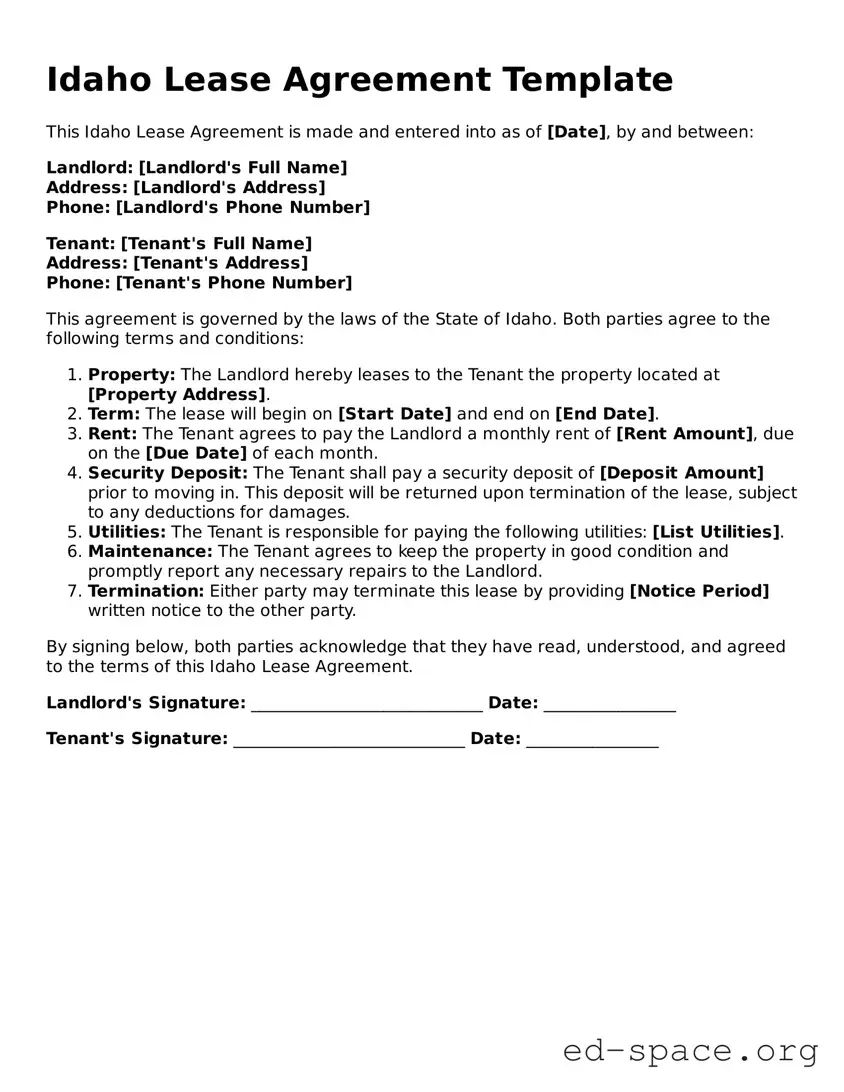
Idaho Lease Agreement Template

This Idaho Lease Agreement is made and entered into as of [Date], by and between:

Landlord: [Landlord's Full Name]
Address: [Landlord's Address]
Phone: [Landlord's Phone Number]

Tenant: [Tenant's Full Name]
Address: [Tenant's Address]
Phone: [Tenant's Phone Number]

This agreement is governed by the laws of the State of Idaho. Both parties agree to the following terms and conditions:

  1. Property: The Landlord hereby leases to the Tenant the property located at [Property Address].
  2. Term: The lease will begin on [Start Date] and end on [End Date].
  3. Rent: The Tenant agrees to pay the Landlord a monthly rent of [Rent Amount], due on the [Due Date] of each month.
  4. Security Deposit: The Tenant shall pay a security deposit of [Deposit Amount] prior to moving in. This deposit will be returned upon termination of the lease, subject to any deductions for damages.
  5. Utilities: The Tenant is responsible for paying the following utilities: [List Utilities].
  6. Maintenance: The Tenant agrees to keep the property in good condition and promptly report any necessary repairs to the Landlord.
  7. Termination: Either party may terminate this lease by providing [Notice Period] written notice to the other party.

By signing below, both parties acknowledge that they have read, understood, and agreed to the terms of this Idaho Lease Agreement.

Landlord's Signature: ____________________________ Date: ________________

Tenant's Signature: ____________________________ Date: ________________

PDF Form Details

Fact Name Details
Purpose The Idaho Lease Agreement form is used to outline the terms and conditions of renting a property.
Governing Laws Idaho Code Title 55 governs lease agreements in Idaho.
Parties Involved The agreement typically involves a landlord and a tenant.
Duration The lease can be for a fixed term or month-to-month, depending on the agreement.
Security Deposit Idaho law allows landlords to collect a security deposit, which must be returned within 21 days after lease termination.

Idaho Lease Agreement: Usage Guidelines

Filling out the Idaho Lease Agreement form is an important step in establishing a rental arrangement. Completing the form accurately ensures that both parties understand their rights and responsibilities. Follow the steps below to fill out the form correctly.

  1. Begin by entering the date at the top of the form.
  2. Provide the full names of the landlord and tenant in the designated sections.
  3. Fill in the complete address of the rental property.
  4. Specify the lease term, including the start and end dates.
  5. Indicate the amount of rent due, along with the payment schedule (monthly, weekly, etc.).
  6. Include any security deposit amount required and the terms for its return.
  7. Outline any additional fees or charges that may apply.
  8. Detail the responsibilities for utilities and maintenance.
  9. Review any rules or restrictions that apply to the property.
  10. Both parties should sign and date the agreement at the bottom of the form.

Your Questions, Answered

What is an Idaho Lease Agreement?

An Idaho Lease Agreement is a legal document that outlines the terms and conditions under which a landlord rents out property to a tenant. This agreement serves to protect the rights of both parties by clearly defining expectations regarding rent, maintenance, and other responsibilities. It is crucial for ensuring a smooth landlord-tenant relationship.

What key elements should be included in the Idaho Lease Agreement?

Essential components of the Idaho Lease Agreement include the names of the landlord and tenant, the property address, the duration of the lease, the rental amount, payment due dates, security deposit details, and maintenance responsibilities. Additionally, it should specify rules regarding pets, smoking, and any other relevant policies that may affect the living environment.

How long is a typical lease term in Idaho?

In Idaho, lease terms can vary widely. They may be set for a fixed duration, such as one year, or they can be month-to-month. Fixed-term leases provide stability for both parties, while month-to-month agreements offer more flexibility. It is important to choose a term that best suits your needs and circumstances.

Can a landlord increase rent during the lease term?

Generally, a landlord cannot increase rent during the lease term unless the lease agreement specifically allows for it. For month-to-month leases, landlords must provide proper notice, typically 30 days, before implementing a rent increase. Understanding these terms in advance can help tenants avoid unexpected financial burdens.

What happens if a tenant needs to break the lease early?

If a tenant needs to break the lease early, they should first review the lease agreement for any specific terms regarding early termination. Depending on the circumstances, they may be required to pay a fee or forfeit their security deposit. Open communication with the landlord can often lead to a mutually agreeable solution.

Is a written lease agreement necessary in Idaho?

While verbal agreements may be enforceable, a written lease agreement is highly recommended. A written document provides clear evidence of the terms agreed upon, reducing the risk of misunderstandings or disputes. It serves as a reference point for both landlords and tenants throughout the lease term.

What should a tenant do if they experience issues with their rental property?

If a tenant encounters issues with their rental property, such as maintenance problems or safety concerns, they should promptly notify the landlord in writing. It is important to document the issue and the communication. If the landlord fails to address the problem in a reasonable timeframe, tenants may have legal options available to them to ensure their rights are protected.

Common mistakes

  1. Incomplete Information: Many people forget to fill out all required fields. This can lead to delays or even rejection of the lease. Double-checking each section is crucial.

  2. Incorrect Dates: Some individuals mistakenly enter the wrong start and end dates for the lease. This can create confusion and potential legal issues down the line.

  3. Not Initialing Changes: If any modifications are made to the lease, failing to initial those changes can lead to disputes. Always ensure that any alterations are clearly marked and initialed.

  4. Missing Signatures: It’s common for people to overlook the need for all parties to sign the agreement. Without the necessary signatures, the lease may not be enforceable.

Documents used along the form

When entering into a lease agreement in Idaho, several other forms and documents may be useful to ensure clarity and protect the interests of both the landlord and the tenant. Each of these documents serves a specific purpose and can help facilitate a smooth leasing process.

  • Rental Application: This document allows landlords to gather important information about potential tenants. It typically includes details such as employment history, credit information, and references. A thorough application helps landlords make informed decisions.
  • Lease Addendum: An addendum is a document that modifies or adds to the terms of the original lease agreement. It may cover specific rules, pet policies, or any other conditions that were not included in the initial lease.
  • Move-In Inspection Checklist: This checklist is used to document the condition of the property before a tenant moves in. Both parties can review and sign it to ensure that any existing damages are noted, preventing disputes later on.
  • Security Deposit Receipt: A receipt for the security deposit provides proof that the tenant has paid this amount. It outlines the terms under which the deposit may be withheld or returned at the end of the lease.
  • Notice to Vacate: This document is used by tenants to formally notify landlords of their intention to move out. It typically includes the intended move-out date and helps ensure compliance with the lease’s notice requirements.

Utilizing these documents alongside the Idaho Lease Agreement can provide both landlords and tenants with a clearer understanding of their rights and responsibilities. Proper documentation contributes to a more organized and transparent leasing experience.

Similar forms

The Lease Agreement form shares similarities with several other legal documents that govern the use and occupancy of property. Below are eight documents that exhibit comparable features and functions:

  • Rental Agreement: Like a lease, a rental agreement outlines the terms under which a tenant may occupy a property. Both documents specify the duration of occupancy, payment terms, and responsibilities of both parties.
  • Sublease Agreement: This document allows a tenant to lease a property to another individual. Similar to a lease, it details the rights and obligations of the original tenant and the subtenant, including rent and duration.
  • Property Management Agreement: This agreement is between a property owner and a management company. It outlines the management company's responsibilities, akin to how a lease defines tenant obligations.
  • Commercial Lease Agreement: This type of lease pertains specifically to business properties. It includes terms related to business operations, similar to residential leases but tailored for commercial use.
  • Tenancy Agreement: Often used interchangeably with a lease, this document establishes the legal relationship between a landlord and tenant, detailing rights and responsibilities.
  • Option to Purchase Agreement: This document provides a tenant the option to buy the property during or at the end of the lease term. It shares similarities with a lease in terms of defining occupancy and payment structures.
  • Service Agreement: While primarily focused on services rather than property, this document can outline terms for service delivery at a leased property, similar to how a lease outlines property use.
  • Eviction Notice: Although it serves a different purpose, an eviction notice is related to lease agreements as it often arises from violations of lease terms, detailing the reasons for termination of occupancy.

Dos and Don'ts

When filling out the Idaho Lease Agreement form, it is important to be mindful of certain practices. Here are some things you should and shouldn't do:

  • Do read the entire lease agreement carefully before signing. Understanding all terms and conditions is crucial.
  • Do provide accurate information. Ensure that all names, addresses, and other details are correct to avoid future disputes.
  • Do discuss any unclear terms with the landlord or property manager. Open communication can help clarify expectations.
  • Do keep a copy of the signed lease for your records. This document will be important throughout your tenancy.
  • Don't rush through the form. Take your time to ensure everything is filled out correctly.
  • Don't leave any sections blank unless instructed. Missing information can lead to misunderstandings.
  • Don't ignore any additional documents or addendums that may accompany the lease. These can contain important details.
  • Don't sign the lease without understanding your rights and responsibilities. Make sure you are fully informed before committing.

Misconceptions

Understanding the Idaho Lease Agreement form is essential for both landlords and tenants. However, several misconceptions can lead to confusion. Here are eight common misconceptions about the Idaho Lease Agreement form:

  1. All lease agreements are the same. Many believe that all lease agreements follow a standard format. In reality, lease agreements can vary significantly based on state laws and individual circumstances.
  2. Oral agreements are just as binding as written ones. While oral agreements can be enforceable, written lease agreements provide clear documentation of the terms and conditions, reducing the potential for disputes.
  3. Only landlords need to sign the lease. Some tenants think that only the landlord's signature is necessary. However, both parties must sign the lease for it to be legally binding.
  4. Security deposits are non-refundable. Many tenants assume that security deposits cannot be recovered. In Idaho, tenants may be entitled to a refund, minus any lawful deductions, if the property is left in good condition.
  5. Lease terms can be changed at any time. Some individuals believe they can modify lease terms whenever they wish. Changes must be agreed upon by both parties and documented in writing.
  6. Landlords can enter the property whenever they want. Tenants often think landlords have unrestricted access to the rental property. In Idaho, landlords must provide reasonable notice before entering, except in emergencies.
  7. Lease agreements are only for residential properties. Many people think lease agreements apply solely to residential rentals. However, they are also used for commercial properties and other types of rentals.
  8. Once signed, a lease cannot be terminated early. Some tenants believe they are locked into a lease for its entire duration. In certain circumstances, leases can be terminated early, but it typically requires mutual agreement or legal grounds.

By addressing these misconceptions, both landlords and tenants can navigate the leasing process more effectively and avoid potential pitfalls.

Key takeaways

When filling out and using the Idaho Lease Agreement form, there are several important points to keep in mind. Here are some key takeaways:

  • Understand the Purpose: The lease agreement outlines the terms between the landlord and tenant, ensuring both parties know their rights and responsibilities.
  • Complete All Sections: Make sure to fill out every section of the form. Missing information can lead to misunderstandings later on.
  • Specify the Duration: Clearly state the length of the lease. Whether it’s a month-to-month agreement or a fixed term, both parties should agree on the duration.
  • Detail Rent Payments: Include the amount of rent, due dates, and acceptable payment methods. This clarity helps prevent disputes over payments.
  • Include Security Deposit Terms: Specify the amount of the security deposit and the conditions for its return. This protects both the landlord and the tenant.
  • Outline Maintenance Responsibilities: Clearly define who is responsible for repairs and maintenance. This can help avoid confusion about who should handle specific issues.
  • Review Local Laws: Familiarize yourself with Idaho’s rental laws. These laws can affect lease terms and tenant rights.
  • Sign and Date the Agreement: Ensure that both parties sign and date the lease. This makes the agreement legally binding and protects everyone involved.

By keeping these takeaways in mind, you can ensure a smoother leasing experience for both landlords and tenants in Idaho.