When it comes to planning for the future, having a Durable Power of Attorney (DPOA) in Idaho is a crucial step. This legal document empowers a trusted individual, known as your agent, to make important financial and healthcare decisions on your behalf if you become incapacitated or unable to communicate your wishes. The Idaho DPOA form is designed to be straightforward, allowing you to specify the powers granted to your agent, whether it be managing your finances, handling real estate transactions, or making medical decisions. Importantly, this form remains effective even if you lose the ability to make decisions for yourself, ensuring that your affairs are managed according to your preferences. Additionally, you can choose to include specific instructions or limitations, tailoring the document to fit your unique needs. By understanding the key components of the Idaho Durable Power of Attorney, you can take proactive steps to protect your interests and ensure your wishes are honored, providing peace of mind for you and your loved ones.
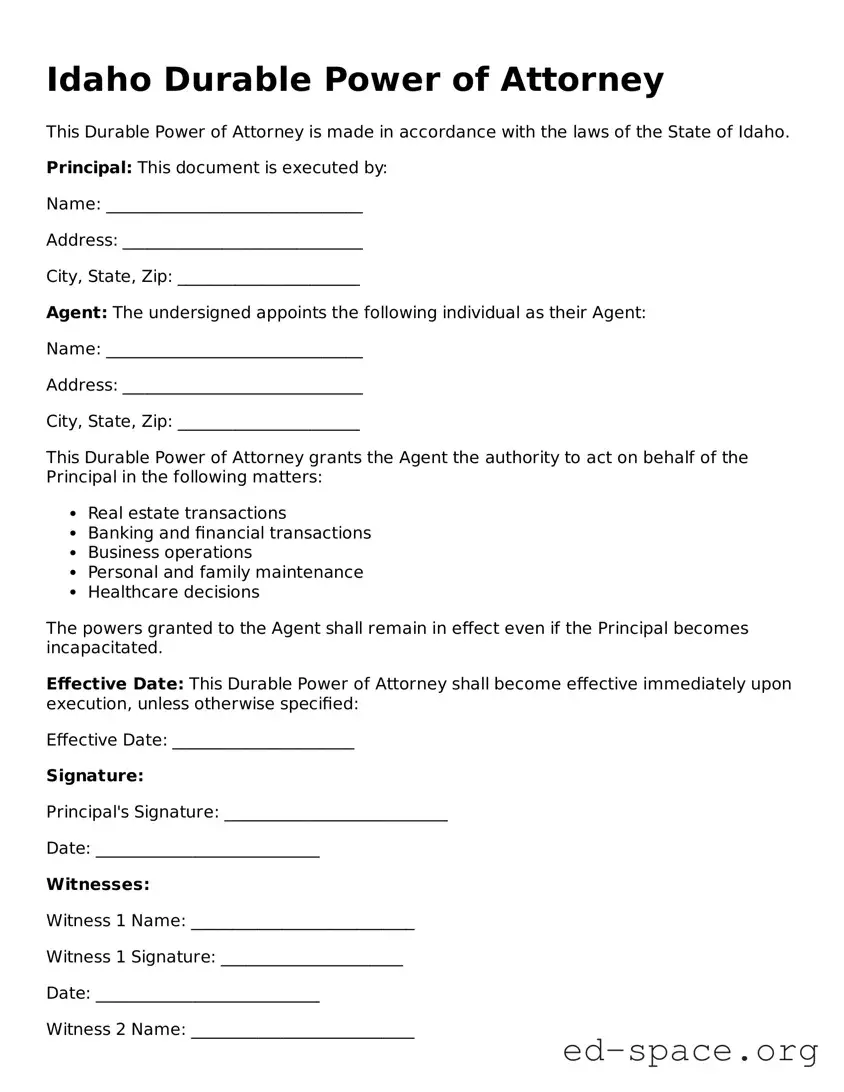
Idaho Durable Power of Attorney
This Durable Power of Attorney is made in accordance with the laws of the State of Idaho.
Principal: This document is executed by:
Name: _______________________________
Address: _____________________________
City, State, Zip: ______________________
Agent: The undersigned appoints the following individual as their Agent:
Name: _______________________________
Address: _____________________________
City, State, Zip: ______________________
This Durable Power of Attorney grants the Agent the authority to act on behalf of the Principal in the following matters:
The powers granted to the Agent shall remain in effect even if the Principal becomes incapacitated.
Effective Date: This Durable Power of Attorney shall become effective immediately upon execution, unless otherwise specified:
Effective Date: ______________________
Signature:
Principal's Signature: ___________________________
Date: ___________________________
Witnesses:
Witness 1 Name: ___________________________
Witness 1 Signature: ______________________
Date: ___________________________
Witness 2 Name: ___________________________
Witness 2 Signature: ______________________
Date: ___________________________
This document must be signed in the presence of two witnesses or a notary public to be valid.
| Fact Name | Description |
|---|---|
| Definition | The Idaho Durable Power of Attorney form allows an individual to designate another person to manage their financial and legal affairs in the event they become incapacitated. |
| Governing Law | This form is governed by Idaho Code § 15-12-501 through § 15-12-504, which outline the rules and regulations regarding powers of attorney in the state. |
| Durability | The term "durable" means that the authority granted remains in effect even if the principal becomes incapacitated, ensuring continuous management of affairs. |
| Agent's Authority | The agent, also known as the attorney-in-fact, can make decisions related to financial matters, property management, and other legal affairs as specified in the document. |
| Revocation | The principal can revoke the Durable Power of Attorney at any time, as long as they are mentally competent, by providing written notice to the agent. |
Filling out the Idaho Durable Power of Attorney form is a straightforward process. Once completed, the form allows you to designate someone to make decisions on your behalf in case you become unable to do so. Follow these steps to ensure you fill it out correctly.
Once you have filled out the form and completed all necessary steps, it is important to discuss your decisions with your agent. Ensure they understand your wishes and are prepared to act on your behalf when needed.
What is a Durable Power of Attorney in Idaho?
A Durable Power of Attorney (DPOA) is a legal document that allows you to appoint someone to make decisions on your behalf if you become unable to do so. This authority can cover financial matters, medical decisions, or both, depending on how the document is drafted. The "durable" aspect means that the power remains in effect even if you become incapacitated.
Who can be appointed as an agent under a Durable Power of Attorney?
You can choose any competent adult to serve as your agent, also known as an attorney-in-fact. This person should be trustworthy, as they will have significant control over your financial and medical decisions. It's essential to select someone who understands your wishes and can act in your best interests.
How do I create a Durable Power of Attorney in Idaho?
Creating a DPOA in Idaho involves filling out a specific form that outlines the powers you wish to grant to your agent. You must sign the document in the presence of a notary public or two witnesses. It's advisable to keep a copy of the signed document in a safe place and provide copies to your agent and any relevant institutions, such as banks or healthcare providers.
Can I revoke my Durable Power of Attorney once it is created?
Yes, you can revoke your Durable Power of Attorney at any time, as long as you are still mentally competent. To do this, you should create a written revocation document and notify your agent and any institutions that may have relied on the original DPOA. It's important to ensure that all parties are aware of the change to avoid any confusion.
What powers can I grant to my agent in a Durable Power of Attorney?
You can grant a wide range of powers to your agent, including managing your finances, handling real estate transactions, making healthcare decisions, and more. However, you have the option to limit the powers based on your preferences. Be clear about what decisions your agent can make on your behalf to ensure your wishes are respected.
What happens if I do not have a Durable Power of Attorney?
If you become incapacitated without a DPOA in place, your family may have to go through a court process to appoint a guardian or conservator. This can be time-consuming, costly, and may not reflect your wishes. Having a DPOA can help avoid this situation and ensure that your preferences are honored.
Is it necessary to hire a lawyer to create a Durable Power of Attorney?
While it is not legally required to hire a lawyer to create a DPOA, consulting with one can be beneficial. A lawyer can help ensure that the document meets all legal requirements and accurately reflects your wishes. This guidance can provide peace of mind and help avoid potential issues down the line.
Not specifying the powers granted. It's important to clearly outline what decisions the agent can make on your behalf.
Forgetting to date the form. A date is crucial for determining when the document becomes effective.
Neglecting to sign the form. Without a signature, the document is not valid.
Failing to have witnesses. Idaho requires that the form be signed in the presence of two witnesses.
Not having the form notarized. Although not always required, notarization can help ensure the document is accepted by institutions.
Using outdated versions of the form. Always use the most current version to avoid issues.
Not discussing the decision with the chosen agent. It’s vital to ensure that the agent is willing and understands their responsibilities.
Overlooking alternate agents. Designating a backup agent can be helpful if the primary agent is unavailable.
Being vague in the description of powers. Clear and specific language helps prevent confusion.
Not reviewing the document regularly. Life changes may necessitate updates to your Durable Power of Attorney.
When preparing a Durable Power of Attorney in Idaho, it’s often helpful to consider additional forms and documents that may complement this important legal tool. These documents can enhance your estate planning and ensure your wishes are clearly communicated. Below is a list of commonly used forms that can work alongside the Durable Power of Attorney.
Having these documents in place can provide peace of mind, knowing that your preferences are documented and legally recognized. It’s advisable to review these forms periodically and update them as your circumstances or wishes change.
When filling out the Idaho Durable Power of Attorney form, it is important to follow certain guidelines. Here is a list of things you should and shouldn't do:
Understanding the Idaho Durable Power of Attorney (DPOA) form is essential for anyone considering its use. However, there are several misconceptions that can lead to confusion. Here are nine common misunderstandings about the DPOA form in Idaho, along with clarifications to help clear things up.
By understanding these misconceptions, individuals can make more informed decisions about their legal and financial planning. A Durable Power of Attorney is a powerful tool that, when used correctly, can provide peace of mind and ensure that one's wishes are honored.
Here are some key takeaways about filling out and using the Idaho Durable Power of Attorney form: