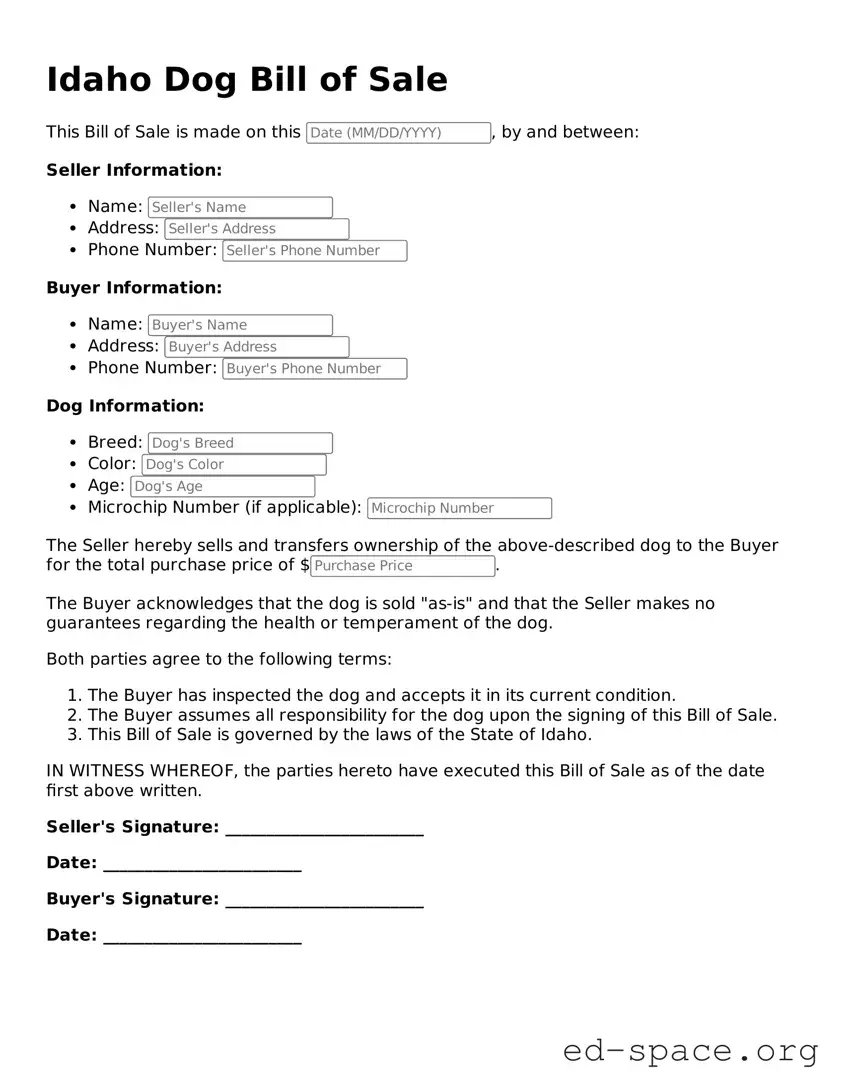
The Idaho Dog Bill of Sale form serves as a crucial document in the transfer of ownership for dogs within the state. This form not only facilitates the legal exchange between the seller and the buyer but also helps establish clear terms regarding the sale. It typically includes essential details such as the names and addresses of both parties, a description of the dog being sold—including breed, age, and any identifying marks—and the purchase price. Additionally, the form may outline any health guarantees or warranties provided by the seller, ensuring that the buyer is informed about the dog's condition at the time of sale. By utilizing this form, both parties can protect their interests and ensure compliance with state regulations, making the transaction smoother and more transparent. Understanding the importance of this document can aid prospective dog owners in making informed decisions while also safeguarding sellers from potential disputes.
Idaho Dog Bill of Sale
This Bill of Sale is made on this , by and between:
Seller Information:
Buyer Information:
Dog Information:
The Seller hereby sells and transfers ownership of the above-described dog to the Buyer for the total purchase price of $.
The Buyer acknowledges that the dog is sold "as-is" and that the Seller makes no guarantees regarding the health or temperament of the dog.
Both parties agree to the following terms:
IN WITNESS WHEREOF, the parties hereto have executed this Bill of Sale as of the date first above written.
Seller's Signature: ________________________
Date: ________________________
Buyer's Signature: ________________________
Date: ________________________
| Fact Name | Description |
|---|---|
| Purpose | The Idaho Dog Bill of Sale form is used to document the sale or transfer of ownership of a dog. |
| Governing Law | This form is governed by Idaho Code § 25-3501 et seq., which covers animal ownership and sales. |
| Seller Information | The form requires the seller's name, address, and contact information to establish accountability. |
| Buyer Information | Buyers must provide their name and contact details, ensuring transparency in the transaction. |
| Dog Description | A detailed description of the dog, including breed, age, and any distinguishing features, is essential for identification. |
| Health Guarantee | The form may include a health guarantee, outlining any warranties regarding the dog’s health at the time of sale. |
| Signatures | Both the seller and buyer must sign the form to validate the transfer of ownership. |
Completing the Idaho Dog Bill of Sale form is a straightforward process that ensures both the buyer and seller have a clear understanding of the transaction. Follow these steps to accurately fill out the form and facilitate a smooth transfer of ownership.
Once the form is filled out completely and signed by both parties, it serves as a formal record of the sale. Keep a copy for your records, and provide one to the other party as well.
What is an Idaho Dog Bill of Sale form?
The Idaho Dog Bill of Sale form is a legal document used to transfer ownership of a dog from one party to another within the state of Idaho. This form serves as proof of the transaction and outlines essential details such as the dog's breed, age, and any identifying features. It protects both the seller and the buyer by clearly stating the terms of the sale and confirming that the buyer has received the dog in good condition.
Why is it important to have a Dog Bill of Sale?
Having a Dog Bill of Sale is crucial for several reasons. Firstly, it provides legal protection for both parties involved in the transaction. The document helps prevent disputes over ownership or the condition of the dog after the sale. Secondly, it serves as a record of the sale, which can be useful for future reference, such as when registering the dog or obtaining medical care. Lastly, it ensures that the buyer understands the responsibilities associated with dog ownership.
What information should be included in the Dog Bill of Sale?
A comprehensive Dog Bill of Sale should include specific details to ensure clarity and legal validity. Key information includes the names and addresses of both the seller and the buyer, a description of the dog (including breed, age, color, and any unique markings), and the sale price. Additionally, any warranties or guarantees regarding the dog's health or behavior should be clearly stated. Both parties should sign and date the document to confirm their agreement.
Can I create my own Dog Bill of Sale, or should I use a template?
Incomplete Information: Failing to provide all required details can lead to issues. Ensure that both the seller's and buyer's information is fully filled out, including names, addresses, and contact numbers.
Incorrect Dog Details: Mistakes in the dog's description can cause confusion. Double-check the breed, age, and any identification numbers, such as microchip information.
Omitting Signatures: Not signing the form can invalidate the sale. Both the seller and buyer must sign the document to confirm the transaction.
Not Keeping a Copy: Failing to retain a copy of the completed form can lead to problems later. Both parties should keep a signed copy for their records.
Ignoring Local Laws: Overlooking local regulations regarding dog sales can result in legal issues. Familiarize yourself with any specific requirements in your area.
When transferring ownership of a dog in Idaho, the Dog Bill of Sale form is essential. However, several other documents often accompany this form to ensure a smooth and legally sound transaction. Below is a list of related forms that may be useful in this process.
Having these documents prepared can facilitate a smoother transition for both the seller and the new owner. Proper documentation helps to clarify responsibilities and ensures that both parties are on the same page regarding the dog’s care and ownership.
The Dog Bill of Sale form serves a specific purpose in the transfer of ownership of a dog. However, several other documents share similarities in their function and importance. Here’s a look at seven documents that are akin to the Dog Bill of Sale form:
Each of these documents plays a crucial role in facilitating clear and legal transactions, ensuring that both parties understand their rights and responsibilities. Having the right paperwork in place can provide peace of mind during any transfer of ownership.
When filling out the Idaho Dog Bill of Sale form, it’s essential to ensure that all information is accurate and complete. Here are ten things you should and shouldn’t do:
By following these guidelines, you can help ensure a smooth transaction when selling or buying a dog in Idaho.
The Idaho Dog Bill of Sale form is a crucial document for anyone involved in the buying or selling of dogs in Idaho. However, several misconceptions often arise regarding this form. Below are six common misunderstandings, along with clarifications to help clear the air.
Understanding these misconceptions can help both buyers and sellers navigate the process of dog ownership more effectively. Proper documentation not only fosters transparency but also ensures a smoother transition of ownership.
The Idaho Dog Bill of Sale form serves as a crucial document for the transfer of ownership of a dog. Understanding its components and implications is essential for both buyers and sellers. Here are key takeaways regarding the form: