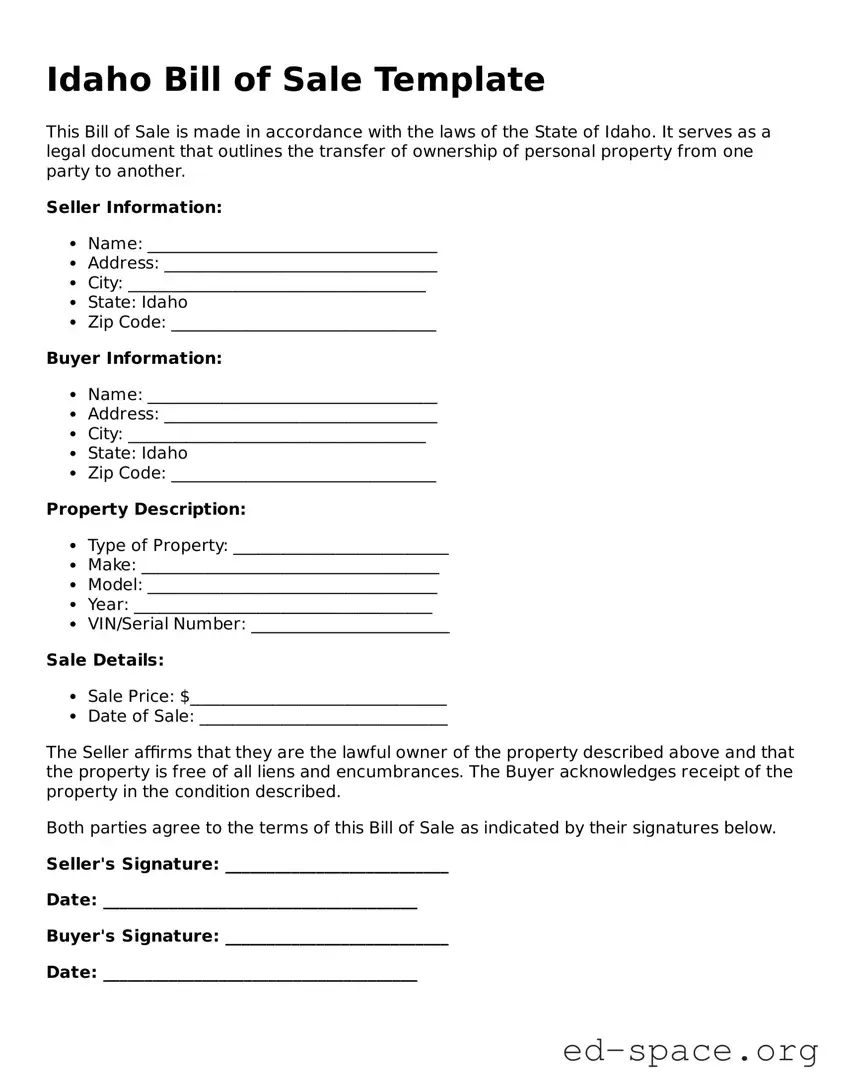
The Idaho Bill of Sale form serves as a crucial document in the transfer of ownership for various types of personal property, including vehicles, boats, and equipment. This form not only provides a written record of the transaction but also protects both the buyer and seller by detailing essential information such as the description of the item, purchase price, and the date of sale. It is important for both parties to sign the document to validate the transaction, ensuring that the seller relinquishes all rights to the item and the buyer accepts ownership. Additionally, the Bill of Sale may include warranties or disclaimers, which clarify the condition of the item being sold. By using this form, individuals can avoid potential disputes and establish clear terms regarding the sale, making it a vital tool in personal property transactions in Idaho.
Idaho Bill of Sale Template
This Bill of Sale is made in accordance with the laws of the State of Idaho. It serves as a legal document that outlines the transfer of ownership of personal property from one party to another.
Seller Information:
Buyer Information:
Property Description:
Sale Details:
The Seller affirms that they are the lawful owner of the property described above and that the property is free of all liens and encumbrances. The Buyer acknowledges receipt of the property in the condition described.
Both parties agree to the terms of this Bill of Sale as indicated by their signatures below.
Seller's Signature: ___________________________
Date: ______________________________________
Buyer's Signature: ___________________________
Date: ______________________________________
| Fact Name | Description |
|---|---|
| Purpose | The Idaho Bill of Sale form serves as a legal document to transfer ownership of personal property from one party to another. |
| Governing Law | This form is governed by Idaho Statutes Title 28, Chapter 1, which outlines the requirements for the sale of goods. |
| Required Information | Essential details include the names and addresses of the buyer and seller, a description of the item being sold, and the sale price. |
| Signatures | Both parties must sign the Bill of Sale to validate the transaction, although notarization is not required in Idaho. |
After obtaining the Idaho Bill of Sale form, you will need to complete it accurately to ensure a smooth transaction. This document serves as proof of the sale and should be filled out with care. Follow the steps below to fill out the form correctly.
Once the form is completed, both parties should keep a copy for their records. This documentation can be important for future reference or in case of disputes.
What is a Bill of Sale in Idaho?
A Bill of Sale is a legal document that records the transfer of ownership of personal property from one party to another. In Idaho, this form is often used for transactions involving vehicles, boats, trailers, and other items of significant value. It serves as proof of the sale and can be important for both the buyer and the seller for various reasons, including tax purposes and future disputes.
Is a Bill of Sale required in Idaho?
While a Bill of Sale is not legally required for every transaction in Idaho, it is highly recommended, especially for high-value items. For vehicles, the Idaho Department of Transportation does require a Bill of Sale when transferring ownership. This document helps protect both parties by providing a clear record of the transaction.
What information should be included in an Idaho Bill of Sale?
An effective Bill of Sale should include several key pieces of information. This typically includes the names and addresses of both the buyer and seller, a detailed description of the item being sold (including make, model, year, and VIN for vehicles), the sale price, and the date of the transaction. It’s also advisable to include any terms of the sale, such as warranties or conditions.
Can I create my own Bill of Sale in Idaho?
Yes, you can create your own Bill of Sale in Idaho. There are templates available online that can guide you in drafting a comprehensive document. However, ensure that it includes all necessary details and complies with Idaho's requirements. Alternatively, you may choose to consult with a legal professional to ensure that your document is properly formatted and includes all relevant information.
Do I need to have the Bill of Sale notarized?
In Idaho, notarization of a Bill of Sale is not required for most transactions. However, having the document notarized can add an extra layer of authenticity and can be beneficial in case of future disputes. It may also be necessary for certain transactions or for specific types of property, so it’s best to check the requirements based on what you are selling.
What should I do with the Bill of Sale after the transaction?
After the transaction is complete, both the buyer and the seller should keep a copy of the Bill of Sale for their records. This document serves as proof of the transaction and may be needed for future reference, such as registering the item or for tax purposes. Ensure that both parties sign and date the document to validate the transaction.
Can a Bill of Sale be used as a receipt?
Yes, a Bill of Sale can function as a receipt. It provides evidence that the buyer has purchased the item and outlines the terms of the sale. This can be particularly important for high-value items, as it helps establish ownership and the agreed-upon price. Keep in mind that a receipt typically includes less detail than a Bill of Sale, but both documents serve to confirm the transaction.
What if the item sold has a lien on it?
If the item being sold has a lien, it is essential to address this before completing the sale. The seller should disclose any liens to the buyer and ensure that the lien is satisfied or released prior to the transaction. This protects the buyer from potential legal issues in the future. It is advisable to consult with a legal professional if you are unsure about how to handle a lien on the property being sold.
Where can I obtain an Idaho Bill of Sale form?
You can obtain an Idaho Bill of Sale form from various sources. Many online legal service websites offer free or paid templates that you can customize. Additionally, local government offices, such as the Department of Motor Vehicles, may provide forms specific to vehicle sales. Always ensure that the form you choose meets the legal requirements for your specific transaction.
Failing to include the date of the sale. This is crucial for establishing the timeline of the transaction.
Not providing accurate contact information for both the buyer and seller. Clear communication is essential for any future correspondence.
Omitting a detailed description of the item being sold. A vague description can lead to disputes later on.
Neglecting to include the purchase price. This amount should reflect the agreed value of the item.
Not signing the document. Both parties must sign the Bill of Sale for it to be valid.
Using incorrect or outdated form versions. Always ensure you are using the most current version of the Bill of Sale form.
Failing to check for notary requirements. Certain transactions may require notarization for added legal protection.
Not keeping a copy of the completed Bill of Sale. Retaining a copy is important for your records and future reference.
Overlooking any additional terms that may need to be included. Specific conditions of the sale should be clearly stated.
Assuming the Bill of Sale is not necessary for small transactions. Regardless of the item's value, a Bill of Sale provides essential proof of the transaction.
When engaging in a sale or transfer of ownership in Idaho, the Bill of Sale form is a crucial document. However, several other forms and documents may also be required to ensure a smooth transaction. Below is a list of commonly used documents that complement the Bill of Sale.
Having these documents prepared and organized can facilitate a seamless transaction. Ensuring that all necessary paperwork is in order protects both the buyer and seller, providing peace of mind throughout the process.
The Bill of Sale form is a crucial document used in various transactions to transfer ownership of personal property. Several other documents serve similar purposes, each with its own specific context. Below are four documents that share similarities with the Bill of Sale:
When filling out the Idaho Bill of Sale form, there are some important practices to keep in mind. Here are four things you should and shouldn't do:
Understanding the Idaho Bill of Sale form is essential for anyone involved in buying or selling personal property in the state. However, several misconceptions can lead to confusion. Here is a list of common misconceptions about the Idaho Bill of Sale form:
Clarifying these misconceptions can help ensure smoother transactions and protect the interests of both buyers and sellers in Idaho.
When filling out and using the Idaho Bill of Sale form, it is crucial to understand several key points to ensure a smooth transaction.
Following these guidelines will help facilitate a successful sale while protecting the interests of both parties involved.