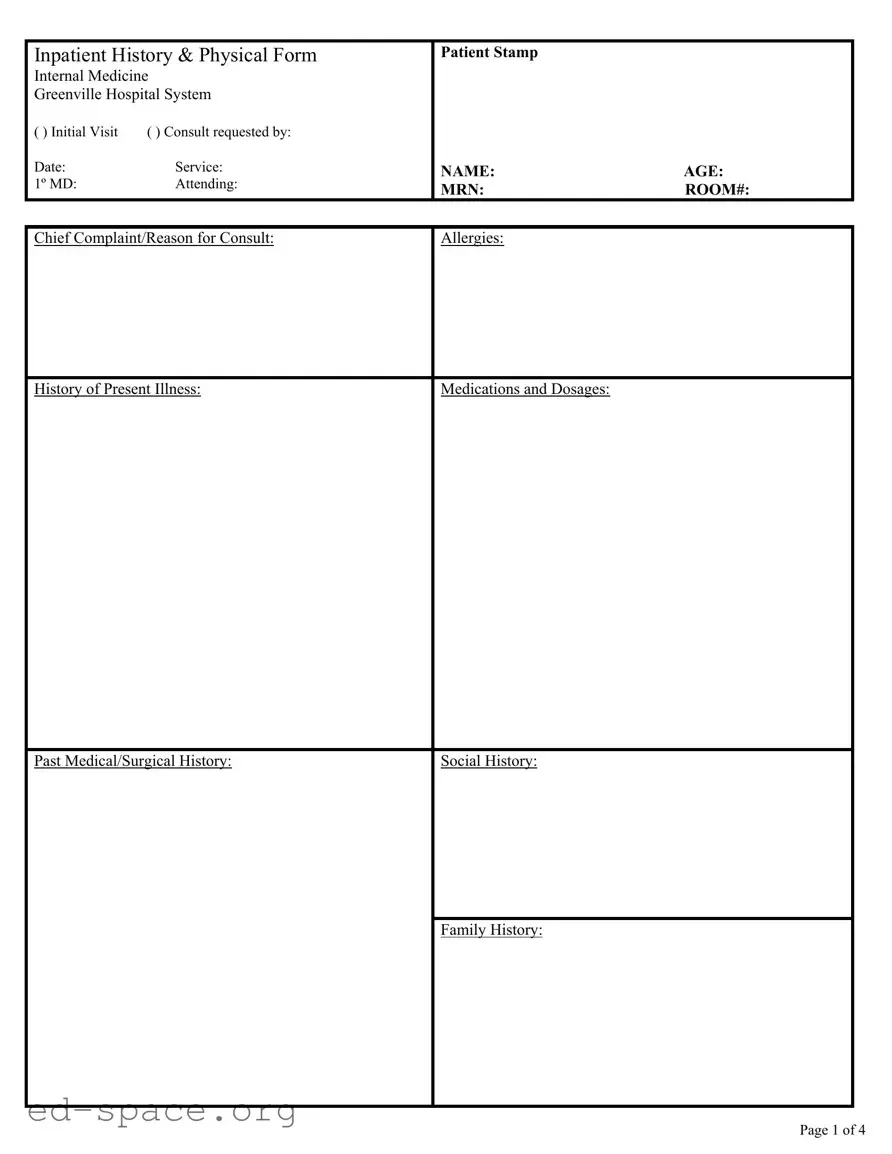
The History and Physical form is a crucial document in the medical field, serving as a comprehensive record of a patient's health status. This form is typically used during initial visits and consultations, providing healthcare providers with essential information about the patient's medical history and current condition. It includes key sections such as the patient's chief complaint, allergies, and a detailed history of present illness. Medications, past medical and surgical history, as well as social and family histories are also documented to give a fuller picture of the patient’s health. A thorough review of systems is conducted, covering various bodily systems to identify any additional concerns. The physical examination section captures vital signs and findings from the examination, ensuring that no detail is overlooked. Finally, the assessment and plan section allows healthcare providers to outline their thoughts and next steps for patient care. Together, these components create a comprehensive overview that guides diagnosis and treatment.

Inpatient History & Physical Form |
Patient Stamp |
|
||
Internal Medicine |
|
|
||
Greenville Hospital System |
|
|
||
( ) Initial Visit |
( ) Consult requested by: |
|
|
|
Date: |
Service: |
NAME: |
AGE: |
|
1º MD: |
Attending: |
|||
MRN: |
ROOM#: |
|||
|
|
|||
Chief Complaint/Reason for Consult:
Allergies:
History of Present Illness:
Medications and Dosages:
Past Medical/Surgical History:
Social History:
Family History:
Page 1 of 4

Comprehensive Review of Systems
ROS NOT OBTAINABLE BECAUSE
Patient Stamp
Constitutional: |
|
Genitourinary: |
|
|
YES NO |
DESCRIBE |
YES NO |
DESCRIBE |
|
Fever, sweats or chills |
|
Dysuria, frequency or urgency |
||
|
Menstrual irregularities |
|
||
Fatigue, anorexia, weight loss or gain |
|
|||
LMP ___________________ |
||||
Weakness |
|
|||
|
Frequent UTI’s |
|
||
|
|
|
||
|
|
Pain/Hematuria |
|
|
Skin: |
|
Musculoskelatal: |
Rashes, no skin breakdown |
|
Muscle aches, arthralgias or arthritis |
|
|
|
|
|
Neurologic: |
|
|
Mental status changes |
Head: |
|
|
|
Headaches |
|
Headache |
|
|
|
Dizziness |
|
Visual changes |
|
|
|
Weakness or numbness |
|
Earache, sinus problems, sore throat |
|
|
|
Seizures |
|
Cough, snoring or mouth ulcers |
|
|
|
Ataxia |
|
|
|
|
|
|
Hematopoietic: |
|
|
Lymphadenopathy |
|
|
Bleeding tendencies |
|
|
|
Cardiovascular: |
|
Psychiatric: |
Chest pain or palpitations |
|
History of anxiety or depression |
Syncope |
|
Hallucinations/Delusions |
Edema |
|
|
|
|
|
|
|
Endocrine: |
|
|
History of diabetes |
|
|
History of thyroid problems |
|
|
|
|
|
Other Symptoms: |
Respiratory: |
|
|
Shortness of breath |
|
|
Cough or sputum production |
|
|
Dyspnea on exertion orthopnea |
|
|
Pleuritic chest pain |
|
|
|
|
|
Gastrointestinal: |
|
|
Heartburn, dysphagia |
|
|
Nausea or vomiting |
|
|
Diarrhea or constipation |
|
|
Melena or BRBPR |
|
|
Hematemesis |
|
|
Abdominal pain |
|
|
Page 2 of 4

Patient Stamp
Physical Exam |
|
|
Labs and Studies |
||
Vitals: |
|
|
|
CBC: |
|
Wt: |
Temp: |
BP: |
P: |
|
|
HT: |
Resp: |
Sat: |
|
|
|
Constitutional: |
nl general appearance |
|
|
|
|
|
|
|
|
|
|
Head: |
|
|
BMP: |
|
|
|
|
PERRLA |
|
|
|
|
|
EOMI |
|
|
|
|
|
nl sclera |
|
|
|
|
|
Vision |
|
|
|
Ears, Nose, Mouth & Throat: |
|
CXR: |
|
||
|
|
nl inspection of nasal |
|
|
|
|
|
mucosa, septum, turbinates, |
|
|
|
|
|
teeth, gums & oropharynx |
|
|
|
|
|
nl ear canal and T |
|
|
|
|
|
|
|
|
|
Neck: |
|
nl neck appearance & |
|
EKG: |
|
|
|
jugular veins |
|
|
|
|
|
Thyroid not palpable, |
|
|
|
|
|
|
|
|
|
Lymph Nodes |
|
nl neck, supraclavicular |
|
|
|
|
|
or axillary adenopathy |
|
|
|
|
|
|
|
|
|
Skin/Extremities: |
Rashes, lesions or ulcers |
|
|
|
|
|
|
Digits & nails |
|
|
|
|
|
Edema |
|
|
|
Breast Evaluation: |
No skin changes |
|
|
|
|
|
|
No nipple discharge |
|
|
|
|
|
No lumps/masses |
|
|
|
|
|
Fibrocystic changes |
|
|
|
Respiratory: |
|
Chest symmetric, nl chest |
|
|
|
|
|
Expansion & respiratory effort |
|
|
|
|
|
nl auscultation |
|
|
|
|
|
nl chest percussion & |
|
|
|
|
|
palpation |
|
|
|
Cardiovascular: |
Reg rhythm |
|
|
|
|
|
|
No murmur, gallop or rub |
|
|
|
|
|
Periph vasc no by ovserv & |
|
|
|
|
|
palpation |
|
|
|
Gastrointestinal: |
No tenderness or masses |
|
|
|
|
|
|
Liver & spleen not felt |
|
|
|
|
|
nl bowel sounds |
|
|
|
|
|
Heme negative stool |
|
|
|
Musculoskeletal: |
nl muscle strength, movement & |
Neurologic: |
Alert and oriented |
||
|
|
tone, no focal atrophy |
|
|
nl reflexes upper and lower |
|
|
nl gait & station |
|
|
extremities |
|
|
|
|
|
Cranial nerves intact |
no pelvic exam |
|
Psychiatric: |
|
||
|
|
nl testes |
|
|
nl mood/affect |
Page 3of 4

Patient Stamp
Assessment:
Plan:
Attending HPI:
Attending PE:
Attending Assessment and Plan:
Resident signature: |
MD |
PGY1, PGY2, PGY3 Date: |
Pager: |
/1439 |
|
Resident name printed: |
Dictated by: |
Intern Pager: |
/1872 |
||
Attending signature: |
|
Date: |
|
. |
|
Attending: Ansari Atkisson Bowers Bruch Call Chang Cochrane Curran Ferraro Fuller Gilroy Hayes Kelly Knight Latham McCraw McFarland Meyer
Page 4 of 4
| Fact Name | Details |
|---|---|
| Purpose of the Form | The History and Physical (H&P) form is used to document a patient's medical history and physical examination findings, ensuring comprehensive care and continuity in treatment. |
| Components of the Form | This form typically includes sections for patient demographics, chief complaints, medical history, medications, and a review of systems, among others. |
| Legal Requirements | In the United States, H&P forms are governed by state-specific regulations, often requiring that they be completed prior to certain procedures or admissions. |
| Compliance Standards | Healthcare providers must comply with HIPAA regulations to protect patient privacy when handling H&P forms. |
| Variations by State | Each state may have unique requirements for H&P documentation, including specific laws that dictate the necessary content and format. |
| Importance in Patient Care | The H&P form plays a critical role in patient safety, as it ensures that all healthcare providers involved in a patient's care have access to important medical information. |
Completing the History and Physical form is essential for ensuring that healthcare providers have a comprehensive understanding of a patient's medical background and current condition. This process involves gathering detailed information about the patient’s health history, current medications, and any presenting complaints. Follow these steps carefully to fill out the form accurately.
What is the purpose of the History and Physical (H&P) form?
The History and Physical form serves as a comprehensive document that captures a patient's medical history and current health status. It is essential for healthcare providers to gather detailed information about the patient’s chief complaint, past medical and surgical history, medications, and family background. This information aids in forming an accurate diagnosis and developing an effective treatment plan. The H&P form ensures that all relevant details are recorded systematically, facilitating better communication among medical staff and enhancing patient care.
What information is typically included in the H&P form?
The H&P form typically includes several key sections. It starts with basic patient information such as name, age, and medical record number. The form then outlines the chief complaint, allergies, and a detailed history of the present illness. Additionally, it covers past medical and surgical history, medications, social history, and family history. A comprehensive review of systems (ROS) is also included, which examines various body systems to identify any additional health concerns. Finally, the physical exam section records vital signs and findings from the examination, providing a holistic view of the patient's health.
Why is a review of systems (ROS) important in the H&P form?
The review of systems (ROS) is a critical component of the H&P form. It systematically evaluates each body system to uncover any symptoms that may not have been initially reported by the patient. This thorough approach helps healthcare providers identify underlying issues that could impact diagnosis and treatment. By documenting symptoms such as headaches, chest pain, or gastrointestinal issues, providers can ensure that all potential health concerns are addressed, leading to more effective and personalized care.
How does the H&P form assist in patient care and treatment planning?
The H&P form plays a vital role in patient care and treatment planning. By compiling a detailed account of the patient's medical history and current health status, it allows healthcare providers to make informed decisions. The information gathered helps in diagnosing conditions accurately, planning appropriate interventions, and monitoring progress. Furthermore, it serves as a reference for all healthcare team members involved in the patient's care, ensuring continuity and consistency in treatment.
Who is responsible for completing the H&P form?
Failing to include complete patient information. It's crucial to fill in all sections, including name, age, and medical record number (MRN).
Neglecting to document chief complaints clearly. The chief complaint should be specific and describe the patient's main issue.
Overlooking allergies. Any known allergies must be listed, as they are vital for safe medical care.
Inadequately detailing the history of present illness. This section should provide a thorough account of the patient's current condition and any relevant symptoms.
Not updating the medications and dosages. Ensure that all current medications are accurately recorded, including dosages and frequency.
Ignoring the past medical and surgical history. This information is essential for understanding the patient's background and potential complications.
Failing to include relevant social history. Details about the patient’s lifestyle, such as smoking or alcohol use, can impact treatment decisions.
Not addressing family history of diseases. This can provide insights into genetic risks and predispositions.
Forgetting to sign and date the form. An unsigned or undated form may lead to delays in care or questions about its validity.
The History and Physical (H&P) form is a crucial document in patient care, providing a comprehensive overview of a patient's medical history and current health status. However, it is often accompanied by other important forms and documents that enhance the overall understanding of a patient's condition. Below are four commonly used documents that work in conjunction with the H&P form.
Understanding these documents and their purposes helps both healthcare providers and patients navigate the complexities of medical care. Together, they contribute to a comprehensive approach to patient management, enhancing safety and quality of care.
When filling out the History and Physical form, there are several important dos and don'ts to keep in mind. Following these guidelines can help ensure that the information is accurate and useful for medical professionals.
Misconceptions about the History and Physical (H&P) form can lead to misunderstandings regarding its purpose and importance in patient care. Below are five common misconceptions:
Accurate completion of the History and Physical (H&P) form is essential for effective patient care. Each section must be filled out thoroughly to ensure that all relevant medical information is captured.
The form includes critical sections such as Chief Complaint, History of Present Illness, and Past Medical/Surgical History. These areas provide a comprehensive overview of the patient's current condition and medical background.
Documentation of medications and dosages is vital. This information helps healthcare providers avoid potential drug interactions and ensures continuity of care.
The Review of Systems (ROS) section allows for a systematic evaluation of various bodily systems. It is important to note any abnormal findings and describe them in detail.
Physical examination results should be documented clearly. Observations regarding vital signs, general appearance, and specific examinations (like cardiovascular and gastrointestinal) must be precise and thorough.
Finally, the Assessment and Plan section must reflect the healthcare provider's clinical judgment. This part outlines the proposed treatment plan and follow-up steps, which are crucial for patient management.