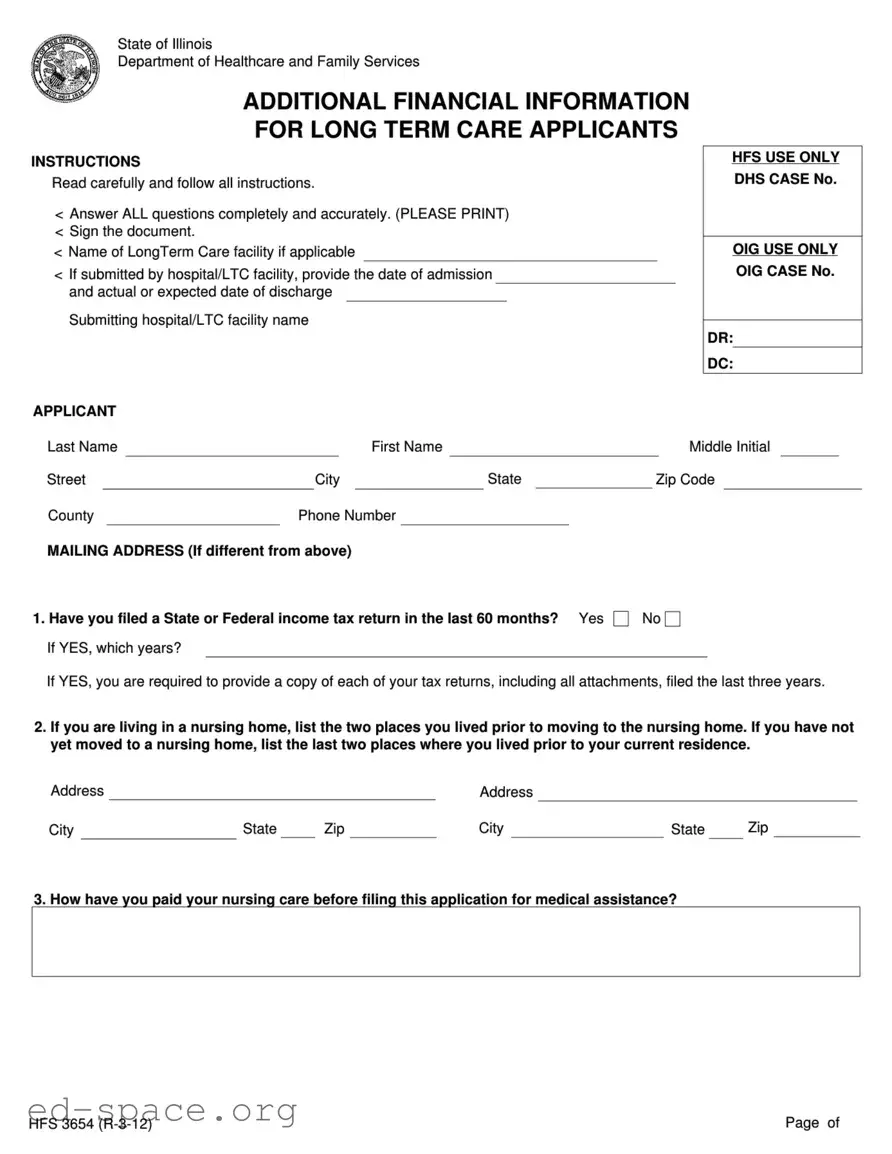
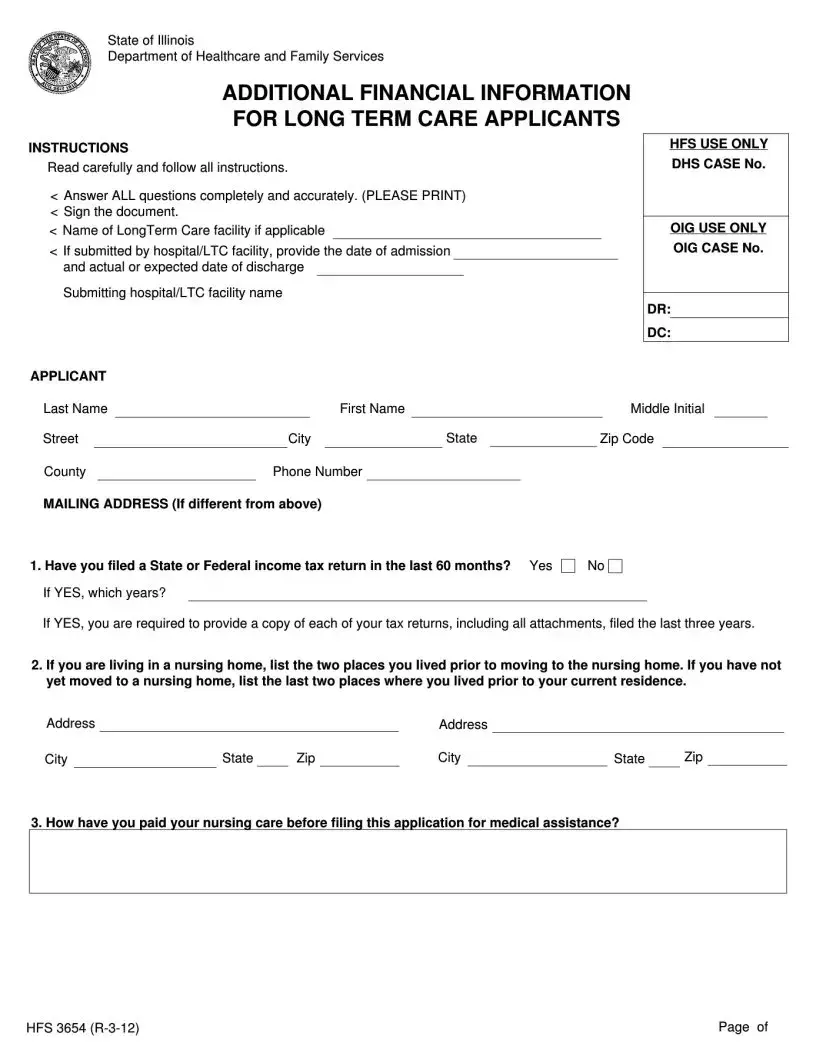
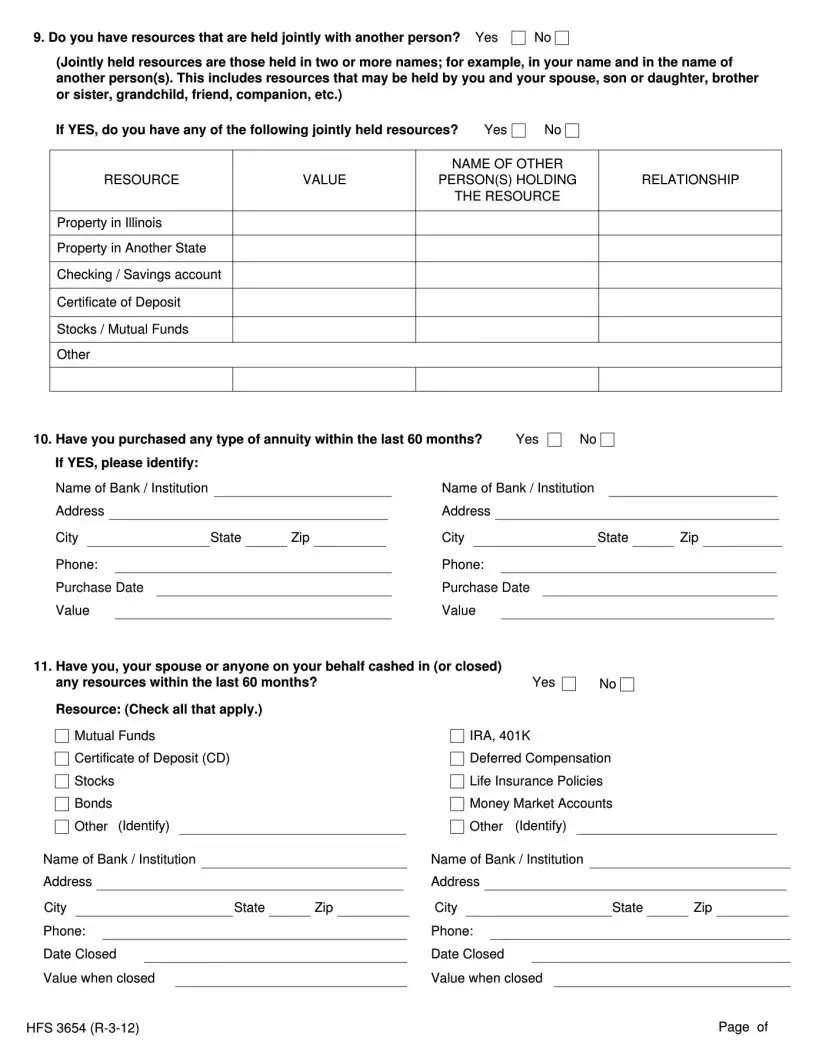
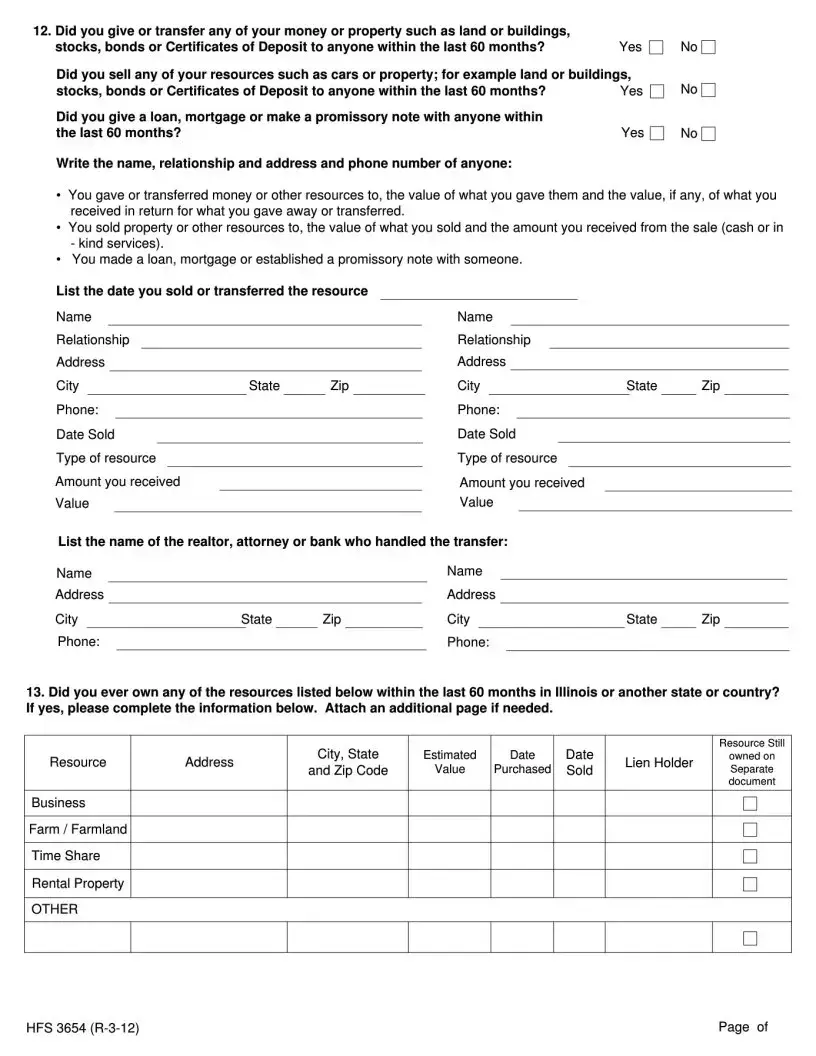
The HFS 3654 form is an essential document for individuals applying for long-term care assistance in Illinois. It gathers crucial financial information to determine eligibility for medical assistance. Applicants must provide comprehensive details about their financial history, including tax returns from the last three years, previous residences, and how they have financed their nursing care. The form also inquires about any assistance received in managing financial affairs, whether from family members, friends, or professionals. Additionally, it addresses discussions held with financial planners or attorneys regarding nursing home residency and related financial planning. Marital status and information about any insurance policies that cover nursing home care are also required. Lastly, applicants must disclose any inheritances received in the past five years, ensuring a complete picture of their financial situation. Completing this form accurately is vital for a smooth application process and to secure the necessary support for long-term care needs.
| Fact Name | Details |
|---|---|
| Form Purpose | The HFS 3654 form collects additional financial information from individuals applying for long-term care assistance in Illinois. |
| Governing Law | This form is governed by the Illinois Public Aid Code, which outlines the eligibility criteria for medical assistance programs. |
| Submission Requirements | Applicants must answer all questions accurately and completely, sign the document, and submit it along with any required tax returns if applicable. |
| Tax Return Disclosure | If the applicant has filed a state or federal tax return in the last 60 months, they must provide copies of those returns for the last three years. |
| Previous Residences | Applicants living in a nursing home must list the last two places they lived before their current residence, or their last two residences if they have not yet moved. |
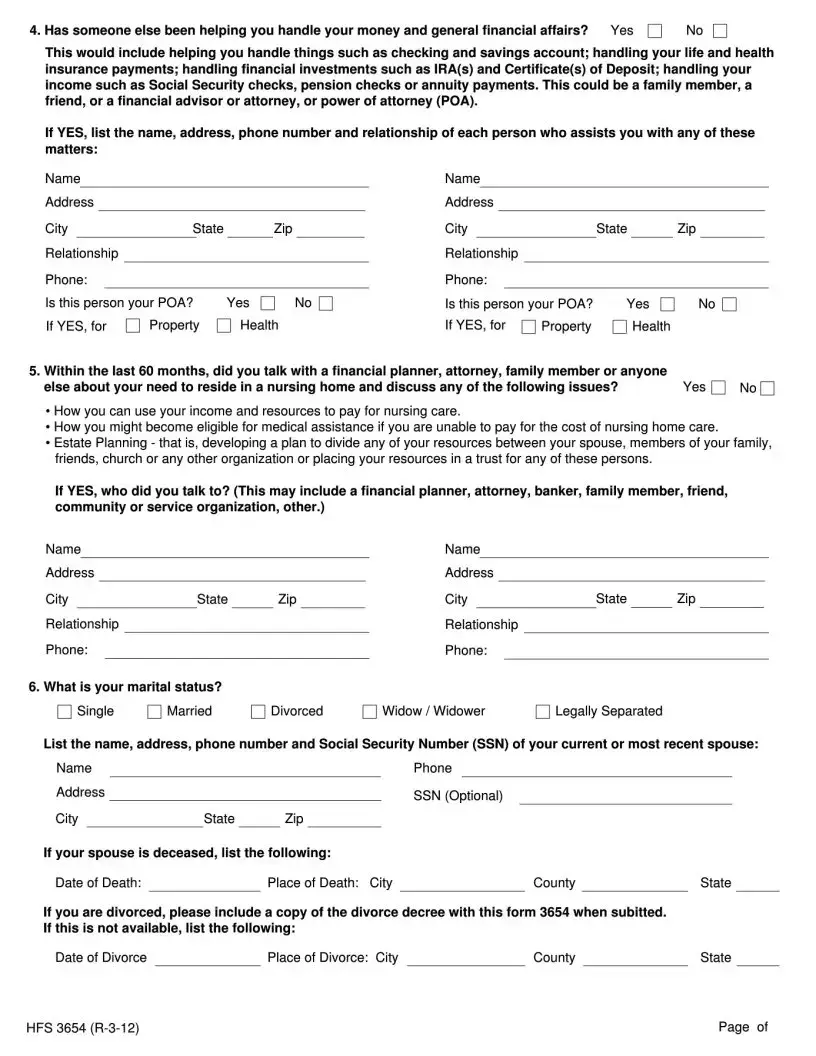
| Financial Assistance | The form inquires whether someone assists the applicant with managing their finances, including checking accounts, insurance payments, and investments. |
To complete the HFS 3654 form, gather all necessary information before starting. Ensure that you answer each question accurately and completely. Once you have filled out the form, review it for any errors or omissions, and sign where required.
What is the purpose of the HFS 3654 form?
The HFS 3654 form is designed to gather additional financial information from individuals applying for long-term care assistance in Illinois. It helps the Department of Healthcare and Family Services assess eligibility for medical assistance based on the applicant's financial situation. By providing detailed financial data, applicants can ensure that their needs are accurately evaluated and that they receive the appropriate level of support.
Who needs to fill out the HFS 3654 form?
This form must be completed by anyone applying for long-term care services in Illinois. Whether you are currently residing in a nursing home or planning to enter one, this form is essential for demonstrating your financial status. It is also necessary for those who have received assistance from a hospital or long-term care facility, as they may need to provide additional information about their admission and discharge dates.
What information is required on the HFS 3654 form?
The form requires various personal and financial details. Applicants must provide their name, address, and contact information, as well as details about their living situation over the past few years. Additionally, it asks about income sources, financial assistance, insurance policies, and any inheritances received. Completing this form accurately is crucial, as it directly impacts the evaluation process for medical assistance.
What should I do if I have not filed a tax return in the last 60 months?
If you have not filed a state or federal income tax return in the last 60 months, you should indicate "No" on the form. However, it’s important to note that you may still be required to provide other financial documentation to support your application. This could include bank statements, proof of income, or other relevant financial records. Always ensure that you provide as much information as possible to facilitate the review process.
Is it necessary to provide information about my spouse?
Yes, if you are married or have a recent spouse, you need to provide their information on the form. This includes their name, address, phone number, and Social Security Number, if applicable. If your spouse is deceased or you are divorced, you will need to include relevant details such as the date and place of death or divorce. This information helps assess your financial situation accurately, as it may impact your eligibility for assistance.
What happens if I inherit money or property while my application is pending?
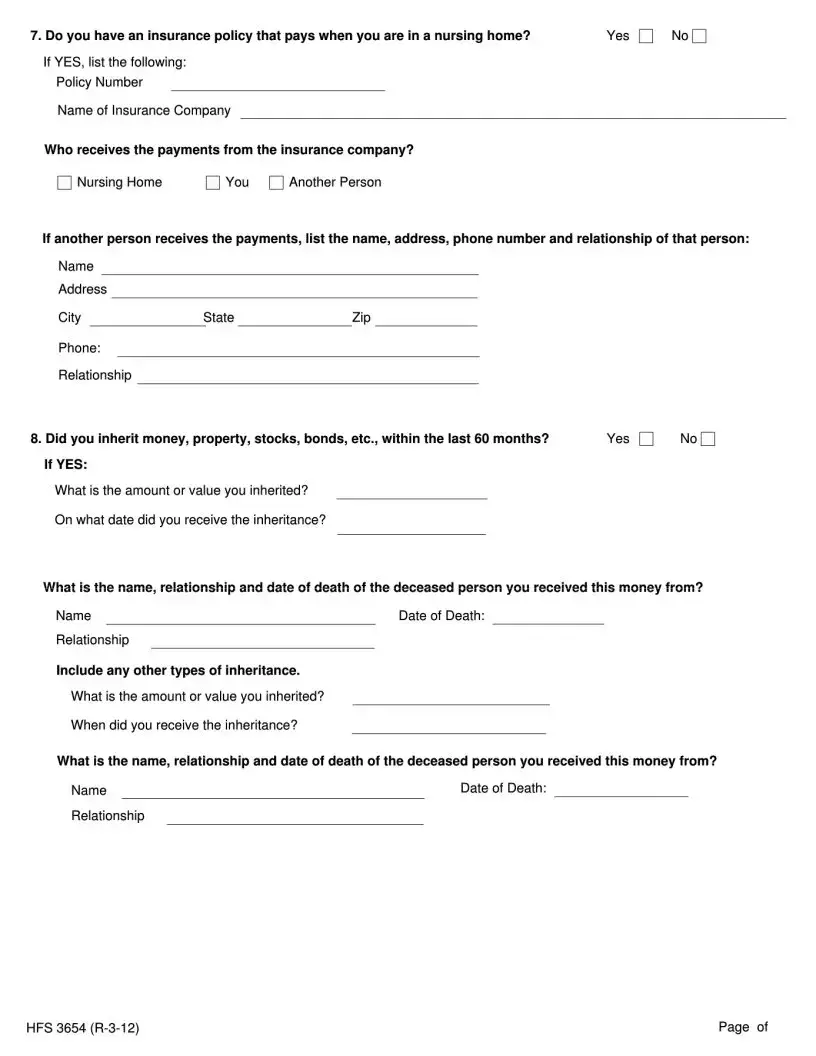
If you inherit money, property, or other assets within 60 months of submitting your application, you must disclose this information on the HFS 3654 form. The form asks for details about the inheritance, including its value and the date received. Inheritances can affect your eligibility for assistance, so it’s essential to report them promptly and accurately to avoid potential issues with your application.
Incomplete Information: Failing to answer all questions can lead to delays or denials. Each section must be filled out completely.
Incorrect Dates: Providing inaccurate admission or discharge dates can create confusion. Ensure that all dates are correct and clearly stated.
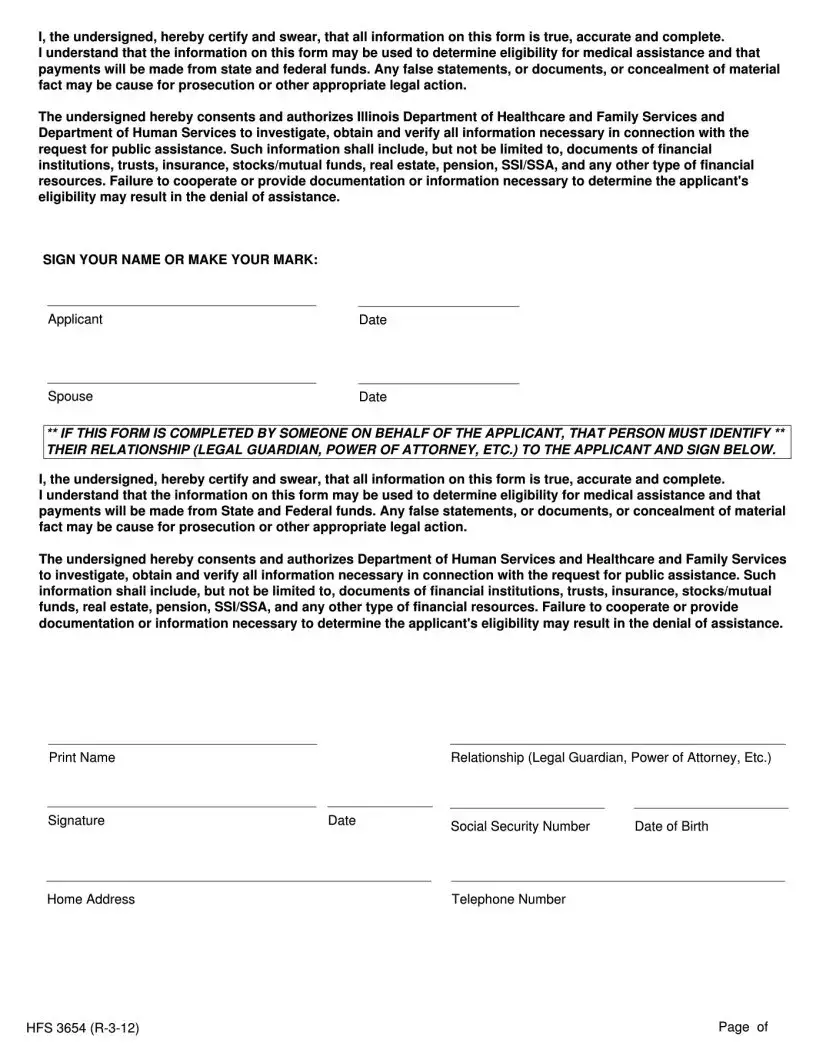
Missing Signatures: Not signing the document is a common oversight. A signature is required to validate the application.
Omitting Tax Returns: If applicable, failing to provide copies of tax returns for the last three years can hinder the application process.
Neglecting Previous Addresses: Not listing the last two residences can result in incomplete information. This is crucial for the assessment of eligibility.
Ignoring Financial Assistance: If someone has been helping with financial matters, this information must be disclosed. Omitting it can affect the evaluation.
Marital Status Errors: Providing incorrect marital status or failing to include necessary details about a spouse can complicate the application.
Insurance Policy Details: Not including information about insurance policies that cover nursing home care can lead to misunderstandings regarding financial resources.
Inheritances Not Reported: Failing to disclose any inheritances received within the last 60 months can lead to issues with eligibility for assistance.
The HFS 3654 form is an important document for individuals applying for long-term care assistance in Illinois. Along with this form, several other documents may be required to support your application. Each of these documents serves a specific purpose and helps ensure that your application is processed smoothly. Below is a list of commonly used forms and documents that may accompany the HFS 3654.
Gathering these documents ahead of time can help streamline the application process for long-term care assistance. Ensuring that you have all necessary paperwork ready will make it easier to provide accurate information and meet any deadlines set by the state. If you have any questions about these documents, consider reaching out to a professional for guidance.
The HFS 3654 Illinois form is designed to gather additional financial information for long-term care applicants. Several other documents serve similar purposes in various contexts. Here’s a list of those documents and how they relate to the HFS 3654 form:
When filling out the HFS 3654 form for Illinois, it is essential to ensure accuracy and completeness. Here are six important do's and don'ts to keep in mind:
Misconceptions about the HFS 3654 Illinois form can lead to confusion and errors in the application process. Below are eight common misconceptions along with clarifications.
Understanding these misconceptions can help ensure that the application process is completed accurately and efficiently.
Filling out the HFS 3654 form is an important step for individuals applying for long-term care assistance in Illinois. Here are some key takeaways to keep in mind:
By keeping these points in mind, you can ensure a smoother application process for long-term care assistance in Illinois.