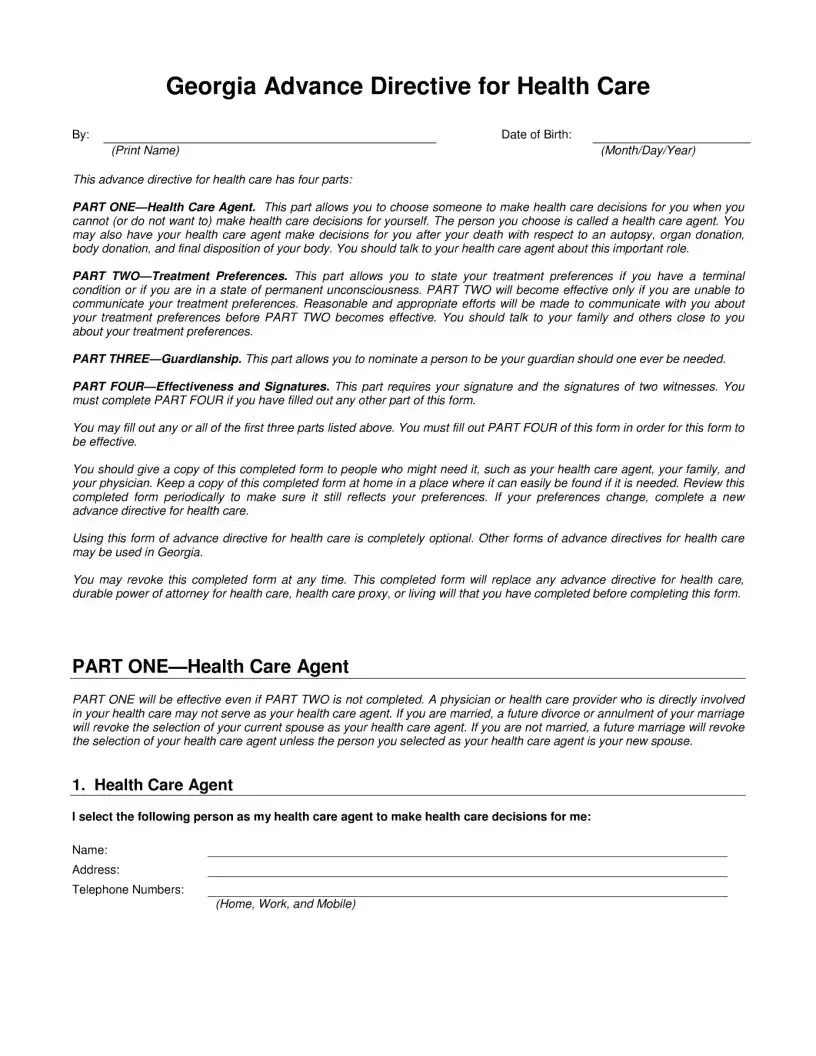
Creating a Health Care Directive is a vital step in ensuring that your medical preferences are honored when you cannot speak for yourself. In Georgia, the Advance Directive for Health Care form is structured into four key parts, each serving a distinct purpose. The first part allows you to designate a health care agent—someone you trust to make medical decisions on your behalf if you're unable to do so. This person can also handle decisions regarding your final arrangements, such as organ donation and the disposition of your body. The second part focuses on your treatment preferences, outlining your wishes in case you face a terminal condition or become permanently unconscious. This section is activated only when you cannot communicate your desires. Next, the third part gives you the opportunity to nominate a guardian in case one is ever needed. Finally, the fourth part is crucial as it requires your signature and the signatures of two witnesses to validate the entire directive. It’s important to share copies of this form with your health care agent, family, and physician, ensuring they are aware of your wishes. Regularly reviewing and updating the directive can help reflect any changes in your preferences, providing peace of mind that your health care decisions align with your values and beliefs.
| Fact Name | Details |
|---|---|
| Governing Law | The Georgia Advance Directive for Health Care is governed by Georgia Code Title 31, Chapter 32. |
| Purpose | This form allows individuals to specify their health care preferences and appoint a health care agent to make decisions on their behalf when they are unable to do so. |
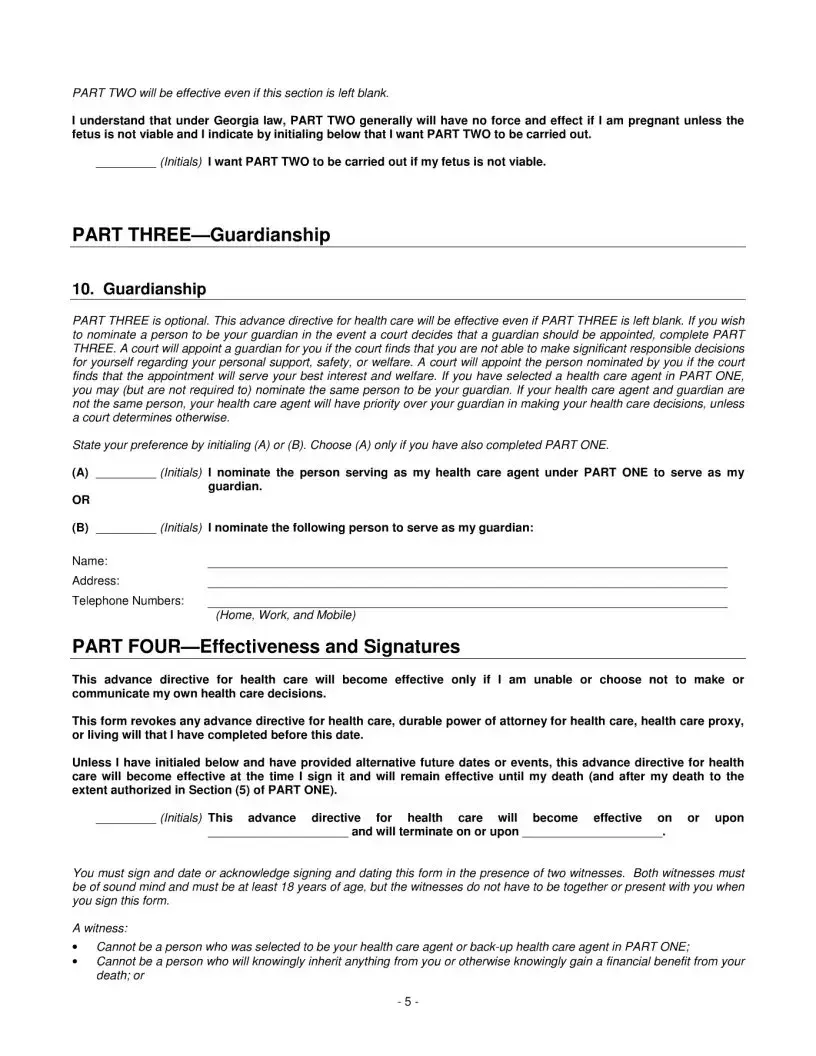
| Parts of the Form | The directive consists of four parts: Health Care Agent, Treatment Preferences, Guardianship, and Effectiveness and Signatures. |
| Health Care Agent | Individuals can choose a health care agent who will make medical decisions if they are unable to do so. This choice remains effective even if other parts are not completed. |
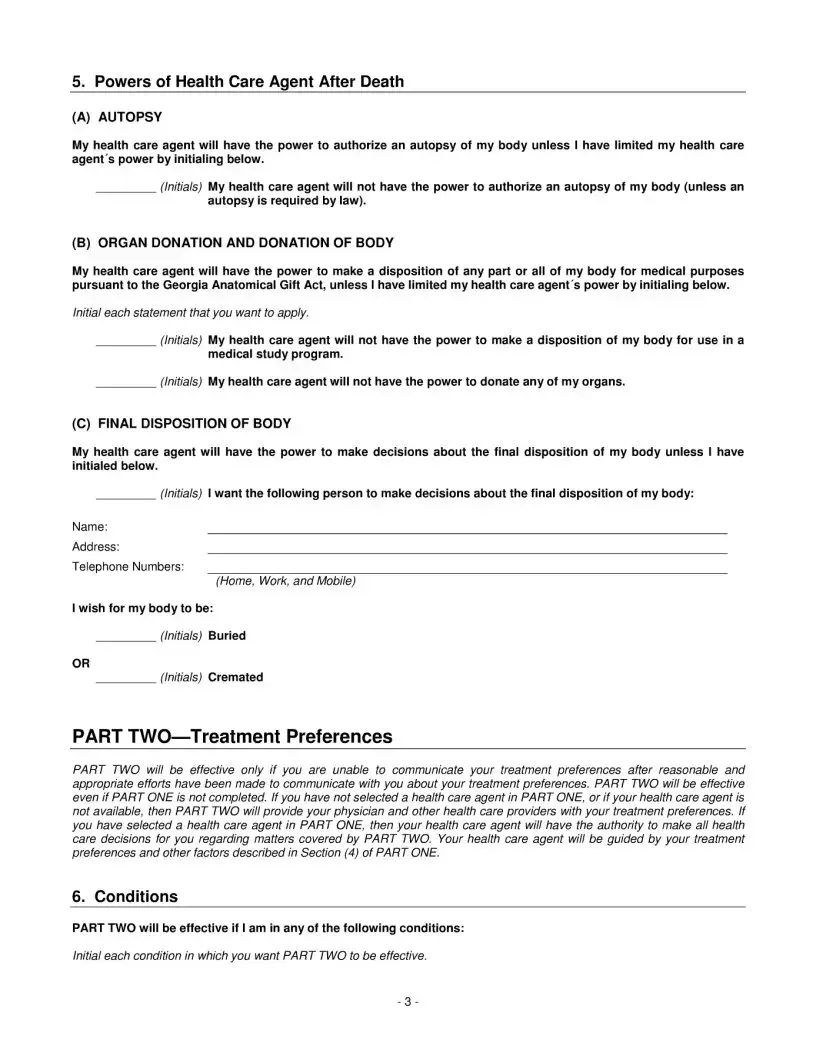
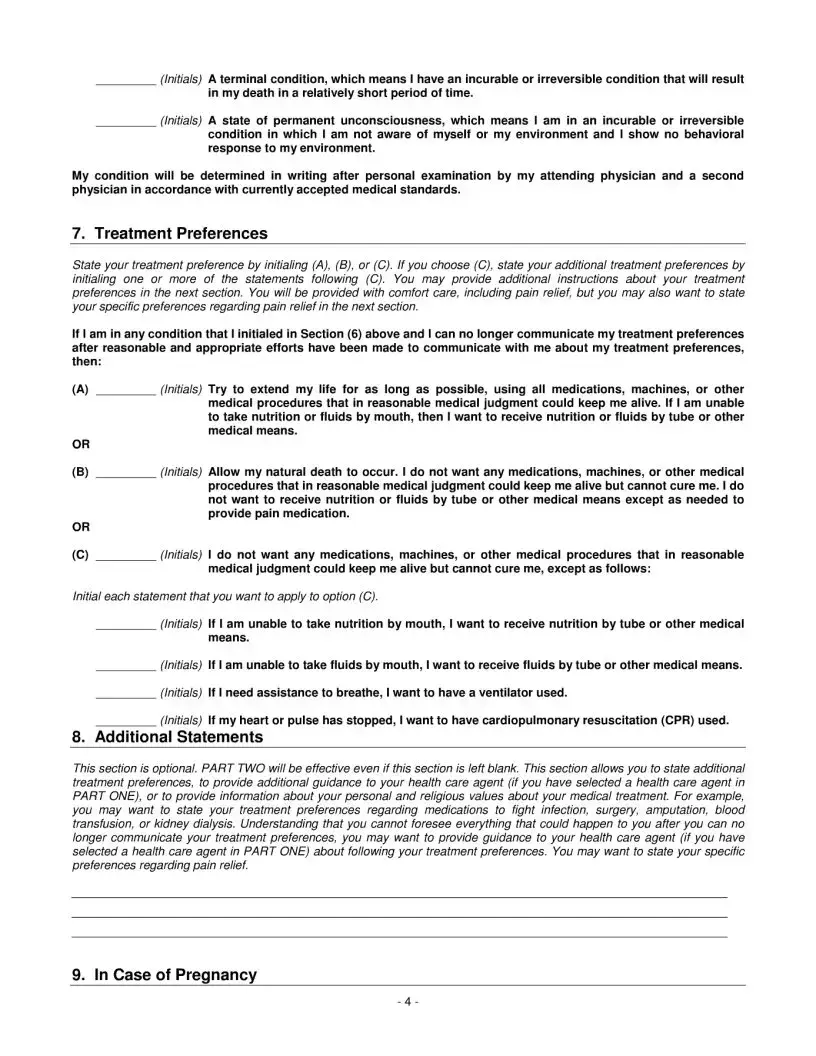
| Treatment Preferences | Part Two allows individuals to express their treatment preferences if they are terminally ill or permanently unconscious. It activates only when they can no longer communicate their wishes. |
| Revocation | Individuals can revoke the directive at any time. Completing this form replaces any prior advance directives or powers of attorney related to health care. |
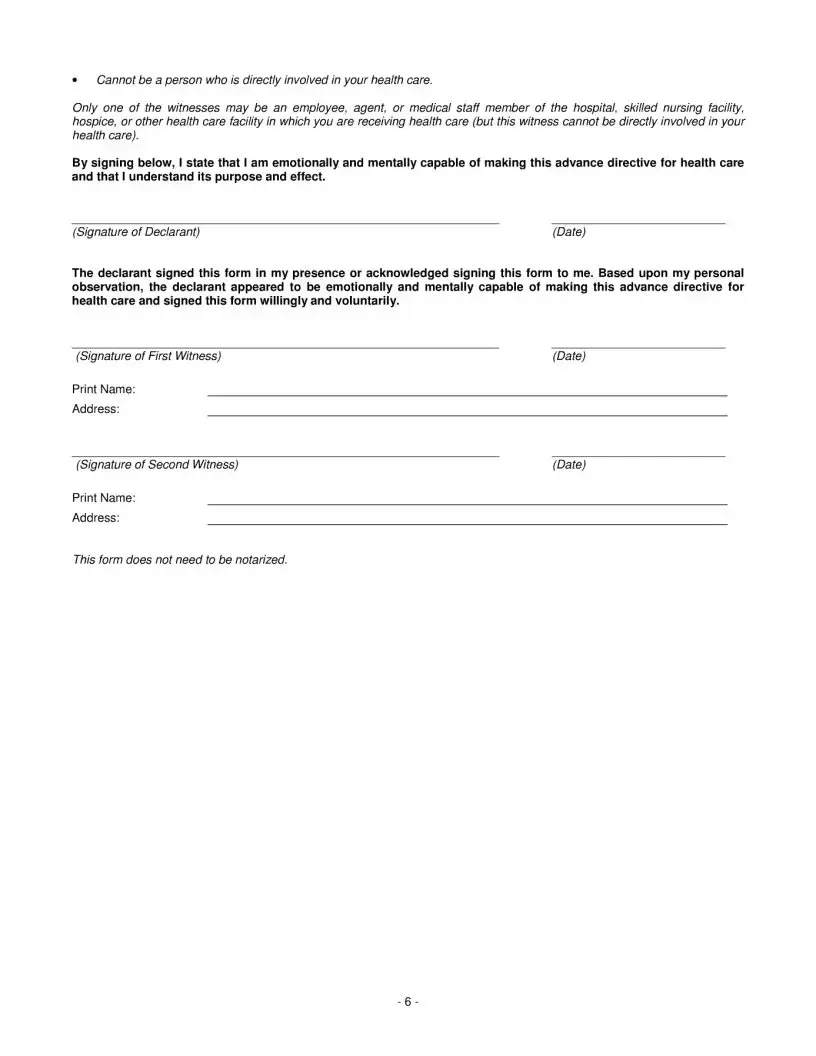
| Signatures Required | The form must be signed by the individual and witnessed by two people to be valid. This ensures that the directive is legally recognized and effective. |
Completing the Health Care Directive Georgia form involves several clear steps. This form allows individuals to designate a health care agent and outline their treatment preferences in various medical scenarios. Follow these instructions carefully to ensure the form is filled out correctly.
What is a Health Care Directive in Georgia?
A Health Care Directive in Georgia, also known as an Advance Directive for Health Care, is a legal document that allows individuals to outline their preferences for medical treatment and designate a person to make health care decisions on their behalf if they are unable to do so. This directive includes four parts: appointing a health care agent, stating treatment preferences, nominating a guardian, and signing the document to make it effective.
Who can be designated as a health care agent?
You can choose any competent adult to be your health care agent, except for a physician or health care provider directly involved in your care. This person will be responsible for making health care decisions on your behalf when you cannot communicate your wishes. It is essential to discuss this role with your chosen agent to ensure they understand your preferences and values.
What happens if my health care agent is unavailable?
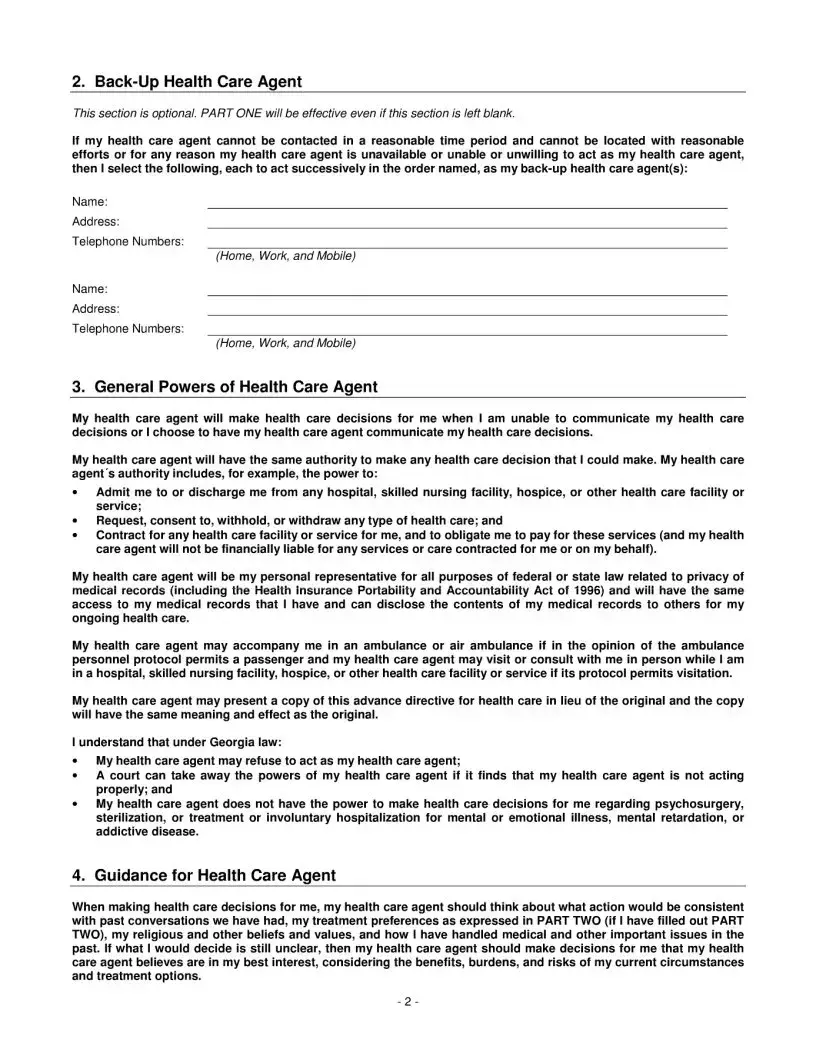
If your primary health care agent is unavailable or unable to act, you can designate back-up health care agents. This is optional, and if you choose to leave this section blank, your primary agent will still have authority. If your primary agent cannot be contacted, the back-up agents will step in to make decisions in the order you have specified.
What are treatment preferences, and when do they take effect?
Treatment preferences allow you to express your wishes regarding medical interventions if you are diagnosed with a terminal condition or become permanently unconscious. These preferences will only take effect if you are unable to communicate your wishes. Prior to this, reasonable efforts will be made to communicate with you about your treatment options.
What is the role of the health care agent?
Your health care agent has the authority to make decisions about your medical care, including admitting or discharging you from facilities, consenting to or refusing treatment, and accessing your medical records. They are expected to act in your best interest, considering your past conversations, treatment preferences, and personal beliefs.
How do I ensure my Health Care Directive is effective?
To make your Health Care Directive effective, you must complete all required parts of the form, particularly the signature section. This includes signing the document and having it witnessed by two individuals. It is also advisable to share copies of the directive with your health care agent, family members, and physician to ensure they are aware of your wishes.
Can I change or revoke my Health Care Directive?
Yes, you can change or revoke your Health Care Directive at any time. If your preferences change, it is essential to complete a new directive. The new directive will replace any previous versions, ensuring that your current wishes are reflected. It is a good practice to review your directive periodically to ensure it aligns with your current values and preferences.
What if I do not want to use this form?
Using the Georgia Advance Directive for Health Care form is completely optional. Other forms of advance directives may be used in Georgia. If you prefer a different format or have specific requirements, you can create a custom directive as long as it complies with Georgia law.
What should I do with my completed Health Care Directive?
After completing your Health Care Directive, keep a copy in a safe but accessible location at home. It is important to provide copies to your health care agent, family, and physician so that they can act according to your wishes when necessary. Regularly review the document to ensure it still reflects your preferences.
Not discussing the role with the chosen health care agent. It's crucial to have a conversation with the person you select to ensure they understand your wishes and are willing to take on this responsibility.
Failing to complete PART FOUR. This part requires your signature and the signatures of two witnesses. Without it, the directive is not valid.
Leaving PART TWO blank. If you have specific treatment preferences, failing to state them can lead to decisions being made that do not align with your wishes.
Choosing a health care agent who is a health care provider. Under Georgia law, a physician or health care provider directly involved in your care cannot serve as your agent.
Not naming a backup health care agent. If your primary agent is unavailable, having a backup can ensure your wishes are still honored.
Neglecting to inform family members about the directive. It's important that your family knows where to find this document and understands your wishes.
Not reviewing the directive periodically. Your health care preferences may change over time, and it's essential to update the document accordingly.
Failing to keep a copy in an accessible location. Ensure that the completed form is stored where it can be easily found in an emergency.
Overlooking the importance of discussing treatment preferences with loved ones. Sharing your thoughts can help guide your agent and family in making decisions that reflect your values.
When preparing a Health Care Directive in Georgia, it’s essential to understand that this document often works alongside several other forms and documents. Each of these plays a crucial role in ensuring that your health care preferences are honored and that your loved ones are prepared to make decisions on your behalf if necessary. Here’s a brief overview of some of the key documents you might consider.
Having these documents in place can provide peace of mind, knowing that your health care wishes will be respected. It's wise to discuss these documents with your family and health care providers to ensure everyone understands your preferences and the roles they may play in your care. Regularly reviewing and updating these documents can help keep your health care plan aligned with your current wishes.
The Health Care Directive Georgia form is a crucial document for individuals wishing to outline their health care preferences and appoint a decision-maker. Several other documents serve similar purposes in health care decision-making. Here’s a look at six of them:
Each of these documents plays a vital role in ensuring that your health care preferences are honored, especially when you are unable to communicate them yourself. Understanding their similarities can help you make informed choices about your health care planning.
When filling out the Health Care Directive Georgia form, there are several important things to keep in mind. Here is a list of dos and don'ts that can help ensure your preferences are clearly communicated.
Misconception 1: The Health Care Directive must be completed in its entirety.
Many believe that all parts of the Georgia Health Care Directive must be filled out for it to be valid. In reality, you can choose to complete any combination of the first three parts, but you must complete Part Four for the directive to be effective.
Misconception 2: A health care agent can be anyone.
Some think they can appoint anyone as their health care agent. However, a physician or health care provider directly involved in your care cannot serve as your health care agent.
Misconception 3: The directive only applies if I am terminally ill.
This form does not only apply to terminal conditions. It also becomes effective if you are in a state of permanent unconsciousness and unable to communicate your treatment preferences.
Misconception 4: My spouse automatically becomes my health care agent.
While many may assume that their spouse will automatically act as their health care agent, this is not the case. A future divorce or annulment revokes the spouse's designation unless you designate them again after the marriage ends.
Misconception 5: I cannot change my health care agent once appointed.
Some individuals think that once they appoint a health care agent, they cannot change their mind. In fact, you can revoke your directive at any time and appoint a new agent if your preferences change.
Misconception 6: The directive is only useful during a medical emergency.
Many people believe that the Health Care Directive is only relevant during emergencies. However, it is also important for routine medical decisions when you are unable to communicate your wishes.
Misconception 7: My health care agent can make any decision without limitations.
It is a common misunderstanding that health care agents have unlimited authority. They cannot make decisions regarding psychosurgery, sterilization, or involuntary hospitalization for mental health issues without specific provisions.
Misconception 8: Once I complete the directive, I don’t need to think about it again.
Some believe that completing the Health Care Directive is a one-time task. In reality, it is important to review your directive periodically to ensure it still reflects your current preferences and values.
Here are some key takeaways about filling out and using the Health Care Directive Georgia form: