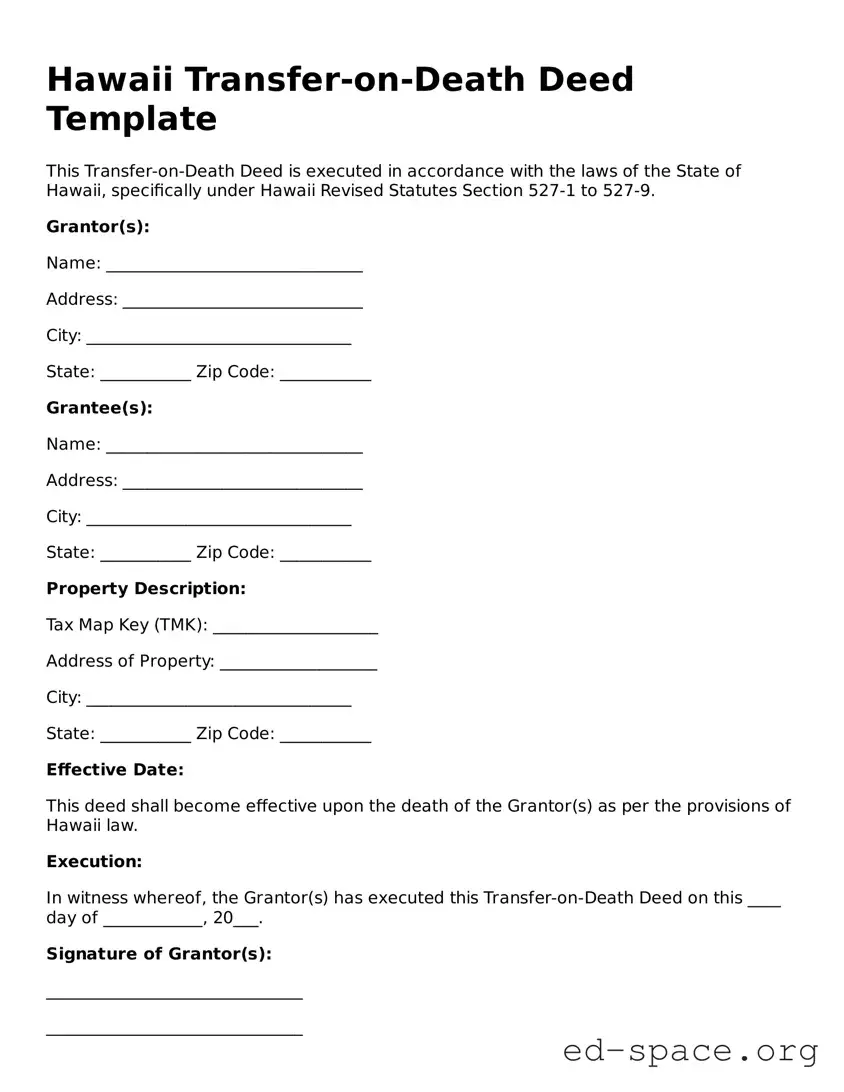
The Transfer-on-Death Deed (TODD) in Hawaii serves as a valuable estate planning tool, allowing property owners to designate beneficiaries who will receive their real estate upon their death without the need for probate. This deed is particularly beneficial for individuals seeking to simplify the transfer of property and minimize potential legal complications for their heirs. By executing a TODD, property owners can maintain control over their assets during their lifetime while ensuring a seamless transition to their chosen beneficiaries. The form must be properly completed and recorded with the appropriate county office to be valid. It is important for individuals to understand the implications of this deed, including its revocability and the necessity for adherence to specific state requirements. Additionally, a TODD does not affect the owner's rights to sell or modify the property during their lifetime, making it a flexible option in estate planning. Overall, the Transfer-on-Death Deed is an efficient way to manage property transfer, providing peace of mind to both property owners and their beneficiaries.
Hawaii Transfer-on-Death Deed Template
This Transfer-on-Death Deed is executed in accordance with the laws of the State of Hawaii, specifically under Hawaii Revised Statutes Section 527-1 to 527-9.
Grantor(s):
Name: _______________________________
Address: _____________________________
City: ________________________________
State: ___________ Zip Code: ___________
Grantee(s):
Name: _______________________________
Address: _____________________________
City: ________________________________
State: ___________ Zip Code: ___________
Property Description:
Tax Map Key (TMK): ____________________
Address of Property: ___________________
City: ________________________________
State: ___________ Zip Code: ___________
Effective Date:
This deed shall become effective upon the death of the Grantor(s) as per the provisions of Hawaii law.
Execution:
In witness whereof, the Grantor(s) has executed this Transfer-on-Death Deed on this ____ day of ____________, 20___.
Signature of Grantor(s):
_______________________________
_______________________________
Witnesses:
Notary Public:
State of Hawaii, County of ________________
On this ____ day of ____________, 20___, before me appeared __________________________, known to me to be the person(s) whose name(s) is/are subscribed to the within instrument, and acknowledged that he/she/they executed the same.
_______________________________
Notary Public, State of Hawaii
My Commission Expires: ________________
| Fact Name | Description |
|---|---|
| Purpose | The Hawaii Transfer-on-Death Deed allows property owners to transfer real estate to beneficiaries upon their death, bypassing probate. |
| Governing Law | This deed is governed by Hawaii Revised Statutes § 526A, which outlines the requirements and procedures for creating and executing the deed. |
| Execution Requirements | The deed must be signed by the property owner in the presence of a notary public and recorded with the Bureau of Conveyances to be valid. |
| Revocation | A property owner can revoke the Transfer-on-Death Deed at any time before their death, provided that the revocation is properly executed and recorded. |
Once you have the Hawaii Transfer-on-Death Deed form ready, follow these steps to complete it accurately. Ensure you have all necessary information at hand, including details about the property and the beneficiaries. After filling out the form, you will need to sign it in front of a notary public before filing it with the appropriate county office.
What is a Transfer-on-Death Deed in Hawaii?
A Transfer-on-Death Deed (TODD) is a legal document that allows a property owner in Hawaii to designate one or more beneficiaries to receive their real estate upon their death. This deed enables the property to transfer outside of probate, simplifying the process for heirs and ensuring that the property is passed on according to the owner’s wishes.
Who can use a Transfer-on-Death Deed?
Any individual who owns real property in Hawaii can use a Transfer-on-Death Deed. This includes homeowners and property investors. However, it is essential that the property owner is of sound mind and legally capable of making decisions regarding their property.
How does a Transfer-on-Death Deed work?
The property owner completes the TODD, naming the beneficiaries who will inherit the property after their death. Once the deed is signed and recorded with the county, it becomes effective. Upon the owner’s death, the property automatically transfers to the named beneficiaries without going through probate, provided the deed is valid and properly executed.
Are there any limitations to using a Transfer-on-Death Deed?
Yes, there are some limitations. A TODD cannot be used for all types of property. For example, it cannot be used for properties held in a trust or for properties that are part of a divorce settlement. Additionally, if the property owner has existing liens or mortgages, those obligations must still be addressed even after the transfer.
Can I change or revoke a Transfer-on-Death Deed?
Yes, a Transfer-on-Death Deed can be revoked or modified at any time before the owner’s death. To do this, the owner must create a new deed or a revocation form and record it with the county. It’s important to ensure that any changes are properly documented to avoid confusion later on.
What happens if the beneficiaries die before the property owner?
If a beneficiary named in the TODD dies before the property owner, the property may pass to the remaining beneficiaries if there are any. If all named beneficiaries pass away before the owner, the property will typically go to the owner’s estate and be distributed according to their will or, if there is no will, according to state intestacy laws.
Is there a cost associated with creating a Transfer-on-Death Deed?
Yes, there are costs involved in creating and recording a Transfer-on-Death Deed. These can include fees for drafting the document, notary services, and recording fees charged by the county. It’s advisable to check with local authorities for specific fee schedules.
Should I consult a professional before creating a Transfer-on-Death Deed?
While it is possible to create a Transfer-on-Death Deed on your own, consulting with a legal professional is highly recommended. An attorney can provide guidance tailored to your specific situation, ensuring that the deed is executed correctly and that your wishes are clearly articulated and legally binding.
Incorrect Property Description: One common mistake is failing to provide a clear and accurate description of the property. The deed should include the exact address, parcel number, and any other identifying details. Omitting this information can lead to confusion or disputes later on.
Not Naming Beneficiaries Properly: When listing beneficiaries, individuals sometimes make the error of not using full legal names or failing to specify relationships. This can create complications when the time comes to transfer ownership. It is essential to ensure that all names are spelled correctly and that the relationship to the property owner is clear.
Failure to Sign and Date: A deed that is not signed and dated is not valid. Some individuals may overlook this critical step, thinking that completing the form is sufficient. It is important to remember that both the property owner and a witness must sign the document for it to be legally binding.
Not Recording the Deed: After filling out the Transfer-on-Death Deed form, it is crucial to record it with the appropriate county office. Many people neglect this step, believing that completing the form is the final action. Without proper recording, the deed may not be recognized, and the intended beneficiaries could face challenges in claiming the property.
The Hawaii Transfer-on-Death Deed allows individuals to transfer property to beneficiaries upon their death without the need for probate. While this deed is a crucial document for estate planning, several other forms and documents are often utilized alongside it to ensure a comprehensive estate plan. Below is a list of these commonly used documents.
Utilizing these documents in conjunction with the Hawaii Transfer-on-Death Deed can create a more effective estate plan. Each document serves a specific purpose and can help ensure that an individual's wishes are honored after their passing.
The Transfer-on-Death Deed (TOD) form is a unique estate planning tool that allows individuals to transfer real property to beneficiaries without going through probate. It shares similarities with several other documents used in estate planning. Here are six documents that have comparable functions or features:
Understanding these documents can help individuals make informed decisions about their estate planning needs. Each serves a unique purpose but can work together to create a comprehensive plan.
When filling out the Hawaii Transfer-on-Death Deed form, it’s essential to approach the process carefully. Here are ten important dos and don’ts to consider:
Following these guidelines will help ensure that your Transfer-on-Death Deed is filled out correctly and serves its intended purpose.
Understanding the Hawaii Transfer-on-Death Deed can be challenging, and several misconceptions often arise. Here are five common misunderstandings about this legal instrument:
This is not true. The Transfer-on-Death Deed is accessible to anyone who owns real property in Hawaii, regardless of their financial status. It provides a straightforward way to transfer property without the need for probate, making it beneficial for all homeowners.
Many believe that simply signing the deed is enough for the transfer to occur. In reality, the transfer only takes effect upon the death of the property owner. Until that time, the owner retains full control over the property.
This misconception can cause unnecessary concern. In fact, a Transfer-on-Death Deed can be revoked at any time by the owner, provided that the owner follows the proper procedures. This flexibility allows individuals to change their plans as circumstances evolve.
This is a common misunderstanding. The deed allows the owner to specify who receives the property, and it does not guarantee equal distribution among heirs. The owner can designate specific individuals or even exclude certain heirs altogether.
While a Transfer-on-Death Deed simplifies the transfer process for the specified property, it does not replace the need for a will. A will serves a broader purpose, addressing other assets and personal wishes, and can provide guidance on matters not covered by the deed.
By dispelling these misconceptions, individuals can make more informed decisions about their estate planning and ensure their wishes are honored in the future.
Filling out and utilizing the Hawaii Transfer-on-Death Deed form can be a straightforward process, but it is essential to understand key aspects to ensure it is executed properly. Here are some important takeaways to consider:
By following these guidelines, individuals can effectively utilize the Transfer-on-Death Deed in Hawaii to ensure their property is transferred smoothly and according to their wishes.