Homepage Free Rental Application Form for Hawaii
Article Guide

When seeking a rental property in Hawaii, prospective tenants must navigate the essential step of completing a rental application form. This document serves as a vital tool for landlords and property managers to assess the suitability of applicants. Typically, the form requests personal information, including the applicant’s name, contact details, and employment history. Additionally, it often inquires about income sources, rental history, and references, providing a comprehensive view of the applicant's financial stability and reliability as a tenant. Many forms also include sections for consent to background and credit checks, which are crucial for landlords to ensure a safe and responsible rental environment. Understanding the various components of the Hawaii rental application form is key for applicants to present themselves favorably while also complying with local regulations and expectations. By carefully filling out this form, individuals can enhance their chances of securing their desired rental property in this beautiful state.

Document Preview

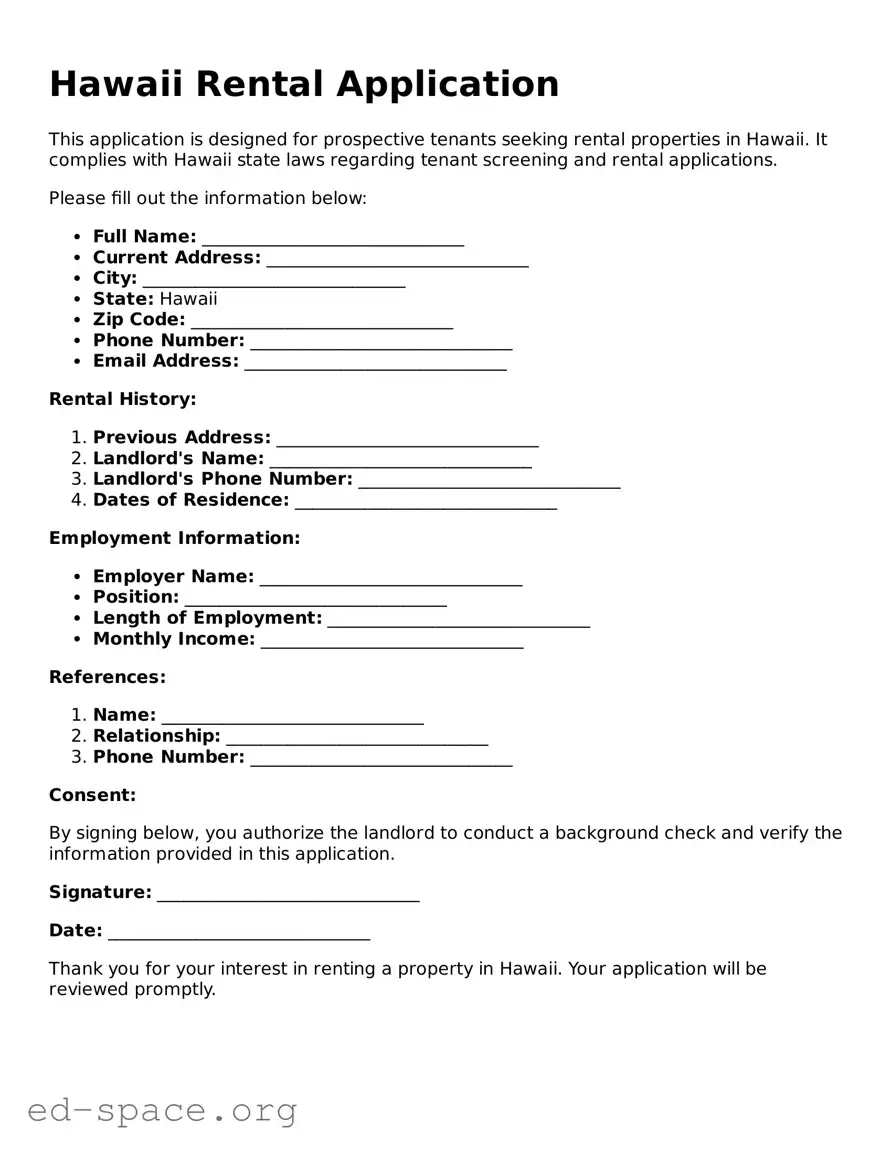
Hawaii Rental Application

This application is designed for prospective tenants seeking rental properties in Hawaii. It complies with Hawaii state laws regarding tenant screening and rental applications.

Please fill out the information below:

  • Full Name: ______________________________
  • Current Address: ______________________________
  • City: ______________________________
  • State: Hawaii
  • Zip Code: ______________________________
  • Phone Number: ______________________________
  • Email Address: ______________________________

Rental History:

  1. Previous Address: ______________________________
  2. Landlord's Name: ______________________________
  3. Landlord's Phone Number: ______________________________
  4. Dates of Residence: ______________________________

Employment Information:

  • Employer Name: ______________________________
  • Position: ______________________________
  • Length of Employment: ______________________________
  • Monthly Income: ______________________________

References:

  1. Name: ______________________________
  2. Relationship: ______________________________
  3. Phone Number: ______________________________

Consent:

By signing below, you authorize the landlord to conduct a background check and verify the information provided in this application.

Signature: ______________________________

Date: ______________________________

Thank you for your interest in renting a property in Hawaii. Your application will be reviewed promptly.

PDF Form Details

Fact Name Description
Required Information The Hawaii Rental Application form typically requires personal details such as the applicant's name, contact information, rental history, and employment details.
Application Fee Landlords in Hawaii may charge a non-refundable application fee to cover the cost of processing the application and conducting background checks.
Governing Laws The application process in Hawaii is governed by the Hawaii Revised Statutes, particularly Chapter 521, which outlines the rights and responsibilities of landlords and tenants.
Fair Housing Compliance Hawaii law prohibits discrimination in rental applications based on race, color, national origin, sex, disability, familial status, and religion, in accordance with the Fair Housing Act.

Hawaii Rental Application: Usage Guidelines

After you obtain the Hawaii Rental Application form, it’s essential to fill it out accurately and completely. This ensures that your application is processed smoothly and increases your chances of securing the rental property you desire. Follow the steps outlined below to complete the form effectively.

  1. Gather necessary documents: Before you start filling out the application, collect all required documents such as identification, proof of income, and rental history.
  2. Read the instructions: Carefully review any instructions provided with the application to understand what information is needed.
  3. Fill in personal information: Start with your full name, current address, phone number, and email address. Make sure this information is accurate.
  4. Provide rental history: List your previous rental addresses, including the names of landlords, contact information, and the duration of your stay at each location.
  5. Detail employment information: Include your current employer's name, address, your job title, and your monthly income. If applicable, provide details about any additional sources of income.
  6. Disclose financial information: Be prepared to provide information about your credit history and any outstanding debts. This may include bank account details or other financial obligations.
  7. List references: Include personal and professional references who can vouch for your character and reliability as a tenant.
  8. Sign and date the application: Ensure you sign and date the form at the end, confirming that all information provided is true and complete.
  9. Submit the application: Follow the instructions for submission, whether it’s online, by mail, or in person. Ensure you keep a copy for your records.

Completing the application accurately is crucial. Once submitted, the landlord or property management will review your information, which may include background and credit checks. Be prepared for follow-up questions or requests for additional documentation.

Your Questions, Answered

What is the purpose of the Hawaii Rental Application form?

The Hawaii Rental Application form is designed to gather essential information from potential tenants. It helps landlords assess the suitability of applicants for their rental properties. By collecting details such as employment history, rental history, and personal references, landlords can make informed decisions regarding who to rent to. This form is a crucial step in the tenant screening process.

What information do I need to provide on the application?

When filling out the application, you will typically need to provide personal information, including your full name, contact information, and Social Security number. Additionally, you may be asked to list your current and previous addresses, employment details, and income sources. Some applications also require references from previous landlords or personal contacts. Be prepared to provide accurate and honest information to avoid any issues during the screening process.

Is there a fee associated with submitting the rental application?

Many landlords or property management companies charge a fee for processing rental applications. This fee helps cover the costs of background checks, credit checks, and other administrative expenses. The amount can vary widely, so it’s advisable to ask about any fees before submitting your application. Ensure you understand what the fee covers and whether it is refundable if your application is not approved.

How long does the application process take?

The duration of the application process can vary depending on several factors. Typically, it may take anywhere from a few days to a week for landlords to review applications and conduct background checks. If you provide all the necessary information promptly, it can help expedite the process. It’s always a good idea to follow up with the landlord or property manager if you haven’t heard back within a reasonable timeframe.

What should I do if my application is denied?

If your application is denied, the landlord is generally required to provide you with a reason for the denial, especially if it relates to your credit history or background check. You have the right to request a copy of the report used in the decision-making process. If you believe the denial was unjust or based on incorrect information, you can address the issues with the landlord or consider seeking legal advice. It’s important to learn from the experience and improve your application for future opportunities.

Common mistakes

  1. Failing to provide accurate personal information. It is crucial to include your full name, current address, and contact information. Inaccuracies can lead to delays or even rejection of your application.

  2. Omitting employment details. Many applicants forget to list their current employer, job title, and income. This information helps landlords assess your financial stability.

  3. Not disclosing rental history. It is essential to provide a complete rental history, including previous addresses and landlord contact information. Missing this can raise red flags for landlords.

  4. Neglecting to sign the application. A signature is necessary to validate your application. Without it, the application may be considered incomplete.

  5. Providing insufficient references. Including personal or professional references can strengthen your application. Ensure you have listed contacts who can vouch for your character and reliability.

  6. Ignoring the application fee. Many landlords require a fee to process your application. Failing to include this payment can result in an automatic denial.

  7. Not reviewing the application for errors. Before submitting, take a moment to review your application for any mistakes. Small errors can lead to misunderstandings or rejections.

Documents used along the form

When renting a property in Hawaii, several forms and documents are commonly used alongside the Hawaii Rental Application form. These documents help both landlords and tenants ensure a smooth rental process. Here’s a brief overview of some key forms you might encounter.

  • Lease Agreement: This is a contract between the landlord and tenant that outlines the terms of the rental arrangement, including rent amount, duration, and responsibilities of both parties.
  • Background Check Authorization: Tenants often need to provide consent for landlords to conduct background checks. This document ensures that the landlord can verify the tenant's rental history and criminal background.
  • Credit Check Consent: Similar to the background check, this form allows landlords to check the tenant's credit history. It helps landlords assess the financial reliability of potential tenants.
  • Pet Agreement: If pets are allowed, this document outlines the rules regarding pet ownership. It may include pet deposits, breed restrictions, and other related policies.
  • Move-In/Move-Out Inspection Checklist: This form records the condition of the property at the time of moving in and out. It helps prevent disputes over security deposits by documenting any existing damage.
  • Rental History Verification: This document is often requested by landlords to confirm a tenant's previous rental experiences. It typically includes contact information for former landlords and details about the rental period.

Having these documents ready can facilitate a more efficient rental process. Being prepared helps both landlords and tenants understand their rights and responsibilities clearly.

Similar forms

The Rental Application form serves a specific purpose in the housing market, but it shares similarities with several other documents. Each of these documents plays a role in gathering essential information about individuals seeking to enter into agreements or contracts. Below are seven documents that are similar to the Rental Application form, along with explanations of their similarities:

  • Lease Agreement: Like the Rental Application, the lease agreement outlines the terms and conditions of renting a property. Both documents require personal information and provide a framework for the landlord-tenant relationship.
  • Employment Application: An employment application collects detailed information about a job candidate, similar to how a Rental Application gathers details about a prospective tenant. Both require personal data, references, and consent for background checks.
  • Credit Application: A credit application is used to evaluate an individual's creditworthiness, much like a Rental Application assesses a tenant's reliability. Both documents often involve financial history and may require consent for credit checks.
  • Tenant Screening Report: This report provides a comprehensive analysis of a potential tenant's background, paralleling the information collected in a Rental Application. Both documents aim to ensure the suitability of an applicant.
  • Background Check Consent Form: This form allows landlords to conduct background checks on applicants. Similar to the Rental Application, it involves personal information and consent, ensuring transparency in the screening process.
  • Guarantor Agreement: A guarantor agreement is used when a tenant requires a co-signer. It shares similarities with the Rental Application in that both documents gather personal and financial information to assess the risk of tenancy.
  • Property Management Agreement: This agreement outlines the responsibilities of property managers and owners. Like the Rental Application, it includes details about the property and the individuals involved, ensuring clarity in the rental process.

Dos and Don'ts

When filling out the Hawaii Rental Application form, it is important to approach the process with care. Here is a list of things to do and avoid to ensure your application is complete and accurate.

  • Do read the entire application carefully before starting.
  • Do provide accurate and honest information.
  • Do include all required documentation, such as proof of income.
  • Do check for any application fees and be prepared to pay them.
  • Do follow up with the landlord or property manager after submission.
  • Don't leave any sections blank unless instructed.
  • Don't use false information to improve your chances.
  • Don't forget to proofread your application for errors.
  • Don't submit an application without understanding the terms of the lease.
  • Don't rush through the process; take your time to ensure completeness.

Misconceptions

Understanding the Hawaii Rental Application form can be challenging due to various misconceptions. Here are nine common misunderstandings regarding this important document.

  1. All rental applications are the same across Hawaii. Many people assume that rental applications are standardized throughout the state. In reality, each landlord or property management company may have its own specific form and requirements.
  2. You only need to provide basic personal information. Some individuals think that only name and contact details are necessary. However, many applications require additional information such as employment history, references, and rental history.
  3. Rental applications are optional. A common misconception is that filling out a rental application is not mandatory. Most landlords require a completed application to consider a potential tenant for a rental property.
  4. Once submitted, the application cannot be changed. Some believe that once they submit their application, they cannot make any changes. In many cases, applicants can request to update their information before the application is processed.
  5. All rental applications will be approved. Many people think that submitting an application guarantees approval. Approval depends on various factors, including credit history, income verification, and rental history.
  6. There is no fee for submitting a rental application. Some applicants assume that all rental applications are free. However, many landlords charge a non-refundable application fee to cover background checks and processing costs.
  7. Providing a social security number is optional. Many believe that they can skip providing their social security number. In most cases, landlords require this information for background checks and to verify identity.
  8. Only individuals can apply for rental properties. Some people think that only single applicants can fill out a rental application. In reality, families or groups can apply together, and all adult members may need to complete separate applications.
  9. Rental applications are only for long-term leases. A misconception exists that rental applications are only needed for long-term leases. However, they can also be required for short-term rentals, vacation homes, or seasonal properties.

Clarifying these misconceptions can help potential tenants navigate the rental process in Hawaii more effectively.

Key takeaways

Filling out the Hawaii Rental Application form is an important step in securing a rental property. Here are some key takeaways to keep in mind:

  1. Provide Accurate Information: Ensure that all personal details, including your name, address, and contact information, are correct.
  2. Employment History: Include your current and previous employment details. This helps landlords assess your ability to pay rent.
  3. Rental History: List your previous rental addresses. This information gives landlords insight into your rental behavior.
  4. References: Provide contact information for personal and professional references. These can help support your application.
  5. Credit Check: Be prepared for a credit check. Landlords often use this to evaluate your financial responsibility.
  6. Application Fee: Some landlords may charge a fee to process your application. Make sure to ask about this upfront.
  7. Timeliness: Submit your application promptly. Rental properties can be in high demand, and acting quickly can improve your chances.

Understanding these points can make the application process smoother and increase your chances of securing a rental home in Hawaii.