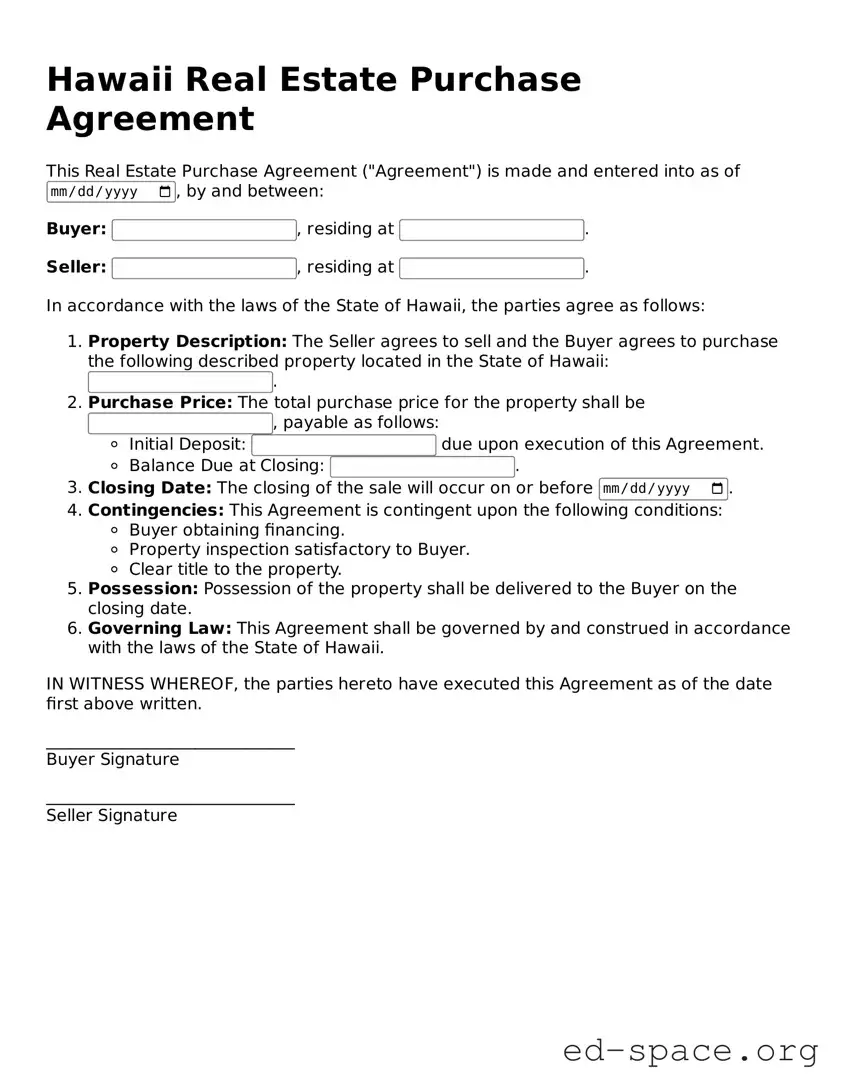
The Hawaii Real Estate Purchase Agreement is a crucial document for anyone looking to buy or sell property in the beautiful islands of Hawaii. This form outlines the terms and conditions of the sale, ensuring that both the buyer and seller are clear on their obligations. Key aspects include the purchase price, financing details, and the closing date. It also addresses contingencies, such as inspections and appraisals, which can affect the transaction. Additionally, the agreement specifies what is included in the sale, like appliances and fixtures, and outlines the responsibilities for property taxes and utilities. Understanding this form is essential for a smooth real estate transaction in Hawaii, as it protects the interests of both parties and helps to avoid misunderstandings. With the right knowledge of this agreement, buyers and sellers can navigate the real estate market with confidence.
Hawaii Real Estate Purchase Agreement
This Real Estate Purchase Agreement ("Agreement") is made and entered into as of , by and between:
Buyer: , residing at .
Seller: , residing at .
In accordance with the laws of the State of Hawaii, the parties agree as follows:
IN WITNESS WHEREOF, the parties hereto have executed this Agreement as of the date first above written.
______________________________
Buyer Signature
______________________________
Seller Signature
| Fact Name | Description |
|---|---|
| Governing Law | The Hawaii Real Estate Purchase Agreement is governed by the laws of the State of Hawaii. |
| Purpose | This form is used to outline the terms and conditions of a real estate transaction in Hawaii. |
| Parties Involved | The agreement involves a buyer and a seller, each of whom must sign the document. |
| Property Description | A detailed description of the property being sold must be included in the agreement. |
| Purchase Price | The total purchase price of the property is clearly stated in the agreement. |
| Earnest Money | The agreement typically requires the buyer to submit earnest money to show commitment. |
| Contingencies | Common contingencies may include financing, inspections, and appraisal conditions. |
| Closing Date | The agreement specifies a closing date when the sale will be finalized. |
| Disclosure Requirements | Sellers are required to disclose certain information about the property to the buyer. |
| Signatures | Both parties must sign the agreement for it to be legally binding. |
Filling out the Hawaii Real Estate Purchase Agreement is an important step in the home-buying process. Once completed, this form will guide you through the next steps in securing your property. Here are the steps to follow when filling out the form.
After completing the form, it is essential to keep a copy for your records. You may also want to consult with a real estate professional to ensure that all details are correctly addressed.
What is a Hawaii Real Estate Purchase Agreement?
The Hawaii Real Estate Purchase Agreement is a legal document that outlines the terms and conditions under which a buyer agrees to purchase a property from a seller. This agreement serves as a binding contract, detailing the responsibilities of both parties and the specifics of the transaction.
What key elements are included in the agreement?
Typically, the agreement includes important details such as the purchase price, property description, closing date, and any contingencies that must be met before the sale can proceed. It also outlines the rights and obligations of both the buyer and the seller, ensuring clarity in the transaction.
Do I need a real estate agent to complete this agreement?
While it is not a legal requirement to have a real estate agent, having one can be beneficial. Agents can provide guidance, help navigate the complexities of the agreement, and ensure that all necessary terms are included. They can also assist with negotiations and help you understand your rights and obligations.
What are contingencies, and why are they important?
Contingencies are specific conditions that must be met for the sale to proceed. Common contingencies include home inspections, financing approval, and appraisal results. These clauses protect buyers by allowing them to back out of the deal if certain conditions are not satisfied, ensuring they are making a sound investment.
Can the purchase agreement be modified after it's signed?
Yes, the purchase agreement can be modified, but both parties must agree to any changes. It’s crucial to document any modifications in writing and have both parties sign the updated agreement. This ensures that everyone is on the same page and protects the interests of both the buyer and the seller.
What happens if one party breaches the agreement?
If one party fails to fulfill their obligations as outlined in the agreement, it is considered a breach. The non-breaching party may have several options, including seeking damages or specific performance, which means they can ask the court to enforce the terms of the agreement. It’s always wise to seek legal advice in such situations.
Is there a specific format for the Hawaii Real Estate Purchase Agreement?
While there is no one-size-fits-all format, the agreement must include certain essential elements to be legally binding. Many real estate professionals use standardized forms that comply with Hawaii laws. It’s important to ensure that any form used is up-to-date and meets legal requirements.
What is the closing process after the agreement is signed?
Once the agreement is signed, the closing process begins. This typically involves finalizing financing, conducting a title search, and completing any agreed-upon inspections. On the closing date, both parties will meet to sign the necessary documents, and the buyer will pay the purchase price, transferring ownership of the property.
How can I ensure my interests are protected in this agreement?
To protect your interests, it’s wise to have a clear understanding of all terms before signing. Consider working with a real estate attorney or a qualified agent who can help you identify potential issues and ensure that the agreement reflects your needs. Thoroughly reviewing the document and asking questions is always encouraged.
What should I do if I have more questions about the agreement?
If you have additional questions, consider reaching out to a real estate professional or legal consultant who specializes in real estate transactions. They can provide personalized advice and help clarify any uncertainties you may have regarding the agreement or the buying process.
Incomplete Information: Buyers and sellers often leave sections blank or fail to provide necessary details. This can include missing names, addresses, or property descriptions. Ensure that all fields are filled out completely to avoid delays.
Incorrect Dates: Failing to specify accurate dates can lead to misunderstandings. For instance, the closing date or the date of the offer should be clearly stated. Double-check all dates to ensure they align with your timeline.
Ignoring Contingencies: Some individuals overlook the importance of including contingencies. These are conditions that must be met for the sale to proceed, such as financing or inspection contingencies. Clearly outline any contingencies to protect your interests.
Not Reviewing Terms: Many people rush through the terms of the agreement without fully understanding them. Important aspects like earnest money deposits, closing costs, and repair obligations should be carefully reviewed. Take the time to understand each term to avoid future disputes.
When engaging in a real estate transaction in Hawaii, several documents complement the Hawaii Real Estate Purchase Agreement form. Each document serves a specific purpose and is essential for ensuring a smooth transaction process.
Understanding these documents can significantly enhance the buying or selling experience in Hawaii. Each plays a vital role in protecting the interests of both parties and facilitating a successful real estate transaction.
Lease Agreement: This document outlines the terms under which a tenant can occupy a property. Like a purchase agreement, it details the parties involved, property description, and payment terms.
Option to Purchase Agreement: This gives a tenant the right to purchase a property within a specified time frame. Similar to a purchase agreement, it includes price, terms, and conditions for the sale.
Seller's Disclosure Statement: This document requires sellers to disclose known issues with the property. Both documents aim to protect buyers by providing crucial information about the property’s condition.
Title Report: This report details the legal ownership of a property and any liens or encumbrances. Like a purchase agreement, it is essential for ensuring a clear transfer of ownership.
Closing Disclosure: This document outlines the final terms of a mortgage, including closing costs. It parallels a purchase agreement by summarizing the financial aspects of the transaction.
Real Estate Listing Agreement: This agreement between a seller and a real estate agent outlines the agent's responsibilities and commission. Both documents set the stage for a property transaction.
Purchase and Sale Agreement: Often used interchangeably with a real estate purchase agreement, it specifies the terms of sale for a property, including price and contingencies.
Escrow Agreement: This document involves a third party holding funds or documents until the transaction is completed. Like a purchase agreement, it ensures that all parties meet their obligations before finalizing the sale.
Home Inspection Agreement: This outlines the terms for a home inspection prior to purchase. Both agreements help buyers understand the property and its condition before committing.
Power of Attorney for Real Estate Transactions: This document allows someone to act on behalf of another in real estate matters. Similar to a purchase agreement, it is crucial for facilitating property transactions smoothly.
When filling out the Hawaii Real Estate Purchase Agreement form, attention to detail is crucial. Here are some important dos and don'ts to keep in mind:
Understanding the Hawaii Real Estate Purchase Agreement form can be challenging. Here are ten common misconceptions that people often have about this important document.
Being aware of these misconceptions can help individuals navigate the real estate process in Hawaii more effectively. Understanding the nuances of the Hawaii Real Estate Purchase Agreement is crucial for a smooth transaction.
When filling out and using the Hawaii Real Estate Purchase Agreement form, several key points are essential to ensure a smooth transaction. Here are the takeaways:
Taking these steps seriously can significantly impact the outcome of your real estate transaction in Hawaii.