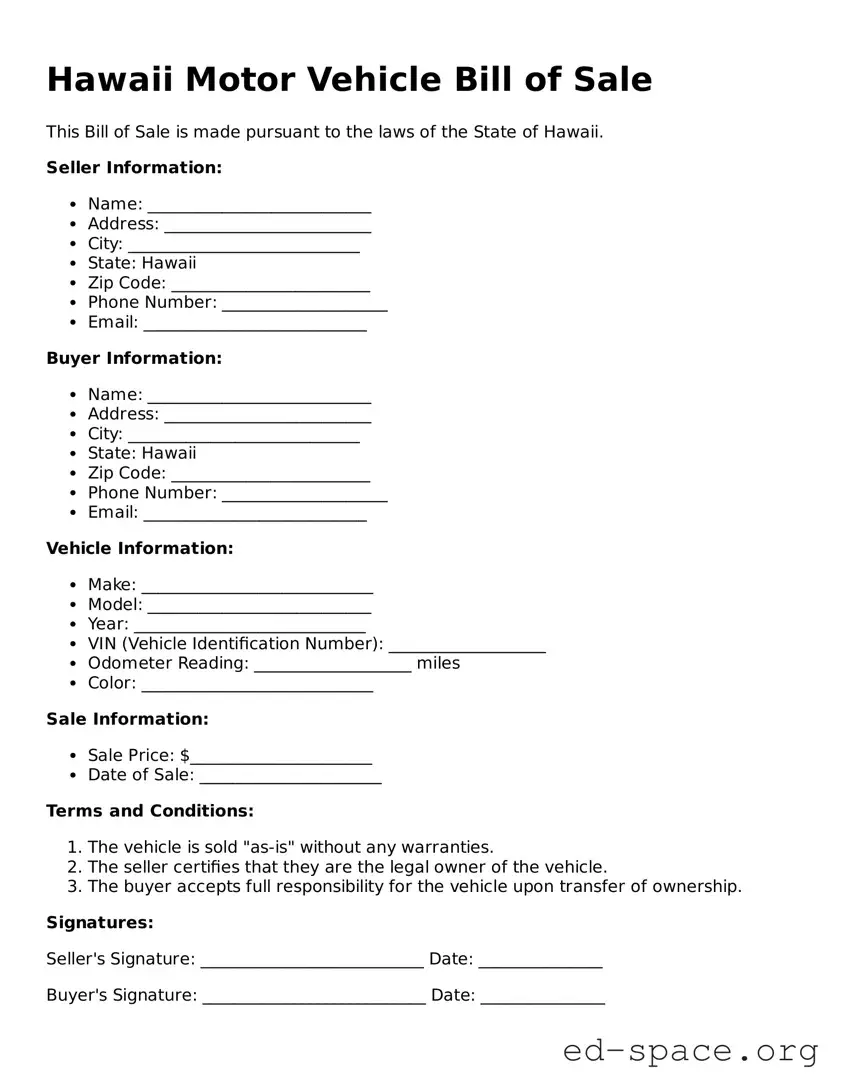
The Hawaii Motor Vehicle Bill of Sale form serves as a crucial document in the transfer of ownership for motor vehicles within the state. This form captures essential details about the vehicle, including its make, model, year, and Vehicle Identification Number (VIN), ensuring that all pertinent information is accurately recorded. Both the seller and the buyer must provide their names, addresses, and signatures, which formalizes the transaction and protects the rights of both parties. Additionally, the form may include the sale price, any warranties, and disclosures related to the vehicle’s condition. Completing this document is not only a legal requirement but also a best practice that can prevent disputes in the future. By documenting the sale, both parties establish a clear record of the transaction, which is beneficial for registration and potential future sales. Understanding the significance of this form is essential for anyone involved in buying or selling a vehicle in Hawaii.
Hawaii Motor Vehicle Bill of Sale
This Bill of Sale is made pursuant to the laws of the State of Hawaii.
Seller Information:
Buyer Information:
Vehicle Information:
Sale Information:
Terms and Conditions:
Signatures:
Seller's Signature: ___________________________ Date: _______________
Buyer's Signature: ___________________________ Date: _______________
This document serves as a record of the sale and transfer of ownership of the vehicle described above.
| Fact Name | Description |
|---|---|
| Purpose | The Hawaii Motor Vehicle Bill of Sale form is used to document the sale of a motor vehicle between a buyer and a seller. |
| Governing Law | This form is governed by the Hawaii Revised Statutes, specifically under Title 14, Chapter 286. |
| Required Information | Essential details include the vehicle's make, model, year, Vehicle Identification Number (VIN), and the sale price. |
| Signatures | Both the seller and buyer must sign the form to validate the transaction. |
After obtaining the Hawaii Motor Vehicle Bill of Sale form, you will need to complete it accurately to ensure a smooth transfer of ownership. This document will be essential for both the seller and the buyer, so it is important to fill it out carefully.
Once the form is completed, it should be kept by both parties for their records. The buyer may need this document for vehicle registration, while the seller should retain it as proof of the sale.
What is a Motor Vehicle Bill of Sale in Hawaii?
A Motor Vehicle Bill of Sale is a legal document that serves as proof of the sale and transfer of ownership of a vehicle in Hawaii. It includes essential information about the vehicle, the buyer, and the seller, providing a record of the transaction. This document is important for both parties involved, as it helps protect their interests and ensures a clear transfer of ownership.
Why is a Bill of Sale necessary?
The Bill of Sale is necessary for several reasons. It provides legal evidence of the sale, which can be important for tax purposes and registration. It can also protect the seller from any future claims related to the vehicle after the sale. Additionally, the buyer may need it to register the vehicle in their name with the local Department of Motor Vehicles (DMV).
What information is typically included in the Bill of Sale?
A typical Motor Vehicle Bill of Sale in Hawaii includes the following information: the names and addresses of both the buyer and seller, the vehicle's make, model, year, and VIN (Vehicle Identification Number), the sale price, the date of the sale, and any conditions of the sale. Both parties should sign the document to validate the transaction.
Do I need to have the Bill of Sale notarized?
In Hawaii, notarization of the Bill of Sale is not required. However, having it notarized can add an extra layer of security and authenticity to the document. It may also help in case of any disputes that arise later regarding the sale.
Can I use a generic Bill of Sale form?
You can use a generic Bill of Sale form, but it is recommended to use a form specifically designed for Hawaii. State-specific forms often include all necessary elements required by local laws and regulations, reducing the risk of missing important information that could affect the transaction.
What should I do after completing the Bill of Sale?
After completing the Bill of Sale, both the buyer and seller should keep a copy for their records. The buyer will need to present the Bill of Sale to the DMV when registering the vehicle in their name. It is also advisable for the seller to notify their insurance company and the DMV about the sale to avoid any future liabilities.
Is there a specific format for the Bill of Sale?
While there is no strict format for the Bill of Sale in Hawaii, it should include all relevant details about the transaction. Many people use templates available online to ensure that they include all necessary information. The clarity of the document is essential to avoid misunderstandings.
What if the vehicle has a lien on it?
If the vehicle has a lien, it is important to address this before completing the sale. The seller should ensure that the lien is paid off and that they have the lien release document. This will prevent any complications for the buyer regarding ownership and registration of the vehicle.
Incomplete Information: One of the most common mistakes is failing to fill out all required fields. The form requires specific details such as the buyer's and seller's names, addresses, and vehicle information. Missing any of this information can lead to complications during the registration process.
Incorrect Vehicle Identification Number (VIN): Another frequent error involves entering an incorrect VIN. This number is crucial for identifying the vehicle and ensuring that it matches the title. An incorrect VIN can result in delays or even legal disputes regarding ownership.
Not Signing the Document: Some individuals forget to sign the Bill of Sale. Both the seller and buyer must provide their signatures to validate the transaction. Without these signatures, the document may not be recognized as a legal record of the sale.
Failure to Date the Form: Lastly, neglecting to include the date of the transaction is a common oversight. The date is essential for establishing when the sale took place, which can be important for tax purposes and future ownership verification.
When buying or selling a vehicle in Hawaii, several important documents may accompany the Motor Vehicle Bill of Sale. Each of these forms serves a specific purpose and helps ensure that the transaction is smooth and legally sound. Here are some key documents you might encounter:
Having these documents ready can make the buying or selling process easier and help avoid potential issues down the road. It’s important to understand the role of each document to ensure a successful transaction.
When filling out the Hawaii Motor Vehicle Bill of Sale form, it's important to follow specific guidelines to ensure accuracy and legality. Here are seven things you should and shouldn't do:
When it comes to the Hawaii Motor Vehicle Bill of Sale form, several misconceptions often arise. These misunderstandings can lead to confusion for both buyers and sellers. Below are five common misconceptions, along with clarifications to help navigate the process more smoothly.
Many people believe that a Bill of Sale is optional when buying or selling a vehicle. In Hawaii, however, this document serves as a critical record of the transaction, providing proof of ownership transfer and protecting both parties involved.
Another misconception is that only the seller's signature is required. In fact, both the buyer and the seller should sign the Bill of Sale to ensure that the transaction is legally binding and recognized by the state.
Some individuals think that notarization is a requirement for the Bill of Sale to be valid. While notarization can add an extra layer of authenticity, it is not a mandatory step in Hawaii for the document to be legally effective.
It is a common belief that the Bill of Sale form is uniform across different vehicle types. However, variations exist depending on whether the vehicle is a car, motorcycle, or boat. Each type may have specific requirements or additional information needed on the form.
Some buyers mistakenly assume that the Bill of Sale guarantees they are receiving a clean title. This document does not verify the title's status; buyers should conduct their own due diligence to ensure that the vehicle is free of liens or other encumbrances.
Understanding these misconceptions can help ensure a smoother transaction process when dealing with motor vehicles in Hawaii. Being informed empowers both buyers and sellers to navigate the complexities of vehicle sales more effectively.
When dealing with the Hawaii Motor Vehicle Bill of Sale form, it's essential to understand its importance and how to fill it out correctly. Here are some key takeaways to keep in mind: