In the picturesque setting of Hawaii, where the beauty of the islands meets the complexities of real estate, the Hawaii Lease Agreement form plays a crucial role in defining the relationship between landlords and tenants. This legally binding document outlines essential terms and conditions that govern the rental of residential or commercial properties. It typically includes provisions such as the duration of the lease, rental payment details, security deposits, and maintenance responsibilities. Additionally, it addresses the rights and obligations of both parties, ensuring clarity and mutual understanding. The form may also contain specific clauses related to local laws, which are particularly important in Hawaii's unique legal landscape. By establishing these guidelines, the Hawaii Lease Agreement not only protects the interests of landlords and tenants but also fosters a sense of trust and cooperation, contributing to a harmonious living environment in this tropical paradise.
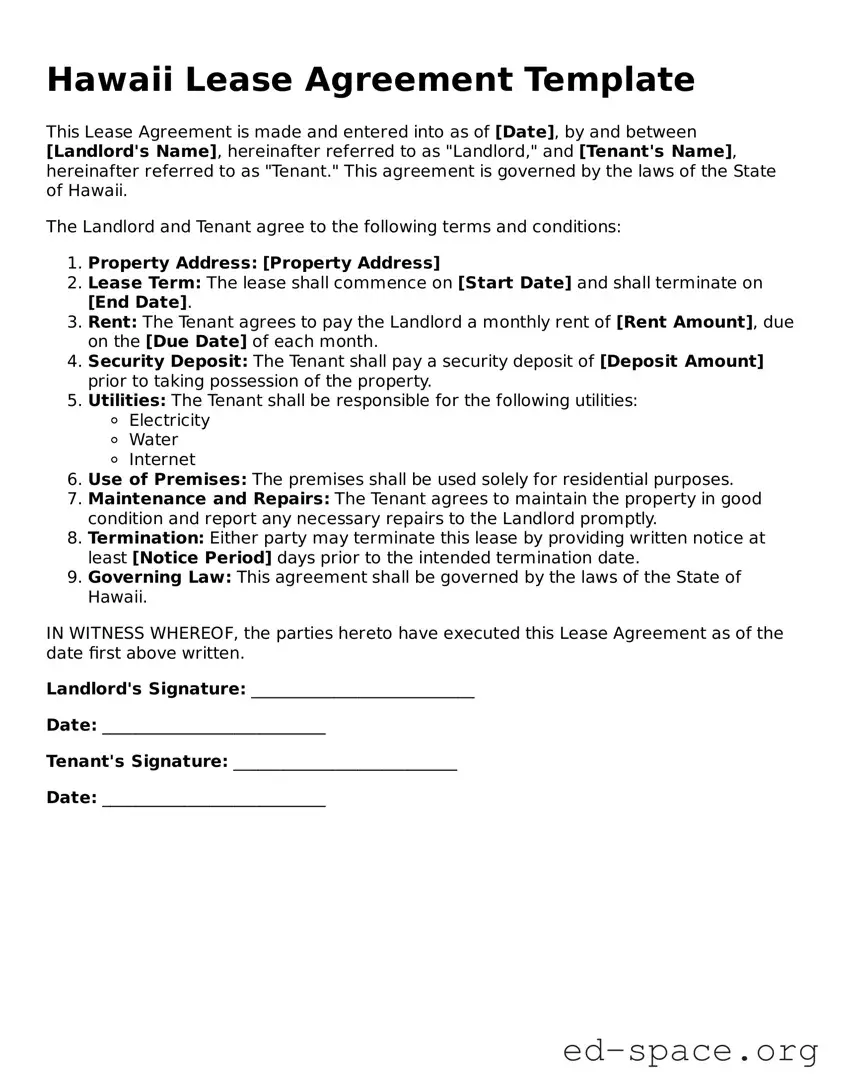
Hawaii Lease Agreement Template
This Lease Agreement is made and entered into as of [Date], by and between [Landlord's Name], hereinafter referred to as "Landlord," and [Tenant's Name], hereinafter referred to as "Tenant." This agreement is governed by the laws of the State of Hawaii.
The Landlord and Tenant agree to the following terms and conditions:
IN WITNESS WHEREOF, the parties hereto have executed this Lease Agreement as of the date first above written.
Landlord's Signature: ___________________________
Date: ___________________________
Tenant's Signature: ___________________________
Date: ___________________________
| Fact Name | Description |
|---|---|
| Governing Law | The Hawaii Lease Agreement is governed by the Hawaii Revised Statutes, specifically Chapter 521, which outlines the rights and responsibilities of landlords and tenants. |
| Types of Leases | This form can be used for various types of leases, including residential, commercial, and agricultural leases, ensuring flexibility for different rental situations. |
| Security Deposit Regulations | In Hawaii, landlords may require a security deposit, but it cannot exceed one month's rent for unfurnished properties and must be held in a trust account. |
| Disclosure Requirements | Landlords must provide tenants with specific disclosures, such as information about lead-based paint, to ensure transparency and safety in rental agreements. |
Filling out the Hawaii Lease Agreement form is an important step in formalizing the rental process. This document outlines the terms and conditions between the landlord and tenant. To ensure that all necessary information is provided accurately, follow the steps below carefully.
Once the form is completed, both parties should keep a copy for their records. This ensures clarity and understanding of the rental agreement moving forward.
What is a Hawaii Lease Agreement form?
A Hawaii Lease Agreement form is a legal document that outlines the terms and conditions under which a landlord rents property to a tenant in Hawaii. This form details the rights and responsibilities of both parties, including rent amount, payment due dates, security deposits, and maintenance obligations.
What are the key components of a Hawaii Lease Agreement?
Key components typically include the names of the landlord and tenant, the property address, lease term (length of the rental agreement), rent amount, payment schedule, security deposit details, maintenance responsibilities, and rules regarding pets and guests. It's important that both parties understand and agree to these terms before signing.
Is a written lease agreement required in Hawaii?
While verbal agreements can be legally binding, having a written lease agreement is highly recommended. A written document provides clarity and protection for both landlords and tenants, reducing the potential for misunderstandings or disputes in the future.
How long can a lease agreement last in Hawaii?
Lease agreements in Hawaii can vary in length. They may be short-term (typically month-to-month) or long-term (usually a year or more). The duration should be clearly stated in the lease agreement, allowing both parties to know their commitments.
What happens if a tenant wants to break the lease early?
If a tenant needs to break the lease early, they should first review the lease agreement for any specific terms regarding early termination. In many cases, tenants may be required to provide notice and may also incur penalties or forfeit their security deposit. Open communication with the landlord can sometimes lead to a mutually agreeable solution.
Are there specific laws governing lease agreements in Hawaii?
Yes, Hawaii has specific laws that govern residential leases. These laws cover various aspects, including security deposits, eviction processes, and tenant rights. Familiarity with these laws can help both landlords and tenants understand their legal rights and responsibilities.
Can a landlord increase the rent during the lease term?
Typically, a landlord cannot increase the rent during the lease term unless the lease agreement specifically allows for it. Any changes to the rent amount usually take effect only when a new lease is signed or at the end of the current lease term. It's crucial for both parties to discuss any potential rent increases in advance.
What should be done if a dispute arises between the landlord and tenant?
If a dispute arises, both parties should first attempt to resolve the issue through open communication. If that doesn't work, they may consider mediation or arbitration as alternative dispute resolution methods. As a last resort, legal action may be necessary, but this can be costly and time-consuming, so it's best to explore other options first.
What is the process for renewing a lease in Hawaii?
Renewing a lease typically involves discussing the terms with the landlord before the lease expires. If both parties agree to continue the rental arrangement, they may either sign a new lease agreement or extend the existing one. It’s important to clarify any changes in terms, such as rent or lease duration, during this process.
Missing Personal Information: Many people forget to fill in their names, addresses, or contact information. This can lead to confusion later on.
Incorrect Dates: Some individuals make mistakes with the lease start and end dates. Double-check these dates to avoid any misunderstandings.
Not Specifying Rent Amount: It’s crucial to clearly state the monthly rent. Leaving this blank or writing it incorrectly can cause issues.
Ignoring Terms and Conditions: Some overlook the importance of reading the terms and conditions. Understanding these can prevent future disputes.
Neglecting Signatures: Forgetting to sign the agreement is a common mistake. Both the landlord and tenant must sign for the lease to be valid.
Overlooking Additional Fees: Not including any additional fees, like maintenance or utilities, can lead to unexpected costs later. Always clarify these details.
When entering into a lease agreement in Hawaii, several additional forms and documents may be necessary to ensure clarity and protect the rights of both landlords and tenants. Below is a list of commonly used documents that accompany the Hawaii Lease Agreement.
Understanding these documents can help both landlords and tenants navigate the leasing process more effectively. Proper documentation promotes transparency and can prevent misunderstandings down the road.
A Lease Agreement is a crucial document in the realm of property rental, but it shares similarities with several other important documents. Understanding these similarities can help clarify their purposes and uses. Here’s a look at nine documents that are similar to a Lease Agreement:
Each of these documents plays a vital role in the rental process, providing clarity and structure to the landlord-tenant relationship. Understanding their similarities can enhance your approach to property management and rental agreements.
When filling out the Hawaii Lease Agreement form, it's important to be thorough and accurate. Here are some key do's and don'ts to keep in mind:
Understanding the Hawaii Lease Agreement form is crucial for both landlords and tenants. However, several misconceptions can lead to confusion and potential disputes. Here are nine common misconceptions about the Hawaii Lease Agreement form:
While it is highly recommended to have a written lease for clarity, oral agreements can also be legally binding in Hawaii. However, proving the terms of an oral agreement can be challenging.
Lease agreements typically cover a longer term, often a year or more, while rental agreements are usually month-to-month. The terms and conditions may vary significantly between the two.
Landlords must provide reasonable notice before entering a tenant's property, except in emergencies. Generally, 24 hours' notice is considered reasonable in Hawaii.
Security deposits can be refundable, depending on the terms of the lease and the condition of the property upon move-out. Landlords must return the deposit within a specific timeframe after the lease ends.
While tenants have rights, withholding rent is generally only permissible under specific circumstances, such as failure to provide essential repairs. Legal advice should be sought before taking such action.
While many terms can be negotiated, some are governed by state law and cannot be altered. Understanding these legal boundaries is important for both parties.
In Hawaii, landlords must provide a valid reason for eviction, such as non-payment of rent or lease violations. Proper legal procedures must be followed to carry out an eviction.
Whether pets are allowed depends on the lease agreement. Many landlords have specific pet policies, and tenants should clarify this before signing.
A lease agreement is not legally binding unless signed by both parties. Signatures indicate acceptance of the terms and conditions outlined in the document.
When navigating the Hawaii Lease Agreement form, several key points can enhance your understanding and ensure a smoother process. Here are some essential takeaways:
Being thorough in these areas can help create a clear and effective lease agreement, ultimately leading to a better experience for both landlords and tenants.