The Hawaii Hold Harmless Agreement form serves a crucial purpose in various legal and business contexts, providing a framework for individuals and organizations to protect themselves from liability. This agreement is often used in situations where one party agrees to assume the risk of certain activities, thereby shielding the other party from claims or damages that may arise. It typically outlines the responsibilities of each party and specifies the scope of the indemnification. By signing this form, participants acknowledge the inherent risks involved and accept that they will not hold the other party responsible for any injuries or losses incurred. This agreement is particularly relevant in recreational activities, property rentals, and events where safety is a concern. Understanding the implications of this document is essential for anyone engaging in activities that could expose them to potential legal action. As such, it is imperative to approach the use of the Hawaii Hold Harmless Agreement with careful consideration and an awareness of its legal ramifications.
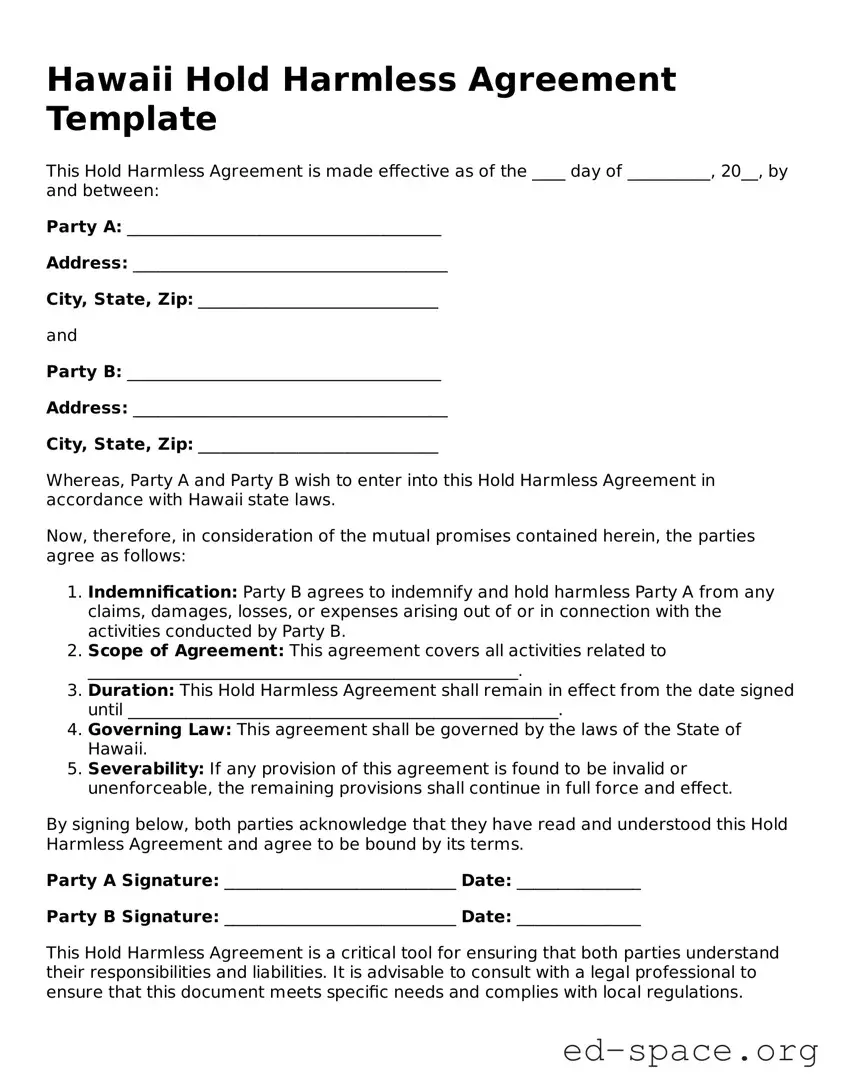
Hawaii Hold Harmless Agreement Template
This Hold Harmless Agreement is made effective as of the ____ day of __________, 20__, by and between:
Party A: ______________________________________
Address: ______________________________________
City, State, Zip: _____________________________
and
Party B: ______________________________________
Address: ______________________________________
City, State, Zip: _____________________________
Whereas, Party A and Party B wish to enter into this Hold Harmless Agreement in accordance with Hawaii state laws.
Now, therefore, in consideration of the mutual promises contained herein, the parties agree as follows:
By signing below, both parties acknowledge that they have read and understood this Hold Harmless Agreement and agree to be bound by its terms.
Party A Signature: ____________________________ Date: _______________
Party B Signature: ____________________________ Date: _______________
This Hold Harmless Agreement is a critical tool for ensuring that both parties understand their responsibilities and liabilities. It is advisable to consult with a legal professional to ensure that this document meets specific needs and complies with local regulations.
| Fact Name | Details |
|---|---|
| Purpose | The Hawaii Hold Harmless Agreement is designed to protect one party from liability for any injuries or damages that may occur during an activity or event. |
| Key Components | This agreement typically includes clauses outlining the responsibilities of each party and the scope of the indemnification. |
| Governing Laws | The agreement is governed by the laws of the State of Hawaii, specifically under Hawaii Revised Statutes. |
| Usage | It is commonly used in various contexts, such as events, recreational activities, and rental agreements to ensure safety and clarify liability. |
Completing the Hawaii Hold Harmless Agreement form is an important step in ensuring that all parties are protected and aware of their responsibilities. After filling out the form, it will need to be submitted as per the instructions provided by the relevant authority or organization.
What is a Hold Harmless Agreement in Hawaii?
A Hold Harmless Agreement is a legal document designed to protect one party from liability for damages or injuries that may occur during a specific activity or event. In Hawaii, this agreement is often used in various contexts, such as recreational activities, construction projects, and rental agreements. By signing this document, one party agrees not to hold the other responsible for certain risks associated with the activity, thus providing a layer of protection against potential lawsuits.
Who typically uses a Hold Harmless Agreement in Hawaii?
Various individuals and organizations utilize Hold Harmless Agreements in Hawaii. Common users include property owners, event organizers, contractors, and businesses that offer recreational services. For instance, if a company organizes a surfing lesson, they might require participants to sign a Hold Harmless Agreement to mitigate their liability in case of an accident. This agreement serves to clarify the responsibilities of each party involved and helps to ensure that everyone understands the risks associated with the activity.
What should be included in a Hold Harmless Agreement?
A well-crafted Hold Harmless Agreement should clearly outline the parties involved, the specific activity or event, and the scope of the liability being waived. It should also include a statement acknowledging that the signer understands the risks involved and voluntarily agrees to the terms. Additionally, it is wise to specify any limitations or exclusions to the liability waiver, such as gross negligence or willful misconduct. This clarity helps to avoid misunderstandings and provides a solid foundation for the agreement.
Is a Hold Harmless Agreement enforceable in Hawaii?
Yes, Hold Harmless Agreements can be enforceable in Hawaii, provided they meet certain legal criteria. To be valid, the agreement must be clear, specific, and not contrary to public policy. Courts generally uphold these agreements as long as they do not attempt to waive liability for gross negligence or intentional misconduct. However, the enforceability can depend on the context and the specific wording of the agreement, so it is crucial to draft it carefully.
Can a Hold Harmless Agreement protect against all types of liability?
No, a Hold Harmless Agreement cannot protect against all types of liability. While it can provide a significant shield against many claims, certain limitations exist. For example, it typically cannot waive liability for intentional harm or gross negligence. Additionally, some statutory protections may override the agreement, particularly in areas like consumer protection or workplace safety. Therefore, it is important to understand the scope of the agreement and consult with a legal expert to ensure it meets the intended purpose.
Incomplete Information: Many individuals fail to fill out all required fields. Each section of the form is important and must be addressed to ensure its validity.
Incorrect Dates: Providing the wrong date can lead to confusion about the agreement's timeline. Always double-check that the dates are accurate.
Not Reading the Terms: Some people skip over the terms and conditions, which can lead to misunderstandings about their rights and responsibilities.
Signature Issues: Forgetting to sign the document or using an illegible signature can render the agreement unenforceable. Ensure that your signature is clear and present.
Failure to Understand Liability: Many individuals do not fully grasp what they are agreeing to in terms of liability. It’s crucial to understand the implications of the hold harmless clause.
Not Including Witnesses: In some cases, a witness may be required for the agreement to be valid. Check if this is necessary for your specific situation.
Using Outdated Forms: Utilizing an old version of the Hold Harmless Agreement can lead to issues. Always ensure you are using the most current form available.
Neglecting to Keep Copies: After submitting the form, failing to keep a copy for your records can lead to complications down the line. Always retain a signed copy for your files.
A Hold Harmless Agreement is an important document that helps protect one party from legal liability for certain actions or events. In Hawaii, this agreement is often used in various contexts, such as construction, events, or rental agreements. Along with the Hold Harmless Agreement, there are several other forms and documents that can be helpful in ensuring all parties understand their rights and responsibilities. Below are four commonly used documents that complement the Hold Harmless Agreement.
Understanding these documents can help ensure that you are adequately protected and that all parties are clear about their obligations. Having the right paperwork in place can prevent misunderstandings and provide peace of mind in various situations.
When filling out the Hawaii Hold Harmless Agreement form, it's essential to approach the task with care. Here’s a list of things to do and avoid:
Misconceptions about the Hawaii Hold Harmless Agreement form can lead to misunderstandings about its purpose and implications. Here is a list of ten common misconceptions, along with clarifications for each.
When filling out and using the Hawaii Hold Harmless Agreement form, there are several important aspects to keep in mind. This document serves as a legal safeguard for parties involved in various activities. Here are some key takeaways:
By keeping these key points in mind, individuals and organizations can effectively utilize the Hawaii Hold Harmless Agreement form to protect themselves and clarify responsibilities in various activities.