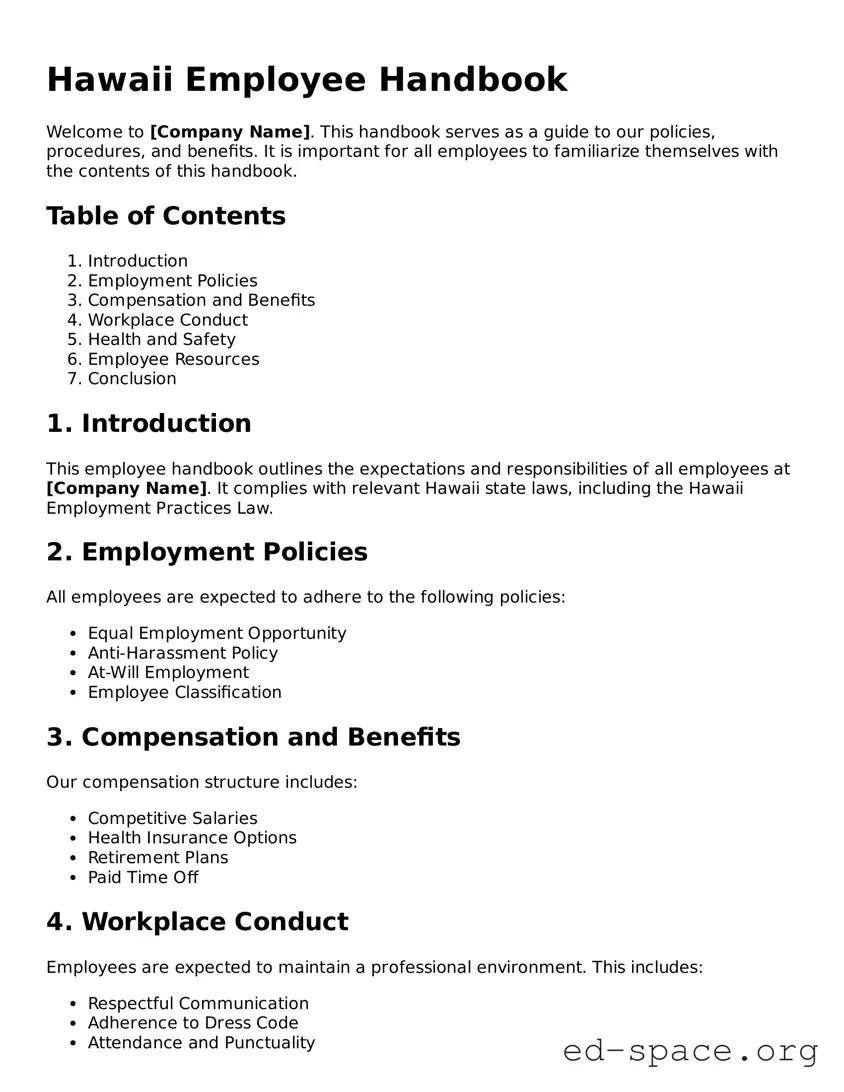
Creating an employee handbook is an essential step for businesses operating in Hawaii, as it serves as a vital resource for both employers and employees. This document outlines workplace policies, procedures, and expectations, helping to establish a clear understanding of the rights and responsibilities of all parties involved. Key aspects of the Hawaii Employee Handbook include important information about workplace conduct, anti-discrimination policies, and employee benefits. It also addresses issues such as attendance, performance evaluations, and disciplinary procedures. By providing comprehensive guidelines, the handbook fosters a positive work environment and promotes compliance with state and federal laws. Additionally, it serves as a reference point for resolving disputes and clarifying company culture. Overall, a well-structured employee handbook is not just a legal requirement; it is a foundational tool for effective communication and organizational success in the workplace.
Hawaii Employee Handbook
Welcome to [Company Name]. This handbook serves as a guide to our policies, procedures, and benefits. It is important for all employees to familiarize themselves with the contents of this handbook.
Table of Contents
1. Introduction
This employee handbook outlines the expectations and responsibilities of all employees at [Company Name]. It complies with relevant Hawaii state laws, including the Hawaii Employment Practices Law.
2. Employment Policies
All employees are expected to adhere to the following policies:
3. Compensation and Benefits
Our compensation structure includes:
4. Workplace Conduct
Employees are expected to maintain a professional environment. This includes:
5. Health and Safety
We prioritize the health and safety of all employees. Key policies include:
6. Employee Resources
Employees have access to various resources, including:
7. Conclusion
This handbook is intended to provide a clear understanding of [Company Name]'s policies. Employees are encouraged to ask questions and seek clarification on any topics covered in this handbook.
By signing below, you acknowledge that you have received and read the Hawaii Employee Handbook.
Employee Signature: ________________________ Date: ________________
| Fact Name | Description |
|---|---|
| Purpose | The Hawaii Employee Handbook serves as a guide for employees regarding company policies and procedures. |
| Governing Law | The handbook must comply with Hawaii Revised Statutes (HRS) Chapter 378, which covers employment practices. |
| Contents | Typically includes sections on workplace behavior, benefits, and disciplinary procedures. |
| Distribution | Employers are encouraged to distribute the handbook to all employees, ensuring everyone understands the policies. |
| Updates | Employers should regularly review and update the handbook to reflect changes in laws or company policies. |
| Legal Protection | A well-crafted handbook can help protect employers from legal disputes by clearly outlining expectations. |
Once you have the Hawaii Employee Handbook form in front of you, the next steps involve carefully providing the required information. This process ensures that your details are accurately recorded, which is essential for compliance and communication within the organization.
What is the purpose of the Hawaii Employee Handbook form?
The Hawaii Employee Handbook form serves as a crucial document for employers in Hawaii. It outlines workplace policies, procedures, and expectations for employees. By providing this handbook, employers ensure that their workforce understands the company's values, rules, and the benefits available to them. It fosters a transparent work environment and can help mitigate misunderstandings or disputes down the line.
Who should create an Employee Handbook in Hawaii?
Any employer operating in Hawaii, regardless of size, should consider creating an Employee Handbook. This includes small businesses, large corporations, and non-profit organizations. A well-crafted handbook is beneficial for all parties involved, as it clarifies rights and responsibilities and sets a standard for workplace behavior.
What key elements should be included in the Hawaii Employee Handbook?
Essential elements of the handbook include company policies on equal employment opportunity, harassment, attendance, dress code, and disciplinary procedures. Additionally, it should detail employee benefits, such as health insurance, vacation time, and sick leave. Including a section on employee rights under Hawaii law is also important, as it helps ensure compliance and informs employees of their protections.
How often should the Employee Handbook be updated?
Regular updates to the Employee Handbook are vital. Employers should review the document at least once a year or whenever significant changes occur, such as new laws, policies, or organizational changes. Keeping the handbook current helps ensure that employees are aware of the latest information and can help protect the employer from potential legal issues.
Is it necessary to have employees sign an acknowledgment of receipt of the handbook?
While not legally required, having employees sign an acknowledgment of receipt is highly recommended. This signature serves as proof that the employee has received the handbook and understands its contents. It can be invaluable in case of disputes or misunderstandings regarding policies, as it demonstrates that the employee was informed of the rules and expectations.
Can an Employee Handbook be used in legal disputes?
Yes, an Employee Handbook can be a critical document in legal disputes. Courts often reference handbooks to determine whether an employer has communicated policies clearly and whether employees have been informed of their rights. A well-drafted handbook can help establish the employer's position and demonstrate compliance with employment laws.
What should I do if I need help creating an Employee Handbook?
If assistance is needed in creating an Employee Handbook, consider consulting with a human resources professional or an attorney specializing in employment law. They can provide guidance tailored to your specific business needs and ensure compliance with local and federal regulations. Additionally, there are various templates and resources available online that can serve as a starting point for developing your handbook.
Incomplete Information: Many individuals forget to fill out all required sections. Missing details can lead to confusion later on. Always double-check to ensure every part is complete.
Incorrect Personal Information: Some people mistakenly enter wrong names, addresses, or contact numbers. This can create issues when the company needs to reach out or send important documents. Always verify your information before submission.
Ignoring Company Policies: Occasionally, employees overlook reading the handbook thoroughly. Understanding company policies is crucial. Not being aware of rules and expectations can lead to misunderstandings or violations.
Failure to Sign and Date: A common mistake is neglecting to sign and date the form. Without a signature, the document may not be considered valid. Ensure you complete this final step to confirm your acknowledgment of the handbook.
The Hawaii Employee Handbook is a vital document that outlines company policies, procedures, and expectations for employees. Along with this handbook, several other forms and documents are commonly used to ensure compliance and clarity in the workplace. Below is a list of these essential documents.
These documents work together to create a structured and transparent work environment. They help establish clear expectations, protect both the employer and employee, and facilitate effective communication within the organization.
The Employee Handbook serves as a crucial resource for employees and employers alike. It outlines policies, procedures, and expectations within the workplace. Below are six documents that share similarities with the Employee Handbook:
When filling out the Hawaii Employee Handbook form, it is essential to approach the task with care and attention. Here are some important guidelines to follow:
By following these guidelines, you can ensure that your completion of the Hawaii Employee Handbook form is both thorough and accurate. Your attention to detail is appreciated and contributes to a smooth onboarding process.
When it comes to the Hawaii Employee Handbook form, several misconceptions can lead to confusion among employers and employees alike. Understanding these misconceptions is essential for ensuring clarity and compliance. Below are five common misunderstandings regarding the Hawaii Employee Handbook form:
Misconception 1: The Employee Handbook is optional for all businesses.
Many people believe that having an Employee Handbook is not a necessity for small businesses. However, while it may not be legally required, it is highly recommended. A well-structured handbook can provide clear guidelines and expectations for employees, fostering a positive work environment.
Misconception 2: All Employee Handbooks must be the same.
Some assume that there is a one-size-fits-all template for Employee Handbooks. In reality, each handbook should reflect the specific policies and culture of the individual business. Customization is key to addressing unique workplace needs and legal requirements.
Misconception 3: Once created, the Employee Handbook does not need to be updated.
It is a common belief that an Employee Handbook is a static document. However, this is not the case. Changes in laws, company policies, or workplace culture may necessitate regular updates to the handbook to ensure it remains relevant and compliant.
Misconception 4: The handbook protects the employer from all legal issues.
While a comprehensive Employee Handbook can help mitigate legal risks, it does not provide absolute protection. Employers must still adhere to all applicable laws and regulations. The handbook serves as a guide but does not replace the need for legal compliance.
Misconception 5: Employees do not need to read the Employee Handbook.
Some employees may feel that reading the handbook is unnecessary. In truth, understanding the handbook is crucial for employees to know their rights and responsibilities. It is an important resource for navigating workplace policies and procedures.
When filling out and using the Hawaii Employee Handbook form, consider the following key takeaways: