In Hawaii, the Durable Power of Attorney (DPOA) form is a crucial legal document that empowers individuals to designate someone they trust to make decisions on their behalf, especially when they are unable to do so themselves. This form allows for a wide range of authority, including managing financial matters, handling real estate transactions, and making healthcare decisions. One of the key features of the DPOA is its durability; it remains effective even if the principal becomes incapacitated. This ensures that the appointed agent can step in seamlessly during critical times. Understanding the nuances of the DPOA form is essential for anyone considering this option, as it can be tailored to fit specific needs and preferences. Additionally, it is important to ensure that the document is executed according to Hawaii's legal requirements, which include proper signatures and, in some cases, notarization. By taking the time to create a Durable Power of Attorney, individuals can gain peace of mind, knowing that their affairs will be managed according to their wishes, regardless of unforeseen circumstances.
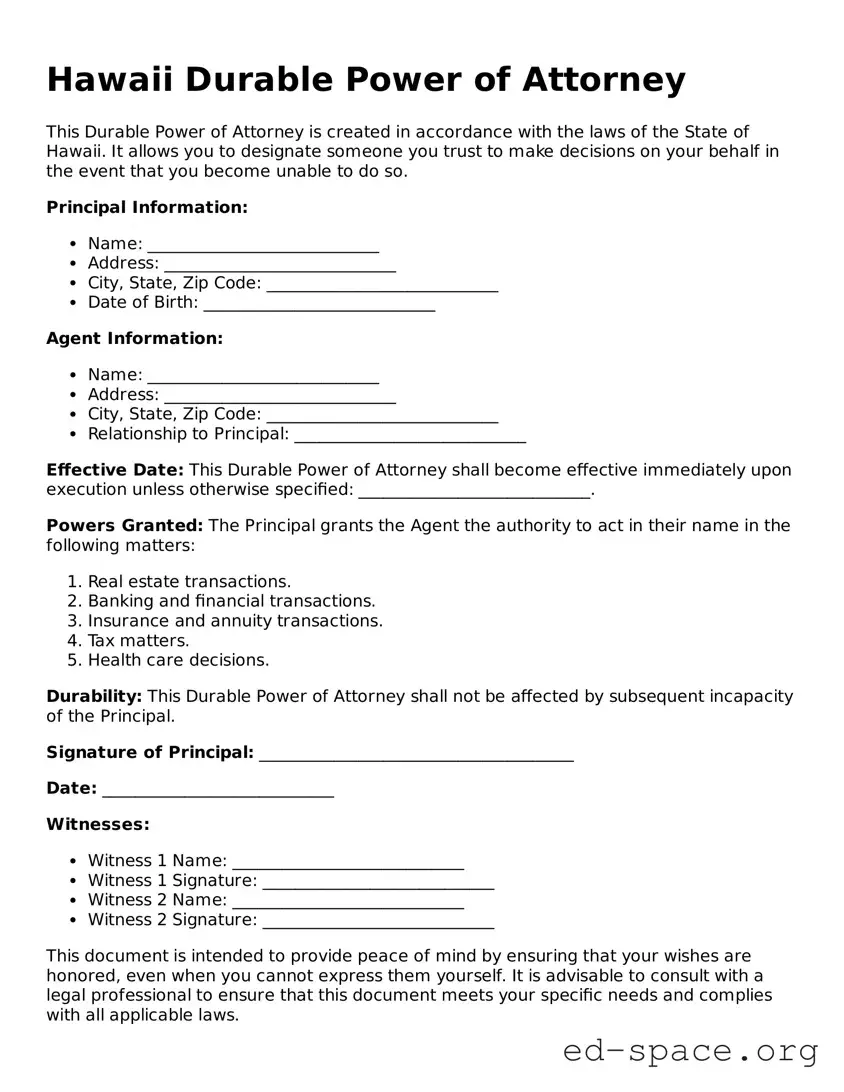
Hawaii Durable Power of Attorney
This Durable Power of Attorney is created in accordance with the laws of the State of Hawaii. It allows you to designate someone you trust to make decisions on your behalf in the event that you become unable to do so.
Principal Information:
Agent Information:
Effective Date: This Durable Power of Attorney shall become effective immediately upon execution unless otherwise specified: ____________________________.
Powers Granted: The Principal grants the Agent the authority to act in their name in the following matters:
Durability: This Durable Power of Attorney shall not be affected by subsequent incapacity of the Principal.
Signature of Principal: ______________________________________
Date: ____________________________
Witnesses:
This document is intended to provide peace of mind by ensuring that your wishes are honored, even when you cannot express them yourself. It is advisable to consult with a legal professional to ensure that this document meets your specific needs and complies with all applicable laws.
| Fact Name | Details |
|---|---|
| Definition | A Durable Power of Attorney in Hawaii allows an individual to appoint someone to make decisions on their behalf, even if they become incapacitated. |
| Governing Law | The Durable Power of Attorney in Hawaii is governed by Hawaii Revised Statutes, Chapter 551E. |
| Durability | This document remains effective even if the principal becomes unable to manage their own affairs. |
| Revocation | The principal can revoke the Durable Power of Attorney at any time, as long as they are still competent to do so. |
Filling out the Hawaii Durable Power of Attorney form is an important step in ensuring your financial and legal affairs are managed according to your wishes. Once you have completed the form, you will need to sign it in the presence of a notary public to make it legally binding. Follow these steps to fill out the form correctly.
What is a Durable Power of Attorney in Hawaii?
A Durable Power of Attorney (DPOA) is a legal document that allows you to appoint someone to manage your financial and legal affairs if you become incapacitated. Unlike a standard power of attorney, a DPOA remains effective even if you are unable to make decisions for yourself. This ensures that your affairs can continue to be handled according to your wishes.
Who can be appointed as my agent under a Durable Power of Attorney?
You can choose anyone you trust to be your agent, also known as an attorney-in-fact. This can be a family member, friend, or even a professional, such as an attorney or accountant. It’s important to select someone who understands your values and wishes, as they will be making significant decisions on your behalf.
Do I need to have a lawyer to create a Durable Power of Attorney in Hawaii?
While it is not legally required to have a lawyer to create a DPOA in Hawaii, consulting one can be beneficial. A lawyer can help ensure that the document meets all legal requirements and accurately reflects your intentions. This can prevent potential disputes or confusion in the future.
What powers can I grant to my agent in the Durable Power of Attorney?
You can grant a wide range of powers to your agent, including managing bank accounts, paying bills, buying or selling property, and making investment decisions. You can specify which powers you want to grant or limit certain powers based on your preferences. Clear instructions can help avoid misunderstandings later on.
How do I revoke a Durable Power of Attorney in Hawaii?
If you decide to revoke your DPOA, you must do so in writing. It’s important to notify your agent and any institutions that may have a copy of the original document. Once the revocation is effective, the previous agent will no longer have authority to act on your behalf. Keeping a record of the revocation is also advisable.
Is my Durable Power of Attorney valid if I move to another state?
A Durable Power of Attorney created in Hawaii may not automatically be recognized in another state. Each state has its own laws regarding powers of attorney. To ensure your DPOA is valid in a new state, it’s wise to review the laws there or consult with a local attorney. This will help you avoid any complications regarding your legal affairs.
What happens if I do not create a Durable Power of Attorney?
If you do not create a DPOA and become incapacitated, a court may appoint a guardian or conservator to manage your affairs. This process can be lengthy, costly, and may not reflect your personal wishes. By establishing a DPOA, you maintain control over who will manage your affairs and how they will be handled in the event of your incapacity.
Not specifying the powers granted. It's essential to clearly outline what decisions the agent can make on your behalf. Leaving this vague can lead to confusion.
Failing to date the document. A date provides clarity about when the power of attorney takes effect. Without it, questions may arise about the validity of the form.
Neglecting to sign in front of a notary. In Hawaii, a notary public must witness your signature. Skipping this step can render the document invalid.
Not choosing a reliable agent. Selecting someone who is trustworthy and capable is crucial. A poor choice can lead to mismanagement of your affairs.
Overlooking alternate agents. If your primary agent cannot serve, having an alternate ensures that your wishes are still honored.
Using outdated forms. Always use the most current version of the Durable Power of Attorney form. Laws can change, and outdated forms may not comply with current requirements.
Not discussing your wishes with your agent. Clear communication about your preferences helps your agent make informed decisions when needed.
Ignoring state-specific requirements. Each state has its own rules. Familiarize yourself with Hawaii's specific requirements to avoid complications.
Not reviewing the document periodically. Life changes, and so might your needs. Regularly reviewing your Durable Power of Attorney ensures it still reflects your wishes.
When preparing a Durable Power of Attorney in Hawaii, it is often beneficial to consider additional legal documents that can complement this form. These documents can help clarify your wishes and ensure that your affairs are managed according to your preferences. Below is a list of commonly used forms and documents that work well alongside a Durable Power of Attorney.
Incorporating these documents into your estate planning can provide clarity and peace of mind. Each form serves a unique purpose, ensuring that your wishes are respected and that your loved ones are equipped to act in your best interests when necessary.
When filling out the Hawaii Durable Power of Attorney form, it's important to follow certain guidelines to ensure the document is valid and effective. Here are some do's and don'ts to consider:
Understanding the Hawaii Durable Power of Attorney (DPOA) form is essential for ensuring your wishes are honored when you can no longer make decisions for yourself. However, several misconceptions exist about this important legal document. Here are seven common misconceptions:
By understanding these misconceptions, individuals can make informed decisions about their Durable Power of Attorney and ensure their preferences are clearly outlined and respected.
When filling out and using the Hawaii Durable Power of Attorney form, it’s important to keep several key points in mind. Understanding these can help ensure that the document serves its intended purpose effectively.
By following these key takeaways, you can create a durable power of attorney that meets your needs and provides peace of mind.