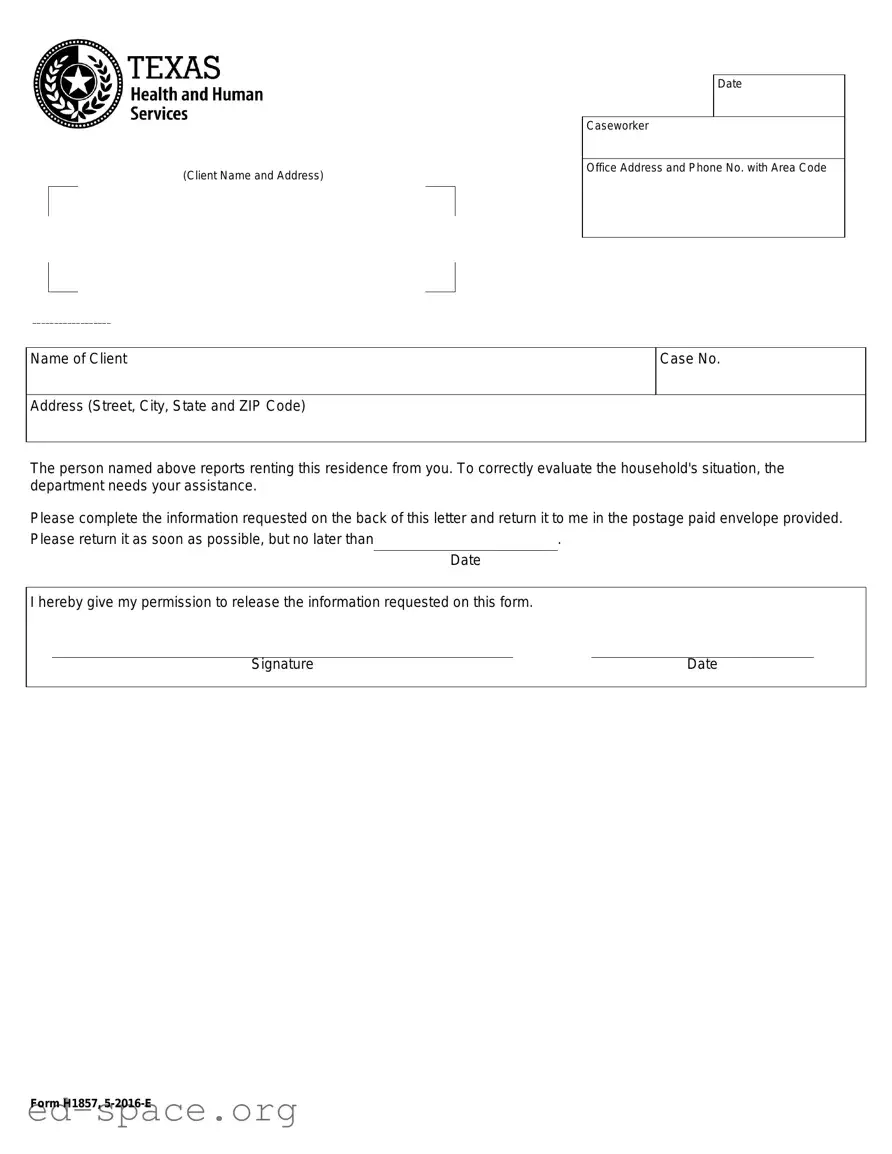
The H1857 form serves as a crucial tool in the evaluation of a household's living situation, particularly in the context of rental agreements. Designed for completion by a landlord or their representative, this form collects essential information about the tenant, including their move-in date and the number of occupants residing in the rental unit. The landlord is also asked to provide details about the rent payment, such as the amount due, the tenant's portion, and the payment frequency. Understanding the financial aspects of the tenancy is vital, which is why the form includes questions about the tenant's payment history and any outstanding rent. Additionally, the H1857 form addresses utility responsibilities, clarifying which utilities are included in the rent and which ones the tenant must manage independently. The information gathered through this form not only assists the department in assessing the household's needs but also helps ensure that tenants receive the support they require. By completing and returning the form promptly, landlords contribute significantly to the process of evaluating housing stability and financial assistance eligibility for their tenants.
(Client Name and Address)
Date
Caseworker
Office Address and Phone No. with Area Code
Name of Client
Case No.
Address (Street, City, State and ZIP Code)
The person named above reports renting this residence from you. To correctly evaluate the household's situation, the department needs your assistance.
Please complete the information requested on the back of this letter and return it to me in the postage paid envelope provided.
Please return it as soon as possible, but no later than |
. |
||
|
|
Date |
|
I hereby give my permission to release the information requested on this form.
Signature |
Date |
Form H1857,
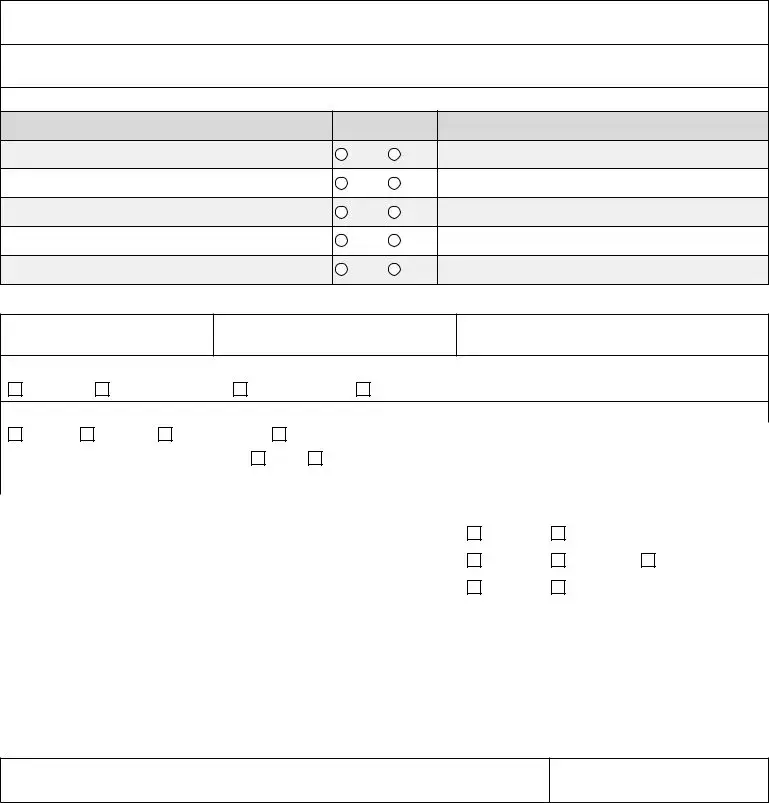
Landlord Verification
Form H1857
May
(This form must be completed by the client's landlord or a representative.)
1.Tenant Move Date:
2.How many people live in the house or apartment?
3.List the names of all people who live in the house or apartment. List their employer, if known:
Name of Person |
Working? |
Employer |
|
|
Yes |
No |
|
|
Yes |
No |
|
|
Yes |
No |
|
|
Yes |
No |
|
|
Yes |
No |
|
4. Questions about the rent payment:
Amount of RentTenant's Portion of RentPerson making payment?
How often paid?
Weekly
Every Two Weeks
Twice a Month
Monthly
Method of payment?
Cash |
Check |
Money Order |
|
Other (explain): |
|
|
|
|
|
|
|
|
|
|
|
|
|||
|
|
|
|
|
|
|
|
|
|
|
|
|
|
|
|
|
|||
Is the tenant current in paying the rent? |
Yes |
No If "No," when was the last month rent was paid? |
|
|
|
|
|||||||||||||
What is the total amount of past due rent? |
|
|
|
|
|
|
|
|
|
|
|
|
|
|
|
|
|
||
|
|
|
|
|
|
|
|
|
|
|
|
|
|
|
|
|
|
|
|
5. Questions about the utilities: |
|
|
|
|
|
|
|
|
|
|
|
|
|
|
|
|
|
||
|
|
|
|
|
|
|
|
|
|
|
|
|
|
|
|
|
|
||
Are all utilities included in rent? |
|
|
|
|
|
|
|
|
Yes |
|
No |
|
|
|
|
||||
|
|
|
|
|
|
|
|
|
|
|
|||||||||
Utilities the tenant is responsible for paying (check all that apply): |
|
|
|
Gas |
|
|
Electric |
|
|
|
Telephone |
|
|||||||
|
|
|
|
|
|
|
|
||||||||||||
Utility bills are paid directly to: |
|
|
|
|
|
|
|
|
Landlord |
|
|
Utility Company |
|
||||||
|
|
|
|
|
|
|
|
|
|
||||||||||
|
|
|
|
|
|
|
|
|
|
|
|
|
|
|
|
|
|
|
|
Please provide the tenant's complete residential address: |
|
|
|
|
|
|
|
|
|
|
|
|
|||||||
|
|
|
|
|
|
|
|
|
|
|
|
|
|
|
|
||||
Street Address |
|
|
|
|
Apt. No. |
|
|
|
City |
|
|
|
|
ZIP Code |
|
||||
|
|
|
|
|
|
|
|
|
|
|
|
|
|
|
|
|
|
|
|
Landlord or Representative Name (printed) |
|
Signature – Landlord or Representative |
|
Date |
Business Address or Residential Address
Telephone No. with Area Code
| Fact Name | Description |
|---|---|
| Purpose of Form | The H1857 form is used for landlords to verify rental information for tenants applying for assistance programs. |
| Completion Requirement | This form must be filled out by the landlord or a representative to ensure accurate evaluation of the tenant's household situation. |
| Governing Law | The H1857 form is governed by state-specific housing assistance laws, which may vary by state. |
| Submission Timeline | Landlords are asked to return the completed form as soon as possible, but no later than the specified date in the request. |
Follow these steps to complete the H1857 form accurately. After filling out the form, it must be returned promptly in the provided envelope. Timely submission is crucial for the evaluation process.
What is the purpose of the H1857 form?
The H1857 form is used to verify rental information for a client who is receiving assistance. It helps the department understand the client's living situation by gathering details about their residence, rent payments, and household members. This information is crucial for evaluating the client's eligibility for various programs.
Who is required to fill out the H1857 form?
The H1857 form must be completed by the landlord or a representative of the landlord. They are responsible for providing accurate information about the tenant's rental agreement, including details about the rent amount, payment frequency, and any utilities that may be included in the rent.
What kind of information does the H1857 form collect?
The form collects several key pieces of information. It asks for the tenant's move-in date, the number of people living in the residence, and their names. Additionally, it inquires about the rent amount, payment methods, and whether the tenant is current on rent payments. Information about utilities is also requested, including who is responsible for paying them.
How should the completed H1857 form be submitted?
Once the landlord or representative has filled out the form, it should be returned in the postage-paid envelope provided. It is important to send it back as soon as possible, ideally by the specified deadline. Timely submission helps ensure that the client's case can be processed without delays.
Failing to include complete client information, such as the full name and address, can delay the processing of the form.
Not providing the correct case number can lead to confusion and misrouting of the form.
Leaving the tenant move date blank or incorrectly filled out may hinder the assessment of the household situation.
Neglecting to list all individuals living in the residence can result in an inaccurate evaluation of the household.
Not indicating the employer information for each tenant, if known, may lead to incomplete data collection.
Providing unclear or incomplete answers regarding rent payments can complicate the verification process.
Forgetting to check the appropriate boxes for utilities included in the rent may cause misunderstandings about tenant responsibilities.
Failing to specify how utilities are paid could lead to confusion about the tenant's financial obligations.
Not signing the form or omitting the date of the signature can invalidate the submission.
Neglecting to provide the landlord’s contact information may hinder follow-up communication.
The H1857 form is an essential document used in various housing assistance programs, particularly for verifying a tenant's rental situation. Along with this form, several other documents often accompany it to provide a comprehensive view of the tenant's circumstances and to facilitate the application process. Below is a list of these documents, each serving a specific purpose.
Each of these documents plays a vital role in the evaluation process for housing assistance. Together, they help create a clear picture of the tenant's living situation, financial status, and overall eligibility for support. Properly completing and submitting these forms can significantly impact the outcome of the assistance request.
The H1857 form is used for landlord verification in housing assistance cases. It shares similarities with several other documents commonly used in similar contexts. Here’s a list of nine documents that have comparable purposes or structures:
Each of these documents plays a vital role in the rental process, ensuring that both landlords and tenants have the necessary information to make informed decisions.
When filling out the H1857 form, it’s essential to follow certain guidelines to ensure accuracy and completeness. Here’s a list of things you should and shouldn’t do:
Following these guidelines will help ensure that the H1857 form is completed correctly and submitted on time. This can aid in a smoother evaluation process for the household's situation.
Misconceptions about the H1857 form can lead to confusion for both landlords and tenants. Understanding the facts can help clarify its purpose and requirements. Here are five common misconceptions:
When filling out and using the H1857 form, it is essential to understand the requirements and process involved. Here are some key takeaways to guide you:
By keeping these points in mind, you can ensure that the H1857 form is filled out correctly and submitted on time, facilitating the assistance needed for the household's evaluation.