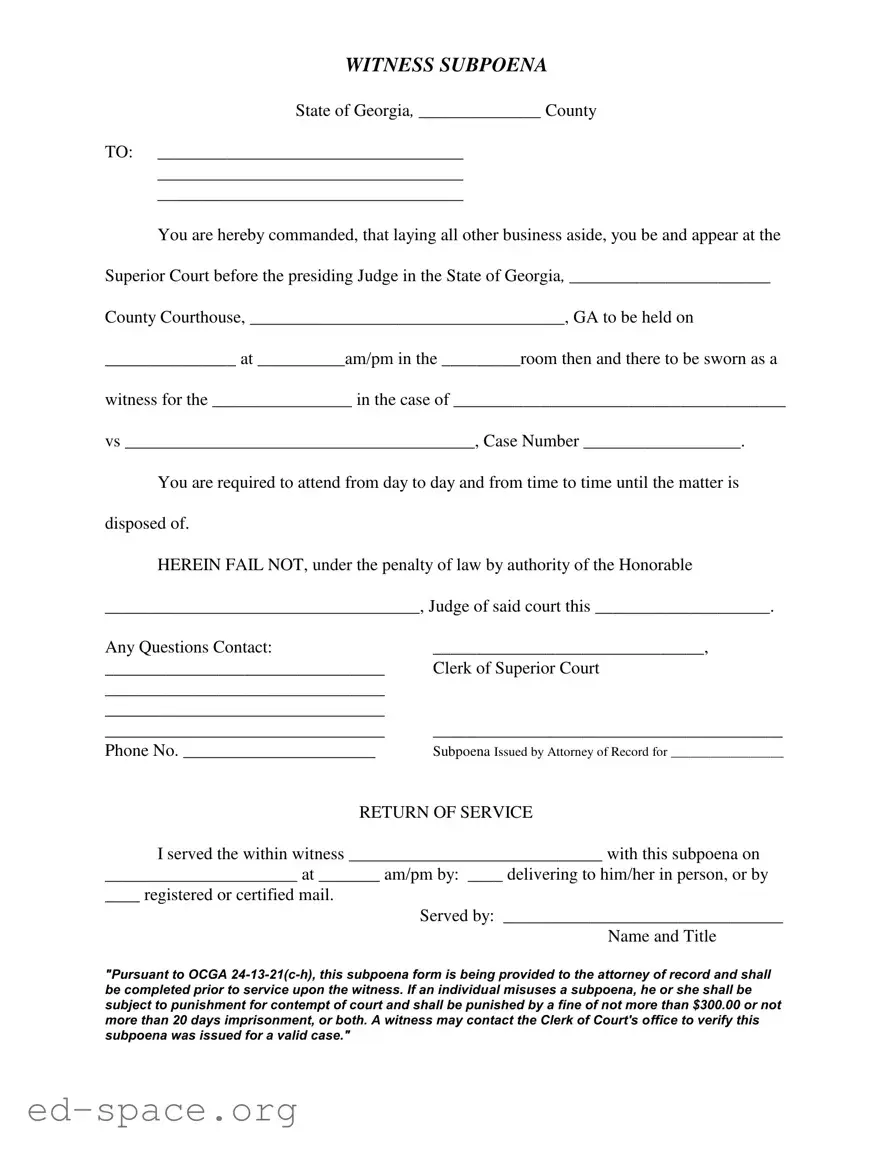
The Georgia Witness Subpoena form serves a crucial role in the legal process by compelling individuals to appear in court as witnesses. This official document, issued by an attorney of record, outlines the essential details necessary for the witness's attendance. It specifies the time and location where the witness must appear, typically at the Superior Court within the designated county. The form includes spaces for the case name, number, and the presiding judge, ensuring clarity regarding the specific legal matter at hand. Additionally, the subpoena emphasizes the importance of the witness's presence, stating that they are required to attend until the case is resolved. It also contains a section for the return of service, which documents how the subpoena was delivered to the witness, whether in person or via registered mail. Importantly, the form warns of the legal consequences of failing to comply, including potential fines and imprisonment, underscoring the serious nature of the obligation. For any questions or verification, the contact information for the Clerk of Superior Court is provided, facilitating communication regarding the subpoena's validity.
WITNESS SUBPOENA
State of Georgia, ______________ County
TO: ___________________________________
___________________________________
___________________________________
You are hereby commanded, that laying all other business aside, you be and appear at the Superior Court before the presiding Judge in the State of Georgia, _______________________
County Courthouse, ____________________________________, GA to be held on
_______________ at __________am/pm in the _________room then and there to be sworn as a
witness for the ________________ in the case of ______________________________________
vs ________________________________________, Case Number __________________.
You are required to attend from day to day and from time to time until the matter is
disposed of.
HEREIN FAIL NOT, under the penalty of law by authority of the Honorable
____________________________________, Judge of said court this ____________________.
Any Questions Contact: |
_______________________________, |
________________________________ |
Clerk of Superior Court |
________________________________ |
|
________________________________ |
|
________________________________ |
________________________________________ |
Phone No. ______________________ |
Subpoena Issued by Attorney of Record for _________________ |
RETURN OF SERVICE
I served the within witness _____________________________ with this subpoena on
______________________ at _______ am/pm by: ____ delivering to him/her in person, or by
____ registered or certified mail.
Served by: ________________________________
Name and Title
"Pursuant to OCGA
| Fact Name | Details |
|---|---|
| Governing Law | The Georgia Witness Subpoena form is governed by OCGA 24-13-21(c-h). |
| Purpose | This form commands a witness to appear in court to provide testimony. |
| Service Methods | A subpoena can be served in person or via registered or certified mail. |
| Consequences of Misuse | Misusing a subpoena may result in contempt of court, leading to fines or imprisonment. |
| Verification | Witnesses can verify the validity of the subpoena by contacting the Clerk of Court's office. |
Filling out the Georgia Witness Subpoena form is a straightforward process. After completing the form, you will need to serve it to the witness. This step is crucial, as it ensures the witness is legally required to appear in court. Follow the steps below to accurately fill out the form.
Once you have completed the form, make sure to serve it to the witness. Proper service is essential to ensure the witness understands their obligation to appear in court.
What is a Georgia Witness Subpoena?
A Georgia Witness Subpoena is a legal document that commands an individual to appear in court to testify as a witness. It is issued by an attorney or a court and specifies the time and place where the witness must appear. This form is essential in ensuring that witnesses fulfill their legal obligations in a court case.
Who can issue a Witness Subpoena in Georgia?
In Georgia, a Witness Subpoena can be issued by an attorney of record involved in a case. The attorney must ensure that the subpoena is properly completed before serving it to the witness. It is important for the attorney to follow all legal protocols to avoid any potential issues.
What information is required on the Witness Subpoena?
The Witness Subpoena must include several key pieces of information: the name of the witness, the court where the case is being heard, the date and time of the court appearance, the names of the parties involved in the case, and the case number. Additionally, it should specify that the witness is required to attend until the matter is resolved.
What happens if a witness does not comply with the subpoena?
If a witness fails to comply with a subpoena, they may be held in contempt of court. This can result in penalties, including fines of up to $300 or imprisonment for up to 20 days, or both. It is crucial for witnesses to understand their legal obligations and the consequences of non-compliance.
How is a Witness Subpoena served?
A Witness Subpoena can be served in person or by registered or certified mail. The person serving the subpoena must complete a Return of Service section on the form, detailing how and when the subpoena was delivered. This ensures there is a record of the service for legal purposes.
Can a witness verify the validity of a subpoena?
Yes, a witness can contact the Clerk of Court’s office to verify the validity of a subpoena. This is a good practice for witnesses who want to ensure that the subpoena is legitimate and pertains to a valid court case.
What should a witness do if they receive a subpoena?
Upon receiving a subpoena, a witness should carefully read the document to understand the requirements. It is advisable to mark the date and time of the court appearance on their calendar. If there are any concerns or conflicts, the witness should consult with an attorney or contact the issuing party for clarification.
Is there a penalty for misusing a subpoena?
Yes, there are penalties for misusing a subpoena. Individuals who misuse a subpoena may face contempt of court charges, which can lead to fines or imprisonment. It is important to use subpoenas only for their intended legal purposes to avoid serious consequences.
What should be included in the Return of Service?
The Return of Service section should include the name of the witness served, the date and time of service, and the method of delivery (in person or by mail). The person who served the subpoena must also sign this section, providing their name and title to confirm that the subpoena was properly delivered.
Can a witness be required to attend court multiple times?
Yes, a witness may be required to attend court multiple times. The subpoena specifies that the witness must attend from day to day and from time to time until the case is disposed of. This means that if the case takes several days or requires multiple hearings, the witness must be available for all of them.
Failing to fill in the county where the subpoena is being issued. This detail is crucial for proper jurisdiction.
Not providing the full name and address of the witness. Incomplete information can lead to delivery issues.
Leaving out the date and time for the court appearance. This information is essential for the witness to know when to appear.
Neglecting to specify the courtroom number. Without this detail, the witness may struggle to find the correct location.
Using an incorrect case number or omitting it entirely. This could cause confusion regarding the case in question.
Not signing the subpoena or failing to provide the date of issuance. A missing signature can render the subpoena invalid.
Forgetting to include the name of the attorney issuing the subpoena. This information is vital for the witness to understand who to contact for questions.
Not indicating how the subpoena was served, whether in person or by mail. This is important for the record of service.
Failing to provide a contact number for the Clerk of Court. Witnesses may need to verify the subpoena or seek clarification.
Not advising the witness of their rights regarding the subpoena. It is important for witnesses to understand the implications of their appearance.
The Georgia Witness Subpoena form is a crucial document in the legal process, compelling a witness to appear in court. However, it is often accompanied by several other forms and documents that serve various purposes throughout the legal proceedings. Understanding these documents can help individuals navigate the complexities of the legal system more effectively.
Each of these documents plays a significant role in the legal process, ensuring that all parties have the information and resources they need to present their case effectively. Familiarity with these forms can enhance one’s understanding of legal proceedings and improve preparedness for court appearances.
The Georgia Witness Subpoena form is an important legal document used to compel a witness to appear in court. Several other documents serve similar purposes in the legal realm. Here’s a look at six documents that share similarities with the Georgia Witness Subpoena:
Each of these documents plays a vital role in the legal process, ensuring that all necessary parties are present and that relevant evidence is gathered for a fair trial.
When filling out the Georgia Witness Subpoena form, there are important guidelines to follow. Here’s a list of things you should and shouldn’t do:
Following these guidelines will help ensure that the subpoena is properly issued and served, facilitating the legal process effectively.
Misconception 1: A subpoena is optional for witnesses.
Many people believe that appearing in court when subpoenaed is optional. This is incorrect. A subpoena is a legal command requiring the witness to appear in court. Ignoring it can lead to serious consequences, including fines or imprisonment.
Misconception 2: Subpoenas can only be issued by judges.
Some individuals think that only judges can issue subpoenas. In reality, attorneys can issue subpoenas as well. The attorney of record for a case has the authority to serve a subpoena to ensure that witnesses appear in court.
Misconception 3: A subpoena guarantees that the witness will be compensated.
There is a common belief that witnesses will receive payment for their time when they appear in court. While some jurisdictions may provide compensation, it is not guaranteed. Witnesses should inquire about potential compensation with the attorney or court.
Misconception 4: You can ignore a subpoena if you do not want to testify.
Some individuals think they can simply refuse to testify if they do not want to participate. This is a dangerous assumption. Failing to comply with a subpoena can result in penalties, including fines or jail time.
Misconception 5: A subpoena is only for criminal cases.
Many people associate subpoenas solely with criminal cases. However, subpoenas can also be issued in civil cases. They serve the same purpose: compelling a witness to provide testimony or evidence relevant to a case.
When dealing with the Georgia Witness Subpoena form, it is crucial to understand its components and proper usage. Here are key takeaways to ensure compliance and effectiveness:
Understanding these key points will help ensure that the subpoena process is handled correctly and efficiently. Always double-check your entries to avoid any potential issues.