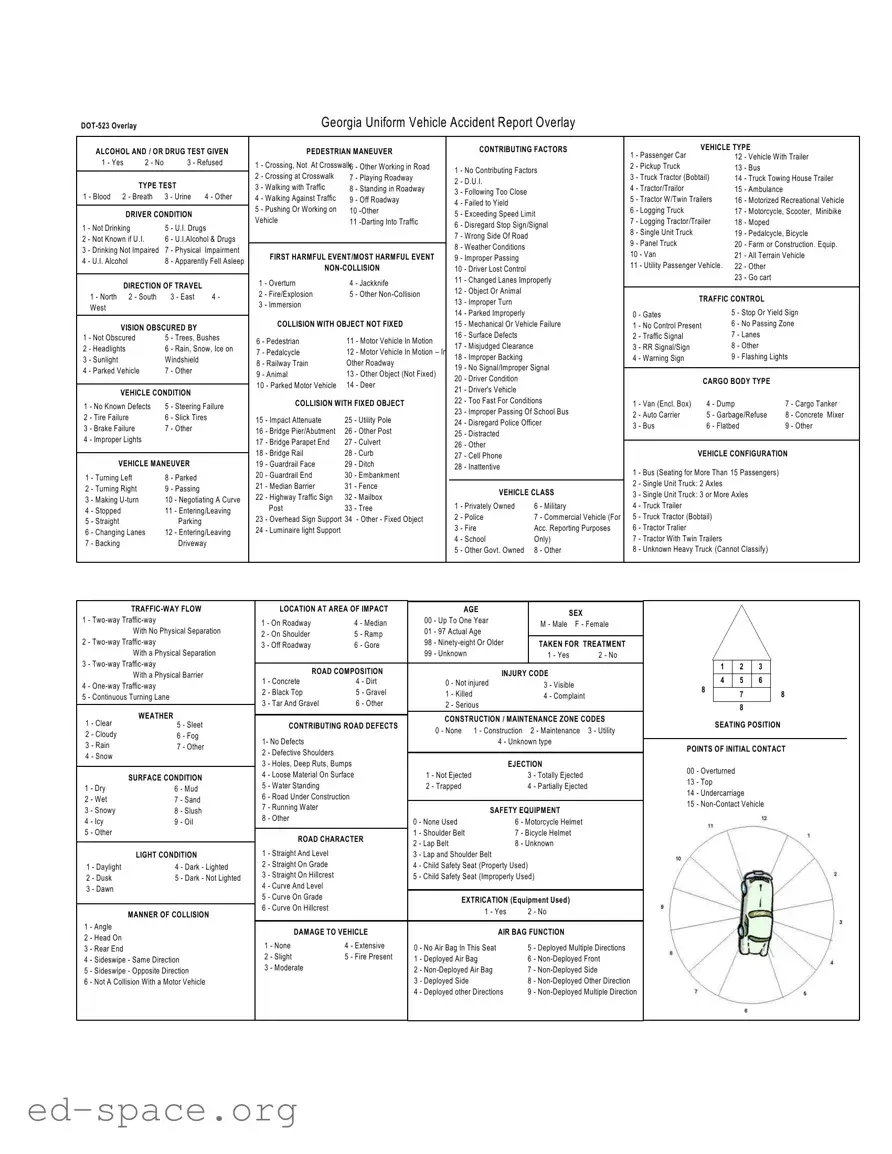
The Georgia Uniform Vehicle Accident Overlay form serves as a critical tool for documenting vehicle accidents within the state. This form captures a wide range of details essential for understanding the circumstances surrounding an accident. It includes sections on vehicle types, ranging from passenger cars to motorcycles, and identifies specific maneuvers and contributing factors that may have led to the incident. The form also addresses driver conditions, indicating whether a driver was under the influence of alcohol or drugs, as well as their physical state at the time of the accident. It records the first harmful event and the most harmful event, allowing for a clear understanding of how the accident unfolded. Additionally, the overlay incorporates information about traffic control measures, road conditions, and the presence of any construction or maintenance zones. By providing a comprehensive view of the accident scene, this form aids law enforcement and insurance companies in their investigations, ultimately contributing to safer roadways in Georgia.
Georgia Uniform Vehicle Accident Report Overlay
ALCOHOL AND / OR DRUG TEST GIVEN |
|
PEDESTRIAN MANEUVER |
|
|
|
|
CONTRIBUTING FACTORS |
|
|
|
|
VEHICLE TYPE |
|
|
|
|
|||||||||
|
|
|
|
|
|
|
1 - Passenger Car |
|
|
12 - Vehicle With Trailer |
|||||||||||||||
1 - Yes |
2 - No |
3 - Refused |
|
|
|
|
|
|
|
|
|
|
|
|
|
|
|||||||||
|
1 - Crossing, Not At Crosswalk |
|
|
|
|
|
|
|
|
2 - Pickup Truck |
|
|
13 - Bus |
|
|
||||||||||
|
|
|
|
|
|
6 - Other Working in Road |
|
|
1 - No Contributing Factors |
|
|
|
|
|
|
||||||||||
|
TYPE TEST |
|
|
2 - Crossing at Crosswalk |
7 - Playing Roadway |
|
|
|
2 - D.U.I. |
|
|
|
3 - Truck Tractor (Bobtail) |
14 - Truck Towing House Trailer |
|||||||||||
|
|
|
3 - Walking with Traffic |
8 - Standing in Roadway |
|
|
|
|
|
4 - Tractor/Trailor |
|
|
|
|
|
|
|
|
|||||||
|
|
|
|
|
3 - Following Too Close |
|
|
|
|
|
15 - Ambulance |
|
|
||||||||||||
1 - Blood 2 - Breath |
3 - Urine |
4 - Other |
|
|
|
|
|
|
|
|
|
|
|
||||||||||||
|
4 - Walking Against Traffic |
9 - Off Roadway |
|
|
|
|
|
|
5 - Tractor W /Twin Trailers |
|
|
|
|
|
|
||||||||||
|
|
|
|
4 - Failed to Yield |
|
|
|
16 - Motorized Recreational Vehicle |
|||||||||||||||||
|
|
|
|
|
|
|
|
|
|
|
|
||||||||||||||
|
DRIVER CONDITION |
|
|
5 - Pushing Or Working on |
10 |
|
|
|
5 - Exceeding Speed Limit |
|
|
6 - Logging Truck |
|
|
17 - Motorcycle, Scooter, Minibike |
||||||||||
|
|
|
Vehicle |
11 |
|
|
|
|
7 - Logging Tractor/Trailer |
|
|
|
|
|
|
||||||||||
1 - Not Drinking |
5 - U.I. Drugs |
|
|
|
6 - Disregard Stop Sign /Signal |
|
|
18 - Moped |
|
|
|||||||||||||||
|
|
|
|
|
|
|
|
|
8 - Single Unit Truck |
|
|
|
|
|
|
|
|
||||||||
|
|
|
|
|
|
|
|
|
|
|
|
|
|
19 - Pedalcycle, Bicycle |
|||||||||||
2 - Not Known if U .I. |
6 - U.I.Alcohol & Drugs |
|
|
|
|
|
|
|
7 - Wrong Side Of Road |
|
|
|
|
||||||||||||
|
|
|
|
|
|
|
|
|
9 - Panel Truck |
|
|
|
|
|
|
|
|
||||||||
|
|
|
|
|
|
|
|
|
|
|
|
|
|
20 - Farm or Construction . Equip. |
|||||||||||
3 - Drinking Not Impaired |
7 - Physical |
Impairment |
|
|
|
|
|
|
|
8 - Weather Conditions |
|
|
|
|
|
||||||||||
|
|
|
|
|
|
|
|
|
|
10 - Van |
|
|
|
|
|
|
|
|
|||||||
|
FIRST HARMFUL EVENT /MOST HARMFUL EVENT |
|
|
|
|
|
|
|
|
|
21 - All Terrain Vehicle |
||||||||||||||
4 - U.I. Alcohol |
8 - Apparently Fell Asleep |
|
|
|
9 - Improper Passing |
|
|
|
|
|
|||||||||||||||
|
|
|
|
|
|
11 - Utility Passenger Vehicle . |
|
|
|
|
|
|
|||||||||||||
|
NON |
|
|
|
|
|
|
|
|
22 - Other |
|
|
|||||||||||||
|
|
|
|
|
|
|
|
10 - Driver Lost Control |
|
|
|
|
|
||||||||||||
|
|
|
|
|
|
|
|
|
|
|
|
|
|
|
|
|
|
|
|
|
|||||
|
DIRECTION OF TRAVEL |
|
|
1 - Overturn |
4 - Jackknife |
|
|
|
11 - Changed Lanes Improperly |
|
|
|
|
|
|
23 - Go cart |
|
|
|||||||
|
|
|
|
|
|
|
|
|
|
|
|
|
|
|
|
|
|
||||||||
|
|
|
2 - Fire/Explosion |
5 - Other Non |
|
|
12 - Object Or Animal |
|
|
|
|
|
|
|
|
|
|
|
|
|
|||||
1 - North |
2 - South |
3 - East |
4 - |
|
|
|
|
|
|
|
|
|
|
|
|
|
|
|
|
||||||
|
|
|
|
|
|
|
|
|
|
TRAFFIC CONTROL |
|
|
|||||||||||||
|
|
|
|
|
|
|
13 - Improper Turn |
|
|
|
|
|
|
|
|||||||||||
|
|
|
|
|
3 - Immersion |
|
|
|
|
|
|
|
|
|
|
|
|
||||||||
West |
|
|
|
|
|
|
|
|
|
|
|
|
|
|
|
|
|
|
|
|
|
|
|||
|
|
|
|
|
|
|
|
|
|
|
|
|
|
|
|
|
|
5 - Stop Or Yield Sign |
|||||||
|
|
|
|
|
|
|
|
|
|
14 - Parked Improperly |
|
|
|
0 - Gates |
|
|
|||||||||
|
|
|
|
|
|
|
|
|
|
|
|
|
|
|
|
||||||||||
|
|
|
|
|
|
|
|
|
|
|
|
|
|
|
|
||||||||||
VISION OBSCURED BY |
|
|
COLLISION WITH OBJECT NOT FIXED |
|
|
|
15 - Mechanical Or Vehicle Failure |
|
|
1 - No Control Present |
6 - No Passing Zone |
||||||||||||||
|
|
|
|
|
|
|
|
16 - Surface Defects |
|
|
|
|
|
|
|
7 - Lanes |
|
|
|||||||
1 - Not Obscured |
5 - Trees, Bushes |
|
6 - Pedestrian |
11 - Motor Vehicle In Motion |
|
|
|
|
|
2 - Traffic Signal |
|
|
|
|
|||||||||||
2 - Headlights |
6 - Rain, Snow, Ice on |
|
|
|
17 - Misjudged Clearance |
|
|
3 - RR Signal/Sign |
|
|
8 - Other |
|
|
|
|
||||||||||
|
7 - Pedalcycle |
12 - Motor Vehicle In Motion – |
In |
|
|
|
|
|
|
|
|
|
|||||||||||||
|
|
18 - Improper Backing |
|
|
|
4 - Warning Sign |
|
|
9 - Flashing Lights |
||||||||||||||||
3 - Sunlight |
|
Windshield |
|
|
8 - Railway Train |
Other Roadway |
|
|
|
|
|
|
|
|
|||||||||||
4 - Parked Vehicle |
7 - Other |
|
|
|
|
|
19 - No Signal/Improper Signal |
|
|
|
|
|
|
|
|
|
|
|
|
||||||
|
|
9 - Animal |
13 - Other Object (Not Fixed) |
|
|
|
|
|
|
|
|
|
|
|
|
|
|
||||||||
|
|
|
|
|
|
|
|
|
|
|
|
|
|
|
|
|
|
|
|||||||
|
|
|
|
|
|
|
20 - Driver Condition |
|
|
|
|
|
CARGO BODY TYPE |
|
|
||||||||||
|
|
|
|
|
10 - Parked Motor Vehicle |
14 - Deer |
|
|
|
|
|
|
|
|
|
|
|||||||||
VEHICLE CONDITION |
|
|
|
|
|
21 - Driver's Vehicle |
|
|
|
|
|
|
|
||||||||||||
|
|
|
|
|
|
|
|
|
|
|
|
|
|
|
|
|
|
||||||||
|
|
|
|
|
|
|
|
|
|
|
|
|
|
|
|
|
|
|
|
|
|||||
|
|
|
|
|
|
|
|
|
|
|
|
|
|
|
|
|
|
|
|
|
|
|
|||
1 - No Known Defects |
5 - Steering Failure |
|
COLLISION WITH FIXED OBJECT |
|
|
|
22 - Too Fast For Conditions |
|
|
1 - Van (Encl. Box) |
4 - Dump |
|
|
7 - Cargo Tanker |
|||||||||||
|
|
|
|
|
|
|
|
|
|
|
|||||||||||||||
|
|
|
|
|
|
|
23 - Improper Passing Of School Bus |
|
|
|
|
|
|
|
|
|
|
|
|
||||||
2 - Tire Failure |
6 - Slick Tires |
|
|
|
|
|
|
|
|
|
2 - Auto Carrier |
5 - Garbage/Refuse |
8 - Concrete Mixer |
||||||||||||
|
15 - Impact Attenuate |
25 - Utility Pole |
|
|
|
|
|
|
|
|
|||||||||||||||
|
|
|
|
24 - Disregard Police Officer |
|
|
|
|
|
|
|
|
|
|
|
|
|||||||||
|
|
|
|
|
|
|
|
|
|
3 - Bus |
6 - Flatbed |
|
|
9 - Other |
|||||||||||
3 - Brake Failure |
7 - Other |
|
|
|
|
|
|
|
|
|
|
|
|
||||||||||||
|
|
16 - Bridge Pier/Abutment |
26 - Other Post |
|
|
|
|
|
|
|
|
|
|
||||||||||||
|
|
|
|
|
25 - Distracted |
|
|
|
|
|
|
|
|
|
|
|
|
|
|||||||
|
|
|
|
|
|
|
|
|
|
|
|
|
|
|
|
|
|
|
|
|
|||||
4 - Improper Lights |
|
|
|
|
|
|
|
|
|
|
|
|
|
|
|
|
|
|
|
|
|
|
|||
|
|
|
17 - Bridge Parapet End |
27 - Culvert |
|
|
|
26 - Other |
|
|
|
|
|
|
|
|
|
|
|
|
|
||||
|
|
|
|
|
|
|
|
|
|
|
|
|
|
|
|
|
|
|
|
|
|||||
|
|
|
|
|
|
|
|
|
|
|
|
|
|
|
|
|
|
|
|
|
|
|
|
||
|
|
|
|
|
18 - Bridge Rail |
28 - Curb |
|
|
|
27 - Cell Phone |
|
|
|
|
|
VEHICLE CONFIGURATION |
|||||||||
|
|
|
|
|
|
|
|
|
|
|
|
||||||||||||||
|
|
|
|
|
|
|
|
|
|
|
|
|
|
|
|
|
|
|
|
|
|
|
|
||
VEHICLE MANEUVER |
|
|
19 - Guardrail Face |
29 - Ditch |
|
|
|
28 - Inattentive |
|
|
|
|
|
|
|
|
|
|
|
|
|
||||
|
|
|
|
|
|
|
|
|
|
|
|
|
|
1 - Bus (Seating for More Than 15 Passengers) |
|
|
|||||||||
1 - Turning Left |
8 - Parked |
|
|
20 - Guardrail End |
30 - Embankment |
|
|
|
|
|
|
|
|
|
|
||||||||||
|
|
|
|
|
|
|
|
|
|
|
|
|
|
|
|
|
|
|
|
||||||
2 - Turning Right |
9 - Passing |
|
|
21 - Median Barrier |
31 - Fence |
|
|
|
|
|
|
|
|
2 - Single Unit Truck: 2 Axles |
|
|
|
|
|
|
|||||
|
|
|
|
|
|
VEHICLE CLASS |
|
|
|
|
|
|
|
|
|
|
|
|
|||||||
|
|
|
|
|
|
|
|
|
|
|
3 - Single Unit Truck: 3 or More Axles |
|
|
|
|
||||||||||
3 - Making |
10 - Negotiating A Curve |
|
22 - Highway Traffic Sign |
32 - Mailbox |
|
|
|
|
|
|
|
|
|
|
|||||||||||
|
|
|
|
|
|
|
|
|
|
|
|
|
|||||||||||||
|
|
|
|
|
|
|
|
|
|
|
|
|
|
|
|
|
|
|
|||||||
|
|
|
|
|
|
|
1 - Privately Owned |
6 - Military |
|
|
4 - Truck Trailer |
|
|
|
|
|
|
|
|
||||||
4 - Stopped |
|
11 - Entering/Leaving |
|
Post |
33 - Tree |
|
|
|
|
|
|
|
|
|
|
|
|
|
|||||||
|
|
|
|
|
|
|
|
2 - Police |
7 - Commercial Vehicle (For |
|
5 - Truck Tractor (Bobtail) |
|
|
|
|
|
|
||||||||
5 - Straight |
|
Parking |
|
|
23 - Overhead Sign Support 34 - Other - Fixed Object |
|
|
|
|
|
|
|
|
|
|||||||||||
|
|
|
|
|
|
|
|
|
3 - Fire |
Acc. Reporting Purposes |
|
6 - Tractor Tralier |
|
|
|
|
|
|
|
|
|||||
6 - Changing Lanes |
12 - Entering/Leaving |
|
24 - Luminaire light Support |
|
|
|
|
|
|
|
|
|
|
|
|
|
|
||||||||
|
|
|
|
|
|
|
|
|
|
|
|
|
|
|
|
|
|
|
|
|
|||||
|
|
|
|
|
|
|
4 - School |
Only) |
|
|
7 - Tractor With Twin Trailers |
|
|
|
|
|
|
||||||||
7 - Backing |
|
Driveway |
|
|
|
|
|
|
|
|
|
|
|
|
|
|
|
||||||||
|
|
|
|
|
|
|
|
5 - Other Govt. Owned |
8 - Other |
|
|
8 - Unknown Heavy Truck (Cannot Classify) |
|
|
|||||||||||
|
|
|
|
|
|
|
|
|
|
|
|
|
|
|
|||||||||||
|
|
|
|
|
|
|
|
|
|
|
|
|
|
|
|
|
|
|
|
|
|
|
|||
|
|
|
|
|
|
|
|
|
|
|
|
|
|
|
|
|
|
|
|
|
|
|
|||
|
TRAFFIC |
|
|
LOCATION AT AREA OF IMPACT |
|
|
|
|
AGE |
SEX |
|
|
|
|
|
|
|
|
|
|
|
|
|||
1 - |
|
|
|
|
|
|
00 - Up To One Year |
|
|
|
|
|
|
|
|
|
|
|
|
||||||
|
|
|
1 - On Roadway |
4 - Median |
|
M - Male F - Female |
|
|
|
|
|
|
|
|
|
|
|||||||||
|
With No Physical Separation |
|
|
01 - 97 Actual Age |
|
|
|
|
|
|
|
|
|
|
|||||||||||
|
|
2 - On Shoulder |
5 - Ramp |
|
|
|
|
|
|
|
|
|
|
|
|
|
|
||||||||
2 - |
|
|
|
3 - Off Roadway |
6 - Gore |
|
98 - |
TAKEN FOR TREATMENT |
|
|
|
|
|
|
|
|
|
|
|||||||
|
With a Physical Separation |
|
|
|
|
99 - Unknown |
|
1 - Yes |
2 - No |
|
|
|
|
|
|
|
|
|
|
||||||
3 - |
|
|
|
ROAD COMPOSITION |
|
|
|
|
|
INJURY CODE |
|
|
|
|
|
1 |
2 |
|
3 |
|
|
|
|||
|
|
|
|
|
|
|
|
|
|
|
|
|
|
|
|
|
|
|
|||||||
|
With a Physical Barrier |
|
|
|
|
|
|
|
|
|
|
|
|
|
|
|
|
|
|
|
|||||
|
|
|
|
|
|
|
|
|
|
|
4 |
5 |
|
6 |
|
|
|
||||||||
|
|
|
1 - Concrete |
4 - Dirt |
|
|
|
|
|
|
|
|
|
|
|
|
|
|
|||||||
4 - |
|
|
|
|
|
|
0 - Not injured |
3 - Visible |
|
|
|
|
|
|
|
|
|
||||||||
|
|
|
2 - Black Top |
5 - Gravel |
|
|
|
|
|
|
|
8 |
|
|
|
|
|
|
|
||||||
5 - Continuous Turning Lane |
|
|
|
|
|
1 - Killed |
|
4 - Complaint |
|
|
|
|
|
7 |
|
|
8 |
|
|
||||||
|
|
|
|
|
|
|
|
|
|
|
|
|
|
|
|
||||||||||
|
|
3 - Tar And Gravel |
6 - Other |
|
|
|
|
|
|
|
|
|
|
|
|
|
|
||||||||
|
|
|
|
|
|
|
|
2 - Serious |
|
|
|
|
|
|
|
8 |
|
|
|
|
|
||||
|
|
|
|
|
|
|
|
|
|
|
|
|
|
|
|
|
|
|
|
||||||
1 - Clear |
WEATHER |
|
|
|
|
|
|
CONSTRUCTION / MAINTENANCE ZONE CODES |
|
|
|
SEATING POSITION |
|
|
|||||||||||
|
|
|
|
|
|
|
|
|
|
|
|||||||||||||||
|
5 - Sleet |
|
|
CONTRIBUTING ROAD DEFECTS |
|
|
|
|
|
|
|
||||||||||||||
|
|
|
|
0 - None |
1 - Construction |
2 - Maintenance |
3 - Utility |
|
|
|
|
|
|||||||||||||
2 - Cloudy |
|
6 - Fog |
|
|
|
|
|
|
|
|
|
|
|
|
|
|
|
||||||||
|
|
|
1- No Defects |
|
|
|
|
|
|
4 - Unknown type |
|
|
|
|
|
|
|
|
|
|
|
|
|||
3 - Rain |
|
7 - Other |
|
|
|
|
|
|
|
|
|
|
|
POINTS OF INITIAL CONTACT |
|||||||||||
|
|
|
2 - Defective Shoulders |
|
|
|
|
|
|
|
|
|
|
|
|||||||||||
4 - Snow |
|
|
|
|
|
|
|
|
|
|
|
|
|
|
|
|
|
|
|
|
|
|
|
|
|
|
|
|
|
3 - Holes, Deep Ruts , Bumps |
|
|
|
|
|
|
|
|
|
|
|
|
|
|
|
|
|
|
|
||
|
|
|
|
|
|
|
|
|
|
EJECTION |
|
|
|
00 - Overturned |
|
|
|
|
|||||||
|
|
|
|
|
|
|
|
|
|
|
|
|
|
|
|
|
|||||||||
|
SURFACE CONDITION |
|
|
4 - Loose Material On Surface |
|
1 - Not Ejected |
|
3 - Totally Ejected |
|
|
|
|
|
|
|
||||||||||
|
|
|
|
|
|
|
|
13 - Top |
|
|
|
|
|
|
|||||||||||
|
|
|
|
|
|
|
|
|
|
|
|
|
|
|
|
|
|
|
|
|
|||||
1 - Dry |
|
6 - Mud |
|
|
5 - Water Standing |
|
|
2 - Trapped |
|
4 - Partially Ejected |
|
|
|
|
|
|
|
|
|
||||||
|
|
|
|
|
|
|
|
|
14 - Undercarriage |
|
|
|
|
||||||||||||
|
|
|
6 - Road Under Construction |
|
|
|
|
|
|
|
|
|
|
|
|
|
|
||||||||
2 - Wet |
|
7 - Sand |
|
|
|
|
|
|
|
|
|
|
|
|
|
|
|
|
|||||||
|
|
|
|
|
|
|
|
|
|
|
|
|
15 - |
|
|
||||||||||
|
|
|
7 - Running Water |
|
|
|
|
|
|
|
|
|
|
|
|
|
|||||||||
3 - Snowy |
|
8 - Slush |
|
|
|
|
|
|
|
|
SAFETY EQUIPMENT |
|
|
|
|
|
|||||||||
|
|
|
|
|
|
|
|
|
|
|
|
|
|
|
|
|
|
|
|
|
|||||
|
|
|
8 - Other |
|
|
|
|
|
|
|
|
|
|
|
|
|
|
|
|
|
|
||||
4 - Icy |
|
9 - Oil |
|
|
|
|
0 - None Used |
6 - Motorcycle Helmet |
|
|
|
|
|
|
|
|
|
|
|
|
|||||
|
|
|
|
|
|
|
|
|
|
|
|
|
|
|
|
|
|
||||||||
5 - Other |
|
|
|
|
ROAD CHARACTER |
|
1 - Shoulder Belt |
7 - Bicycle Helmet |
|
|
|
|
|
|
|
|
|
|
|
|
|||||
|
|
|
|
|
|
2 - Lap Belt |
|
8 - Unknown |
|
|
|
|
|
|
|
|
|
|
|
|
|||||
|
|
|
|
|
|
|
|
|
|
|
|
|
|
|
|
|
|
|
|||||||
|
|
|
|
|
|
|
|
|
|
|
|
|
|
|
|
|
|
|
|
|
|||||
|
LIGHT CONDITION |
|
|
1 - Straight And Level |
|
|
3 - Lap and Shoulder Belt |
|
|
|
|
|
|
|
|
|
|
|
|
|
|||||
1 - Daylight |
|
4 - Dark - Lighted |
|
2 - Straight On Grade |
|
|
4 - Child Safety Seat (Property Used) |
|
|
|
|
|
|
|
|
|
|
|
|
|
|||||
2 - Dusk |
|
5 - Dark - Not Lighted |
|
3 - Straight On Hillcrest |
|
|
5 - Child Safety Seat (Improperly Used) |
|
|
|
|
|
|
|
|
|
|
|
|
||||||
3 - Dawn |
|
|
|
|
4 - Curve And Level |
|
|
|
|
|
|
|
|
|
|
|
|
|
|
|
|
|
|
|
|
|
|
|
|
|
5 - Curve On Grade |
|
|
|
|
|
EXTRICATION (Equipment Used ) |
|
|
|
|
|
|
|
|
|
|
|
|
||
|
MANNER OF COLLISION |
|
6 - Curve On Hillcrest |
|
|
|
|
|
|
1 - Yes |
2 - No |
|
|
|
|
|
|
|
|
|
|
|
|
||
|
|
|
|
|
|
|
|
|
|
|
|
|
|
|
|
|
|
|
|
|
|||||
|
|
|
|
|
|
|
|
|
|
|
|
|
|
|
|
|
|
|
|
|
|
|
|||
1 - Angle |
|
|
|
|
DAMAGE TO VEHICLE |
|
|
|
|
|
AIR BAG FUNCTION |
|
|
|
|
|
|
|
|
|
|
|
|
||
2 - Head On |
|
|
|
|
|
|
|
|
|
|
|
|
|
|
|
|
|
|
|
|
|
||||
|
|
|
|
|
|
|
|
|
|
|
|
|
|
|
|
|
|
|
|
|
|
|
|
|
|
3 - Rear End |
|
|
|
|
1 - None |
4 - Extensive |
|
0 - No Air Bag In This Seat |
5 - Deployed Multiple Directions |
|
|
|
|
|
|
|
|
|
|
||||||
4 - Sideswipe - Same Direction |
|
|
2 - Slight |
5 - Fire Present |
|
1 - Deployed Air Bag |
6 - |
|
|
|
|
|
|
|
|
|
|
||||||||
|
|
|
|
|
|
|
|
|
|
|
|
|
|
|
|||||||||||
5 - Sideswipe - Opposite Direction |
|
|
3 - Moderate |
|
|
2 - Non |
7 - |
|
|
|
|
|
|
|
|
|
|
||||||||
6 - Not A Collision With a Motor Vehicle |
|
|
|
|
3 - Deployed Side |
|
8 - |
|
|
|
|
|
|
|
|
|
|
||||||||
|
|
|
|
|
|
|
|
4 - Deployed other Directions |
9 - |
|
|
|
|
|
|
|
|
|
|||||||
|
|
|
|
|
|
|
|
|
|
|
|
|
|
|
|
|
|
|
|
|
|
|
|
|
|
| Fact Name | Details |
|---|---|
| Form Title | The form is officially titled the "Georgia Uniform Vehicle Accident Report Overlay" and is designated as DOT-523. |
| Governing Law | This form is governed by the laws and regulations set forth by the Georgia Department of Transportation and relevant state statutes regarding motor vehicle accidents. |
| Usage Purpose | The form is used to document details surrounding vehicle accidents, including contributing factors, driver conditions, and vehicle types involved. |
| Testing for Alcohol/Drugs | It includes sections to indicate whether an alcohol and/or drug test was administered to involved drivers. |
| Data Collection | The form collects various data points, such as direction of travel, weather conditions, and road composition, to provide a comprehensive overview of the accident. |
Completing the Georgia Uniform Vehicle Accident Overlay form requires careful attention to detail. This form gathers essential information about the circumstances surrounding a vehicle accident, aiding in the documentation and analysis of incidents. Follow the steps below to ensure accurate completion.
What is the Georgia Uniform Vehicle Accident Overlay form?
The Georgia Uniform Vehicle Accident Overlay form, also known as DOT-523 Overlay, is a document used to report vehicle accidents in the state of Georgia. It captures essential information about the accident, including details about the vehicles involved, the conditions at the time of the accident, and any contributing factors. This form is typically filled out by law enforcement officers at the scene of an accident.
Who is required to complete this form?
This form is generally completed by law enforcement officers responding to a vehicle accident. However, individuals involved in the accident may also need to provide information for the report. It is important to ensure that all relevant details are accurately recorded to facilitate any necessary investigations or claims.
What information is included in the form?
The form includes a variety of information such as the type of vehicles involved, the direction of travel, weather conditions, and any contributing factors like driver condition or road defects. It also captures details about injuries, safety equipment used, and the type of collision that occurred. This comprehensive data helps to create a clear picture of the accident.
How is the information on the form used?
The information collected on the Georgia Uniform Vehicle Accident Overlay form is used for multiple purposes. It assists law enforcement in analyzing traffic accidents, aids in insurance claims processing, and can be utilized in legal proceedings if necessary. Accurate reporting is crucial for determining fault and understanding accident trends.
What should I do if I find errors on the form?
If you notice errors on the Georgia Uniform Vehicle Accident Overlay form, it is important to address them as soon as possible. Contact the law enforcement agency that completed the report to request corrections. Providing accurate information is essential for ensuring that the record reflects the true circumstances of the accident.
Where can I obtain a copy of the completed form?
A copy of the completed Georgia Uniform Vehicle Accident Overlay form can typically be obtained from the law enforcement agency that responded to the accident. Some agencies may also provide access to these reports online. It is advisable to check with the specific agency for their procedures regarding report requests.
Incomplete Information: Failing to fill out all required sections can lead to delays or complications in processing the report. Each field is crucial for a comprehensive understanding of the incident.
Inaccurate Details: Providing incorrect information, such as vehicle types or driver conditions, can misrepresent the facts of the accident. Accuracy is vital for legal and insurance purposes.
Neglecting Witnesses: Omitting details about witnesses or their statements can weaken the report. Witness accounts can provide additional context and support the information presented.
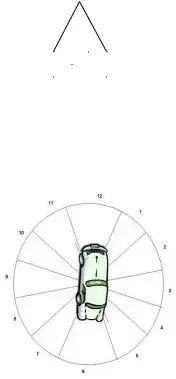
Ignoring Diagrams: Failing to utilize the diagram section can result in a lack of clarity about the accident's dynamics. Visual representation can enhance understanding of the collision.
Overlooking Signatures: Not signing the form or neglecting to obtain the necessary signatures can invalidate the report. Signatures confirm the accuracy of the information provided.
When dealing with vehicle accidents in Georgia, several forms and documents are often necessary to ensure that all aspects of the incident are properly recorded and addressed. Below is a list of common documents that may accompany the Georgia Uniform Vehicle Accident Overlay form. Each document plays a vital role in the overall process, providing essential information for legal and insurance purposes.
Each of these documents serves a specific purpose in the aftermath of a vehicle accident. By gathering and organizing these forms, individuals can navigate the complexities of insurance claims and legal processes with greater confidence. It is important to approach these matters with thoroughness and attention to detail to ensure that all necessary information is available when needed.
The Georgia Uniform Vehicle Accident Overlay form is essential for documenting vehicle accidents. Several other documents serve similar purposes in different contexts. Here’s a list of ten documents that share similarities with this form:
When filling out the Georgia Uniform Vehicle Accident Overlay form, it is important to follow certain guidelines to ensure accuracy and completeness. Below is a list of things you should and shouldn't do.
This form is designed to document various types of vehicle accidents, not just those that result in significant damage or injury. Even minor incidents can benefit from thorough documentation using this form.
While law enforcement typically completes the form at the scene of an accident, individuals involved in the accident can also provide information. This allows for a more comprehensive account of the incident.
Although the form contains various sections, each is designed to capture specific details about the accident. Clear instructions accompany the form, making it accessible for anyone to fill out with the right guidance.
Even in cases where injuries are not present, completing the form can help establish facts about the incident. This documentation can be crucial for insurance claims and legal matters later on.
The overlay form is applicable for a wide range of accidents, including those involving pedestrians, cyclists, and stationary objects. It is versatile and can capture various scenarios.
In Georgia, completing and submitting this form is often a requirement for insurance purposes and legal documentation. Failing to do so can complicate claims and other proceedings related to the accident.
Filling out the Georgia Uniform Vehicle Accident Overlay form is essential for accurately documenting vehicle accidents. Here are some key takeaways to keep in mind:
By following these guidelines, you can help ensure that the form is filled out correctly and completely.