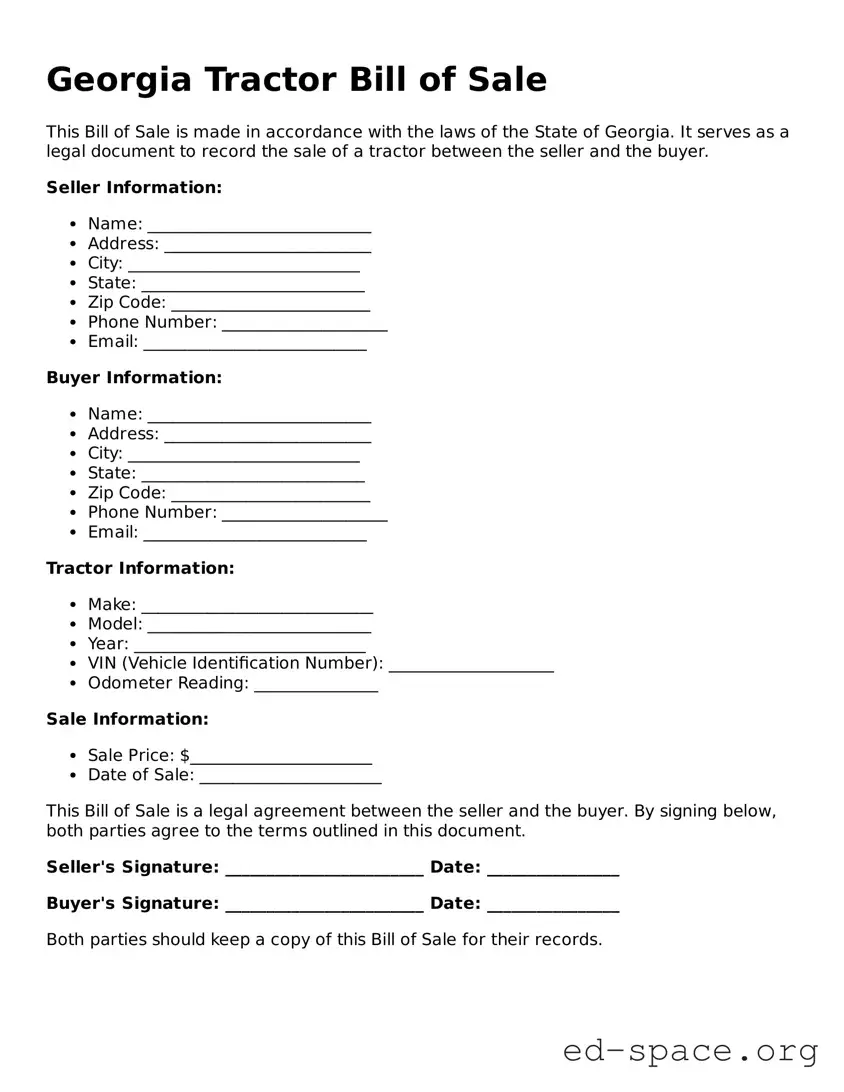
The Georgia Tractor Bill of Sale form serves as a crucial document in the transfer of ownership for tractors and other agricultural equipment within the state. This form captures essential details, including the names and addresses of both the buyer and the seller, as well as a comprehensive description of the tractor being sold. Key information such as the make, model, year, and Vehicle Identification Number (VIN) is typically included to ensure clarity and prevent disputes. The bill of sale also outlines the sale price and any terms related to the transaction, including payment methods and warranties, if applicable. By providing a written record of the sale, this form protects both parties and can serve as proof of ownership in future transactions. Understanding the importance of this document can help ensure a smooth and legally compliant transfer of property.
Georgia Tractor Bill of Sale
This Bill of Sale is made in accordance with the laws of the State of Georgia. It serves as a legal document to record the sale of a tractor between the seller and the buyer.
Seller Information:
Buyer Information:
Tractor Information:
Sale Information:
This Bill of Sale is a legal agreement between the seller and the buyer. By signing below, both parties agree to the terms outlined in this document.
Seller's Signature: ________________________ Date: ________________
Buyer's Signature: ________________________ Date: ________________
Both parties should keep a copy of this Bill of Sale for their records.
| Fact Name | Detail |
|---|---|
| Purpose | The Georgia Tractor Bill of Sale form is used to document the sale of a tractor between a buyer and a seller. |
| Governing Law | This form is governed by the laws of the State of Georgia. |
| Required Information | It typically requires details such as the names and addresses of the buyer and seller, the tractor's make, model, and VIN. |
| Notarization | Notarization is not required for the bill of sale, but it can provide additional legal protection. |
| Transfer of Ownership | The form serves as proof of ownership transfer once signed by both parties. |
| Sales Tax | Sales tax may be applicable based on the sale price and local regulations. |
| Record Keeping | Both the buyer and seller should keep a copy of the completed bill of sale for their records. |
| Condition of Tractor | The form may include a section for the seller to disclose the condition of the tractor. |
| Legal Use | This document can be used in legal disputes to establish the terms of the sale. |
| Customization | Users can customize the form to include additional terms or conditions relevant to the sale. |
Once you have the Georgia Tractor Bill of Sale form in hand, you will need to provide specific details to ensure a smooth transaction. This document serves as a record of the sale and will require accurate information about both the buyer and the seller, as well as the tractor itself.
After completing the form, both parties should keep a copy for their records. This documentation will serve as proof of the transaction and may be required for future reference, such as registration or title transfer purposes.
What is a Georgia Tractor Bill of Sale?
A Georgia Tractor Bill of Sale is a legal document that records the transfer of ownership of a tractor from one party to another. This form serves as proof of the sale and includes important details such as the names of the buyer and seller, the description of the tractor, the sale price, and the date of the transaction. Having this document can protect both parties in case of disputes in the future.
Is a Bill of Sale required in Georgia for tractor sales?
While a Bill of Sale is not legally required for every tractor sale in Georgia, it is highly recommended. This document provides a clear record of the transaction, which can be invaluable for both the buyer and seller. In cases where the tractor is registered, having a Bill of Sale may be necessary for the buyer to register the vehicle in their name.
What information should be included in the Georgia Tractor Bill of Sale?
A comprehensive Georgia Tractor Bill of Sale should include the following information: the full names and addresses of both the buyer and seller, a detailed description of the tractor (including make, model, year, and Vehicle Identification Number or VIN), the sale price, the date of the sale, and any warranties or conditions agreed upon. Including this information helps ensure clarity and reduces the likelihood of misunderstandings.
Do I need to have the Bill of Sale notarized?
In Georgia, notarization of the Bill of Sale is not required, but it is a good practice. Having the document notarized adds an extra layer of authenticity and can help prevent disputes regarding the legitimacy of the sale. If either party has concerns about the transaction, a notarized Bill of Sale can provide peace of mind.
Can I create my own Tractor Bill of Sale?
Yes, you can create your own Tractor Bill of Sale in Georgia. While templates are widely available online, ensure that your document includes all necessary details and complies with state requirements. Customizing the form allows you to tailor it to your specific transaction, which can be beneficial for both parties involved.
What should I do after completing the Bill of Sale?
After completing the Bill of Sale, both the buyer and seller should keep a copy for their records. The seller should also provide the buyer with any necessary documents for registration, such as the title. If the tractor is being registered, the buyer will need to present the Bill of Sale to the appropriate state agency, along with any other required paperwork.
What if there are issues after the sale?
If issues arise after the sale, such as disputes over the condition of the tractor or non-payment, the Bill of Sale serves as a crucial piece of evidence. It outlines the terms of the sale and can help resolve conflicts. In some cases, it may be necessary to seek legal advice or mediation to address the situation effectively.
Incomplete Information: One of the most common mistakes is leaving out essential details. Buyers and sellers should ensure that all fields are filled in completely. This includes names, addresses, and the tractor's identification number.
Incorrect Vehicle Identification Number (VIN): The VIN is crucial for identifying the tractor. Errors in this number can lead to complications during registration. Always double-check the VIN against the tractor’s title or registration documents.
Not Signing the Document: Both parties must sign the bill of sale for it to be valid. A common oversight is neglecting to obtain signatures. Without signatures, the document may not hold up in any disputes.
Failing to Include Purchase Price: The purchase price should be clearly stated on the form. This detail is important for tax purposes and future reference. Omitting it can create confusion later on.
Not Keeping Copies: After filling out the form, it’s vital for both parties to retain a copy. Many people forget to make copies, which can lead to issues if there are disagreements about the sale in the future.
When completing a transaction involving a tractor in Georgia, several additional documents may be necessary alongside the Tractor Bill of Sale form. These documents help ensure that the sale is legally binding and that all aspects of the transaction are properly recorded.
Having these documents prepared and organized can streamline the sale process and protect both the buyer and seller. Proper documentation helps prevent disputes and ensures compliance with state laws.
When filling out the Georgia Tractor Bill of Sale form, it's important to follow certain guidelines to ensure the document is valid and effective. Below is a list of things you should and shouldn't do.
By following these guidelines, you can ensure that your Tractor Bill of Sale is filled out correctly and serves its intended purpose.
Understanding the Georgia Tractor Bill of Sale form is essential for anyone involved in the buying or selling of tractors in the state. However, several misconceptions exist regarding this document. Below is a list of common misunderstandings, along with clarifications for each.
By addressing these misconceptions, individuals can better understand the importance and function of the Georgia Tractor Bill of Sale form in their transactions.
When completing the Georgia Tractor Bill of Sale form, there are several important points to keep in mind. This document serves as proof of the transaction between the seller and the buyer, ensuring that both parties are protected. Here are key takeaways to consider:
Following these guidelines will help ensure a smooth transaction when buying or selling a tractor in Georgia.