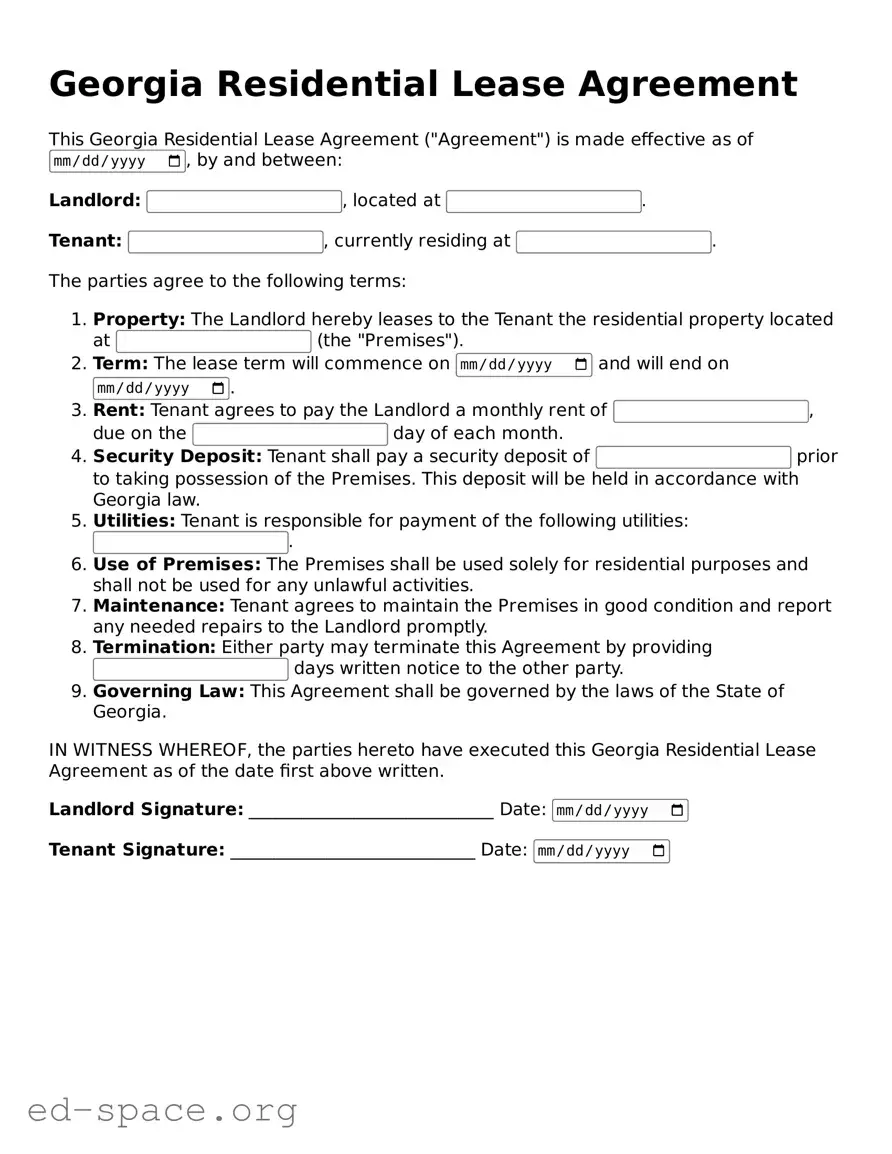
The Georgia Residential Lease Agreement form is a crucial document that outlines the terms and conditions between a landlord and tenant for renting a residential property. This form typically includes essential details such as the names of the parties involved, the property address, and the duration of the lease. It specifies the rent amount, payment due dates, and acceptable payment methods. Additionally, the agreement covers security deposits, maintenance responsibilities, and rules regarding pets or alterations to the property. Both parties must understand their rights and obligations, as this document serves to protect their interests and establish a clear framework for the rental relationship. By addressing key aspects like termination clauses and dispute resolution processes, the Georgia Residential Lease Agreement helps to prevent misunderstandings and fosters a positive rental experience.
Georgia Residential Lease Agreement
This Georgia Residential Lease Agreement ("Agreement") is made effective as of , by and between:
Landlord: , located at .
Tenant: , currently residing at .
The parties agree to the following terms:
IN WITNESS WHEREOF, the parties hereto have executed this Georgia Residential Lease Agreement as of the date first above written.
Landlord Signature: ____________________________ Date:
Tenant Signature: ____________________________ Date:
| Fact Name | Details |
|---|---|
| Purpose | The Georgia Residential Lease Agreement is used to outline the terms and conditions of renting residential property in Georgia. |
| Governing Laws | This agreement is governed by the Official Code of Georgia Annotated (O.C.G.A.) Title 44, Chapter 7. |
| Duration | The lease can specify a fixed term or be month-to-month, depending on the agreement between the landlord and tenant. |
| Security Deposit | Georgia law allows landlords to charge a security deposit, but it must be returned within one month after the lease ends, unless deductions are made. |
| Disclosure Requirements | Landlords must disclose certain information, such as the presence of lead-based paint in properties built before 1978. |
Filling out the Georgia Residential Lease Agreement form requires careful attention to detail. This document serves as a legally binding contract between a landlord and a tenant, outlining the terms and conditions of the rental arrangement. It is essential to ensure that all necessary information is accurately provided to avoid potential disputes in the future.
Once the form is completed, it is advisable to keep a copy for personal records. Both parties should retain their signed versions of the lease for future reference. This helps ensure that everyone is aware of their rights and obligations throughout the rental period.
What is a Georgia Residential Lease Agreement?
A Georgia Residential Lease Agreement is a legal document that outlines the terms and conditions under which a landlord rents a property to a tenant. This agreement includes important details such as the rental amount, duration of the lease, security deposit requirements, and the responsibilities of both parties. It serves to protect the rights of both the landlord and the tenant throughout the rental period.
What should be included in a Georgia Residential Lease Agreement?
Essential elements of a Georgia Residential Lease Agreement typically include the names of the landlord and tenant, the property address, the lease term (whether it's month-to-month or for a fixed duration), the rent amount and due date, details about the security deposit, maintenance responsibilities, and any rules regarding pets or smoking. Additionally, the agreement should specify procedures for terminating the lease and handling disputes.
How long does a lease typically last in Georgia?
In Georgia, lease agreements can vary in length. Common lease terms include one year, six months, or month-to-month arrangements. The duration should be clearly stated in the lease agreement. It’s important for both landlords and tenants to understand the duration to ensure proper planning and adherence to the terms of the lease.
Can a landlord increase the rent during the lease term?
Generally, landlords cannot increase the rent during the lease term unless the lease agreement explicitly allows for such increases. If the lease is month-to-month, the landlord may raise the rent after providing proper notice, typically 30 days in Georgia. Always review the lease terms to understand any provisions regarding rent increases.
What happens if a tenant needs to break the lease early?
If a tenant needs to break the lease early, they should first review the lease agreement for any specific terms regarding early termination. Many leases include a clause that outlines the penalties or fees associated with breaking the lease. It’s advisable for tenants to communicate openly with their landlord to discuss potential options, such as finding a replacement tenant or negotiating an early termination agreement.
Is it necessary to have a written lease agreement?
While verbal agreements can be legally binding in Georgia, having a written lease agreement is highly recommended. A written document provides clarity on the terms and protects both parties in case of disputes. It serves as a reference point for expectations and responsibilities, making it easier to resolve any issues that may arise during the rental period.
Failing to include all required parties. It is essential to list everyone who will be living in the rental unit. Omitting a tenant can lead to confusion and potential legal issues.
Not specifying the lease term. Clearly stating the duration of the lease—whether it's month-to-month or for a fixed term—helps avoid misunderstandings.
Ignoring the rent payment details. Make sure to include the amount of rent, the due date, and acceptable payment methods. This clarity can prevent disputes later on.
Overlooking maintenance responsibilities. Both landlords and tenants should understand who is responsible for repairs and maintenance. Clearly outlining these responsibilities can save time and frustration.
Not addressing security deposits. Specify the amount of the security deposit, the conditions for its return, and any deductions that may apply. This is crucial for protecting tenant rights.
Failing to include pet policies. If pets are allowed or prohibited, this must be clearly stated in the lease. This prevents conflicts between tenants and landlords.
Neglecting to outline termination procedures. The lease should detail how either party can terminate the agreement, including notice periods and acceptable reasons for termination.
Not reviewing the lease before signing. Both parties should read through the entire lease agreement to ensure all terms are understood and agreed upon. Rushing through this step can lead to significant issues down the line.
When entering into a rental agreement in Georgia, various forms and documents may be used alongside the Residential Lease Agreement. These documents help clarify the terms of the lease and protect the rights of both the landlord and tenant. Below is a list of commonly used forms that can accompany the lease agreement.
Using these documents in conjunction with the Georgia Residential Lease Agreement can help create a clear understanding between landlords and tenants. Each form plays a crucial role in ensuring that both parties are informed and protected throughout the rental process.
Rental Agreement: Similar to a Residential Lease Agreement, a rental agreement outlines the terms under which a landlord allows a tenant to occupy a property. Both documents specify rent amounts, duration, and responsibilities of each party.
Commercial Lease Agreement: This document is akin to a Residential Lease Agreement but is tailored for commercial properties. It includes terms specific to business use, such as zoning regulations and operating hours.
Month-to-Month Lease: This flexible agreement allows tenants to occupy a property on a month-to-month basis. Like the Residential Lease Agreement, it details rent and responsibilities but can be terminated with shorter notice.
Sublease Agreement: A sublease agreement permits a tenant to rent out their leased property to another party. It shares similarities with the Residential Lease Agreement in terms of outlining the rights and responsibilities of the original tenant and subtenant.
Lease Option Agreement: This type of agreement gives tenants the option to purchase the property at a later date. It incorporates elements of a Residential Lease Agreement while adding terms related to the future purchase.
Roommate Agreement: This document is used when multiple tenants share a rental property. It outlines each roommate's responsibilities and rights, similar to how a Residential Lease Agreement delineates terms between landlord and tenant.
Short-Term Rental Agreement: Often used for vacation rentals, this agreement specifies terms for a shorter duration than a typical lease. It includes many of the same elements as a Residential Lease Agreement, such as payment terms and property rules.
Lease Renewal Agreement: This document extends the terms of an existing lease. It mirrors the Residential Lease Agreement by reaffirming the original terms while possibly adjusting rent or duration.
Filling out the Georgia Residential Lease Agreement can be a straightforward process if you keep a few key points in mind. Here are some essential dos and don’ts to ensure everything goes smoothly.
By following these tips, you can fill out the Georgia Residential Lease Agreement with confidence, ensuring a smoother rental experience.
Understanding the Georgia Residential Lease Agreement is crucial for both landlords and tenants. However, there are several misconceptions that can lead to confusion. Here’s a breakdown of nine common misunderstandings:
Many people believe that all lease agreements follow the same format. In reality, lease agreements can vary significantly based on the specific terms negotiated between the landlord and tenant.
Some tenants think that a verbal agreement with their landlord is sufficient. However, having a written lease agreement is essential to protect both parties and clarify expectations.
It’s a common belief that security deposits cannot be refunded. In Georgia, landlords must return the deposit, minus any lawful deductions, within a specific time frame after the lease ends.
Many assume that landlords can change lease terms whenever they want. Changes to the lease must be agreed upon by both parties and documented in writing.
Some tenants think landlords have unrestricted access to the property. In Georgia, landlords must provide reasonable notice before entering, except in emergencies.
While landlords are generally responsible for major repairs, tenants may also be responsible for minor repairs or maintenance, depending on the lease terms.
Many tenants believe that landlords can increase rent at any moment. In Georgia, landlords must provide written notice of rent increases, and the timing depends on the lease agreement.
Some think landlords can evict tenants on a whim. However, Georgia law requires landlords to follow specific legal procedures, including providing notice before eviction.
Many believe lease agreements are only applicable for long-term rentals. In fact, they can also be used for short-term rentals, outlining the terms for any rental duration.
Being informed about these misconceptions can help both landlords and tenants navigate their rental agreements more effectively. Always read the lease carefully and seek clarification on any unclear terms.
When filling out and using the Georgia Residential Lease Agreement form, it’s important to keep several key points in mind. Here are some essential takeaways:
By keeping these points in mind, you can help ensure that your lease agreement is clear, comprehensive, and legally sound.