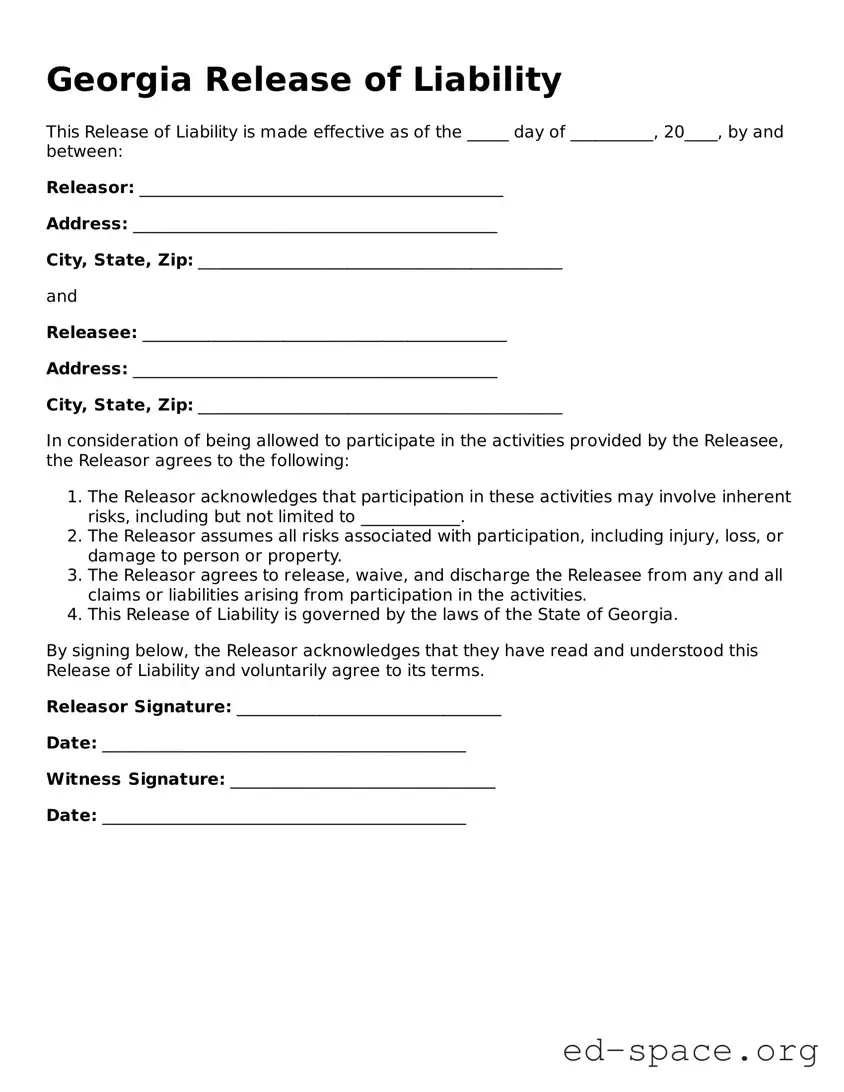
In the state of Georgia, the Release of Liability form serves as a crucial document for individuals and organizations looking to mitigate risk and protect themselves from potential legal claims. This form is particularly important in activities that involve inherent risks, such as sports, recreational events, or even certain business operations. By signing this document, participants acknowledge the risks involved and agree to release the organizer or provider from liability for injuries or damages that may occur. It outlines the responsibilities of all parties involved, ensuring that everyone understands the terms and conditions associated with the activity. Additionally, the form often includes specific language that clarifies the scope of the release, making it clear what rights are being waived. Understanding the nuances of this document is essential for anyone planning an event or engaging in activities where liability could be a concern. Properly executed, the Release of Liability form can provide peace of mind and legal protection, allowing participants to enjoy their experience with reduced worry about unforeseen incidents.
Georgia Release of Liability
This Release of Liability is made effective as of the _____ day of __________, 20____, by and between:
Releasor: ____________________________________________
Address: ____________________________________________
City, State, Zip: ____________________________________________
and
Releasee: ____________________________________________
Address: ____________________________________________
City, State, Zip: ____________________________________________
In consideration of being allowed to participate in the activities provided by the Releasee, the Releasor agrees to the following:
By signing below, the Releasor acknowledges that they have read and understood this Release of Liability and voluntarily agree to its terms.
Releasor Signature: ________________________________
Date: ____________________________________________
Witness Signature: ________________________________
Date: ____________________________________________
| Fact Name | Description |
|---|---|
| Purpose | The Georgia Release of Liability form is designed to protect individuals and organizations from legal claims resulting from injuries or damages that may occur during an activity. |
| Governing Law | This form is governed by the laws of the State of Georgia, specifically under Georgia Code § 51-1-1, which addresses liability waivers. |
| Voluntary Agreement | Signing the form indicates that the participant voluntarily agrees to assume the risks associated with the activity. |
| Scope of Release | The release typically covers all claims, including those arising from negligence, unless specifically excluded in the document. |
| Legal Enforceability | For the release to be enforceable, it must be clear, unambiguous, and signed by all parties involved. |
Completing the Georgia Release of Liability form is a straightforward process. Ensure you have all necessary information at hand before you start. Follow the steps below to fill out the form accurately and efficiently.
Once the form is filled out, it is essential to keep a copy for your records. You may need to submit the original form to the organization or individual overseeing the activity. Ensure you understand any additional steps required after submission.
What is a Georgia Release of Liability form?
A Georgia Release of Liability form is a legal document that protects individuals or organizations from being held liable for injuries or damages that may occur during a specific activity or event. By signing this form, participants acknowledge the risks involved and agree not to hold the organizers responsible for any accidents or injuries that may arise.
When should I use a Release of Liability form?
This form is typically used in situations where there is a potential for risk, such as sports events, recreational activities, or any event where participants could be injured. If you are organizing an event or activity that involves physical exertion or potential hazards, it is wise to have participants sign this form to limit your liability.
Who should sign the Release of Liability form?
All participants in the activity should sign the form. If a participant is a minor, a parent or guardian must sign on their behalf. This ensures that everyone involved acknowledges the risks and agrees to the terms outlined in the document.
Does signing a Release of Liability form mean I cannot sue?
While signing the form does limit your ability to sue for injuries that are acknowledged in the document, it does not eliminate all rights to legal action. If negligence or misconduct is involved, a court may still allow a lawsuit to proceed. The form primarily protects against claims arising from inherent risks associated with the activity.
Is a Release of Liability form legally binding in Georgia?
Yes, a properly executed Release of Liability form is generally considered legally binding in Georgia, provided it meets certain criteria. The form must be clear, concise, and voluntarily signed by the participant. It should also include specific language about the risks involved and the participant's acknowledgment of those risks.
Can I modify a Release of Liability form?
Yes, you can modify the form to suit your specific needs, but it’s important to ensure that any changes do not invalidate its legal protections. Customizing the document can help clarify the risks associated with your particular activity and ensure that all relevant details are included.
What if a participant refuses to sign the Release of Liability form?
If a participant refuses to sign the form, it is advisable to prohibit their participation in the activity. This protects you from potential liability claims and ensures that all participants have acknowledged the risks involved. Clear communication about the necessity of the form can help alleviate concerns.
Where can I obtain a Georgia Release of Liability form?
Many online legal form providers offer templates for a Georgia Release of Liability form. You can also consult with a legal professional to create a customized version tailored to your specific activity. Always ensure that the form complies with Georgia laws and adequately addresses your needs.
Failing to read the entire form thoroughly. Many individuals skip over important details, which can lead to misunderstandings about the terms and conditions.
Not providing complete personal information. Omitting essential details such as full name, address, or contact information can cause issues later on.
Inadequate description of the activity. A vague or incomplete description of the activity for which the release is being signed can render the document ineffective.
Not understanding the implications of signing. Some individuals do not fully grasp that signing the form may limit their rights to sue for injuries or damages.
Neglecting to date the form. Failing to include the date can create confusion about when the release was executed, which may affect its validity.
Forgetting to sign the form. A common oversight is leaving the signature line blank, which invalidates the entire document.
Signing under duress. Individuals sometimes sign the form without feeling free to do so, which can be a significant issue if disputes arise.
Not having a witness or notary when required. Depending on the situation, some releases may need to be witnessed or notarized for legal enforceability.
Ignoring state-specific requirements. Each state may have its own rules regarding liability releases, and failing to comply with Georgia's specific laws can lead to complications.
The Georgia Release of Liability form is often accompanied by several other documents that help clarify responsibilities and ensure safety in various activities. Each of these documents serves a specific purpose, and understanding them can be beneficial for individuals and organizations alike.
These documents collectively enhance safety and clarify responsibilities, making them valuable tools for individuals and organizations planning events or activities in Georgia. Understanding each of these forms can help ensure that all parties are informed and protected.
When filling out the Georgia Release of Liability form, it is essential to be thorough and careful. This document serves to protect an organization from claims arising from activities that may involve risk. Here are some important dos and don’ts to consider.
By following these guidelines, individuals can ensure that they are completing the Release of Liability form correctly and protecting their rights while also acknowledging the inherent risks involved in certain activities.
Understanding the Georgia Release of Liability form is crucial for anyone involved in activities that may pose risks. However, several misconceptions can lead to confusion. Here are six common misunderstandings about this important document:
Many believe that signing a Release of Liability means that the other party is free from any responsibility, regardless of the circumstances. In reality, while it can limit liability, it does not protect against gross negligence or intentional harm.
While commonly associated with sports, this form can be used in various situations, such as recreational activities, events, and even certain business transactions. Its application is broader than many realize.
Not all Release of Liability forms are created equal. Each form can vary significantly in language and coverage. It’s essential to read and understand the specific terms of any document before signing.
While minors cannot legally sign contracts, a parent or guardian can typically sign on their behalf. This allows for participation in activities while still acknowledging the associated risks.
This is a common misconception. While the form may limit certain claims, it does not eliminate the right to sue for issues such as fraud, misrepresentation, or if the terms of the release are violated.
In some cases, individuals may have the right to revoke their consent to the release, depending on the circumstances and local laws. It’s important to understand the specific terms regarding revocation before signing.
By clarifying these misconceptions, individuals can make more informed decisions when it comes to participating in activities that require a Release of Liability in Georgia.
When considering the Georgia Release of Liability form, it is essential to understand its purpose and how to use it effectively. Here are some key takeaways:
Understanding these key points can help ensure that the Georgia Release of Liability form is used effectively and responsibly, protecting both the organizer and the participants involved.