When it comes to buying or selling property in Georgia, having a solid understanding of the Real Estate Purchase Agreement form is essential. This document serves as the foundation for the transaction, outlining the terms and conditions agreed upon by both the buyer and the seller. Key aspects of the form include the purchase price, the legal description of the property, and the closing date, all of which play a crucial role in ensuring a smooth transfer of ownership. Additionally, the agreement addresses contingencies, such as financing and inspections, which protect both parties by allowing them to back out under certain conditions. By clearly defining responsibilities and expectations, this form helps to minimize misunderstandings and disputes, making it an indispensable tool in the real estate process. Understanding its components can empower buyers and sellers alike, providing them with the confidence to navigate their real estate transactions effectively.
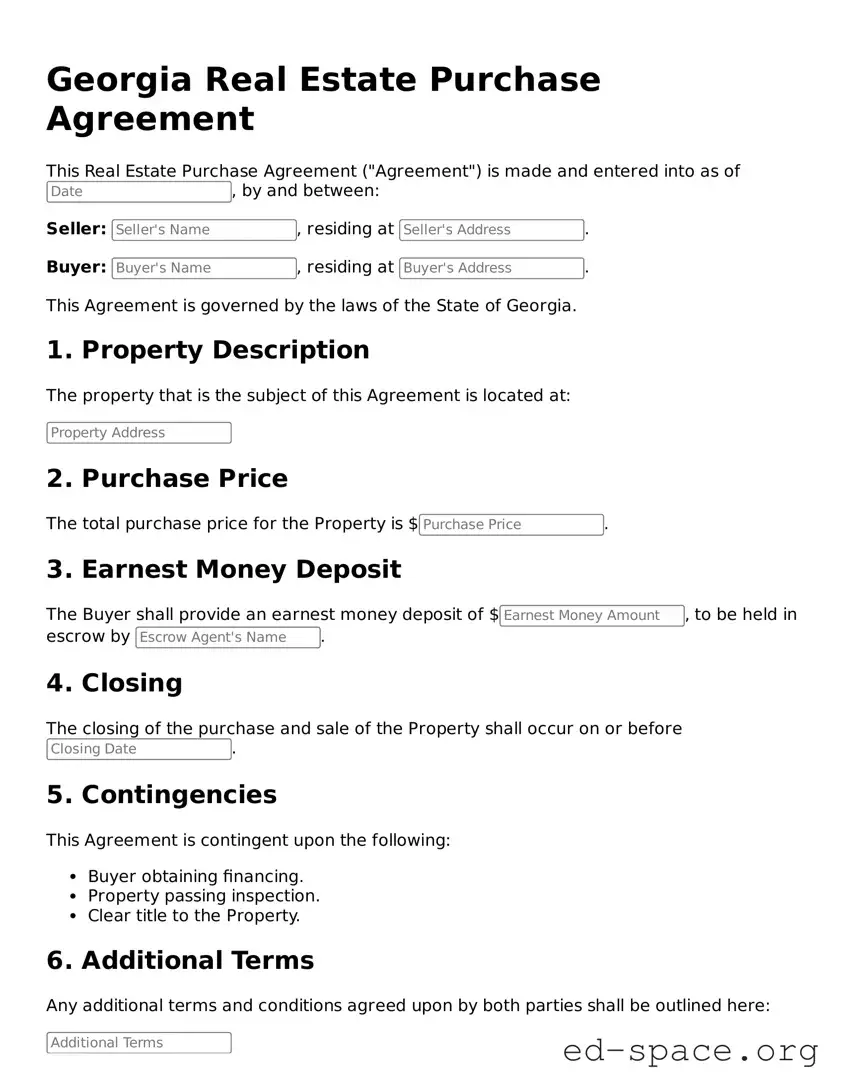
Georgia Real Estate Purchase Agreement
This Real Estate Purchase Agreement ("Agreement") is made and entered into as of , by and between:
Seller: , residing at .
Buyer: , residing at .
This Agreement is governed by the laws of the State of Georgia.
1. Property Description
The property that is the subject of this Agreement is located at:
2. Purchase Price
The total purchase price for the Property is $.
3. Earnest Money Deposit
The Buyer shall provide an earnest money deposit of $, to be held in escrow by .
4. Closing
The closing of the purchase and sale of the Property shall occur on or before .
5. Contingencies
This Agreement is contingent upon the following:
6. Additional Terms
Any additional terms and conditions agreed upon by both parties shall be outlined here:
7. Signatures
By signing below, both parties agree to the terms of this Agreement.
Seller's Signature: ___________________________ Date:
Buyer's Signature: ___________________________ Date:
| Fact Name | Description |
|---|---|
| Governing Law | The Georgia Real Estate Purchase Agreement is governed by the laws of the State of Georgia. |
| Parties Involved | The agreement typically involves a buyer and a seller, both of whom must be clearly identified. |
| Property Description | A detailed description of the property being sold is required, including its address and legal description. |
| Purchase Price | The purchase price must be clearly stated in the agreement, along with any earnest money deposit. |
| Contingencies | Common contingencies include financing, inspections, and appraisal conditions that must be satisfied. |
| Closing Date | The agreement should specify the closing date when the property transfer will take place. |
| Default Provisions | The agreement outlines what happens if either party defaults on the terms, including potential remedies. |
| Signatures | Both parties must sign the agreement for it to be legally binding, along with the date of signing. |
Filling out the Georgia Real Estate Purchase Agreement is an important step in the home buying process. Once completed, this form will help outline the terms of the sale, protecting both the buyer and the seller. Here’s how to fill it out correctly.
After completing the form, it’s wise to review it thoroughly. Make sure all information is correct and that both parties understand the terms before moving forward.
What is a Georgia Real Estate Purchase Agreement?
The Georgia Real Estate Purchase Agreement is a legal document that outlines the terms and conditions for the sale of real property in Georgia. It serves as a binding contract between the buyer and seller, detailing the purchase price, property description, and any contingencies that must be met before the sale can proceed.
What are the key components of the agreement?
Key components include the names of the buyer and seller, the property address, the purchase price, earnest money deposit, financing details, and any contingencies such as inspections or appraisals. The agreement also specifies the closing date and responsibilities for closing costs.
Is it necessary to have an attorney review the agreement?
What happens if either party wants to back out of the agreement?
If either party wishes to back out, they must refer to the contingencies outlined in the agreement. If contingencies are not met, the buyer may be able to withdraw without penalty. However, if a party backs out without a valid reason, they may be liable for damages or the earnest money deposit.
How is earnest money handled in the agreement?
Earnest money is a deposit made by the buyer to show their serious intent to purchase the property. The amount is specified in the agreement and is typically held in escrow until closing. If the sale goes through, it is applied to the purchase price. If the buyer backs out without a valid reason, the seller may keep the earnest money.
Can the agreement be modified after it is signed?
Yes, the agreement can be modified after it is signed, but both parties must agree to the changes. Any modifications should be documented in writing and signed by both the buyer and seller to ensure they are enforceable.
What are common contingencies included in the agreement?
Common contingencies include financing, home inspections, appraisal, and the sale of the buyer's current home. These contingencies allow the buyer to back out of the agreement without penalty if certain conditions are not met.
How long is the agreement valid?
The validity of the agreement depends on the terms outlined within it, particularly the closing date. If the transaction does not close by that date, the agreement may become void unless extended by mutual consent of both parties.
Failing to include all necessary parties: It is crucial to ensure that all individuals involved in the transaction are listed on the agreement. This includes both the buyer and the seller. Omitting a party can lead to legal complications later.
Not specifying the purchase price: The agreement must clearly state the agreed-upon purchase price. Without this information, the contract may be considered incomplete or unenforceable.
Ignoring contingencies: Buyers often forget to include important contingencies, such as financing or inspection conditions. These contingencies protect the buyer and should be clearly outlined in the agreement.
Neglecting to define closing costs: It is essential to specify who will be responsible for closing costs in the agreement. This avoids misunderstandings and ensures that both parties are on the same page.
Leaving out important dates: Key dates, such as the closing date and any deadlines for contingencies, should be included. Missing these dates can create confusion and potential delays in the transaction.
Not reviewing the form thoroughly: Many individuals rush through the completion of the form without carefully reviewing it. This can lead to errors that may affect the validity of the agreement.
When engaging in a real estate transaction in Georgia, several documents may accompany the Real Estate Purchase Agreement. Each of these documents serves a specific purpose and contributes to the overall clarity and legality of the transaction. Below is a list of commonly used forms that may be necessary.
Understanding these documents is crucial for anyone involved in a real estate transaction. Each form plays a vital role in ensuring a smooth and transparent process, ultimately leading to a successful sale or purchase.
The Real Estate Purchase Agreement is a crucial document in the process of buying or selling property. However, it shares similarities with several other important documents in real estate transactions. Here’s a look at eight such documents:
Each of these documents plays a vital role in the real estate process, ensuring that both buyers and sellers understand their rights and responsibilities. By recognizing the similarities, individuals can better navigate the complexities of real estate transactions.
When filling out the Georgia Real Estate Purchase Agreement form, attention to detail is crucial. Here are some essential dos and don'ts to consider:
Understanding the Georgia Real Estate Purchase Agreement form can be challenging. Here are five common misconceptions about this document:
When dealing with the Georgia Real Estate Purchase Agreement form, it's important to keep a few key points in mind. Here are some takeaways that can help you navigate the process smoothly:
By keeping these points in mind, you can approach the Georgia Real Estate Purchase Agreement with confidence.