In the realm of marriage, a prenuptial agreement serves as a crucial tool for couples looking to outline their financial and personal arrangements before tying the knot. In Georgia, this legal document can address a variety of important aspects, including the division of property, debt responsibilities, and spousal support in the event of divorce or separation. It allows individuals to protect their assets and clarify expectations, which can help reduce conflicts later on. The Georgia Prenuptial Agreement form typically requires both parties to provide full disclosure of their financial situations, ensuring that all assets and liabilities are transparent. Additionally, the agreement must be signed voluntarily by both parties, without any coercion, to be considered valid. Couples may also choose to include provisions regarding the management of future income and property acquired during the marriage. By taking the time to create a comprehensive prenuptial agreement, partners can foster open communication about financial matters, ultimately laying a foundation for a more secure and harmonious relationship.
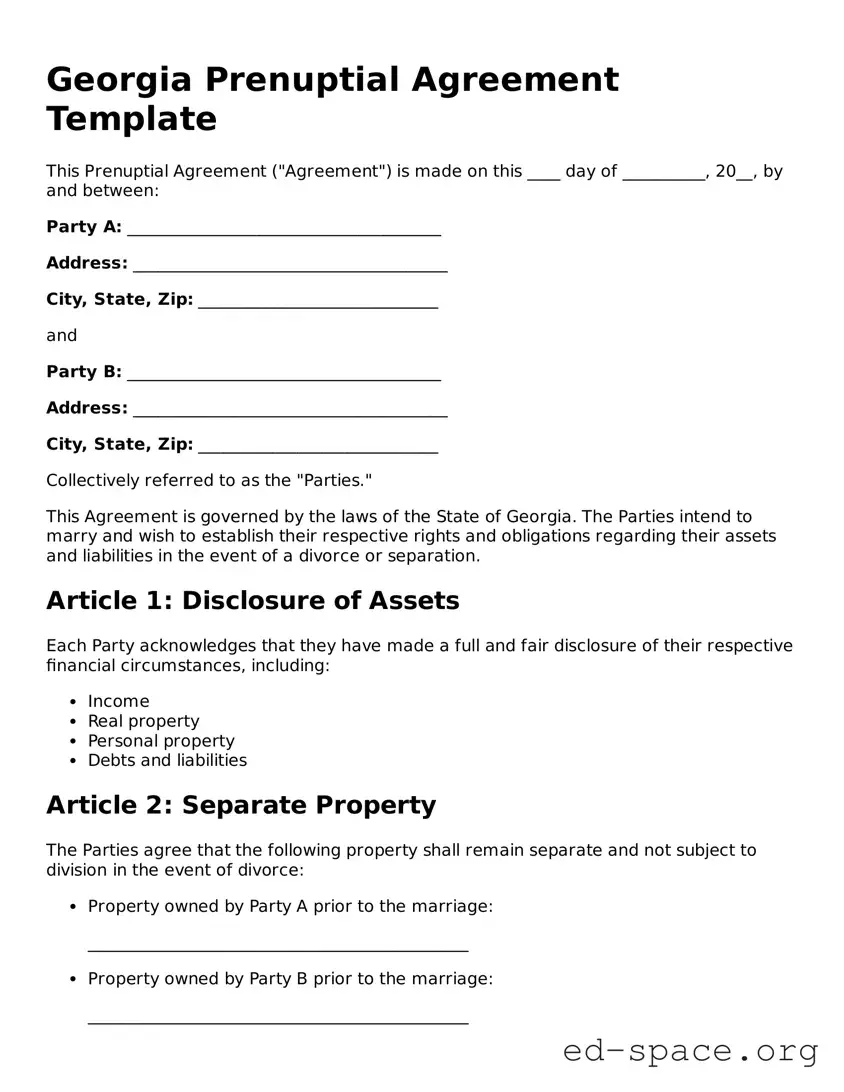
Georgia Prenuptial Agreement Template
This Prenuptial Agreement ("Agreement") is made on this ____ day of __________, 20__, by and between:
Party A: ______________________________________
Address: ______________________________________
City, State, Zip: _____________________________
and
Party B: ______________________________________
Address: ______________________________________
City, State, Zip: _____________________________
Collectively referred to as the "Parties."
This Agreement is governed by the laws of the State of Georgia. The Parties intend to marry and wish to establish their respective rights and obligations regarding their assets and liabilities in the event of a divorce or separation.
Article 1: Disclosure of Assets
Each Party acknowledges that they have made a full and fair disclosure of their respective financial circumstances, including:
Article 2: Separate Property
The Parties agree that the following property shall remain separate and not subject to division in the event of divorce:
______________________________________________
______________________________________________
Article 3: Marital Property
The Parties agree that any property acquired during the marriage shall be considered marital property and shall be divided as follows:
______________________________________________
Article 4: Spousal Support
In the event of divorce, the Parties agree to the following terms regarding spousal support:
______________________________________________
Article 5: Miscellaneous Provisions
IN WITNESS WHEREOF, the Parties have executed this Prenuptial Agreement as of the date first above written.
Party A Signature: ____________________________
Date: ______________________________________
Party B Signature: ____________________________
Date: ______________________________________
Witnessed by:
Witness Name: ______________________________
Signature: __________________________________
Date: ______________________________________
| Fact Name | Description |
|---|---|
| Definition | A prenuptial agreement in Georgia is a contract entered into by two individuals before marriage, outlining the division of assets and financial responsibilities in the event of divorce or separation. |
| Governing Law | Georgia law governs prenuptial agreements, specifically under the Georgia Code Title 19, Chapter 3, Article 3. |
| Enforceability | For a prenuptial agreement to be enforceable in Georgia, it must be in writing and signed by both parties. Full disclosure of assets is also recommended. |
| Modification | Prenuptial agreements can be modified after marriage, but such modifications must also be in writing and signed by both parties to be valid. |
Filling out a prenuptial agreement form in Georgia is a straightforward process. Once you have the form ready, you can begin entering the necessary information. The following steps will guide you through the process to ensure you complete it correctly.
What is a prenuptial agreement in Georgia?
A prenuptial agreement, often called a prenup, is a legal contract between two people before they get married. It outlines how assets and debts will be divided in case of divorce or separation. In Georgia, this agreement can help clarify financial responsibilities and protect individual interests, making it a useful tool for many couples.
What should be included in a prenuptial agreement?
While each prenup is unique, common elements include the division of property, spousal support, and management of debts. Couples may also include provisions for financial responsibilities during the marriage. It's essential to discuss these topics openly and ensure both parties are comfortable with the terms.
Is a prenuptial agreement enforceable in Georgia?
Yes, a properly drafted and executed prenuptial agreement is enforceable in Georgia. To be valid, both parties must voluntarily sign the agreement, and it should be fair and reasonable at the time of signing. Full disclosure of assets is also crucial for enforceability.
Can a prenuptial agreement be changed after marriage?
Yes, a prenuptial agreement can be modified after marriage. However, both parties must agree to the changes, and it should be documented in writing and signed by both individuals. This ensures that any new terms are legally binding.
Do I need a lawyer to create a prenuptial agreement in Georgia?
While it’s not legally required, consulting a lawyer is highly recommended. An attorney can help ensure that the agreement is fair, legally sound, and tailored to your specific needs. Having separate legal representation for both parties can also help avoid future disputes.
How long does it take to create a prenuptial agreement?
The time it takes to create a prenuptial agreement can vary. Generally, it can take a few weeks to a couple of months, depending on how quickly both parties can agree on the terms and gather necessary financial information. Starting the process early is advisable to avoid any last-minute stress.
What happens if we don’t have a prenuptial agreement?
If a couple does not have a prenuptial agreement, Georgia law will determine how assets and debts are divided in the event of a divorce. This may not align with either party's wishes. Without a prenup, the court will look at factors like the length of the marriage and contributions made by each spouse to reach a fair distribution.
Incomplete Information: Many individuals fail to provide all necessary details about their assets and liabilities. This can lead to disputes later. Ensure that every item is listed, including bank accounts, real estate, and debts.
Not Seeking Legal Advice: Some couples attempt to fill out the form without consulting a lawyer. This can result in misunderstandings of legal implications. Engaging a legal professional can clarify rights and obligations.
Ignoring State Laws: Each state has specific requirements for prenuptial agreements. Failing to adhere to Georgia's regulations can render the agreement invalid. Familiarize yourself with local laws to ensure compliance.
Not Disclosing Full Financial Picture: Full transparency is crucial. Hiding assets or failing to disclose financial information can lead to the agreement being challenged in court. Be honest and thorough in your disclosures.
When preparing a Georgia Prenuptial Agreement, several other forms and documents may be beneficial to ensure a comprehensive understanding of each party's rights and responsibilities. Below is a list of related documents that are often used in conjunction with a prenuptial agreement.
Utilizing these documents alongside a prenuptial agreement can help clarify expectations and protect both parties’ interests. It's wise to consult with a legal professional to ensure that all documents are properly prepared and tailored to your specific situation.
A Prenuptial Agreement is a legal document that outlines the terms of a couple's financial arrangements before marriage. Several other documents share similarities with a prenuptial agreement in terms of purpose and function. Here are nine such documents:
When filling out the Georgia Prenuptial Agreement form, it’s important to be careful and thorough. Here’s a list of things you should and shouldn’t do:
By following these guidelines, you can help ensure that your prenuptial agreement is effective and fair for both parties.
When it comes to prenuptial agreements in Georgia, several misconceptions can cloud understanding and decision-making. Here are four common misunderstandings about the Georgia Prenuptial Agreement form:
Understanding these misconceptions can empower individuals to make informed decisions about their financial future and relationships. A prenuptial agreement can serve as a valuable tool for clarity and protection.
When considering a prenuptial agreement in Georgia, there are several important points to keep in mind. Below are key takeaways that can help you navigate the process effectively.