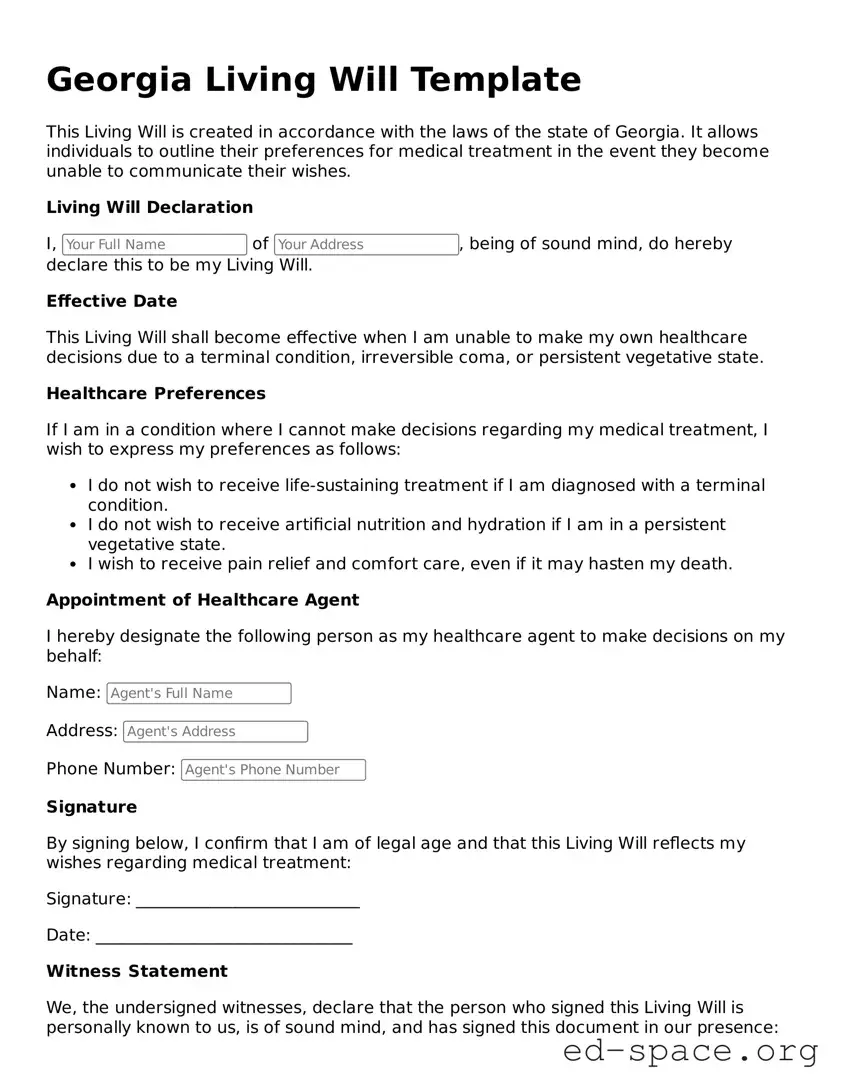
In the state of Georgia, the Living Will form serves as a crucial document that allows individuals to express their preferences regarding medical treatment in the event they become unable to communicate their wishes. This form is particularly significant for those who want to ensure their values and choices are respected during critical health situations. By outlining specific instructions about life-sustaining treatments, such as resuscitation and artificial nutrition, individuals can guide their healthcare providers and loved ones in making informed decisions on their behalf. Additionally, the Living Will can alleviate the emotional burden on family members, who may otherwise face difficult choices without clear guidance. Understanding the requirements for creating this document, including the necessary signatures and witnesses, is essential for ensuring that one's wishes are legally recognized and honored. As individuals navigate the complexities of end-of-life care, the Living Will form stands as a vital tool in fostering autonomy and peace of mind.
Georgia Living Will Template
This Living Will is created in accordance with the laws of the state of Georgia. It allows individuals to outline their preferences for medical treatment in the event they become unable to communicate their wishes.
Living Will Declaration
I, of , being of sound mind, do hereby declare this to be my Living Will.
Effective Date
This Living Will shall become effective when I am unable to make my own healthcare decisions due to a terminal condition, irreversible coma, or persistent vegetative state.
Healthcare Preferences
If I am in a condition where I cannot make decisions regarding my medical treatment, I wish to express my preferences as follows:
Appointment of Healthcare Agent
I hereby designate the following person as my healthcare agent to make decisions on my behalf:
Name:
Address:
Phone Number:
Signature
By signing below, I confirm that I am of legal age and that this Living Will reflects my wishes regarding medical treatment:
Signature: ___________________________
Date: _______________________________
Witness Statement
We, the undersigned witnesses, declare that the person who signed this Living Will is personally known to us, is of sound mind, and has signed this document in our presence:
This Living Will is intended to comply with the Georgia Advance Directive for Health Care Act. It is recommended to discuss your wishes with your healthcare agent and family.
| Fact Name | Description |
|---|---|
| Definition | A Georgia Living Will is a legal document that outlines your wishes regarding medical treatment in the event you become unable to communicate those wishes yourself. |
| Governing Laws | The Living Will in Georgia is governed by the Georgia Advance Directive for Health Care Act, O.C.G.A. § 31-32-1 et seq. |
| Eligibility | Any adult who is 18 years or older can create a Living Will in Georgia, provided they are of sound mind. |
| Witness Requirements | To make a Living Will valid in Georgia, it must be signed in the presence of two witnesses who are not related to you or entitled to any portion of your estate. |
| Revocation | You can revoke your Living Will at any time, as long as you communicate your decision to the appropriate parties, such as your healthcare provider. |
Filling out a Georgia Living Will form is an important step in ensuring that your healthcare wishes are honored. After completing the form, you'll want to ensure that it is signed and witnessed properly to make it legally binding. Here’s how to fill it out correctly.
Once you have completed these steps, your Living Will will be ready to guide your medical care in accordance with your preferences. Remember to keep the original document in a safe place and share copies with trusted family members or friends.
What is a Georgia Living Will?
A Georgia Living Will is a legal document that allows individuals to express their wishes regarding medical treatment in case they become unable to communicate those wishes themselves. This document typically outlines preferences for life-sustaining treatments, such as resuscitation, artificial nutrition, and hydration. It ensures that your healthcare providers and loved ones understand your desires during critical situations.
Who should create a Living Will in Georgia?
Anyone aged 18 or older can create a Living Will in Georgia. It is especially important for individuals with serious health conditions, those undergoing major surgeries, or anyone who wishes to make their healthcare preferences known. Having a Living Will can provide peace of mind, knowing that your wishes will be respected if you cannot speak for yourself.
How do I create a Living Will in Georgia?
To create a Living Will in Georgia, you must complete a form that complies with state laws. This form should clearly state your medical treatment preferences. Once completed, you need to sign the document in the presence of two witnesses or a notary public. It’s essential that your witnesses are not your immediate family members or anyone who would benefit from your estate.
Can I change or revoke my Living Will?
Yes, you can change or revoke your Living Will at any time. To do this, simply create a new Living Will that clearly states your updated wishes. Make sure to inform your healthcare providers and loved ones about the changes. Additionally, you can revoke your Living Will by destroying the document or by stating your intent to revoke it in writing.
Is a Living Will the same as a Durable Power of Attorney for Healthcare?
No, a Living Will and a Durable Power of Attorney for Healthcare are different documents. A Living Will specifies your wishes regarding medical treatment, while a Durable Power of Attorney for Healthcare designates someone to make healthcare decisions on your behalf if you are unable to do so. Many people choose to have both documents to ensure comprehensive planning for their healthcare needs.
Failing to clearly state your wishes. It's crucial to specify what medical treatments you do or do not want. Vague language can lead to confusion.
Not signing the document. A Living Will is only valid if it is signed by you. Remember to include the date of your signature as well.
Ignoring the witness requirement. In Georgia, you need at least two witnesses to sign your Living Will. Ensure that your witnesses are not related to you or beneficiaries of your estate.
Using outdated forms. Laws can change, so always use the most current version of the Georgia Living Will form to ensure it complies with state regulations.
Not discussing your wishes with family. It’s important to communicate your desires with loved ones. This can prevent misunderstandings and conflicts later on.
Overlooking the need for updates. As your health or preferences change, revisit your Living Will. Regularly updating it ensures it reflects your current wishes.
Failing to include specific scenarios. Be as detailed as possible about your preferences for various medical situations. This can guide healthcare providers effectively.
Not keeping copies accessible. After completing your Living Will, store copies in easily accessible locations. Inform your healthcare proxy and family where to find them.
Neglecting to appoint a healthcare proxy. While a Living Will outlines your wishes, appointing someone to make decisions on your behalf can provide additional clarity in emergencies.
A Georgia Living Will is a crucial document that outlines an individual's preferences regarding medical treatment in the event of a terminal illness or incapacitation. However, it is often used in conjunction with several other forms and documents that can enhance its effectiveness and ensure comprehensive planning for healthcare decisions. Below is a list of such documents.
In summary, while the Georgia Living Will serves as a vital tool for expressing healthcare preferences, it is most effective when used alongside these additional documents. Each of these forms plays a unique role in ensuring that an individual's wishes are honored and that their loved ones are equipped to make informed decisions during challenging times.
When filling out the Georgia Living Will form, it’s important to approach the process with care. Here are some guidelines to help you navigate this important document.
Following these dos and don'ts will help ensure that your Living Will accurately reflects your wishes and is legally valid. Always consider discussing your decisions with loved ones or a legal professional to clarify your intentions.
Many people have misunderstandings about the Georgia Living Will form. Here are four common misconceptions:
When filling out and using the Georgia Living Will form, keep these key takeaways in mind: