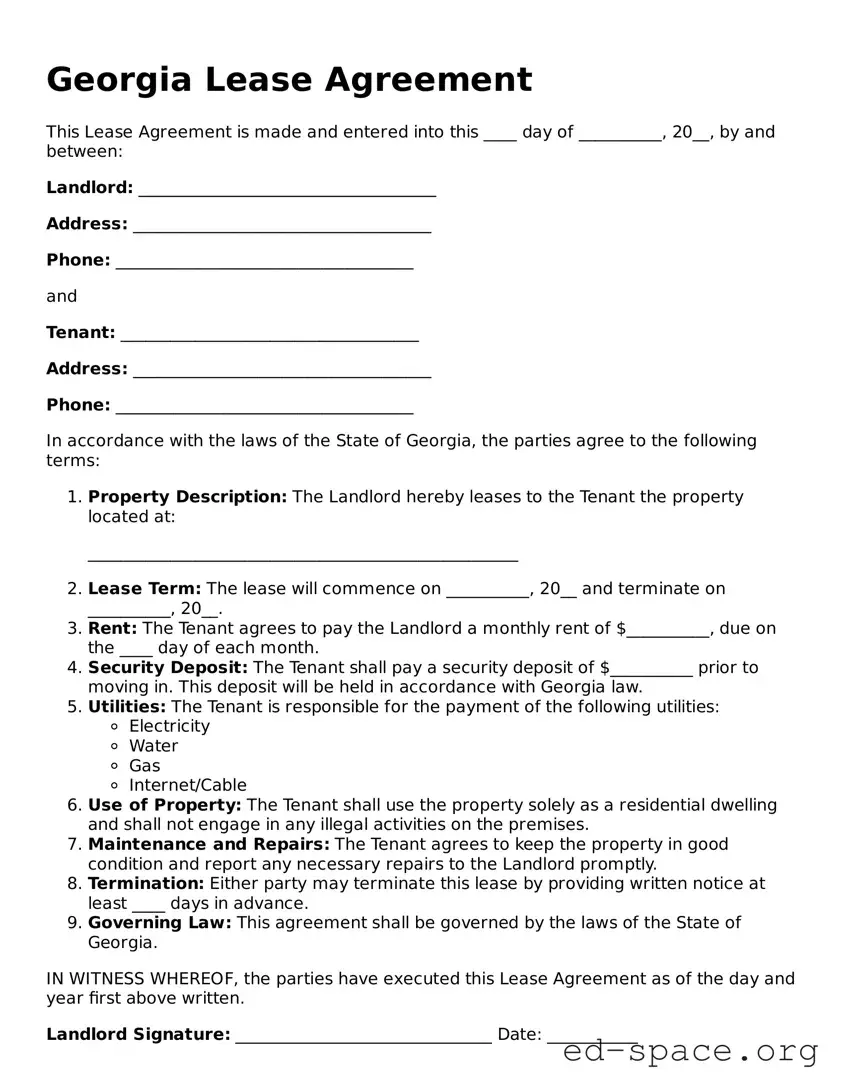
When entering into a rental agreement in Georgia, understanding the Georgia Lease Agreement form is essential for both landlords and tenants. This document outlines the rights and responsibilities of each party, ensuring a clear understanding of the terms of the lease. Key aspects include the duration of the lease, which specifies how long the tenant will occupy the property, and the rental amount, detailing the monthly payment obligations. Additionally, the form addresses security deposits, outlining how much is required and the conditions for its return. Maintenance responsibilities are also highlighted, clarifying who is accountable for repairs and upkeep of the property. Furthermore, the agreement includes provisions for terminating the lease, which can help prevent misunderstandings in the event of early termination. Understanding these components is vital for a smooth rental experience, as they protect both parties and foster a positive landlord-tenant relationship.
Georgia Lease Agreement
This Lease Agreement is made and entered into this ____ day of __________, 20__, by and between:
Landlord: ____________________________________
Address: ____________________________________
Phone: ____________________________________
and
Tenant: ____________________________________
Address: ____________________________________
Phone: ____________________________________
In accordance with the laws of the State of Georgia, the parties agree to the following terms:
____________________________________________________
IN WITNESS WHEREOF, the parties have executed this Lease Agreement as of the day and year first above written.
Landlord Signature: _______________________________ Date: ___________
Tenant Signature: _______________________________ Date: ___________
| Fact Name | Description |
|---|---|
| Governing Law | The Georgia Lease Agreement is governed by the Official Code of Georgia Annotated (O.C.G.A.) Title 44, Chapter 7. |
| Duration | Lease agreements can be for a fixed term, typically ranging from six months to one year, or can be month-to-month. |
| Security Deposit | Landlords may require a security deposit, which cannot exceed one month's rent, and must be returned within one month after the lease ends, barring any damages. |
| Notice Requirements | Both landlords and tenants must provide a written notice of at least 60 days to terminate a month-to-month lease. |
Filling out the Georgia Lease Agreement form requires careful attention to detail. Each section of the form needs to be completed accurately to ensure a clear understanding between the landlord and tenant. Once the form is filled out, it should be reviewed for any errors before being signed by both parties.
What is a Georgia Lease Agreement?
A Georgia Lease Agreement is a legally binding contract between a landlord and a tenant. It outlines the terms and conditions under which a tenant can occupy a rental property in Georgia. This document typically includes details like the rental amount, duration of the lease, and responsibilities of both parties.
What are the key components of a Georgia Lease Agreement?
Key components include the names of the landlord and tenant, property address, lease term (length of the agreement), rent amount and payment details, security deposit information, maintenance responsibilities, and rules regarding pets or alterations to the property. Each section is crucial to ensure clarity and prevent disputes.
How long is a typical lease agreement in Georgia?
Lease agreements in Georgia can vary in length. They can be short-term (month-to-month) or long-term (typically 6 to 12 months). Some landlords may offer longer leases, but the most common duration is one year. The lease length should be clearly stated in the agreement.
Is a security deposit required in Georgia?
Yes, landlords in Georgia often require a security deposit. This deposit is typically equal to one month's rent but can be more depending on the landlord's policy. The security deposit protects the landlord against potential damages or unpaid rent. Georgia law requires landlords to return the deposit within one month after the lease ends, minus any deductions for damages.
Can a landlord enter the rental property without notice?
In Georgia, landlords must provide reasonable notice before entering a rental property, usually 24 hours. However, in emergencies, such as a fire or flood, they may enter without prior notice. It's best to include specific terms about entry in the lease agreement to avoid misunderstandings.
What happens if a tenant breaks the lease early?
If a tenant breaks the lease early, they may be responsible for paying rent until a new tenant is found or until the lease term ends, depending on the lease terms. Some leases include an early termination clause, which outlines the penalties or fees associated with breaking the lease early. Always review the lease carefully for these details.
Are there any specific laws governing lease agreements in Georgia?
Yes, Georgia has specific laws that govern residential leases. These laws address issues like security deposits, eviction processes, and tenant rights. It's essential for both landlords and tenants to familiarize themselves with these laws to ensure compliance and protect their rights.
Can tenants make changes to the property?
Tenants generally cannot make changes to the property without the landlord's permission. This includes painting walls, installing shelves, or making structural changes. Any alterations should be discussed and documented in the lease agreement to avoid disputes later on.
What should a tenant do if they have a dispute with their landlord?
If a dispute arises, the tenant should first try to communicate directly with the landlord to resolve the issue. If that doesn’t work, they may consider mediation or seeking legal advice. Documenting all communications and keeping records of any agreements can be helpful if the situation escalates.
How can a lease agreement be terminated?
A lease agreement can be terminated by mutual agreement of both parties, or through specific conditions outlined in the lease, such as non-payment of rent or lease violations. Tenants should provide written notice to the landlord as required by the lease terms, typically 30 days in advance, before moving out.
Not Reading the Entire Agreement: Many individuals skim through the lease without fully understanding all the terms. This can lead to confusion and potential disputes later on.
Incorrect Names or Information: Failing to accurately fill in the names of all parties involved can cause legal issues. Each tenant's name should be spelled correctly and match their identification.
Missing Dates: Forgetting to include important dates, such as the lease start and end dates, can create ambiguity. Clear timelines are essential for both landlords and tenants.
Ignoring Additional Fees: Many lease agreements include extra charges, such as maintenance fees or penalties for late payments. Not acknowledging these can lead to unexpected costs.
Neglecting to Specify Security Deposit Terms: The lease should clearly outline the amount of the security deposit and the conditions for its return. Omitting this information can result in disputes at the end of the lease.
Failing to Understand Maintenance Responsibilities: Tenants should be aware of who is responsible for repairs and maintenance. Misunderstandings in this area can lead to frustration and financial burden.
Not Including Pet Policies: If pets are allowed or restricted, this should be clearly stated in the lease. Failing to address this can lead to conflicts between tenants and landlords.
Overlooking Renewal and Termination Clauses: Understanding how the lease can be renewed or terminated is crucial. Not paying attention to these clauses can leave tenants in tricky situations.
When entering into a lease agreement in Georgia, several additional forms and documents may be necessary to ensure a smooth rental process. These documents help clarify the responsibilities of both landlords and tenants, protect rights, and provide important information. Below is a list of commonly used forms that complement the Georgia Lease Agreement.
Having these forms and documents on hand can significantly streamline the leasing process. They provide clarity and protection for both parties, ensuring a positive rental experience in Georgia.
Rental Agreement: Similar to a lease agreement, a rental agreement outlines the terms under which a property is rented. Both documents specify the duration of the rental, payment terms, and responsibilities of both parties. However, rental agreements are typically month-to-month, while lease agreements usually cover a longer term.
Sublease Agreement: A sublease agreement allows a tenant to rent out their leased property to another person. Like a lease agreement, it includes details about rent, duration, and responsibilities. The original tenant remains responsible to the landlord, similar to how a tenant is bound by the lease.
Commercial Lease Agreement: This document is used for renting commercial properties. It includes terms similar to a residential lease agreement but often addresses different aspects such as zoning laws and business operations. Both agreements serve to protect the rights of the landlord and tenant.
Property Management Agreement: This document outlines the relationship between a property owner and a property management company. It shares similarities with a lease agreement in that it defines terms, responsibilities, and payment structures. Both aim to ensure clear communication and expectations.
Tenancy Agreement: A tenancy agreement is often used interchangeably with a lease agreement. It sets forth the terms of occupancy, including rent and duration. Both documents aim to formalize the relationship between the landlord and tenant, ensuring both parties understand their rights and obligations.
When filling out the Georgia Lease Agreement form, it's essential to approach the task with care. A well-completed lease can save you from potential disputes and misunderstandings later on. Here’s a list of dos and don’ts to guide you through the process.
By following these guidelines, you can fill out your Georgia Lease Agreement form with confidence, paving the way for a smoother rental experience.
Understanding lease agreements is crucial for both landlords and tenants. Unfortunately, several misconceptions can lead to confusion and potential disputes. Here are ten common misunderstandings about the Georgia Lease Agreement form:
Being aware of these misconceptions can help both landlords and tenants navigate their agreements more effectively. Clear communication and understanding of the lease terms are essential for a successful rental experience.
When filling out and using the Georgia Lease Agreement form, keep these key takeaways in mind:
Following these guidelines will help ensure a smooth leasing experience for everyone involved.