In the state of Georgia, the Hold Harmless Agreement form serves as a vital tool for individuals and organizations looking to navigate the complexities of liability and risk management. This agreement is designed to protect one party from legal claims or damages that may arise from the actions of another. Whether you are renting a venue for an event, engaging in a construction project, or participating in recreational activities, understanding the nuances of this form is essential. By clearly outlining the responsibilities and liabilities of each party involved, the Hold Harmless Agreement fosters a sense of security and trust. It allows individuals to engage in various activities without the constant worry of potential lawsuits or financial repercussions. Additionally, this form can be customized to fit specific situations, making it a flexible option for different scenarios. Knowing how to properly utilize this agreement can safeguard your interests and provide peace of mind in various personal and professional undertakings.
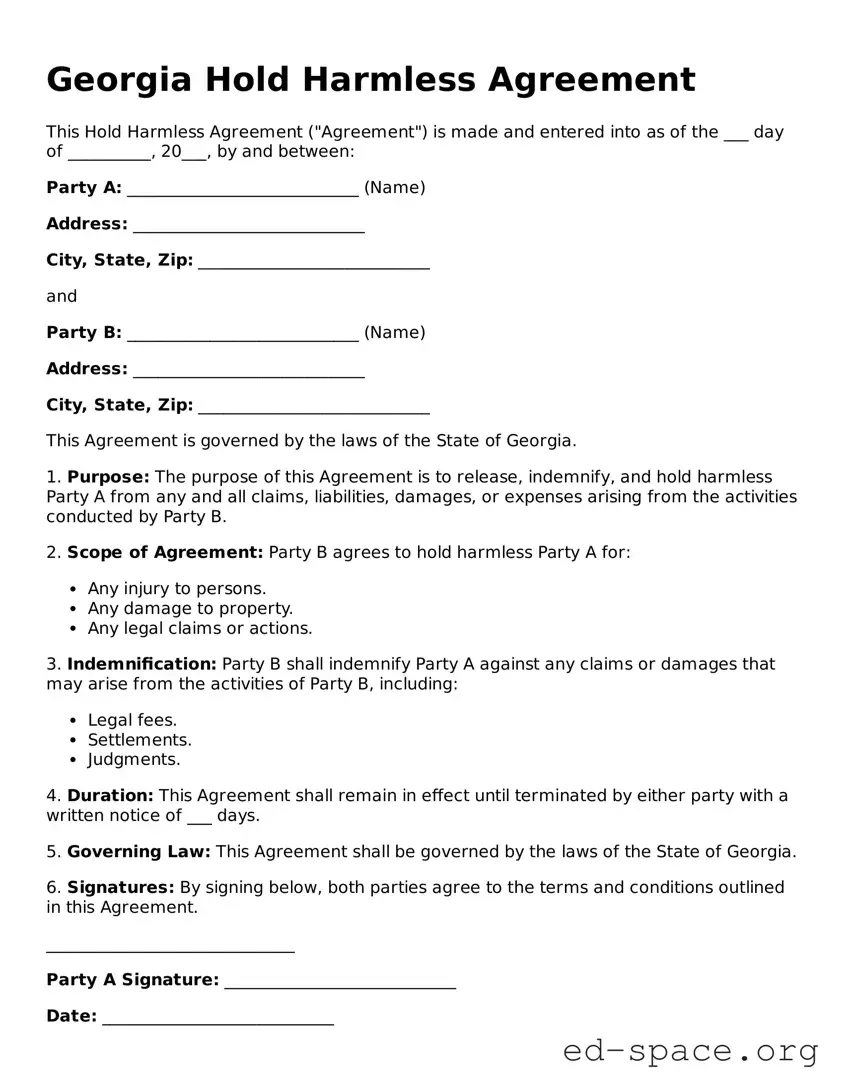
Georgia Hold Harmless Agreement
This Hold Harmless Agreement ("Agreement") is made and entered into as of the ___ day of __________, 20___, by and between:
Party A: ____________________________ (Name)
Address: ____________________________
City, State, Zip: ____________________________
and
Party B: ____________________________ (Name)
Address: ____________________________
City, State, Zip: ____________________________
This Agreement is governed by the laws of the State of Georgia.
1. Purpose: The purpose of this Agreement is to release, indemnify, and hold harmless Party A from any and all claims, liabilities, damages, or expenses arising from the activities conducted by Party B.
2. Scope of Agreement: Party B agrees to hold harmless Party A for:
3. Indemnification: Party B shall indemnify Party A against any claims or damages that may arise from the activities of Party B, including:
4. Duration: This Agreement shall remain in effect until terminated by either party with a written notice of ___ days.
5. Governing Law: This Agreement shall be governed by the laws of the State of Georgia.
6. Signatures: By signing below, both parties agree to the terms and conditions outlined in this Agreement.
______________________________
Party A Signature: ____________________________
Date: ____________________________
______________________________
Party B Signature: ____________________________
Date: ____________________________
| Fact Name | Description |
|---|---|
| Definition | A Hold Harmless Agreement is a legal document that protects one party from liability for certain actions or events. |
| Purpose | This agreement is often used to ensure that one party will not hold the other responsible for injuries or damages that may occur during an activity. |
| Governing Law | In Georgia, these agreements are governed by state contract law, which emphasizes the importance of clear and mutual consent. |
| Enforceability | Hold Harmless Agreements are generally enforceable in Georgia, provided they are clearly written and voluntarily agreed upon by both parties. |
| Common Uses | These agreements are commonly used in activities such as sports, construction projects, and rental agreements. |
| Limitations | Georgia courts may not enforce Hold Harmless Agreements that attempt to waive liability for gross negligence or intentional misconduct. |
Once you have obtained the Georgia Hold Harmless Agreement form, you will need to carefully complete it to ensure all necessary information is accurately provided. Follow the steps below to fill out the form correctly.
What is a Georgia Hold Harmless Agreement?
A Georgia Hold Harmless Agreement is a legal document that protects one party from liability for certain actions or events. Typically used in contracts, this agreement ensures that one party agrees to assume the risk of loss or damage, thereby relieving the other party from legal responsibility. It is commonly utilized in various contexts, including real estate transactions, construction contracts, and service agreements.
Who typically uses a Hold Harmless Agreement in Georgia?
Individuals and businesses often use Hold Harmless Agreements. Landlords may require tenants to sign this agreement to limit liability for injuries occurring on the property. Similarly, contractors may ask clients to sign a Hold Harmless Agreement to protect themselves from claims arising from their work. Event organizers also use this document to safeguard against potential lawsuits related to accidents during an event.
What are the key components of a Hold Harmless Agreement?
A well-crafted Hold Harmless Agreement typically includes several essential components. These include the identification of the parties involved, a clear description of the activities or situations covered by the agreement, and the specific liabilities being waived. Additionally, it should outline the duration of the agreement and any relevant state laws that may apply. Clarity in language is crucial to ensure that all parties understand their rights and obligations.
Is a Hold Harmless Agreement enforceable in Georgia?
Yes, Hold Harmless Agreements are generally enforceable in Georgia, provided they meet certain legal requirements. The agreement must be clear, specific, and voluntarily signed by all parties involved. However, it is important to note that courts may not enforce these agreements in cases of gross negligence or intentional wrongdoing. Therefore, while they provide significant protection, they do not offer blanket immunity in all situations.
Can a Hold Harmless Agreement be modified or revoked?
Yes, parties can modify or revoke a Hold Harmless Agreement, but such changes must be made in writing and signed by all parties involved. It is advisable to include a clause in the original agreement that outlines the process for making amendments. This ensures that all parties are aware of how changes can be made and helps maintain clarity and mutual understanding.
What should I consider before signing a Hold Harmless Agreement?
Before signing a Hold Harmless Agreement, consider the potential risks involved and the extent of liability you are agreeing to assume. It is wise to read the document carefully and, if necessary, consult with a legal professional to understand its implications fully. Ensure that the agreement is fair and that you are comfortable with the terms outlined. Being informed will help you make a decision that protects your interests.
Incomplete Information: One common mistake is failing to provide all required personal details. This can include names, addresses, and contact information. Leaving out any of these details can lead to confusion or delays in processing the agreement.
Not Reading the Terms Carefully: Many individuals overlook the specific terms and conditions outlined in the agreement. It is crucial to understand what you are agreeing to, as this document can have significant legal implications.
Incorrect Dates: Entering the wrong dates can invalidate the agreement. Ensure that the dates of signing and any relevant events are accurate to avoid complications later on.
Failure to Sign: It may seem obvious, but some individuals forget to sign the document. Without a signature, the agreement is not legally binding, rendering it ineffective.
The Georgia Hold Harmless Agreement is a crucial document that protects one party from liability for damages or injuries that may occur during a specified activity or event. To ensure comprehensive protection and clarity in various transactions, several other forms and documents are often used in conjunction with this agreement. Below is a list of these documents, each serving a specific purpose.
Utilizing these documents alongside the Georgia Hold Harmless Agreement can help create a robust framework for managing risks and responsibilities. Each form plays a vital role in ensuring that all parties are protected and aware of their obligations, contributing to a safer and more organized event or activity.
A Hold Harmless Agreement is a legal document designed to protect one party from liability or claims that may arise from the actions of another party. Several other documents serve similar purposes, offering varying degrees of protection and outlining responsibilities. Here are eight documents that are comparable to a Hold Harmless Agreement:
When filling out the Georgia Hold Harmless Agreement form, it's important to be careful and thorough. Here’s a list of things to do and avoid:
Following these guidelines will help you complete the form effectively and with confidence.
The Georgia Hold Harmless Agreement is a crucial document in various legal and business contexts. However, several misconceptions surround its purpose and function. Here are ten common misunderstandings:
Understanding these misconceptions is vital for anyone considering a Hold Harmless Agreement in Georgia. Clarity can prevent misunderstandings and protect your interests.
When dealing with a Georgia Hold Harmless Agreement, it’s essential to understand its purpose and how to properly fill it out. Here are some key takeaways to keep in mind:
By following these key points, you can navigate the process of using a Georgia Hold Harmless Agreement more effectively and with greater confidence.