Homepage Free Deed Form for Georgia
Content Overview

The Georgia Deed form is a crucial document in real estate transactions, serving as the legal instrument that transfers ownership of property from one party to another. It outlines essential details such as the names of the grantor and grantee, a clear description of the property, and any conditions or restrictions that may apply to the transfer. This form is not just a piece of paper; it represents the culmination of negotiations and agreements between the involved parties. Additionally, it must be properly executed and notarized to ensure its validity. Understanding the nuances of the Georgia Deed form is vital for anyone involved in buying or selling property in the state, as it helps protect the rights of both the seller and the buyer while ensuring a smooth transfer of ownership.

Document Preview

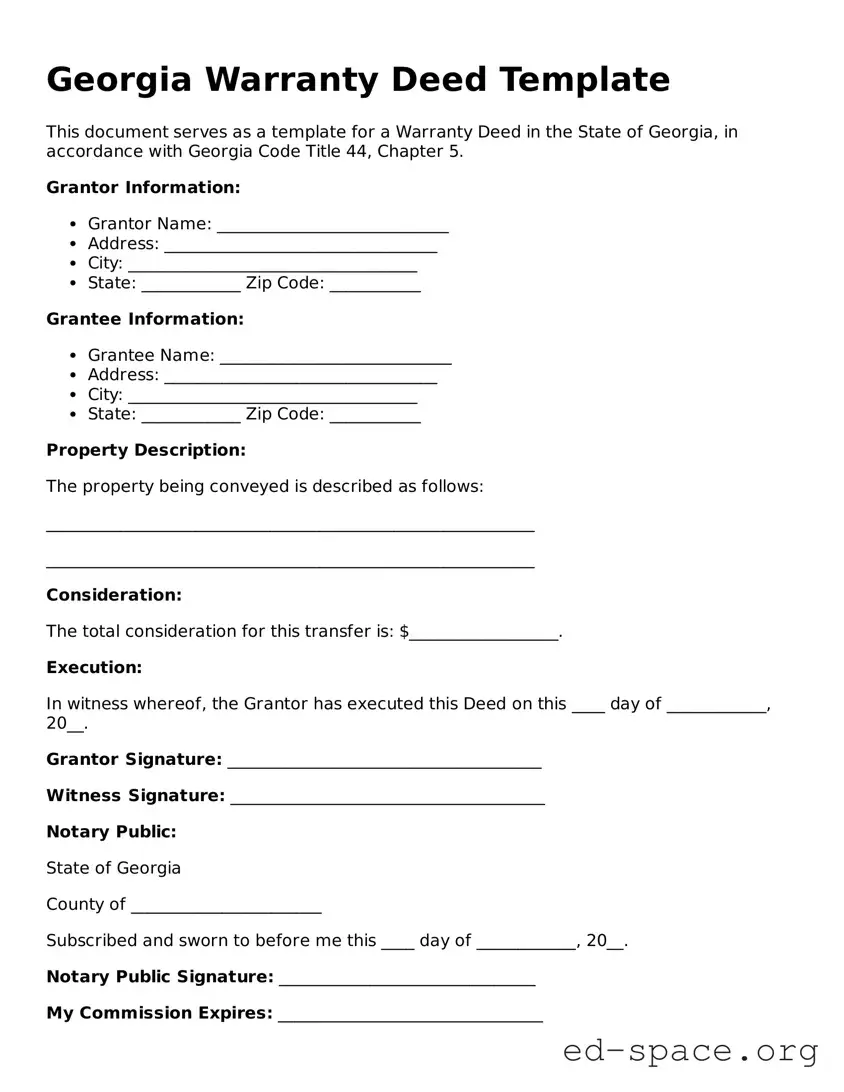
Georgia Warranty Deed Template

This document serves as a template for a Warranty Deed in the State of Georgia, in accordance with Georgia Code Title 44, Chapter 5.

Grantor Information:

  • Grantor Name: ____________________________
  • Address: _________________________________
  • City: ___________________________________
  • State: ____________ Zip Code: ___________

Grantee Information:

  • Grantee Name: ____________________________
  • Address: _________________________________
  • City: ___________________________________
  • State: ____________ Zip Code: ___________

Property Description:

The property being conveyed is described as follows:

___________________________________________________________

___________________________________________________________

Consideration:

The total consideration for this transfer is: $__________________.

Execution:

In witness whereof, the Grantor has executed this Deed on this ____ day of ____________, 20__.

Grantor Signature: ______________________________________

Witness Signature: ______________________________________

Notary Public:

State of Georgia

County of _______________________

Subscribed and sworn to before me this ____ day of ____________, 20__.

Notary Public Signature: _______________________________

My Commission Expires: ________________________________

PDF Form Details

Fact Name Details
Document Purpose The Georgia Deed form is used to transfer ownership of real property from one party to another.
Governing Law This form is governed by the laws of the State of Georgia, particularly O.C.G.A. § 44-5-30 et seq.
Types of Deeds Common types include warranty deeds, quitclaim deeds, and special warranty deeds.
Signature Requirements The deed must be signed by the grantor (seller) and may require notarization for validity.
Recording To protect the interests of the new owner, the deed should be recorded in the county where the property is located.
Tax Implications Transfer taxes may apply when the deed is executed, and these should be considered during the transaction.

Georgia Deed: Usage Guidelines

After obtaining the Georgia Deed form, it’s important to fill it out accurately to ensure a smooth transfer of property ownership. Once completed, the form will need to be signed, notarized, and then recorded with the appropriate county office.

  1. Begin by entering the date at the top of the form. This should be the date you are completing the deed.
  2. Next, provide the names of the grantor(s) (the person or people transferring the property). Make sure to include their full legal names.
  3. In the following section, list the names of the grantee(s) (the person or people receiving the property). Again, use their full legal names.
  4. Indicate the property’s address. Include the street number, street name, city, and zip code.
  5. Describe the property in detail. This may include the lot number, block number, and any other identifying information that helps clarify the property’s location.
  6. Next, state the consideration amount. This is typically the purchase price or the value of the property being transferred.
  7. Include any special provisions if applicable. This could involve specific conditions or agreements related to the property transfer.
  8. Sign the form in the designated area. The grantor(s) must sign in front of a notary public.
  9. Have the form notarized. The notary will verify the identities of the signers and provide their official stamp or seal.
  10. Finally, submit the completed deed to the appropriate county office for recording. Be sure to check if there are any fees associated with this process.

Your Questions, Answered

What is a Georgia Deed form?

A Georgia Deed form is a legal document used to transfer ownership of real estate from one party to another in the state of Georgia. This form serves as a written record of the transaction and includes important details such as the names of the parties involved, a description of the property, and any conditions or restrictions related to the transfer. It is essential for ensuring that the transfer is recognized legally and can be enforced in court if necessary.

What types of Deed forms are available in Georgia?

Georgia offers several types of Deed forms, each serving a different purpose. The most common types include Warranty Deeds, which guarantee that the seller has clear title to the property; Quitclaim Deeds, which transfer whatever interest the seller has without any guarantees; and Special Warranty Deeds, which provide limited warranties covering only the time the seller owned the property. Choosing the right type of Deed is crucial, as it affects the rights and protections of both the buyer and the seller.

How do I fill out a Georgia Deed form?

Filling out a Georgia Deed form requires careful attention to detail. Start by entering the names of the grantor (seller) and grantee (buyer) accurately. Next, provide a clear legal description of the property, which can usually be found on the property's tax records. Make sure to include the sale price, if applicable, and any specific terms or conditions. After completing the form, both parties must sign it in the presence of a notary public to make it legally binding.

Do I need to record the Deed after it is signed?

Yes, recording the Deed is an important step in the process. After the Deed is signed and notarized, it should be filed with the county clerk’s office where the property is located. Recording the Deed provides public notice of the ownership transfer and protects the buyer’s rights to the property. Failing to record the Deed could lead to complications in the future, especially if there are disputes over ownership or if the property is sold again.

Common mistakes

  1. Failing to include the correct names of all parties involved. It is crucial to ensure that the names of both the grantor (the person transferring the property) and the grantee (the person receiving the property) are spelled correctly and match their legal identification.

  2. Not providing a complete legal description of the property. A vague or incomplete description can lead to confusion and potential disputes. Always include the lot number, block number, and any other identifying information.

  3. Neglecting to sign the deed. Without the appropriate signatures, the deed is not valid. Both parties must sign the document in the presence of a notary public.

  4. Overlooking the notary requirement. A deed must be notarized to be legally binding. Ensure that the notary public completes their part before submitting the deed.

  5. Using outdated forms. Always check for the most current version of the deed form. Laws and requirements can change, and using an old form may result in issues.

  6. Failing to include the date of the transaction. This date is important for record-keeping and can affect the priority of claims on the property.

  7. Not recording the deed after completion. Once the deed is filled out and signed, it should be filed with the county clerk’s office. Failing to do so may lead to problems with ownership recognition.

Documents used along the form

When dealing with property transactions in Georgia, several forms and documents often accompany the Georgia Deed form. Each of these documents serves a specific purpose in ensuring that the transfer of property rights is clear and legally binding. Below is a list of commonly used forms and documents that you might encounter.

  • Title Search Report: This document provides a history of the property’s ownership and any claims against it. It helps ensure that the seller has the legal right to transfer the property.
  • Property Disclosure Statement: Sellers are often required to disclose any known issues with the property. This statement informs buyers about the condition of the property and any potential problems.
  • Closing Statement: Also known as a HUD-1, this document outlines all the financial details of the transaction, including the purchase price, closing costs, and any adjustments made at closing.
  • Bill of Sale: This document transfers ownership of personal property that may be included in the sale, such as appliances or furniture, and is often used in conjunction with the deed.
  • Affidavit of Title: This sworn statement by the seller confirms their ownership of the property and that there are no undisclosed liens or claims against it.
  • Power of Attorney: If the seller cannot be present at closing, this document allows someone else to act on their behalf, ensuring the transaction can proceed smoothly.
  • Loan Documents: If the buyer is financing the purchase, various loan documents will be required, including a mortgage agreement and promissory note outlining the terms of the loan.
  • Survey: A property survey shows the exact boundaries of the property and any structures on it. This can help resolve any disputes about property lines.
  • Deed of Trust: In some cases, a deed of trust is used instead of a mortgage. It serves as security for the loan and outlines the rights of the lender and borrower.

Understanding these documents can help facilitate a smoother property transaction. Each plays a vital role in protecting the interests of both buyers and sellers, ensuring that all legal aspects are addressed. Being informed can make the process less daunting and more efficient.

Similar forms

The Deed form is a vital document in real estate transactions, but it shares similarities with various other legal documents. Understanding these similarities can help clarify their roles in property law and transactions. Here’s a look at ten documents that resemble the Deed form:

  • Title Insurance Policy: Like a Deed, this document provides evidence of ownership and protects against potential disputes over property ownership. Both documents are essential for establishing clear title to the property.
  • Mortgage Agreement: This document outlines the terms of borrowing money to purchase property. Similar to a Deed, it is a legal instrument that must be recorded to protect the lender’s interest in the property.
  • Lease Agreement: A lease grants a tenant the right to occupy a property for a specified time. It is similar to a Deed in that both documents convey rights related to property, although a lease does not transfer ownership.
  • Bill of Sale: This document transfers ownership of personal property. While a Deed pertains to real property, both serve to formalize the transfer of ownership and protect the interests of the parties involved.
  • Quitclaim Deed: This is a specific type of Deed that transfers any interest the grantor has in the property without warranties. It is similar to a general Deed in that it conveys property rights but differs in the level of assurance provided.
  • Warranty Deed: This Deed guarantees that the grantor holds clear title to the property and has the right to sell it. Like a standard Deed, it serves to transfer ownership but offers additional protections to the buyer.
  • Power of Attorney: This document allows one person to act on behalf of another in legal matters, including property transactions. Both a Power of Attorney and a Deed can facilitate the transfer of property rights, albeit in different ways.
  • Affidavit of Title: This sworn statement confirms the seller's ownership and the absence of liens or claims against the property. It complements a Deed by providing assurance about the seller’s right to convey the property.
  • Real Estate Purchase Agreement: This contract outlines the terms of a property sale. While it does not transfer ownership, it is similar to a Deed in that it formalizes the agreement between buyer and seller.
  • Deed of Trust: This document secures a loan by transferring the property to a trustee until the loan is paid off. Like a Deed, it involves property rights but is used primarily in financing scenarios.

Each of these documents plays a unique role in property transactions, yet they all share the common goal of clarifying and securing property rights. Understanding their similarities can provide valuable insight into the complexities of real estate law.

Dos and Don'ts

When filling out the Georgia Deed form, there are important dos and don'ts to keep in mind. Here’s a helpful list to guide you through the process.

  • Do ensure all names are spelled correctly.
  • Do provide a complete legal description of the property.
  • Do sign the form in front of a notary public.
  • Don't leave any required fields blank.
  • Don't use abbreviations for names or addresses.
  • Don't forget to check for any local recording requirements.

Misconceptions

Understanding the Georgia Deed form can be challenging. Here are ten common misconceptions that often lead to confusion:

  1. All deeds are the same. Many people think that all deed forms are interchangeable. In reality, each type of deed serves a different purpose and has unique legal implications.
  2. A deed must be notarized to be valid. While notarization adds credibility, not all deeds require it to be legally binding in Georgia. Some deeds can be valid without a notary's signature.
  3. Only lawyers can prepare a deed. While legal assistance is helpful, individuals can prepare their own deeds as long as they follow the correct format and guidelines.
  4. Once a deed is recorded, it cannot be changed. While recording a deed establishes its public record, it is possible to amend or correct a deed under certain conditions.
  5. Deeds are only for transferring ownership. Deeds can also be used for other purposes, such as creating easements or establishing rights of way.
  6. All deeds must be filed with the county. Not all deeds require recording. Some transactions may not need to be filed unless the parties choose to do so.
  7. Signing a deed is the final step. While signing is crucial, parties must also ensure that the deed is properly executed and recorded to complete the transfer.
  8. A deed is the same as a title. A deed conveys ownership, while a title refers to the legal rights to own and use property. They are related but not the same.
  9. Property taxes are unaffected by the deed. Changes in ownership can trigger reassessment of property taxes, which may lead to increased tax obligations.
  10. All deeds must be written in legal language. While clarity is important, deeds can be written in plain language as long as they fulfill legal requirements.

By understanding these misconceptions, individuals can navigate the Georgia Deed form more effectively and make informed decisions regarding property transactions.

Key takeaways

When filling out and using the Georgia Deed form, it is important to keep several key points in mind. Here are eight essential takeaways:

  1. Identify the parties involved: Clearly state the names of the grantor (seller) and grantee (buyer). Ensure that the names match official identification documents.
  2. Provide a legal description: Include a precise legal description of the property being transferred. This may differ from the property address and is crucial for accurate identification.
  3. Specify the consideration: Mention the amount of money or other value exchanged for the property. This is often referred to as "consideration" in the deed.
  4. Signatures are essential: The deed must be signed by the grantor. If there are multiple grantors, all must sign the document.
  5. Notarization is required: A notary public must witness the signing of the deed. This step adds a layer of authenticity and is necessary for the document to be legally binding.
  6. Record the deed: After signing and notarization, the deed should be filed with the county's clerk of court or the appropriate recording office. This step is crucial for public record.
  7. Understand tax implications: Be aware of any transfer taxes that may apply when transferring property in Georgia. This can affect the overall cost of the transaction.
  8. Consult a professional: While it is possible to fill out the deed form independently, seeking legal advice can help avoid mistakes and ensure compliance with all local laws.